
Operator guide and implementation framework · AI prospecting
I Built a B2B Intent Data Workflow—Here’s What Worked and What Created Noise
AI may assist research organization and drafting. A human editor reviews every published page, checks material claims against the cited sources and owns the final decision. No company paid for placement in this article.
AI use policyAgent-ready brief
AI takeaways
Keep the key points here, or take a source-aware text brief into Claude, ChatGPT or another AI workspace.- 01Keep fit, intent and trigger evidence in separate fields so one score cannot hide the reason for action.
- 02Preserve source, timestamp, account resolution, person resolution and review state from event to CRM outcome.
- 03A company-level signal does not identify a buyer or authorize outreach by itself.
- 04Evaluate intent data with one ICP, fixed rules, human rejection reasons and explicit stop conditions.
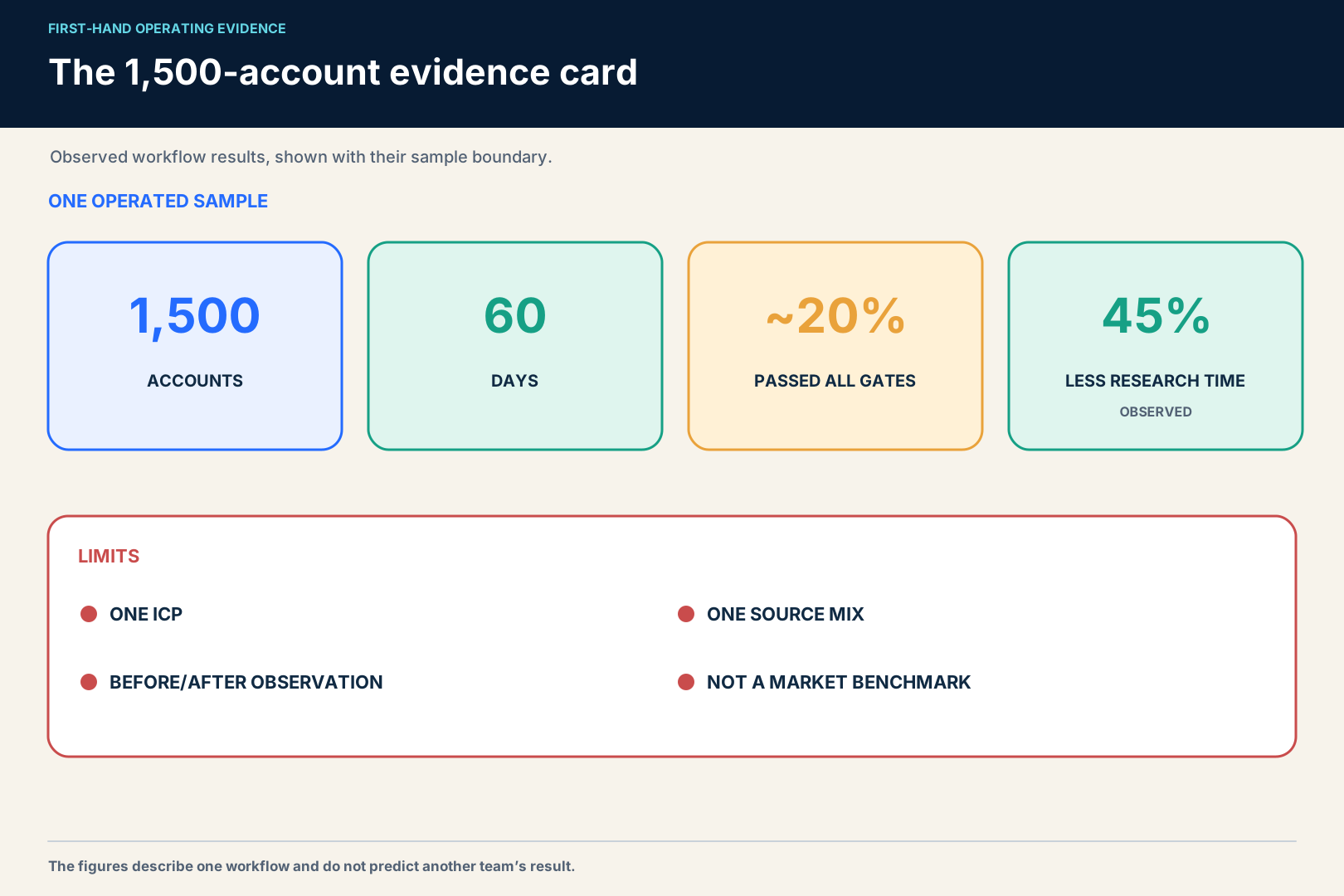
- 05Treat the 1,500-account, 60-day observation as one workflow sample, not a market benchmark.
Intent becomes useful only after fit, account, person, recency and human-review checks turn raw activity into an inspectable sales decision.
01 / What B2B Intent Data Means in Practice
What B2B Intent Data Means in Practice
- What happened? A company returned to a pricing page, compared products on a review platform, or researched a relevant topic.
- Where did it happen? On your website, on a named external platform, or across a modeled publisher network.
- Which account was resolved? The system maps activity to a company domain or company record.
- How recent and unusual was it? The activity may be a new event, a repeat visit, or a surge relative to a baseline.
- What should happen next? A human-approved play may call for research, advertising, account nurture, or direct outreach.
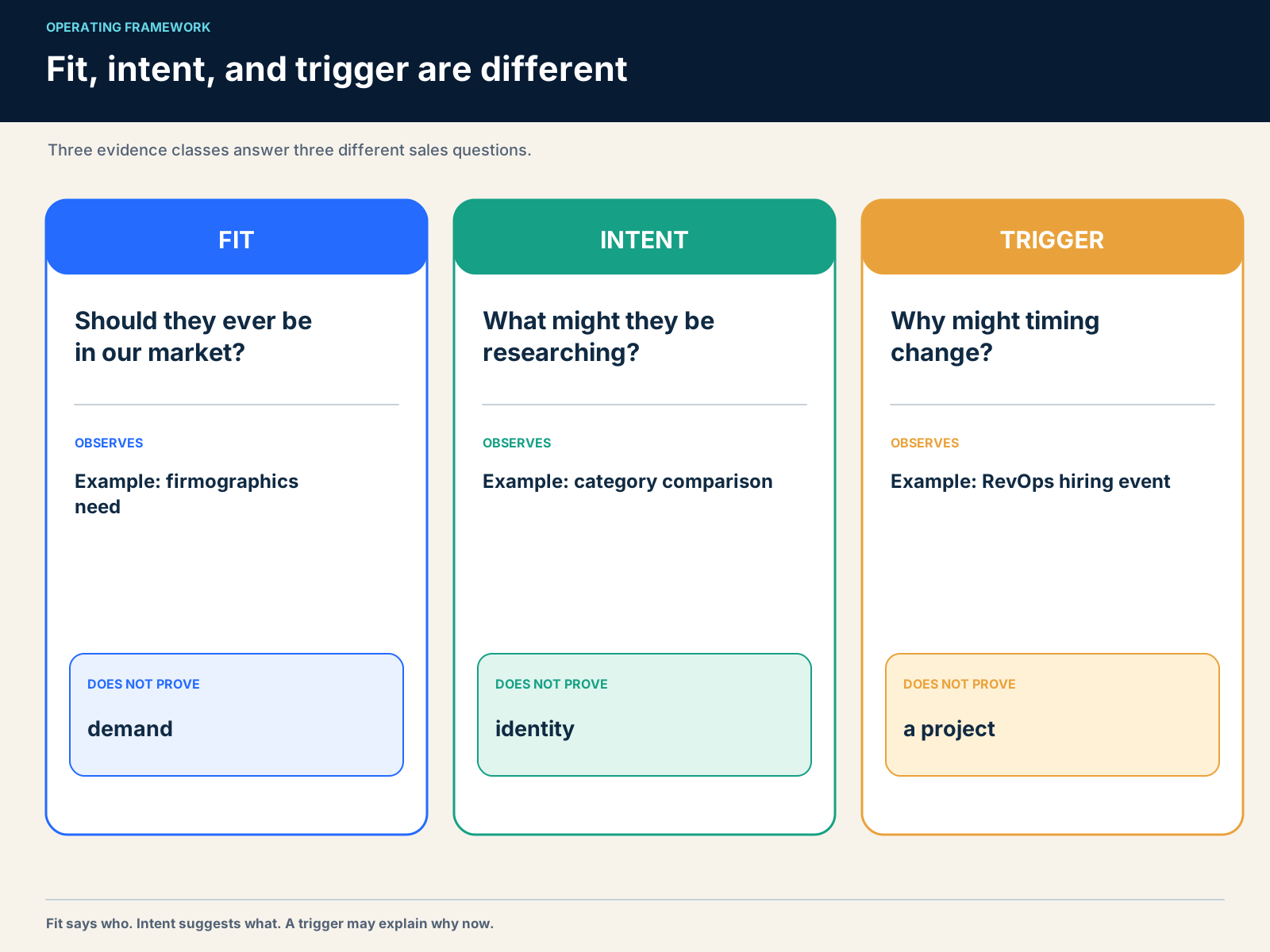
02 / Intent, Fit, and Trigger Are Different Things
Intent, Fit, and Trigger Are Different Things
| Evidence class | Question it answers | Example | What it cannot prove |
|---|---|---|---|
| Fit | Should this company ever be in our market? | Mid-market B2B SaaS company in an approved geography | That a project exists now |
| Intent | What might the account be researching? | Repeat pricing-page visits or a G2 competitor comparison | The visitor’s identity, budget, or authority |
| Trigger | Why might the timing have changed? | Hiring a Head of RevOps or changing a relevant technology | That the event created a buying process |
approved account fit + recent relevant behavior + a plausible reason to act now
03 / Where B2B Intent Data Comes From
Where B2B Intent Data Comes From
First-party behavior
Review-platform and comparison research
Third-party topic and publisher data
Public business signals
- “The new RevOps leader may be rebuilding systems.”
- “The technology change may create a migration problem.”
- “The funding event may change priorities.”
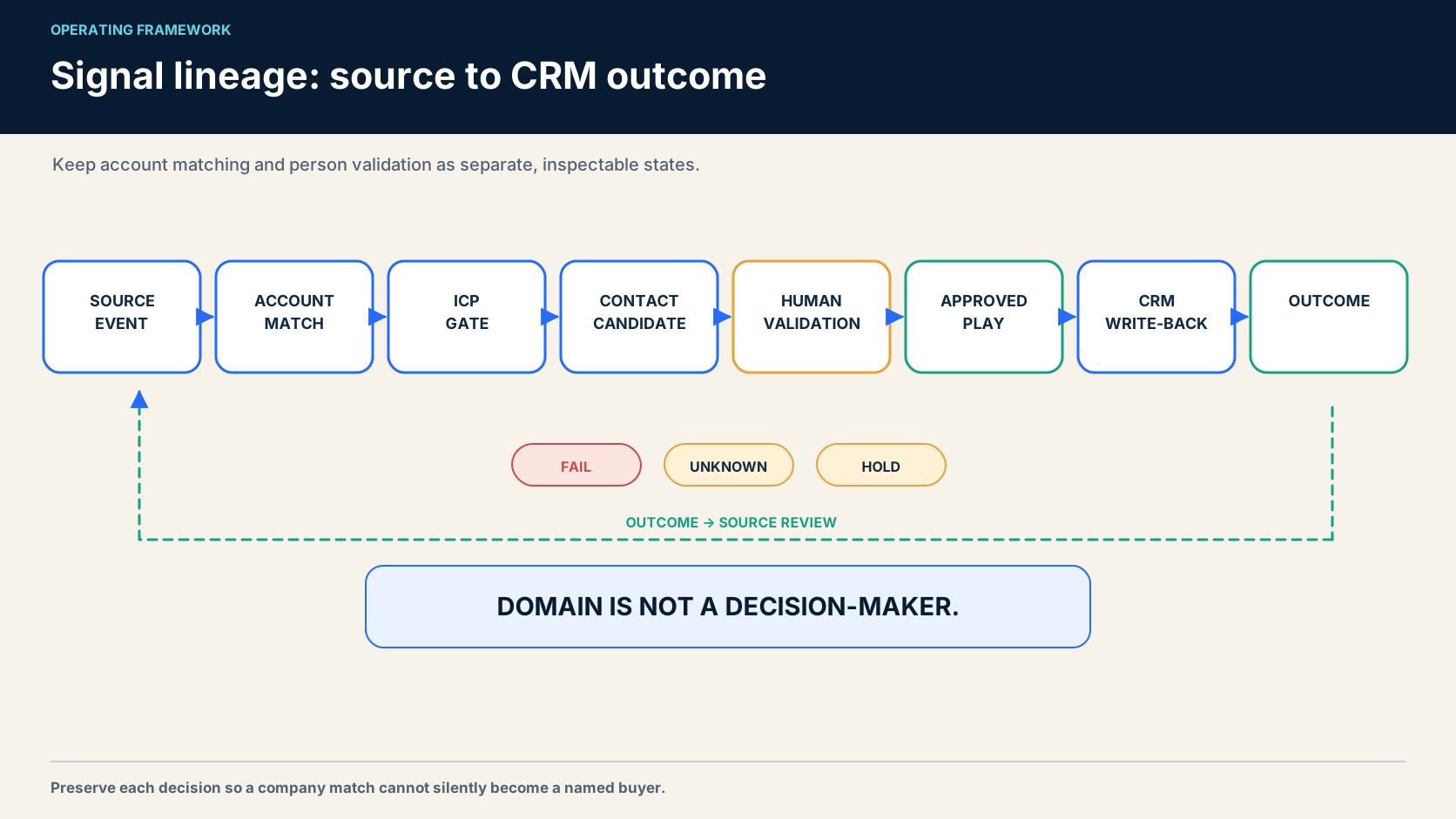
04 / How Raw Activity Becomes a Usable Record
How Raw Activity Becomes a Usable Record
1. Capture the event
- source;
- observed action or topic;
- event timestamp;
- collection timestamp;
- URL, category, or topic where permitted;
- raw company identifier;
- source confidence;
- consent or permitted-use context.
2. Resolve the account
- resolved domain: the system believes the activity belongs to a company;
- resolved contact: a separate process finds a relevant person at that company;
- verified buying role: a human or reliable source confirms the person’s current responsibility;
- confirmed interest: the person or account responds with explicit commercial interest.
3. Normalize the signal
| Field | Example value |
|---|---|
| Signal class | first-party pricing activity |
| Source | owned website tool |
| Observed action | second pricing visit |
| Event time | timestamp |
| Resolved account | company domain |
| Fit state | pass, fail, or unknown |
| Contact state | unresolved, candidate, or verified |
| Recency | hours or days |
| Play | research, nurture, outreach, or ignore |
| Human decision | approved, rejected, or hold |
4. Apply the ICP gate
5. Resolve a plausible person
- Does the person still work at the company?
- Does the role match the expected buying group?
- Is the geography and business unit relevant?
- Is there a permitted channel?
- Does the message make sense without revealing sensitive tracking?
6. Validate the hypothesis
7. Route and write back
8. Learn from the outcome
05 / Which Signals Deserved Attention in My Sample
Which Signals Deserved Attention in My Sample
| Signal | Why it earned attention | Main uncertainty | Human check |
|---|---|---|---|
| Repeat visit to a pricing page | Direct first-party behavior; recent and repeated | Visitor identity and purpose | Confirm account, role, history, and permitted action |
| G2 competitor or comparison activity | Research occurred in a product-evaluation environment | Account-level, not person-level; category activity may be broad | Confirm product relevance and buying group |
| Head of RevOps job opening | Clear time-bound organizational change | Hiring does not prove a software project | Read the role, company plan, and current stack |
| Broad topic surge | Can expose off-site research | Topic ambiguity and weak person resolution | Require strong fit or a second signal |
| Single low-value page visit | Very recent but weak | Accidental or informational traffic | Usually hold; do not route directly |
06 / Practical Plays by Evidence Strength
Practical Plays by Evidence Strength
Strong first-party activity from a known account
Review-platform research
Topic surge
Structural trigger
Customer or expansion signal
07 / Accuracy Is a Workflow Property, Not a
Accuracy Is a Workflow Property, Not a Vendor Number
- Was the event captured correctly?
- Was the event mapped to the correct company?
- Was the topic interpreted correctly?
- Did the account fit the ICP?
- Was the selected contact current and relevant?
- Did the timing support an appropriate action?
- Did the signal predict an outcome?
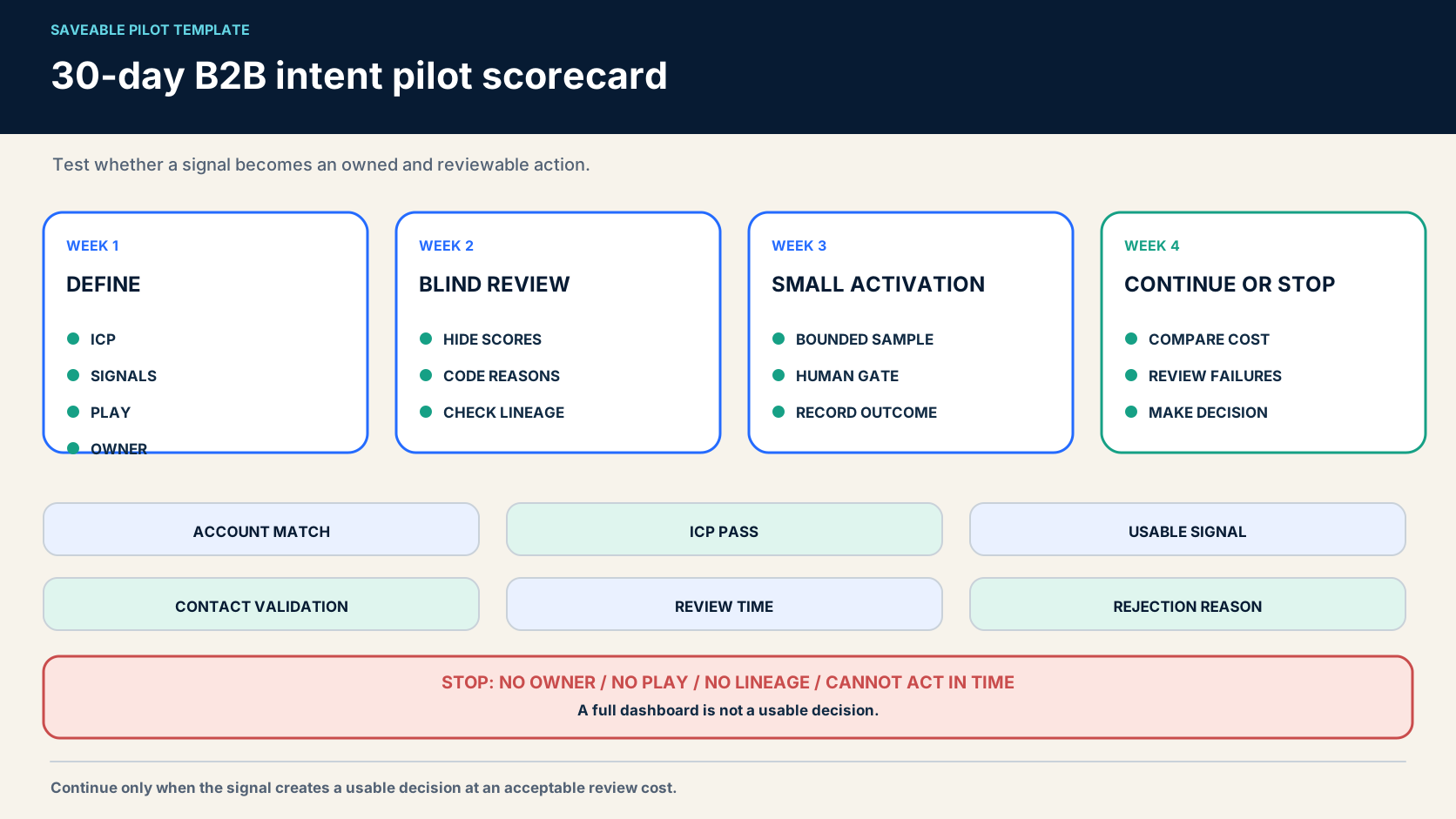
| Metric | Definition |
|---|---|
| Account match rate | resolved accounts divided by raw signal records |
| ICP pass rate | accounts passing every hard fit rule divided by resolved accounts reviewed |
| Usable-signal rate | records approved for a defined play divided by signals reviewed |
| Contact validation rate | verified relevant contacts divided by approved accounts requiring contact research |
| Time to review | operator minutes from signal arrival to decision |
| False-positive reason | coded rejection reason such as wrong fit, stale event, broad topic, wrong account, or no valid contact |
| Outcome by source | later reply, interest, opportunity, or other predefined state tied back to the original source |
08 / Privacy, Permission, and the Creepy Boundary
Privacy, Permission, and the Creepy Boundary
- document the original source;
- store only fields needed for the play;
- define retention by signal type;
- restrict access to behavioral detail;
- verify suppression and opt-out states before activation;
- do not reveal hidden tracking in outreach;
- do not infer sensitive traits;
- review vendor data-processing and security terms;
- recheck platform rules before automating a channel.
09 / A 30-Day Pilot I Would Run Before
A 30-Day Pilot I Would Run Before Buying More Data
Week 1: define the contract
- received;
- resolved account;
- ICP pass;
- ICP fail;
- contact unresolved;
- approved for research;
- approved for outreach;
- rejected;
- hold;
- outcome recorded.
Week 2: run a blinded review
Week 3: activate a small cohort
Week 4: decide whether to continue
- the ICP is still disputed;
- sellers cannot explain why records are prioritized;
- topics produce mostly broad noise;
- contacts cannot be resolved lawfully and accurately;
- review cost exceeds the value of the queue;
- CRM fields cannot preserve source and outcome;
- the team has no matching play.
10 / When B2B Intent Data Is Not Worth
When B2B Intent Data Is Not Worth Buying
11 / A Worked Intent Record From Event to
A Worked Intent Record From Event to Outcome
The decisions inside one record
12 / How I Would Build a Score Without
How I Would Build a Score Without Hiding the Evidence
- direct first-party behavior;
- review or comparison research;
- third-party topic research;
- public business trigger;
- current relationship evidence;
- explicit demand.
- Source confidence: how directly did the source observe the event?
- Account confidence: how strong is the company match?
- Action confidence: how much verified evidence supports the proposed play?
Use decay before using more points
Keep unknown as a valid state
13 / How to Diagnose a Weak Intent Program
How to Diagnose a Weak Intent Program
Many signals, few resolved accounts
Many resolved accounts, few ICP passes
Many ICP passes, few verified contacts
Many approved contacts, little activation
Many sends, few useful replies
Useful replies, no opportunities
14 / What I Would Ask a Provider in
What I Would Ask a Provider in a Live Evaluation
- Which events are first-party, licensed, modeled, or inferred?
- Can a user export source and timestamp fields?
- How are topic changes versioned?
- Can we suppress customers, partners, and active opportunities before activation?
- Can we keep the provider score out of a blinded review?
- What happens when a company has many domains?
- How are remote workers and shared networks handled?
- Which data is person-level, and what proves that level?
- What deletion and retention controls exist?
- Which product functions require more credits or another contract?
15 / The Decision I Took From the 60-Day
The Decision I Took From the 60-Day Run
16 / B2B Intent Data FAQ
B2B Intent Data FAQ
What is B2B intent data?
How to identify in-market B2B accounts using intent data
How is B2B intent data collected?
How accurate is intent data?
Is intent data legal?
What is the difference between intent data and buying signals?
Can intent data identify a person?
Research note
Methodology
- 01The guide combines current official documentation with an owner-operated 1,500-account workflow observed over 60 days.
- 02The approximately 20% pass rate and 45% research-time observation belong to that sample and are not causal or universal performance claims.
- 03Mutable product, pricing, consent and data-resolution facts were reviewed on 26 August 2026 and require rechecking before implementation.
Source ledger
Sources & editorial notes
- 01Buyer Intent
G2 · official product documentation; reviewed 2026-08-26. Vendor-authored; Plan-dependent; Company activity does not identify a decision-maker
- 02Intent data and Company Surge
Bombora · official product page; reviewed 2026-08-26. Vendor-authored; Performance claims are attributed
- 03Use buyer intent
HubSpot · official product documentation; reviewed 2026-08-26. Vendor-authored; Feature and credit limits are plan-dependent
- 04TrustRadius Intent Activity Glossary
TrustRadius · official product documentation; reviewed 2026-08-26. Vendor-authored; Package-dependent
- 05Legal grounds for processing data
European Commission · authoritative regulatory guidance; reviewed 2026-08-26. General information, not legal advice
- 06General Data Protection Regulation
European Union · primary legal text; reviewed 2026-08-26. No universal compliance conclusion