Weekly industry intelligence · No noiseSubscribe to the Luck My Sales newsletterFree briefing

Independent intelligence on AI in sales

Menu

LinkedIn tool comparison · Social selling

Best LinkedIn Outreach Tools for B2B Sales: Compare Workflow Fit and Account Risk

Compare LinkedIn outreach tools by workflow job, human review, multichannel control, reply handling and account exposure before choosing a sender.
Editorial disclosure

AI may assist research organization and drafting. A human editor reviews every published page, checks material claims against the cited sources and owns the final decision. No company paid for placement in this article.

AI use policy

Agent-ready brief

AI takeaways

Keep the key points here, or take a source-aware text brief into Claude, ChatGPT or another AI workspace.
  1. 01Sales Navigator is the baseline when current professional context and manual control matter.
  2. 02LinkedIn prohibits third-party tools that scrape or automate activity, so no vendor can remove account exposure.
  3. 03A visible social fact becomes useful only when it supports a current commercial reason to contact someone.
  4. 04Strategic accounts, replies and suppression remain human-owned even when routine steps are automated.
  5. 05Judge the whole funnel from accepted connection to meaningful reply, held call and opportunity.
Includes summary, takeaways, sources and a use note.
The best LinkedIn outreach tool is not the one that automates the most actions. It is the one that owns the right part of your workflow without hiding who was contacted, why the contact was relevant, what was sent, or who must take over after a reply.
That answer is less exciting than a list of ‘safe’ automation products. It is also more honest. LinkedIn says it does not allow third-party software or browser extensions that scrape, modify, or automate activity on its website. A vendor can describe rate limits, account rotation, dedicated IPs, or human-like behavior. Those claims do not override LinkedIn's policy or remove account exposure.
Use LinkedIn Sales Navigator when you need current professional context and manual outreach. Consider a sequencer only when the potential time saving is worth the platform, brand, and data risk. Keep strategic accounts manual. Stop every sequence when the buyer replies. Measure accepted connections, meaningful replies, and booked calls as one funnel instead of celebrating activity in isolation.
Commercial disclosure: Luck My Sales received no affiliate payment, sponsorship, free access, consulting benefit, or other consideration from any product in this comparison. Anastasiia has used Linked Helper, Lemlist, Instantly, Outreach.io, and Snov.io in live outreach work over more than seven years. The other products are evaluated from current official documentation, not a controlled hands-on test. NextLevel AI appears only as the disclosed first-party context of one anonymized workflow.

Compare the workflow job first; automate only after authority, reply ownership and account exposure are explicit.

01 / LinkedIn outreach tools

LinkedIn outreach tools at a glance

ToolMain jobEvidence hereHuman gate that still mattersBest fit
LinkedIn Sales NavigatorSearch, account context, saved leads, signalsOfficial LinkedIn documentationConfirm current role, account fit, and reason to contactManual or named-account research
Linked HelperDesktop execution and campaign stepsDirect useAccount limits, list approval, copy, and every replyCost-sensitive operators who accept policy exposure
LemlistEmail plus LinkedIn sequence orchestrationDirect use in a broader workflowChannel order, sender health, reply stop, CRM admissionSMB multichannel execution
HeyReachMulti-sender LinkedIn execution and shared inboxDocumentation reviewedAccount permissions, rotation logic, reply ownerAgencies and multi-seat teams
ExpandiLinkedIn and email sequence executionDocumentation reviewedCampaign logic, duplicate protection, reply ownershipTeams wanting one multichannel interface
DripifyLinkedIn sequences, team controls, analyticsDocumentation reviewedEnrollment, limits, message review, stop statesSmall teams wanting a guided interface
WaalaxyLinkedIn and email prospecting sequencesDocumentation reviewedData origin, sequence selection, reply handlingSolo and small-team prospecting
SkyleadLinkedIn plus email smart sequencesDocumentation reviewedSource quality, branch logic, sender and suppressionOperators coordinating two channels
La Growth MachineConditional LinkedIn, email, and other-channel workflowsDocumentation reviewedConditions, identity matching, shared inbox ownershipMore complex multichannel paths
OverloopAI-assisted prospecting and outbound workflowsDocumentation reviewedResearch evidence, copy approval, CRM stateTeams that want prospecting plus execution
This is a job map, not a ranking from one to ten. Sales Navigator does not perform the same job as HeyReach. Lemlist and La Growth Machine span channels. Linked Helper is relevant because of price and direct operating history, but that does not make it compliant or low risk.

02 / counts as a

What counts as a LinkedIn outreach tool

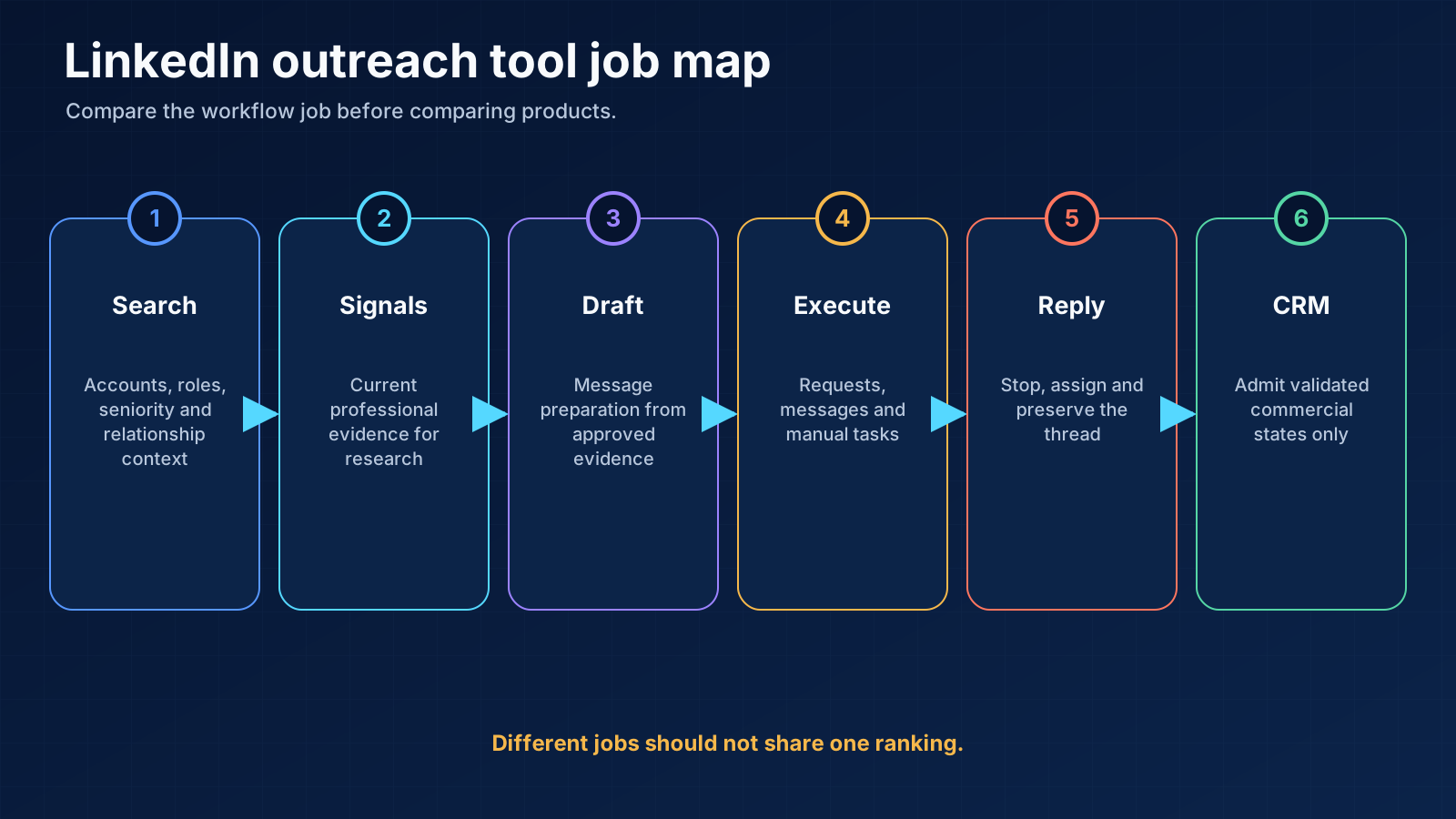
The category hides at least six different jobs.
  1. Account and lead search. Find people by company, title, seniority, geography, relationship, or activity.
  2. Signal collection. Surface professional changes or engagement that may justify research.
  3. Message preparation. Draft or personalize a connection request, DM, InMail, or follow-up.
  4. Action execution. Visit profiles, send requests, withdraw requests, send messages, or create manual tasks.
  5. Conversation handling. Put replies in one inbox, tag them, assign an owner, and stop automation.
  6. System coordination. Sync CRM state, connect email, prevent duplicate touches, and report the funnel.
One product may cover several jobs. That does not mean it performs each job well or should receive permission to do all of them. A research layer can create a shortlist without sending. A drafting layer can prepare text without touching LinkedIn. A sequencer can execute approved steps without deciding who belongs in the campaign. Separating the jobs is the easiest way to avoid accidental autonomy.
The buying requirement should look like this:
ICP → approved list → verified professional context → message thesis → permitted LinkedIn action → reply stop → human owner → CRM rule
If your requirement starts with “send 500 connection requests,” the system has no definition of relevance. It only has a volume target.
LinkedIn outreach tool categories mapped to six workflow jobs.
Compare the workflow job before comparing products.

03 / we evaluated the

How we evaluated the shortlist

We reviewed the current product pages and help material available on 18 August 2026. We also used first-hand operator evidence where it existed. A product page can verify that a feature is offered. It cannot verify that the feature is permitted by LinkedIn, improves pipeline, or works for your account.
The comparison uses seven questions.
  • What object does the product control: search result, profile, request, message, reply, or CRM record?
  • Does it show the source and date behind a “signal”?
  • Can a human approve the list and message before execution?
  • Can named accounts be removed from automation?
  • Does one reply stop every related step across channels?
  • Can an SDR claim the conversation without another sender continuing?
  • Can the team export its list, message version, reply state, and outcome?
We did not use vendor acceptance rates, revenue claims, or testimonials to decide placement. Those results depend on audience, account history, offer, copy, timing, and measurement definitions. We also did not compare list prices because they change and often exclude Sales Navigator, data, enrichment, email infrastructure, and operator time.

04 / platform-risk contract most

The platform-risk contract most comparisons skip

The most important fact in this category is not a feature. It is the platform dependency.
LinkedIn's official policy says third-party software that automates tasks may violate its User Agreement and can lead to restriction. The policy tells restricted users to disable the software or extension and follow the suspension process. Therefore, a cloud product, browser extension, desktop app, or dedicated IP does not deserve an editorial “safe” label.
Before using an executor, write down five decisions.
DecisionRequired answer
Account at riskWhich person's professional account is exposed, and what happens if access is restricted?
Permitted actionsWhich actions may run, which are manual, and which are prohibited internally?
Named-account ruleWhich customers, opportunities, partners, and strategic accounts never enter automation?
Kill switchWhich warning, reply, list defect, or brand failure pauses the campaign?
Recovery ownerWho reviews a restriction, preserves evidence, changes the workflow, and communicates internally?
My team learned this through restrictions, not theory. Poor action limits and weak imitation of normal account behavior contributed to account blocks, including in Linked Helper workflows. We went through account recovery, changed tools, and reduced limits. That experience did not reveal a magic “safe” limit. It showed that the account owner carries the downside while the automation vendor sells the upside.
The practical conclusion is conservative: automate only an already-proven motion, keep ordinary and strategic accounts separate, and assume the account can still be restricted.

05 / Best LinkedIn outreach

Best LinkedIn outreach tools by workflow job

LinkedIn Sales Navigator: best for manual research and current professional context

Sales Navigator is the cleanest starting point when the real bottleneck is finding the right people, not sending more messages. Its current lead filters include company, role, seniority, geography, connection path, changed jobs, recent posting, company followers, buyer-intent features, and CRM-related filters. Availability varies by plan.
This information can make research faster, but it still needs interpretation. A recent post proves that a person posted. A job change proves that a profile reports a new job. Neither proves a current commercial problem.
Across my own work, job-change and new-role signals were weak in most broad campaigns. They became useful in a smaller set of specific, less-saturated niches. Engagement around a competitor or a topic directly related to the offer was often a stronger reason to investigate. Even then, I checked whether the activity had current commercial meaning before writing.
Sales Navigator is the best fit when a founder or SDR can research and contact a limited number of high-value accounts manually. It is also the right baseline for evaluating automation: if the team cannot build a relevant list and message with native research, adding execution software will scale the confusion.
Evidence label: official LinkedIn documentation plus direct broader use of LinkedIn research. Main limitation: context is not intent, and native access does not authorize third-party automation.

Linked Helper: best for low-cost execution, with explicit account exposure

Linked Helper is a desktop automation product with campaign steps, list handling, messaging, and integrations. It has been practical and inexpensive in my past workflows. That is a meaningful operational advantage for a small team. It is not evidence of platform permission.
The product can be attractive when a team wants more campaign control than manual LinkedIn work and does not need an expensive agency interface. Yet the evaluation should begin with the downside. We experienced restrictions when limits and action patterns were handled badly. Recovery and tool changes consumed time that is absent from the license price.
Use it only if the organization has consciously accepted this exposure and created a recovery plan. Do not connect the most valuable founder or executive account merely because the interface is affordable. Keep message strategy, list approval, and replies human-owned.
Evidence label: direct use. Best fit: cost-sensitive operators with a proven motion and explicit risk acceptance. Main limitation: direct restriction history and conflict with LinkedIn's broad automation policy.

Lemlist: best for a visible email-plus-LinkedIn state machine

Lemlist supports email, LinkedIn actions, calls, delays, conditions, and campaign previews. In our real workflow, the value was not “LinkedIn automation” by itself. The value was seeing channel steps and reply state in one operating view.
We used LinkedIn for tier-one prospects and email for tiers two and three. A tier-one record could receive email after five to eight days without LinkedIn engagement. Any reply stopped the remaining sequence. The SDR then classified the response and decided whether to nurture, suppress, reactivate later, ask a technical owner for information, or admit the record to CRM.
This makes Lemlist a strong fit for an SMB that already knows its audience and wants one multichannel execution layer. It is a poor fit if the team expects the tool to define ICP, fix the offer, or decide that a generic social fact is relevant.
Evidence label: direct use in a disclosed first-party NextLevel AI workflow. Best fit: an SMB coordinating email and LinkedIn with one reply owner. Main limitation: LinkedIn actions still carry platform exposure; sequence visibility does not repair weak qualification.

HeyReach: best documented fit for multi-sender teams and agencies

HeyReach documents sender rotation, lead imports, connection and message steps, connected-state logic, a unified inbox, voice notes, integrations, API access, and webhooks. This is a wider team-control surface than a simple browser extension.
The useful buying question is not whether multiple senders create more capacity. It is whether the organization can govern those senders. Which employee accounts are connected? Can an agency client see and approve copy? Does the unified inbox assign a single human owner? Can a reply in one account suppress actions from another account or email sender?
HeyReach's site includes strong customer outcomes and scale language. We did not use those claims in this recommendation. The best documented fit is an agency or multi-seat team that needs sender assignment, one inbox, and integrations. The human gate is still campaign eligibility and account-level permission.
Evidence label: documentation reviewed. Main limitation: multi-account execution can multiply exposure and coordination errors as quickly as it multiplies capacity.

Expandi: best for teams that want one LinkedIn-and-email execution interface

Expandi positions itself around LinkedIn and email outreach, smart sequences, personalization, team roles, inbox work, duplicate protection, and integrations. That breadth makes it relevant when the team wants one interface for channel execution.
The product should be evaluated on state consistency. Import the same test accounts, build one channel order, and verify what happens when a connection request is ignored, accepted, or answered. Confirm whether a reply removes the person from every remaining email and LinkedIn step. Test existing connections, missing email addresses, duplicate contacts, and current customers.
Do not award points for a larger action menu. Award points for a clear preview, deterministic stop, exportable state, and an easy way to exclude named accounts.
Evidence label: documentation reviewed. Best fit: a team wanting a combined execution interface and willing to test edge states. Main limitation: broad automation still depends on LinkedIn and on correct cross-channel identity matching.

Dripify: best for a guided LinkedIn sequence and manager view

Dripify documents LinkedIn campaign sequences, team management, analytics, inbox features, and integrations. Its appeal is a more guided workflow for a small sales team that wants to set up, monitor, and compare campaigns without building a custom system.
Guided does not mean governed. A manager should still approve the audience, first message, follow-ups, and per-account exclusions. Analytics must retain denominators. Connection acceptance, replies, interested replies, meetings, and opportunities are different events. A dashboard that compresses them into one success score makes diagnosis harder.
Pilot Dripify with ordinary accounts only. Review every pending message for the first batch. If the copy sounds like a template when read next to five other messages, fix the message system before increasing volume.
Evidence label: documentation reviewed. Best fit: a small team that values a guided interface and manager visibility. Main limitation: ease of launch can move automation ahead of message and list proof.

Waalaxy: best for an accessible solo or small-team prospecting flow

Waalaxy offers LinkedIn prospecting flows, email features, imports, sequences, inbox-related functions, and integrations. Its product language is accessible to solo sellers and smaller teams, which can reduce setup friction.
That simplicity makes the pre-launch contract more important. Templates should not decide the commercial logic. The operator must define the audience, why the sequence exists, which professional evidence is acceptable, and which response ends the flow.
A small team should compare Waalaxy with manual Sales Navigator work and one email sender, not only with other automation suites. If manual research plus a simple tracker produces enough qualified conversations, an extra LinkedIn executor may add more account exposure than value.
Evidence label: documentation reviewed. Best fit: solo or small-team prospecting with a narrow, pre-approved motion. Main limitation: accessible templates can encourage premature standardization.

Skylead: best for smart-sequence branching across LinkedIn and email

Skylead documents LinkedIn and cold-email automation, smart sequences, email discovery/enrichment, inbox functions, and integrations. The branching concept is useful when contactability differs across the list.
The risk is branch sprawl. Each condition creates another state to test: connected or not, email found or not, replied or silent, accepted or pending, valid or risky address. Before launch, create a small test record for every branch and verify the expected next step. One unresolved edge can create a duplicate touch across channels.
Choose Skylead when the team truly needs conditional multichannel paths and has an operator who will test them. Do not choose it because “smart sequence” sounds more intelligent than a shorter workflow.
Evidence label: documentation reviewed. Best fit: an operator-led team coordinating email and LinkedIn contactability. Main limitation: branch complexity and cross-channel suppression need deliberate QA.

La Growth Machine: best for more complex conditional multichannel paths

La Growth Machine documents conditional sequences, LinkedIn and email steps, A/B testing, a shared inbox, reply tags, integrations, and API capabilities. It is designed for workflows that extend beyond a simple request-plus-follow-up sequence.
That makes it useful for a mature motion and excessive for an unproven one. More channels and conditions create more chances for mismatched identity, outdated context, contradictory copy, and unclear ownership. The team needs one canonical person ID, one current account owner, and a global stop state.
Some vendor material in this category uses safety-oriented language. We do not convert that into a guarantee. LinkedIn's own policy remains the authoritative platform boundary.
Evidence label: documentation reviewed. Best fit: teams with a proven multichannel process and a technical operations owner. Main limitation: implementation and state complexity can exceed the value for a small list.

Overloop: best for teams that want AI-assisted prospecting plus execution

Overloop currently positions itself as an AI sales prospecting platform with research, list building, personalization, campaign execution, and CRM-related workflow. This can reduce the number of tools in the stack.
It also concentrates decisions. If one system finds the account, decides it fits, writes the message, and enrolls it, an early error can pass through every stage without a fresh review. The buyer should insist on source visibility, an approval queue, named-account exclusion, and a reply stop that works across all active campaigns.
Overloop belongs on the shortlist when consolidating research and execution is the defined goal. It should not receive a higher ranking merely because the feature surface is larger.
Evidence label: documentation reviewed. Best fit: a team seeking one prospecting-and-execution workspace. Main limitation: consolidated convenience can hide where a qualification or message error entered.

06 / professional signals are

Which professional signals are worth using

Personalization is useful only when the evidence changes the reason to contact, the problem discussed, or the offer made. A prospect's city, school, hobby, or generic post can make a message look personalized without making it commercially relevant.
Use a signal hierarchy.

Stronger signals to investigate

  • engagement around a competitor, adjacent solution, or problem category;
  • a current company initiative visible in an official source;
  • an active role or responsibility directly connected to the offer;
  • a relevant product launch, market move, hiring pattern, or operational change;
  • a mutual customer, partner, or credible relationship path;
  • a buyer action connected to your company, where the platform and consent basis allow it.

Weak signals unless more context exists

  • job change by itself;
  • promotion by itself;
  • a generic congratulatory post;
  • old content with no current commercial link;
  • a random personal interest;
  • a company fact that could be inserted into any template.
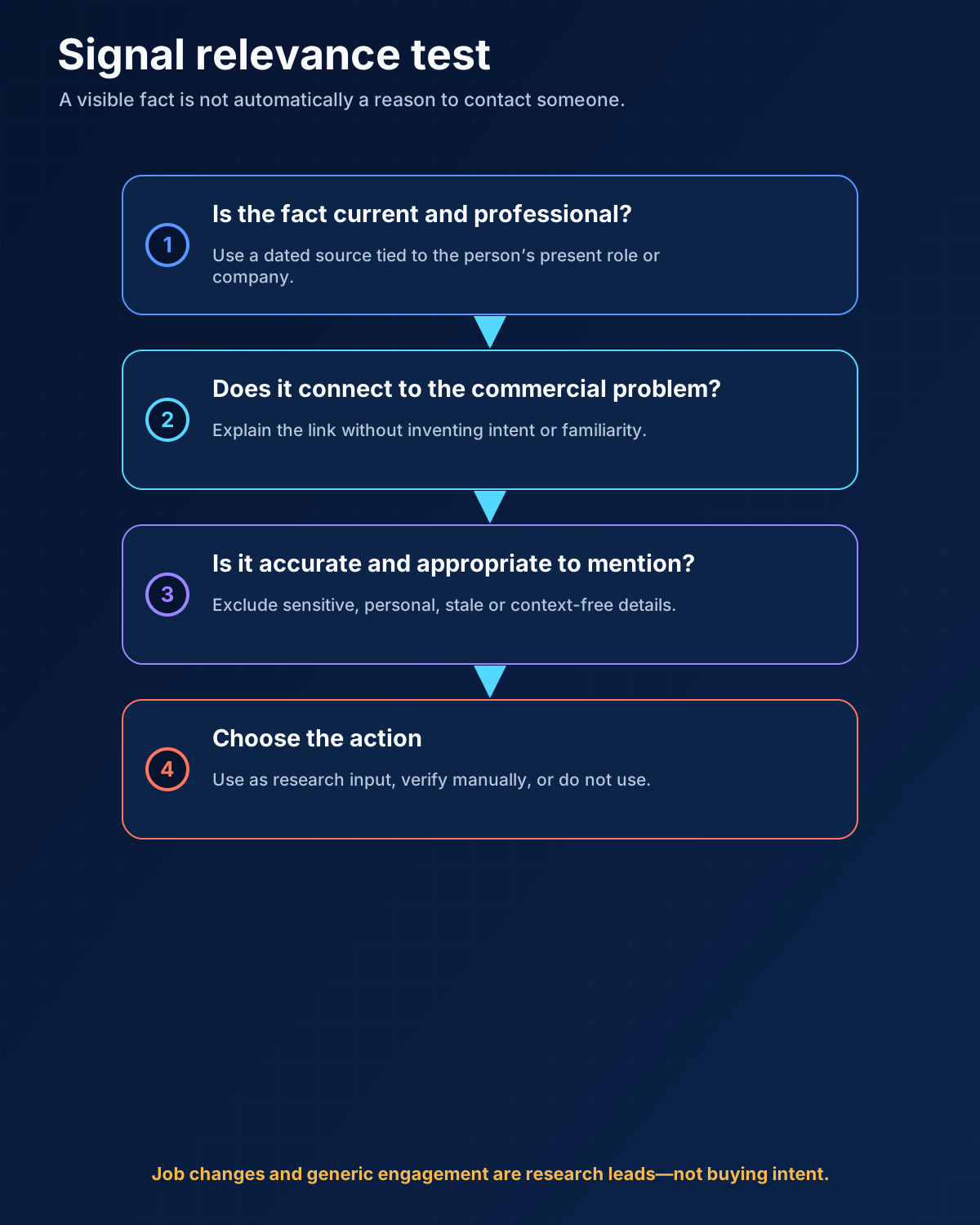
Sales Navigator's filter documentation shows which data can be surfaced. It does not say every surfaced item is a good reason to message. The seller's work is to connect evidence to a plausible business problem without pretending to know more than the evidence supports.
Four-gate test for deciding whether a professional signal supports LinkedIn outreach.
A visible fact is not automatically a commercial reason to contact someone.

07 / human-approval matrix

The human-approval matrix

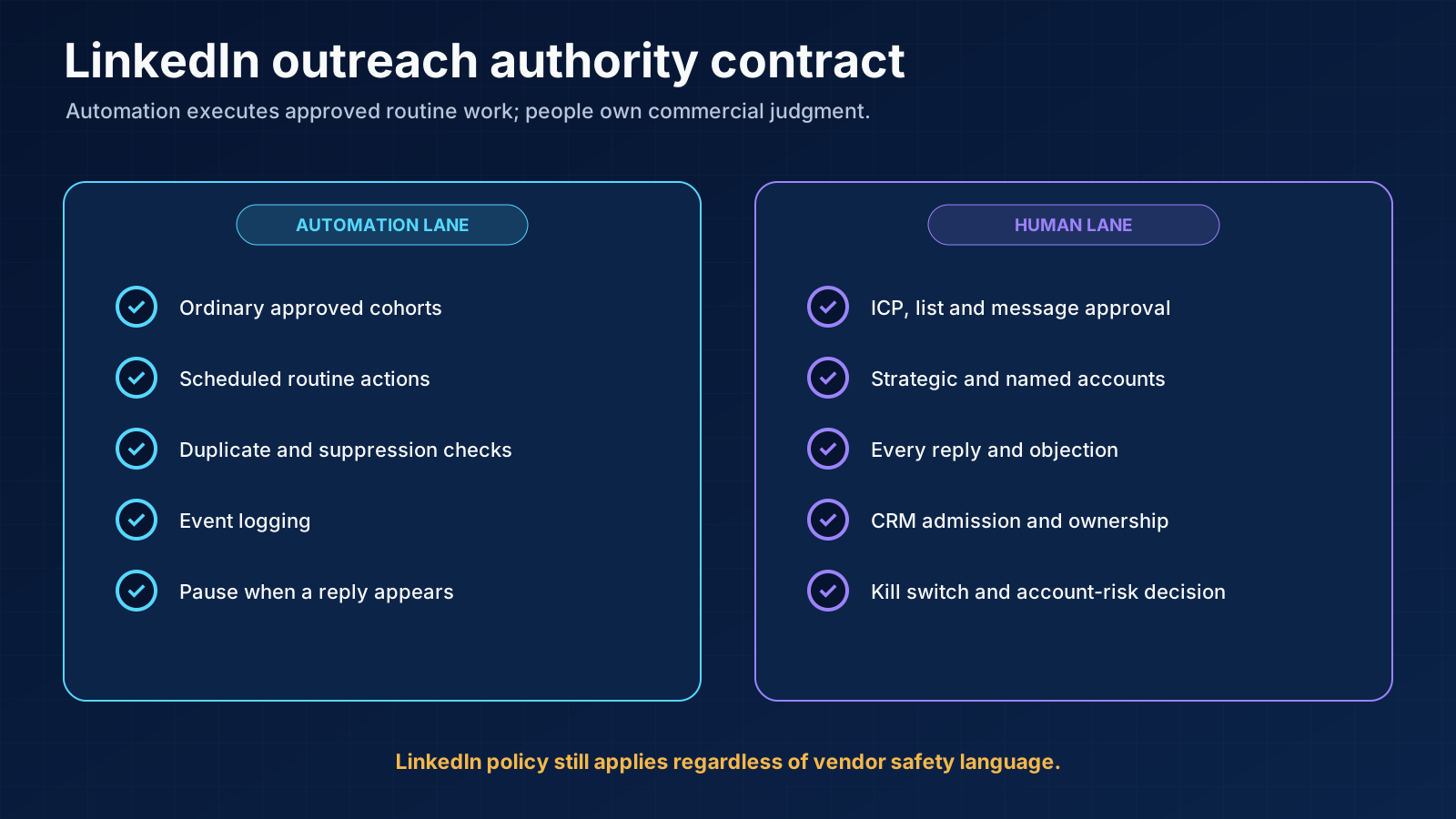
Once a motion has been manually proven, ordinary execution can be automated more than strategy.
ActionDefault authorityWhy
Define ICP, exclusion, and offerHumanThe system cannot repair a market decision it was never given
Approve list and signalsHuman, with sampling laterFalse fit scales into wasted touches and brand damage
Draft ordinary first messagesAI/tool may draftEvidence and claim still need review during setup
Send ordinary approved requests/follow-upsMay automate after proofSaves repetitive execution time
Strategic or named accountsHumanContext, ownership, and downside are higher
Comments, likes, voice notesRisk-dependent and usually manualThey represent the person publicly and can look synthetic
Classify repliesTool may suggestSDR validates meaning and next action
Unsubscribe or explicit negativeImmediate stop/suppressionContinuing creates brand and compliance risk
CRM admissionHuman-validated ruleCold list volume is not pipeline
The matrix is deliberately stricter at the start. For the first batch, review every record and every message. After the system produces stable evidence, move to structured sampling. Do not reduce review merely because the tool has completed a large number of actions without an error alert.
Human and automated responsibilities in a LinkedIn outreach workflow.
Automation executes approved routine work; people retain commercial judgment.

08 / 30-day pilot for

A 30-day pilot for a small B2B team

Week 1: prove the list and message manually

Select one narrow ICP and one offer. Build a small set in Sales Navigator or another approved source. Exclude customers, opportunities, partners, competitors, employees, and named accounts. For each record, store the current role, company, evidence URL, date, reason to contact, and message thesis.
Send manually. The goal is not a benchmark reply rate. The goal is to learn whether the evidence and offer produce real conversations.

Week 2: configure the smallest useful executor

Import only approved ordinary accounts. Recreate the message and follow-up logic. Add a global reply stop, suppression rules, and a clear SDR owner. Create test records that cover accepted, pending, replied, wrong-person, unsubscribe, and existing-customer states.
Do not connect a strategic executive account as the first production sender.

Week 3: run a controlled batch

Review every pending action before launch. Monitor account warnings, accepted requests, replies, and booked calls. Read the replies. “Thanks” and “not now” are not the same as a qualified conversation. Track how much human review the tool actually removes and how much new QA it creates.

Week 4: decide by funnel and operating cost
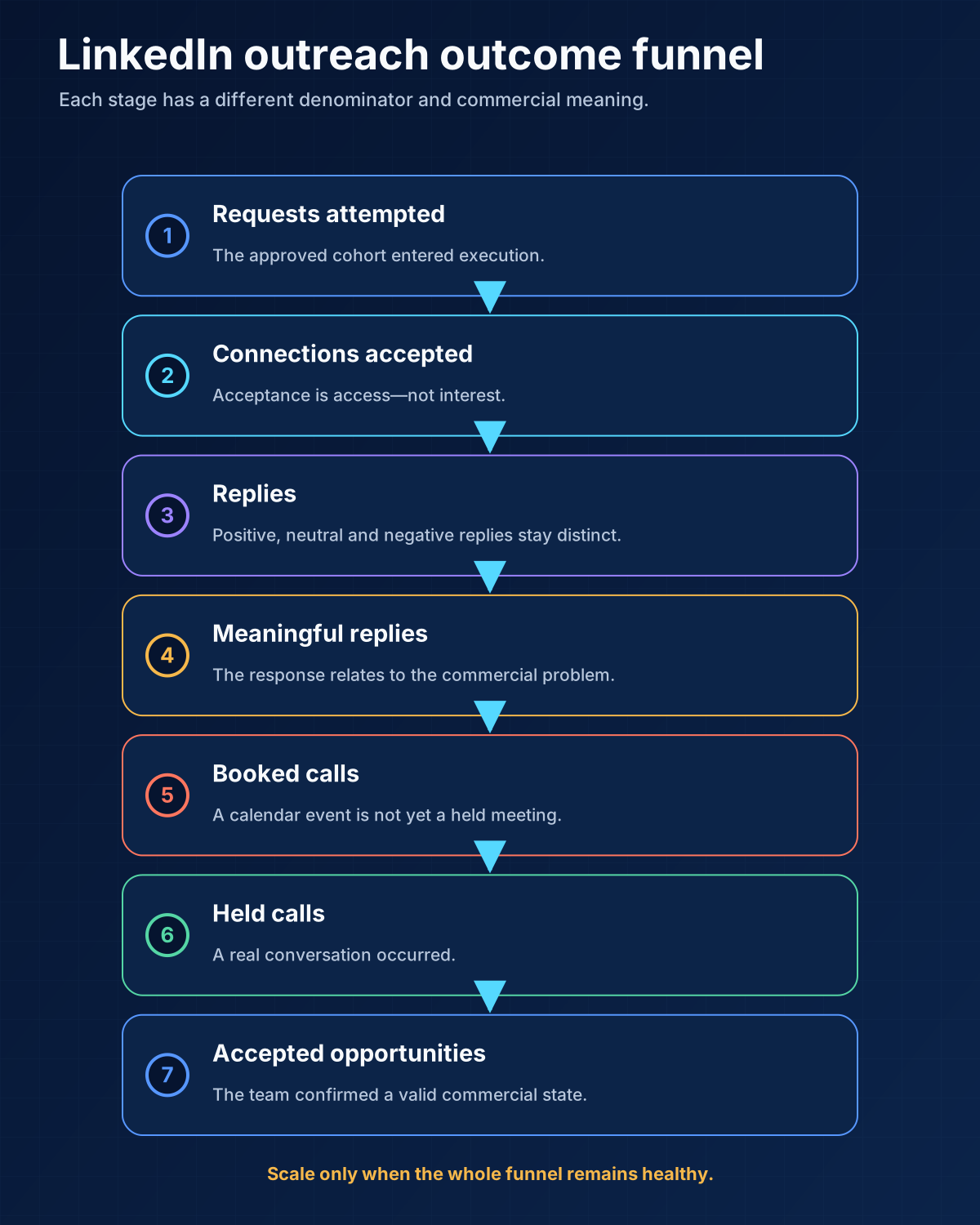
Expand only if list quality remains stable, messages preserve the intended voice, the account has no warning state, replies stop all sequences, and the SDR can handle conversations promptly. Count the tool, Sales Navigator, data, enrichment, email, implementation, review, and recovery time.
The decision is not “Did automation send more?” It is “Did the system create more seller-approved conversations without unacceptable account, brand, or data exposure?”
LinkedIn outreach funnel with separate acceptance, reply, meeting and opportunity stages.
Each stage has a different denominator and commercial meaning.

09 / Selection rules by

Selection rules by team type

Founder or solo seller

Start with Sales Navigator and manual contact. Add a light executor only after the message works and the account is not irreplaceable. If the niche is tiny or every account matters, remain manual.

Small in-house SDR team

Lemlist, Dripify, Waalaxy, or another guided executor can make sense when the team needs consistent steps and one reply queue. Choose by state visibility and human control, not maximum daily actions.

Agency or multi-sender team

HeyReach, Expandi, or a more configurable platform may fit sender assignment and shared inbox needs. Require client approval, account-level permissions, global suppression, and auditable ownership before scale.

Technical multichannel operation

Skylead or La Growth Machine may fit conditional channel paths. Budget for branch QA, identity resolution, webhooks, and monitoring. More automation is useful only if the state model stays understandable.

Team consolidating prospecting and execution

Overloop may reduce handoffs, while Lemlist or other multichannel products can centralize execution. Test whether consolidation improves source visibility and review time. If it hides decisions, the smaller stack is better.

10 / final shortlist worksheet

A final shortlist worksheet

Write one sentence for each field before booking a demo.
  • Job: “We need the tool to execute approved follow-ups.”
  • Non-job: “It must not choose our ICP or named accounts.”
  • Input: “It receives a human-approved list with current evidence.”
  • Action: “It may send ordinary requests and follow-ups.”
  • Stop: “Any reply or account warning pauses the person.”
  • Owner: “The assigned SDR reads and answers the reply.”
  • CRM: “Only a validated conversation enters CRM.”
  • Proof: “We will compare review time, replies, calls, and warnings.”
  • Exit: “We will remove the tool if control or account exposure is unacceptable.”
Now ask the vendor to show each state live. Do not accept a slide that says “AI handles it.” Import a test record. Put the record in two campaigns. Reply from one channel. Confirm that the second campaign stops. Mark it as a customer. Try to enroll it again. Export the state. These small tests reveal more than a long feature checklist.
Also ask who stores the LinkedIn session, which permissions teammates receive, and how the account is disconnected. The answer will not make automation compliant. It will show whether the team understands the exposure it is accepting.

11 / Frequently asked questions

Frequently asked questions

Are LinkedIn outreach automation tools safe?

No independent editor should promise that. LinkedIn's policy says third-party software that scrapes or automates activity is not allowed, and accounts may be restricted. Vendor controls can change operational exposure, but they do not override the policy.

What is the best LinkedIn outreach tool for a small business?

For high-value or narrow outreach, start with Sales Navigator and manual execution. If the motion is proven, shortlist one sequencer that provides preview, exclusions, reply stops, and a clear inbox owner. Lemlist is relevant when email must share the workflow; a lighter LinkedIn-first product may fit when email is separate.

Should connection requests be personalized?

Only when the personalization has genuine commercial meaning. A short, accurate reason to connect is better than a long template filled with a random profile fact. In some motions, a neutral request followed by a relevant message after acceptance is more credible.

Which metric matters most?

Use the funnel: accepted connections, meaningful replies, and booked calls. Add opportunities and customers when the cycle allows. A high acceptance rate with weak replies can signal broad targeting, curiosity, or polite connections rather than commercial fit.

When should LinkedIn lead instead of cold email?

LinkedIn should lead when the niche is narrow, the audience is active in IT or digital communities, social context matters, or the offer is timely enough that visible professional activity improves relevance. Email should lead when verified reach, controlled testing, and repeatable scale matter more. Our cold email vs LinkedIn outreach guide covers that decision in detail.

12 / Final recommendation

Final recommendation

Do not buy a LinkedIn outreach tool to discover your sales process. Prove the ICP, offer, evidence, message, and reply handling manually. Then buy the smallest layer that removes a specific execution bottleneck.
For research, Sales Navigator is the baseline. For a disclosed SMB email-plus-LinkedIn workflow, Lemlist is the strongest first-hand fit in this comparison. Linked Helper is inexpensive and practical but carries direct restriction history. HeyReach is a credible documentation-led shortlist for agencies and multi-sender teams. Expandi, Dripify, Waalaxy, Skylead, La Growth Machine, and Overloop fit different levels of channel and workflow complexity.
None is “safe.” None can turn a weak offer into demand. The durable advantage is the operating contract around the tool: approved list, commercially relevant evidence, named-account gate, global reply stop, human SDR ownership, selective CRM admission, and a kill switch the team will actually use.
Continue with the AI Sales Outreach workflow, the personalization-tools comparison, the AI cold email tools guide, and the Luck My Sales methodology and AI policy.

Research note

Methodology

  1. 01Anastasiia's direct-use evidence covers Linked Helper, Lemlist, Instantly, Outreach.io and Snov.io over more than seven years.
  2. 02Other products are compared from official documentation and are not presented as controlled hands-on tests.
  3. 03The shortlist is ordered by workflow job rather than paid placement, affiliate relationship or a universal score.
Read the full methodology

Source ledger

Sources & editorial notes

  1. 01
    LinkedIn prohibited software and extensions

    LinkedIn Help · Official product, platform, provider or standards source used for the bounded claim cited in this guide.

  2. 02
    Sales Navigator lead and account filters

    LinkedIn Help · Official product, platform, provider or standards source used for the bounded claim cited in this guide.

  3. 03
    Linked Helper product documentation

    Linked Helper · Official product, platform, provider or standards source used for the bounded claim cited in this guide.

  4. 04
    Lemlist product documentation

    Lemlist · Official product, platform, provider or standards source used for the bounded claim cited in this guide.

  5. 05
    HeyReach product documentation

    HeyReach · Official product, platform, provider or standards source used for the bounded claim cited in this guide.

  6. 06
    Expandi product documentation

    Expandi · Official product, platform, provider or standards source used for the bounded claim cited in this guide.

  7. 07
    Dripify product documentation

    Dripify · Official product, platform, provider or standards source used for the bounded claim cited in this guide.

  8. 08
    Waalaxy product documentation

    Waalaxy · Official product, platform, provider or standards source used for the bounded claim cited in this guide.

  9. 09
    Skylead product documentation

    Skylead · Official product, platform, provider or standards source used for the bounded claim cited in this guide.

  10. 10
    La Growth Machine product documentation

    La Growth Machine · Official product, platform, provider or standards source used for the bounded claim cited in this guide.

  11. 11
    Overloop product documentation

    Overloop · Official product, platform, provider or standards source used for the bounded claim cited in this guide.

Corrections or primary material: contact the corrections desk.

About the author

Anastasiia Krynytska

Anastasiia Krynytska is a LeadGen Team Lead at Softermii and the lead editor of Luck My Sales. She covers AI-assisted outbound, account research, qualification, messaging, CRM handoffs and revenue workflows from a practitioner’s perspective.View author profile LinkedIn

Continue reading

01 · News analysis

AI sales is moving from assistant to operating layer

The category is expanding from drafting support into research, pipeline decisions, recommended actions and controlled execution.

Read news
02 · Field analysis

In AI sales, the handoff may be the product

Models are becoming accessible; durable value sits in the controlled transition from signal to seller action.

Read analysis
03 · Research framework

Sales AI Workflow Signals 2026

A launch framework for mapping the products, controls and buying questions shaping AI-enabled revenue work.

Read reports

Luck My Sales briefing

Useful context, once a week.

News, explanations and original research from this desk. No noise.
The newsletter is still being built. We will contact you when the first edition is ready.