Commercial comparison and buyer guide · Lead enrichment
I Compared B2B Intent Data Providers—Here’s What I’d Actually Shortlist
AI may assist research organization and drafting. A human editor reviews every published page, checks material claims against the cited sources and owns the final decision. No company paid for placement in this article.
AI use policyAgent-ready brief
AI takeaways
Keep the key points here, or take a source-aware text brief into Claude, ChatGPT or another AI workspace.- 01Topic, review-site, first-party, contact-data and orchestration products are different purchases.
- 02Evidence labels should distinguish operator use, same-account comparison, guided evaluation and documentation review.
- 03A company match or topic surge is not a named buyer and should not silently become one in the CRM.
- 04Compare providers on one fixed account set with blinded review and recorded rejection reasons.
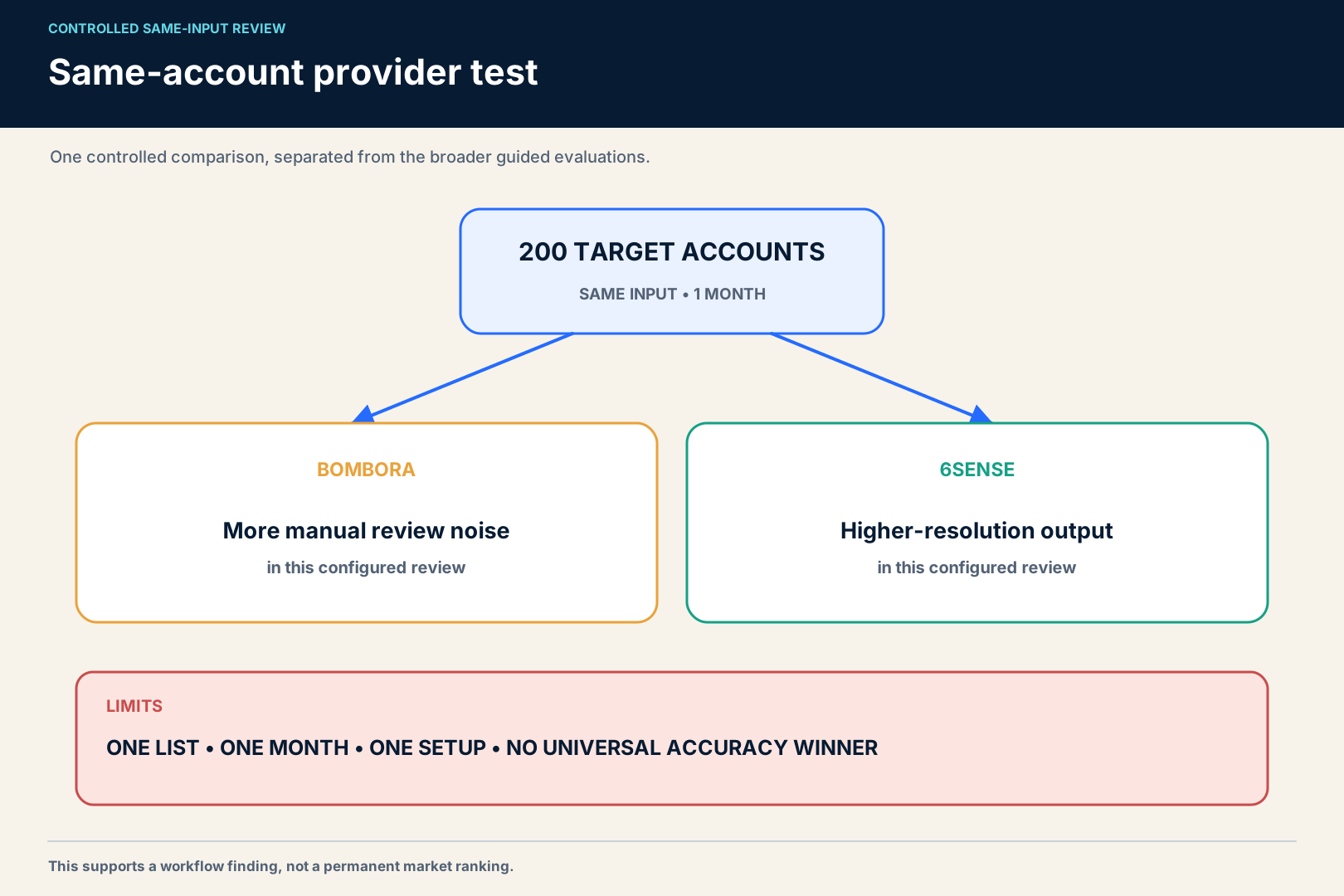
- 05The 6sense and Bombora result describes one 200-account, one-month review—not a permanent market ranking.
Choose the signal category before the provider, then compare usable resolution, freshness, rejection burden and total operating cost on the same target accounts.
01 / My B2B Intent Data Provider Shortlist by
My B2B Intent Data Provider Shortlist by Use Case
Research and account-platform sources
| Use case | Shortlist | Why it belongs | Evidence level | Main caveat |
|---|---|---|---|---|
| Topic research and a portable feed | Bombora | Account-level topic surge with a documented baseline model | Same-account test + official docs | Broad topics created review noise in our sample |
| Enterprise account prediction and orchestration | 6sense or Demandbase | Combines intent with account intelligence and activation | 6sense same-account test; both guided review + docs | Higher implementation and governance load |
| Software-review research | G2 or TrustRadius | Observes buyers researching products, categories, pricing, or comparisons | G2 operator-used; both guided review + docs | Mostly company-level; category activity can be broad |
| Technology research audiences | TechTarget Priority Engine | First-party research within TechTarget’s technology content network | Guided review + docs | Strongest fit is technology markets |
First-party, contact, and orchestration sources
| Use case | Shortlist | Why it belongs | Evidence level | Main caveat |
|---|---|---|---|---|
| HubSpot-native first-party intent | HubSpot Buyer Intent | Website behavior and company matching inside the CRM workflow | Guided review + docs | Tracking, credits, consent, and plan rules apply |
| Contact data plus Bombora topics | Cognism | Adds contact research and Bombora-based intent filters | Guided review + docs | Intent source overlaps Bombora; quote-based plan |
| Lean company-level website identification | Dealfront Web Visitors | Identifies companies visiting owned pages and exposes page activity | Guided review + docs | Company identification is not a named buyer |
| Multi-source signal orchestration | Common Room | Combines product, website, community, social, CRM, and public signals | Guided review + docs | It is an orchestration layer, not one universal data source |
02 / How I Compared the Providers
How I Compared the Providers
What “resolution” meant
What “usable signal” meant
- the account passed every hard ICP rule;
- the event or topic was relevant to the problem we sold;
- the signal was recent enough for a defined play;
- the source and event could be inspected;
- a plausible contact or account owner could be found;
- a human approved the next action.
What “manual disqualification” meant
What we held constant
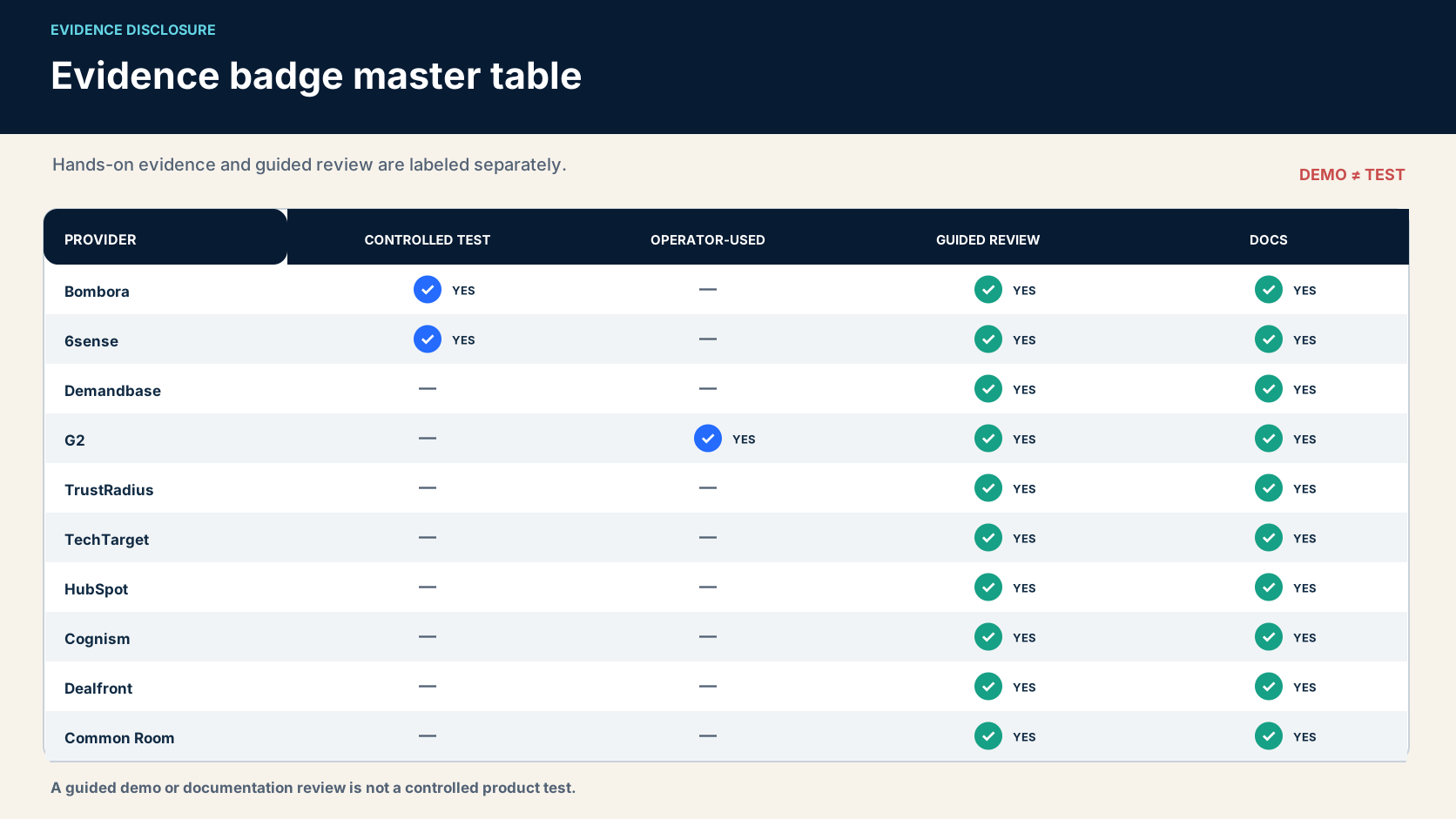
Evidence labels used in this guide
- Controlled same-account test: same 200 accounts and month for Bombora and 6sense.
- Operator-used source: used in an active workflow, but not in the same two-provider test.
- Guided review: product was demonstrated or reviewed with vendor guidance.
- Documentation review: current official pages were checked on August 26, 2026.
03 / Choose the Signal Category Before the Provider
Choose the Signal Category Before the Provider
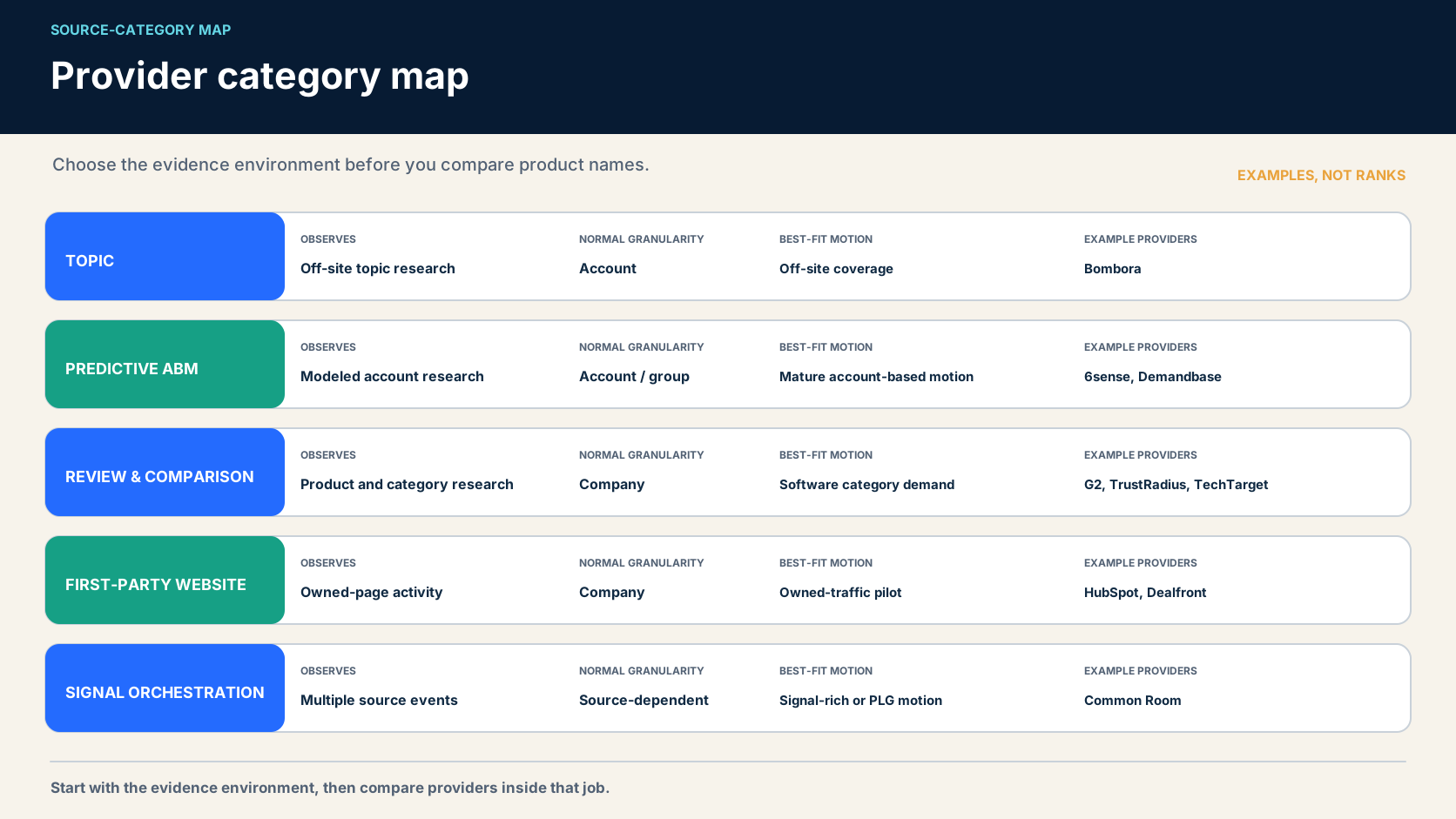
Topic-surge data
Predictive account-intelligence platforms
Review and comparison intent
Technology-publisher intent
First-party website intent
Contact-plus-intent platforms
Multi-source signal orchestration
04 / B2B Intent Data Providers Compared
B2B Intent Data Providers Compared
Topic, account-intelligence, and review sources
| Provider | Primary evidence source | Granularity | Best-fit buyer | Activation model | Evidence in this guide |
|---|---|---|---|---|---|
| Bombora | Publisher-network topic activity | Account | Teams needing off-site topic coverage | Feed, integrations, partner platforms | Controlled same-account test + docs |
| 6sense | Native and integrated intent inside account intelligence | Account and buying-group context, configuration-dependent | Enterprise ABM and revenue teams | Platform orchestration | Controlled same-account test + docs |
| Demandbase | Keyword and account-intelligence signals | Account | Mature ABM and marketing operations | Platform and data delivery | Guided review + docs |
| G2 | Product, category, pricing, alternatives, and comparison research | Company | Software vendors with relevant G2 demand | Dashboard, export, integrations | Operator-used + docs |
| TrustRadius | Product, category, pricing, and comparison research | Company | B2B technology vendors | API and subscription workflows | Guided review + docs |
Publisher, first-party, contact, and orchestration sources
| Provider | Primary evidence source | Granularity | Best-fit buyer | Activation model | Evidence in this guide |
|---|---|---|---|---|---|
| TechTarget | Technology-content research | Account and prospect context | Enterprise technology vendors | Feeds, sales product, integrations | Guided review + docs |
| HubSpot | Owned website activity plus CRM context | Company and some contact-level signals, product-dependent | HubSpot-centered teams | CRM-native workflow | Guided review + docs |
| Cognism | Bombora intent plus contact and company data | Account plus contact research | Teams wanting one prospecting surface | Search, lists, CRM workflows | Guided review + docs |
| Dealfront | Owned website visits matched to companies | Company | Lean European or B2B web-traffic teams | Visitor feed and CRM sync | Guided review + docs |
| Common Room | Multi-source digital and business signals | Account and contact, source-dependent | PLG, community, developer, and signal-rich motions | Aggregation, scoring, alerts, plays | Guided review + docs |
05 / Provider Notes and My Verdicts
Provider Notes and My Verdicts
Bombora: shortlist for topic coverage, then narrow aggressively
6sense: shortlist when account intelligence and activation matter together
Demandbase: shortlist for mature ABM teams that want flexible keyword intent
G2: shortlist for software-category and competitor research
TrustRadius: shortlist for another first-party technology-research view
TechTarget Priority Engine: shortlist for enterprise technology audiences
HubSpot Buyer Intent: shortlist for a CRM-native first-party pilot
Cognism: shortlist when contact data and Bombora intent belong in one surface
Dealfront: shortlist for lean website-intent discovery
Common Room: shortlist when multi-source signals are the real problem
06 / The Stacks I Would Build
The Stacks I Would Build
Lean website-intent stack
Review-led software stack
Enterprise ABM stack
Contact-plus-intent outbound stack
Multi-source signal stack
07 / How to Run a 30-Day Provider Bake-Off
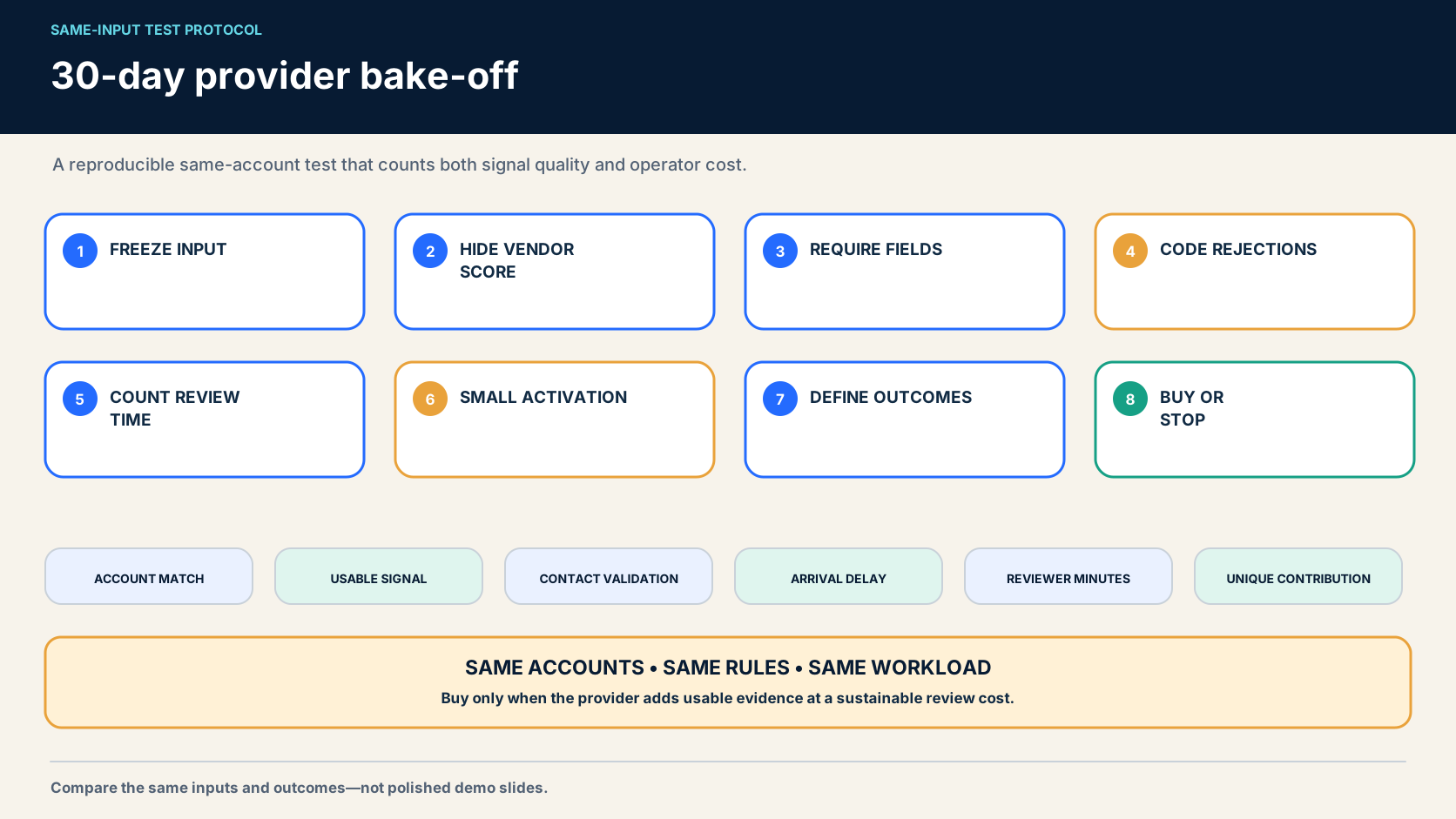
How to Run a 30-Day Provider Bake-Off
Step 1: freeze the input
Step 2: hide the provider score
Step 3: define the required fields
- source;
- event or topic;
- event time;
- company identifier;
- match confidence where available;
- recency;
- contact or buying-group context where offered;
- integration path;
- permitted-use and retention context.
Step 4: record every rejection
Step 5: measure review cost
Step 6: activate a small approved cohort
Step 7: compare outcomes by defined state
Step 8: choose or stop
08 / How I Would Analyze the Provider Bake-Off
How I Would Analyze the Provider Bake-Off
09 / Pricing and Contract Traps
Pricing and Contract Traps
- Is the intent source native, licensed, or resold?
- Are topics, keywords, accounts, seats, exports, or API calls limited?
- Are historical data and real-time alerts included?
- Which integrations require another plan or service?
- Is implementation mandatory?
- Can data be exported if the contract ends?
- How long may signals be retained?
- Are subsidiaries and global accounts resolved consistently?
- Does the contract include security, privacy, and deletion commitments?
- What operator time is required every week?
10 / My Final Decision Framework
My Final Decision Framework
- Use case: name the decision the signal should improve.
- Source: know what behavior the provider actually observes.
- Market coverage: test a named account list, not a slide.
- Resolution: separate account, contact, and buying-role evidence.
- Recency: confirm the event arrives before the play expires.
- Activation: assign an owner, action, approval, and CRM write-back.
- Acceptance: measure how many reviewed records become usable.
- Cost: include subscription, implementation, overlap, and review time.
- Governance: confirm legal basis, transparency, retention, security, and suppression.
- Outcome: trace later commercial states without inventing attribution.
11 / What the Same-Account Review Changed for Me
What the Same-Account Review Changed for Me
- Did the provider return the correct account?
- Could I inspect the event or topic?
- Did the signal arrive inside a useful window?
- Did it add evidence that another source did not already provide?
- Could the reviewer choose a relevant person?
- Did the record support a specific play?
- How many minutes did the decision take?
Why a demo is not a test
Why official documentation is necessary but incomplete
12 / Build the Evaluation Dataset Before the Sales
Build the Evaluation Dataset Before the Sales Call
Group 1: obvious target accounts
Group 2: difficult identity cases
Group 3: known non-targets
Group 4: known recent research
Use an evidence sheet for each returned record
13 / Questions That Expose Data Lineage
Questions That Expose Data Lineage
- data collected on properties it owns;
- data collected through a cooperative;
- licensed partner feeds;
- bidstream or advertising data;
- your first-party website data;
- CRM and marketing data;
- public business events;
- model-generated scores or stage predictions.
Ask what person-level means
Ask about event time and delivery time
Ask how false positives are corrected
14 / How I Would Compare Commercial Terms
How I Would Compare Commercial Terms
Data scope
Access scope
Activation scope
Service scope
Governance scope
Exit scope
contract allocation + implementation allocation + overlapping data + reviewer time + seller time + integration maintenance
15 / Four Provider Combinations I Would Avoid
Four Provider Combinations I Would Avoid
Two platforms reselling the same feed with no added value
Enterprise prediction before ICP agreement
Review intent without category demand
First-party visitor identification without meaningful traffic
16 / The Provider Proof I Would Require at
The Provider Proof I Would Require at Renewal
17 / My Shortlist Is Conditional by Design
My Shortlist Is Conditional by Design
18 / B2B Intent Data Provider FAQ
B2B Intent Data Provider FAQ
Which B2B intent data provider is best?
How much do intent data tools cost?
Can intent providers identify individual buyers?
Is Bombora data resold by other platforms?
Are free buyer intent tools useful?
How should two providers be tested fairly?
Research note
Methodology
- 01The comparison combines current first-party documentation, guided evaluations and one owner-supplied 200-account same-list review of 6sense and Bombora over one month.
- 02Unequal access levels remain visible; products reviewed through a demo or documentation are not described as hands-on tests.
- 03Provider capabilities, plans, contracts, data rights and resolution rules are mutable and must be reconfirmed for the buyer's market and account.
Source ledger
Sources & editorial notes
- 01Intent data and Company Surge
Bombora · official product page; reviewed 2026-08-26. Vendor-authored; Performance claims are attributed
- 02Intent Data
6sense · official product page; reviewed 2026-08-26. Vendor-authored; Plan-dependent
- 03B2B buyer intent data
Demandbase · official product page; reviewed 2026-08-26. Vendor-authored; Volume and accuracy claims not independently validated here
- 04Buyer Intent
G2 · official product documentation; reviewed 2026-08-26. Vendor-authored; Plan-dependent; Company activity does not identify a decision-maker
- 05TrustRadius Intent Activity Glossary
TrustRadius · official product documentation; reviewed 2026-08-26. Vendor-authored; Package-dependent
- 06Account Intent Feeds
TechTarget · official product page; reviewed 2026-08-26. Vendor-authored; Technology-market focus
- 07Use buyer intent
HubSpot · official product documentation; reviewed 2026-08-26. Vendor-authored; Feature and credit limits are plan-dependent
- 08Using Intent in your Search
Cognism · official product documentation; reviewed 2026-08-26. Vendor-authored; Package rules can change
- 09Web Visitors pricing
Dealfront · official pricing page; reviewed 2026-08-26. Time-sensitive; Company identification is not person identity or purchase proof
- 10Go-to-market signals
Common Room · official signal library; reviewed 2026-08-26. Vendor taxonomy; Intent labels are not universal standards