Operator guide and implementation framework · Implementation guides
I Ran Two AI Sales Enablement Workflows for 12 Reps—Here’s What I’d Automate First
AI may assist research organization and drafting. A human editor reviews every published page, checks material claims against the cited sources and owns the final decision. No company paid for placement in this article.
AI use policyAgent-ready brief
AI takeaways
Keep the key points here, or take a source-aware text brief into Claude, ChatGPT or another AI workspace.- 01The first workflow to automate is usually call summarization plus proposed CRM actions, not autonomous messaging.
- 02Use the sequence AI suggests, human approves, CRM records.
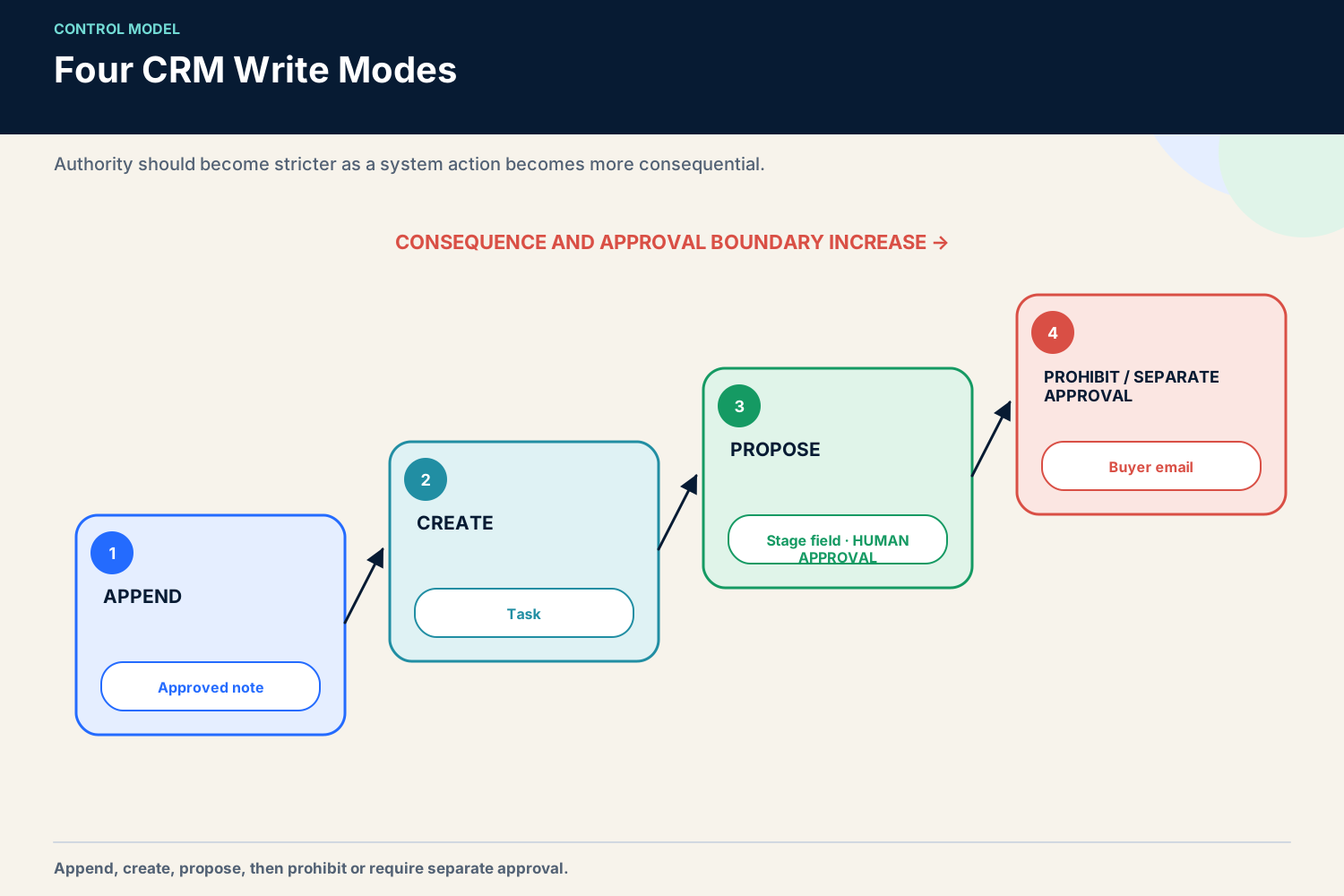
- 03Increase approval strength with consequence: append, create, propose, then prohibit or separately approve.
- 04Treat adoption, efficiency, quality and process outcomes as separate measurement layers.
- 05The 12-rep observations are directional operating evidence, not controlled product benchmarks.
Start AI sales enablement with one evidence-grounded bottleneck, keep external communication and consequential CRM changes human-approved, and measure the workflow before revenue attribution.
01 / Quick answer: what AI sales enablement should
Quick answer: what AI sales enablement should do
- the call gives the model a concrete evidence source;
- the output is easy for the seller to inspect;
- an incorrect summary can be corrected before it affects a buyer;
- approved actions can be written into the system of record;
- time saved and correction rate can be measured without pretending that AI caused revenue.
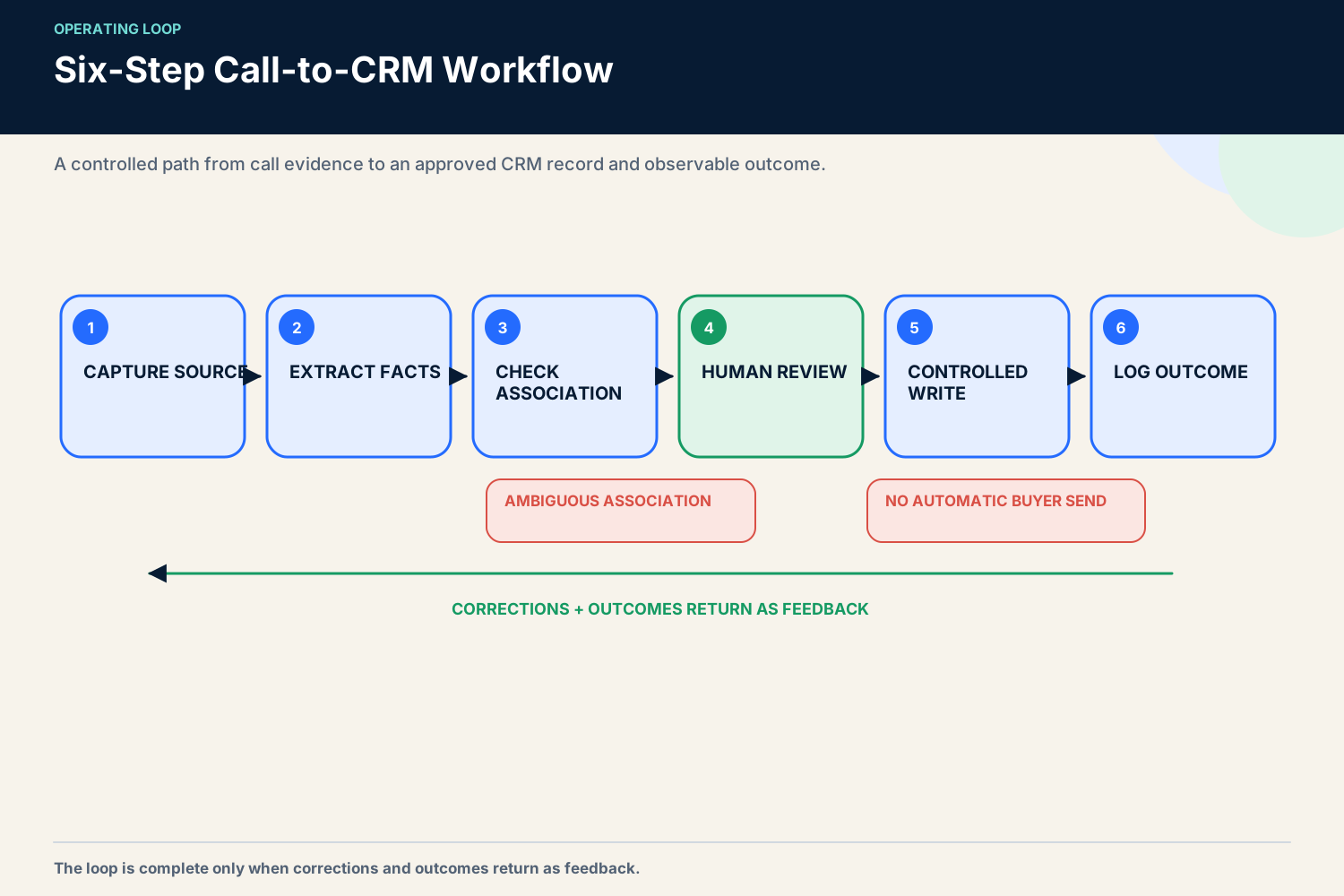
conversation evidence → structured draft → seller review → controlled CRM write-back → outcome feedback02 / What AI sales enablement is—and what it
What AI sales enablement is—and what it is not
It is not a content generator by default
It is not the same as sales automation
It is not autonomous selling
03 / Diagnose the bottleneck before choosing AI
Diagnose the bottleneck before choosing AI
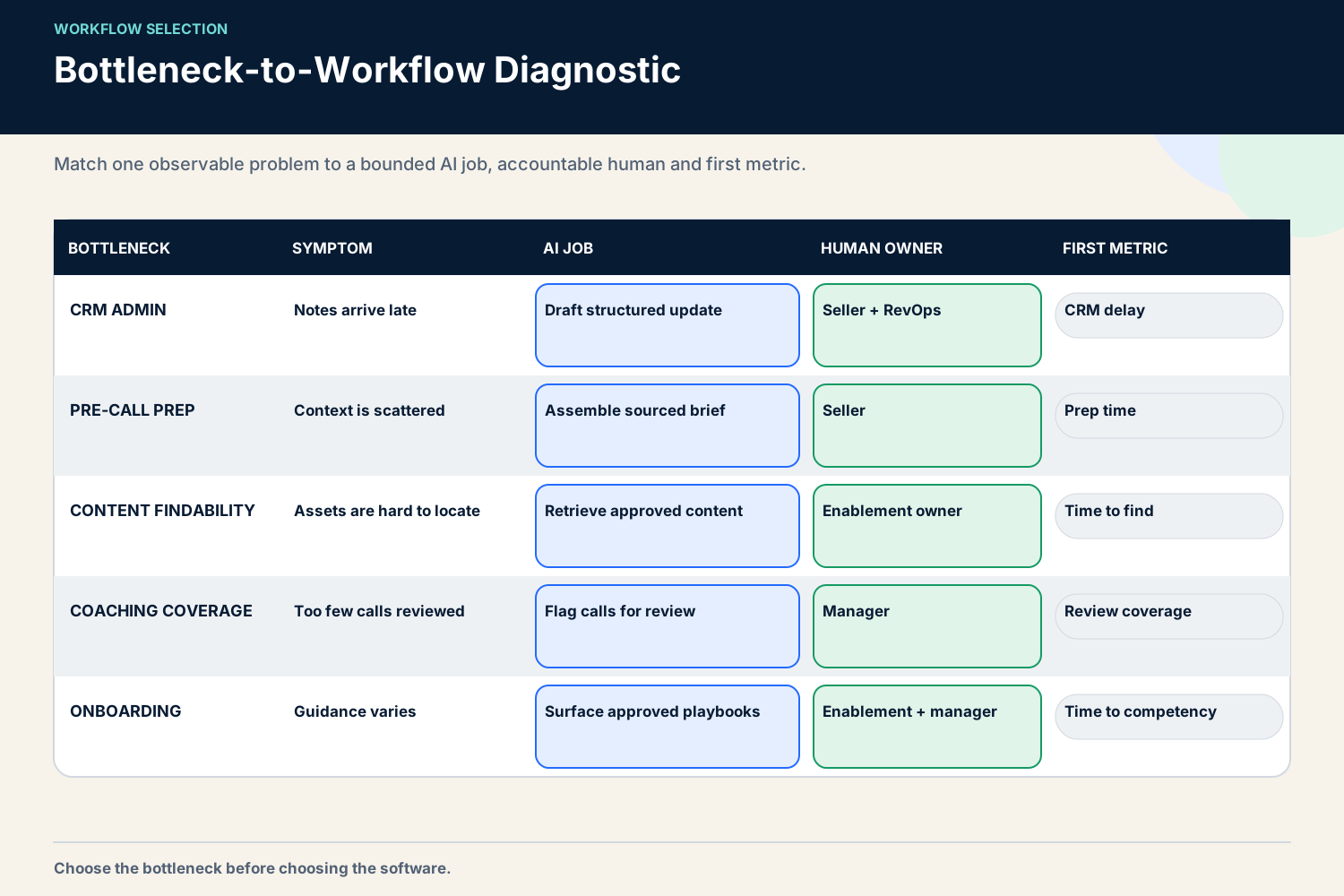
| Bottleneck | Observable symptom | Useful AI job | Human authority | First metric |
|---|---|---|---|---|
| CRM administration | Notes and next steps arrive late or remain incomplete | Summarize calls and propose structured updates | Seller approves facts and actions | Minutes per rep per day; correction rate |
| Pre-call preparation | Reps search several systems before meetings | Assemble a bounded brief from approved sources | Seller decides what matters | Prep time; source coverage |
| Content retrieval | Reps ask the same questions or use old files | Retrieve verified content in context | Content owner verifies source | Successful retrieval; stale-content reports |
People and execution bottlenecks
| Bottleneck | Observable symptom | Useful AI job | Human authority | First metric |
|---|---|---|---|---|
| Coaching coverage | Managers cannot review enough calls | Surface moments and patterns for review | Manager chooses coaching action | Reviewed moments; coaching completion |
| Onboarding | New reps cannot apply training in live work | Recommend role- and stage-specific practice | Manager certifies readiness | Time to agreed competency |
| Deal execution | Next steps and stakeholders are inconsistent | Extract commitments and missing evidence | Deal owner accepts the plan | Accepted actions; overdue commitments |
- What repetitive job consumes time or creates an accuracy problem?
- Where does the source evidence live?
- Who currently makes the decision?
- Which output is a draft, which is a fact and which is an action?
- What can the system write, and what is read-only?
- What baseline will show improvement or harm?
04 / The first workflow I would automate
The first workflow I would automate
Step 1: capture the conversation and preserve the source
- call identifier and time;
- participants;
- CRM account, contact and opportunity association;
- transcript or authorized recording location;
- model and workflow version;
- output time.
Step 2: extract facts, commitments and proposed actions separately
- buyer-stated priorities, each linked to evidence;
- questions that remain unanswered;
- commitments made by the buyer;
- commitments made by the seller;
- proposed next steps with owner and due date;
- risks or contradictions;
- fields that might need an update;
- a confidence or review flag.
Step 3: validate identity and association
Step 4: present a short approval surface
- what the system heard;
- where the evidence came from;
- what will be added or changed;
- which buyer-facing draft, if any, was prepared;
- approve, edit or reject controls.
Step 5: write approved data through a controlled path
| Mode | Example | Recommended control |
|---|---|---|
| Append | Add an approved call note | Automated after review; preserve source and author |
| Create | Create a follow-up task | Automated after owner and due-date approval |
| Propose | Recommend stage or close-date change | Seller explicitly accepts the change |
| Prohibit | Send buyer message or overwrite protected commercial terms | Keep outside the workflow or require a separate high-authority approval |
Step 6: log corrections and outcomes
- invented facts;
- missed commitments;
- wrong owner;
- wrong association;
- unhelpful wording;
- incorrect field suggestion;
- duplicate action.
Define an acceptance contract before the pilot
05 / What happened in the 12-rep operating case
What happened in the 12-rep operating case
06 / AI sales enablement use cases, prioritized
AI sales enablement use cases, prioritized
Start here: low-exposure, reversible assistance
- call summary drafts linked to the source;
- action-item extraction;
- pre-call briefs assembled from approved CRM and knowledge sources;
- internal search across verified playbooks;
- suggested coaching moments for manager review;
- proposed CRM notes and tasks;
- stale-content alerts for content owners.
Add after the basics: medium-dependency workflows
- next-best-action recommendations;
- opportunity-risk summaries;
- role-specific onboarding paths;
- content suggestions based on deal context;
- proposed stage, amount or close-date updates;
- automated quality sampling across calls.
Treat as high-risk: externally exposed or consequential action
- automatic buyer-facing messages;
- autonomous discount or commercial-term decisions;
- silent opportunity-stage or forecast changes;
- automatic coaching conclusions used for performance management;
- broad record overwrite;
- actions based on sensitive or weakly governed data.
07 / The minimum viable AI enablement stack
The minimum viable AI enablement stack
1. System of record
2. Evidence layer
3. Workflow layer
4. Measurement and governance
08 / Data, privacy and quality guardrails
Data, privacy and quality guardrails
1. Name the owner
2. Minimize access
3. Preserve provenance
4. Separate facts from inference
5. Use structured output
6. Require human approval for external communication
7. Bound CRM writes
8. Log versions and decisions
9. Define stop conditions
10. Test rollback
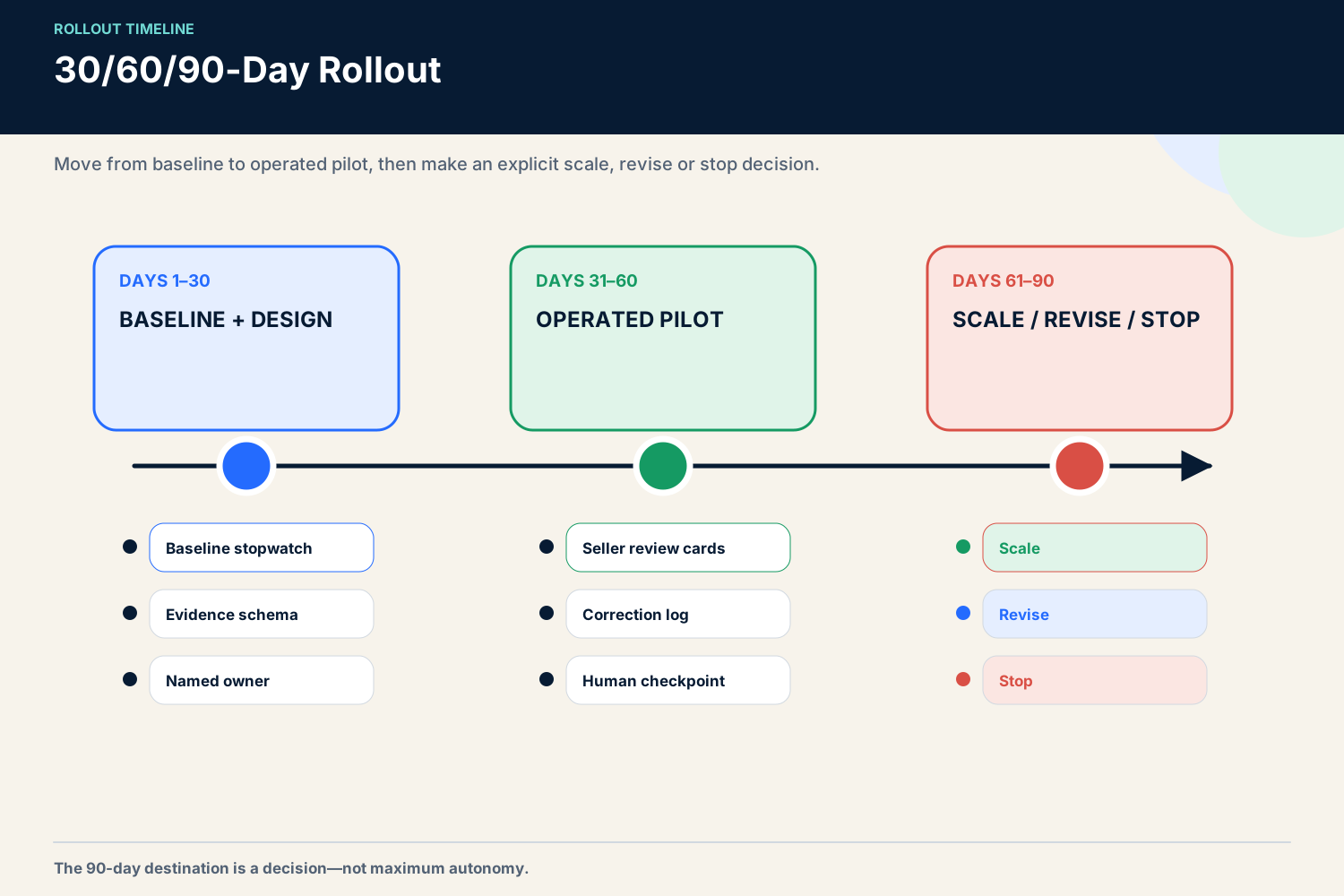
09 / A 30/60/90-day rollout
A 30/60/90-day rollout
Days 1–30: baseline and design
- time spent after each call;
- percentage of calls with usable notes;
- delay before notes and actions reach the CRM;
- association errors;
- missing owners or due dates;
- seller corrections.
Days 31–60: operated pilot
- Can a seller verify the output in under a minute?
- Which fields create the most edits?
- Does the system quote or locate the evidence?
- Are actions assigned to the right owner?
- Do missing inputs cause a safe stop?
- Are buyer-facing drafts clearly separated from CRM updates?
Days 61–90: scale, revise or stop
10 / Who owns the operating system after launch
Who owns the operating system after launch
- a weekly pilot review for corrections, incidents and adoption;
- a monthly workflow review for source, schema and permission changes;
- a quarterly value review to decide whether to expand, narrow, replace or retire the workflow.
11 / How to measure AI sales enablement ROI
How to measure AI sales enablement ROI
Adoption
Efficiency
Quality and control
Business process outcomes
net operating value = verified time value + avoided rework - software - implementation - maintenance - review - incident cost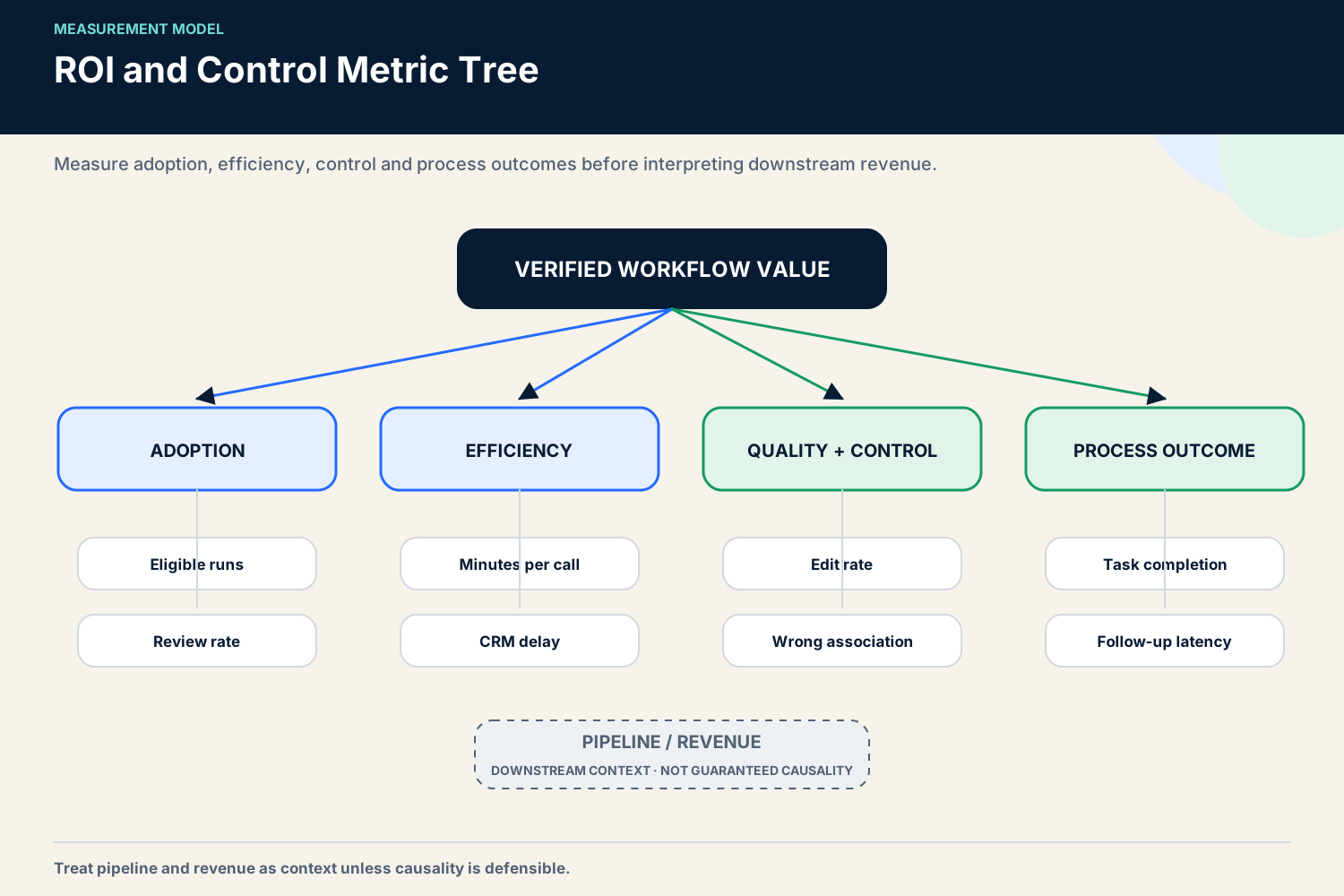
12 / Common failure modes
Common failure modes
Automating a vague process
Measuring output instead of impact
Hiding the source
Allowing premature external action
Overwriting canonical fields
Buying a platform before defining the job
Underestimating maintenance
Treating one team’s result as a benchmark
13 / When to buy software—and when to improve
When to buy software—and when to improve the process first
- one bottleneck is clearly defined;
- the CRM and evidence source already exist;
- the output schema is narrow;
- a technical owner can maintain integrations and logs;
- permissions and review are manageable;
- the team can tolerate a controlled pilot.
- many teams need governed content, learning and coaching together;
- role, region and permission complexity is high;
- CRM and productivity delivery must be supported at scale;
- enablement has an owner and admin capacity;
- reporting across programs is a real requirement;
- procurement, security and change management justify the breadth.
14 / FAQ
FAQ
What is AI sales enablement?
How does AI sales enablement work?
Which sales enablement workflow should I automate first?
How do I measure the ROI of AI sales enablement?
What data does AI sales enablement require?
Does AI replace sales enablement teams or managers?
15 / My final recommendation
My final recommendation
evidence → suggestion → approval → record → outcome → correctionResearch note
Methodology
- 01The guide is informed by two owner-operated workflows used with 12 AEs and SDRs: pre-call briefing and call-to-CRM processing.
- 02The 60-to-12-minute administration observation lacks a preserved formal observation window and is presented as directional, not causal evidence.
- 03Official product and governance sources were reviewed on 26 August 2026; packaging, APIs and model behavior require rechecking before rollout.
Source ledger
Sources & editorial notes
- 01Calls
Gong API Documentation · official product documentation; reviewed 2026-08-26. Plan and permission boundaries may apply; Vendor documentation is not accuracy evidence
- 02CRM integrations
Gong Help · official product documentation; reviewed 2026-08-26. Feature availability depends on plan and configuration; Gong connects to one CRM at a time
- 03AI Risk Management Framework
NIST · authoritative public-sector framework; reviewed 2026-08-26. General framework, not a sales-workflow certification; AI RMF 1.0 is under revision
- 04Running Codex safely at OpenAI
OpenAI · official product safety and operations article; reviewed 2026-08-26. Supports internal-build governance framing only; Does not prove sales workflow performance or lower TCO
- 05Introducing the Codex app
OpenAI · official product article; reviewed 2026-08-26. Product capabilities evolve; No zero-cost or SaaS-replacement inference
- 062026 Agentic Coding Trends Report
Anthropic · official vendor report; reviewed 2026-08-26. Vendor-authored trend report; Does not prove custom tooling is free, universally preferable or a replacement for SaaS