AI meeting assistant comparison · Meeting assistants
Best AI Meeting Assistants for Sales: Compare Notes, CRM Write-Back and Follow-Up Control
AI may assist research organization and drafting. A human editor reviews every published page, checks material claims against the cited sources and owns the final decision. No company paid for placement in this article.
AI use policyAgent-ready brief
AI takeaways
Keep the key points here, or take a source-aware text brief into Claude, ChatGPT or another AI workspace.- 01Choose the capture mode before evaluating summary quality.
- 02Inspect commercial names, numbers, speakers, intent and evidence—not a single transcript percentage.
- 03Treat follow-up, pricing, promises and sensitive CRM fields as proposals that require human authority.
- 04Run the same meetings and field-level CRM contract through every finalist.
- 05Pause automation when consent, identity, evidence, ownership or correction thresholds fail.
A sales meeting assistant should be judged by the quality of the revenue record and controlled follow-through it creates, not by the polish of its summary.
01 / Quick shortlist: best by sales workflow
Quick shortlist: best by sales workflow
| Team or workflow | Start with | Why | Main verification |
|---|---|---|---|
| Founder or individual seller | Fathom or a similarly lightweight assistant | Fast capture, accessible summaries, low operating burden | Does it preserve the offer, objection and next step? |
| Small sales team that needs configurable CRM follow-through | Fireflies | Reviewable CRM Autofill and workflow-oriented integrations | Which fields write automatically, and what can be reviewed first? |
| Sales team that values the cleanest day-to-day review experience | Fathom | In my use, the interface made reviewing calls and actions easier | Validate your language, meeting platform and CRM path |
| Managed enterprise pipeline | Gong | Conversation evidence connected to broader revenue workflows | Cost, adoption, governance and manager operating capacity |
| ZoomInfo-centered enterprise stack | Chorus | Adjacent conversation-intelligence option | Confirm current product scope and stack dependency directly |
| In-person or restricted-bot meetings | A product with supported mobile or bot-free capture | A calendar bot may be unacceptable or impossible | Consent, recording quality and speaker attribution |
02 / What makes an AI meeting assistant usef…
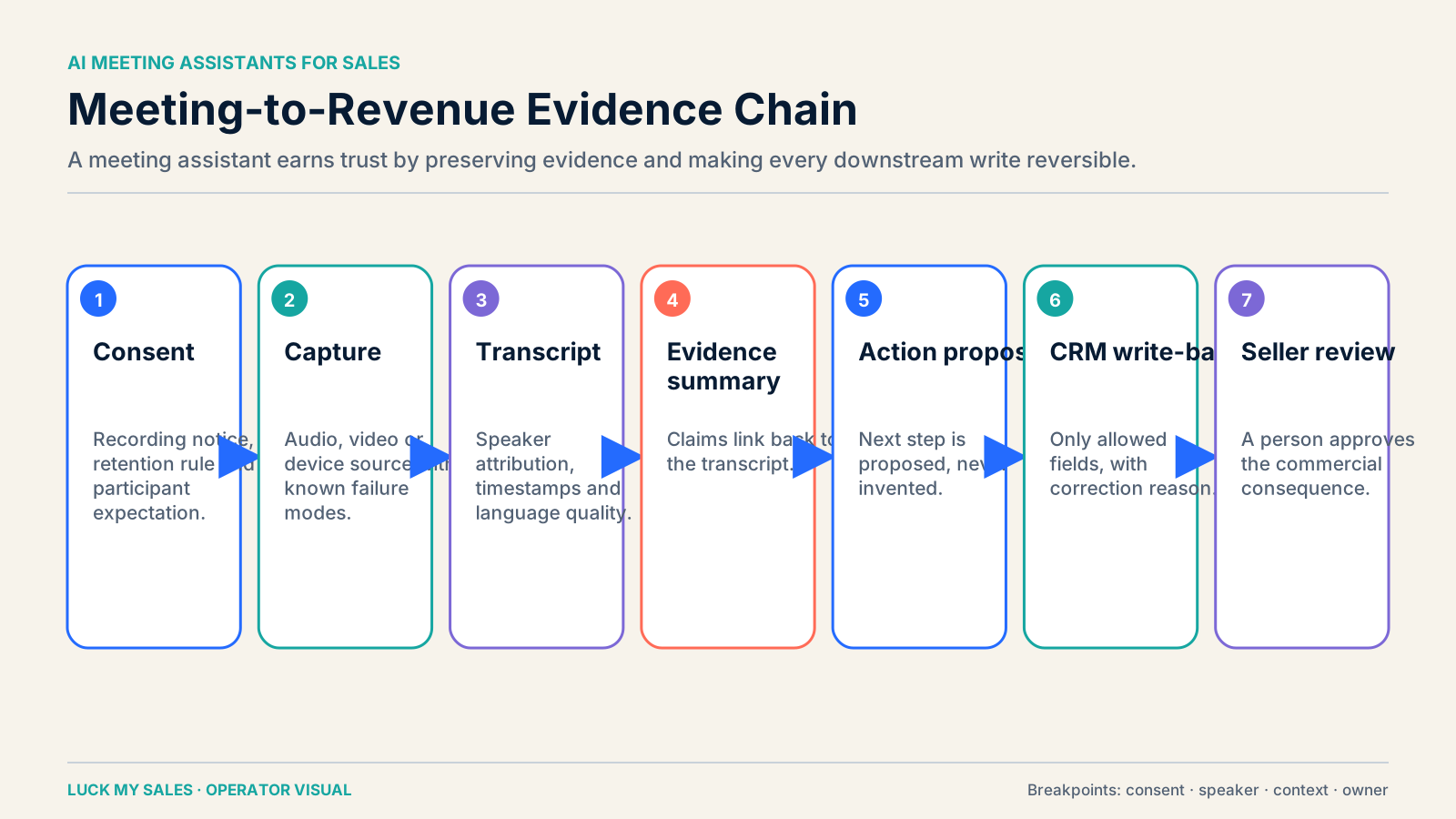
What makes an AI meeting assistant useful for sales?
03 / Meeting assistant, AI note taker or con…
Meeting assistant, AI note taker or conversation intelligence?
| Category | Primary job | Typical buyer | Common failure |
|---|---|---|---|
| AI note taker | Record, transcribe and summarize meetings | Individual seller or small team | Attractive recap with weak commercial context |
| AI meeting assistant | Capture plus tasks, follow-up and CRM workflow | Sales team and RevOps | Too much write-back authority too early |
| Conversation intelligence | Analyze calls across pipeline, coaching and management workflows | Sales leadership and enablement | Expensive system with low manager and seller adoption |
04 / Choose the capture mode before the model
Choose the capture mode before the model
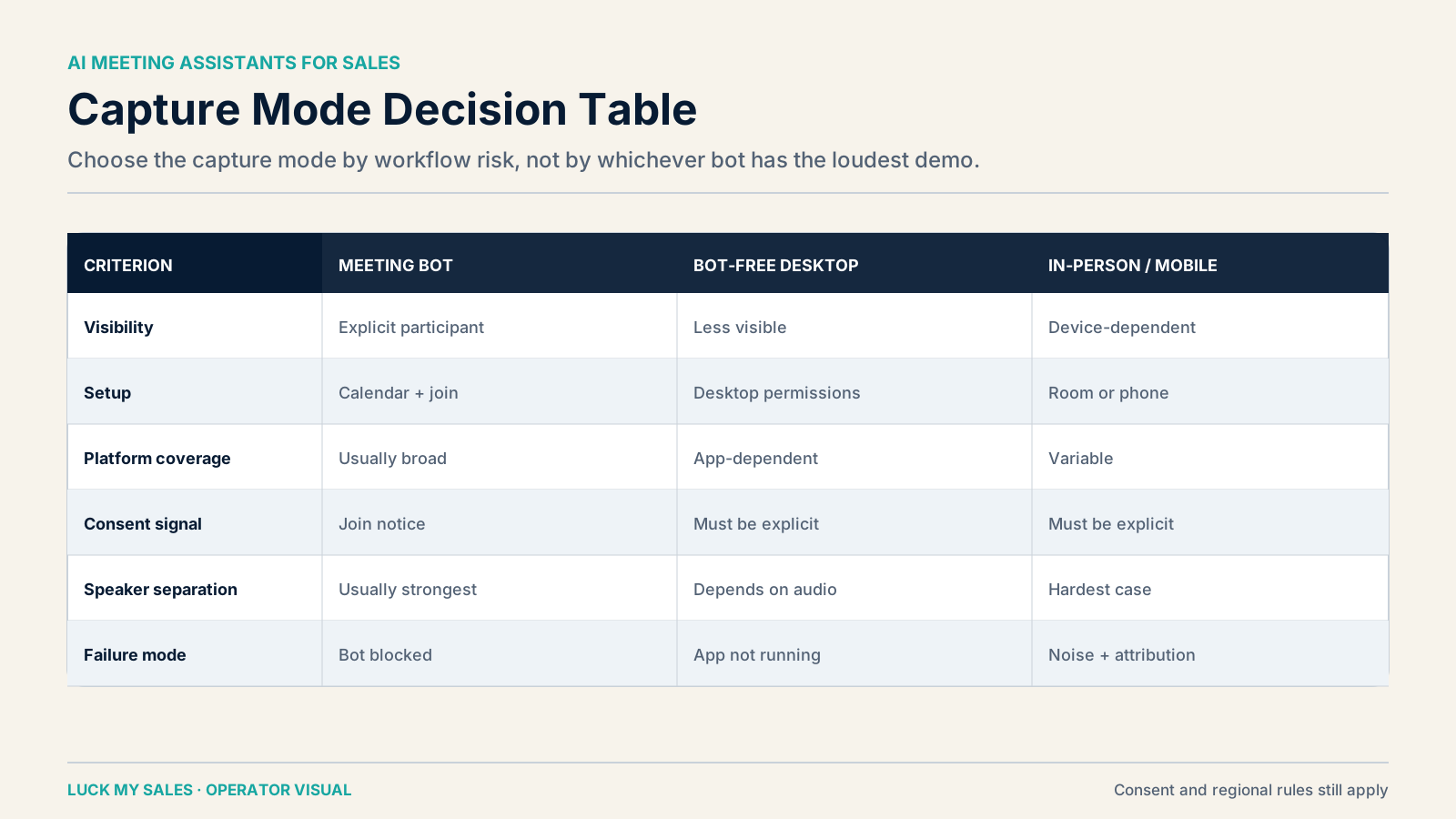
Calendar bot
Bot-free desktop or browser capture
Mobile and in-person capture
Platform-native recording
05 / Transcript quality is necessary, but no…
Transcript quality is necessary, but not enough
- commercial entities: company, product, competitor and person names;
- numbers: prices, quantities, dates, percentages and contract terms;
- speaker attribution: who made the promise or raised the objection;
- negation and qualification: “not approved,” “might,” “after security review”;
- action language: owner, deadline and dependency.
06 / The commercial-context test
The commercial-context test
- problem in the buyer's words;
- current process and consequence;
- buying role and other stakeholders;
- timing and trigger;
- constraints, risks and objections;
- commercial promise made by the seller;
- explicit next step, owner and date;
- unresolved questions.
- Observed: a short quote, timestamp or transcript reference.
- Inferred: the system's classification, such as intent or objection.
- Approved: the seller's accepted next step or CRM change.
07 / Actions and follow-up: proposal is not …
Actions and follow-up: proposal is not permission
| Action | Safe default |
|---|---|
| Save transcript and summary | Automatic, with source link and retention rule |
| Extract possible next step | Automatic proposal |
| Create task | Automatic only after owner/date validation; otherwise review |
| Draft follow-up | Automatic draft |
| Send follow-up | Seller approval |
| Fill an empty contact field | Automatic after validation |
| Overwrite trusted contact data | Never silently |
| Change opportunity stage | Seller approval |
| Change forecast | Seller approval |
| Change account owner | Deterministic territory/segment rule and accountable human |
| Create price or commercial promise | Human-provided approved terms only |
08 / CRM write-back needs a field-level cont…
CRM write-back needs a field-level contract
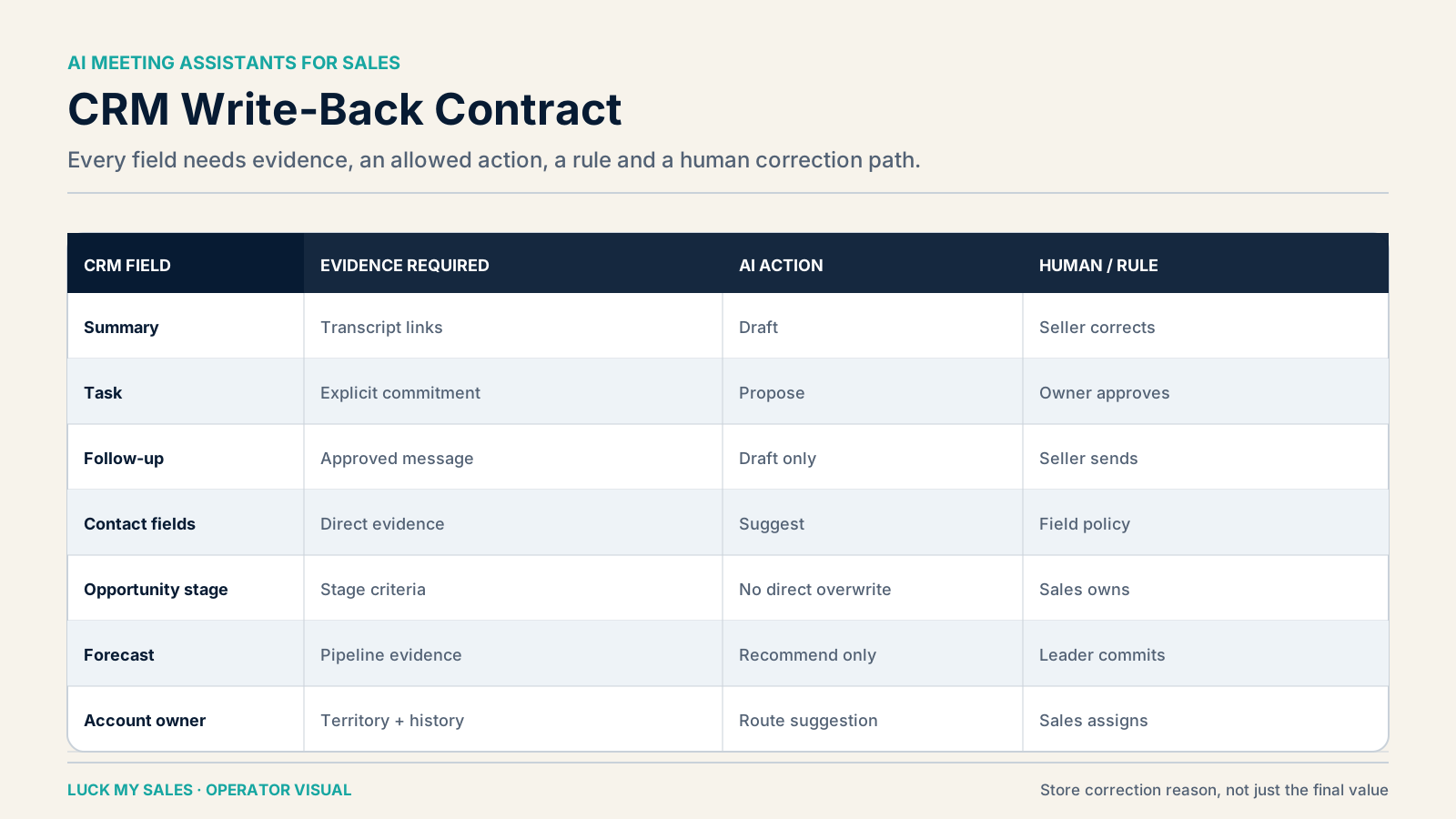
- source evidence;
- transformation or classification;
- confidence requirement;
- create, fill-empty or overwrite permission;
- human approver;
- rollback path;
- correction reason.
| CRM object or field | Default action | Why |
|---|---|---|
| Meeting activity | Create automatically | It is an auditable event |
| Transcript/recording link | Attach automatically | Preserves source evidence |
| Summary | Write automatically with AI label | Useful, reversible, traceable |
| Next-step task | Create after owner/date check | Prevents orphan tasks |
| Contact phone/title | Fill only if empty and evidence is strong | Avoids silent overwrites |
| Lifecycle stage | Propose; seller or defined owner approves | Changes process treatment |
| Opportunity stage | Propose; seller approves | Consequential pipeline decision |
| Forecast category | Never auto-finalize | Management commitment |
| Account owner | Apply deterministic rule; sales accountable | Prevents ownership drift |
| Follow-up email | Save as draft | Commercial communication requires context |
09 / Consent, retention and access are workf…
Consent, retention and access are workflow requirements
- Who is informed before recording starts?
- Can the assistant be removed or recording stopped immediately?
- Which meetings must never be captured?
- Where are audio, video, transcript and derived summaries stored?
- How long is each artifact retained?
- Can a participant request deletion?
- Which employees can search transcripts?
- Does model training use customer content, and under which setting?
- What happens when a seller leaves?
- Are CRM copies deleted when the source is deleted?
10 / Product cards: evidence state before ve…
Product cards: evidence state before verdict
Fathom — best starting point for a seller who values review UX
Fireflies — strong when post-call workflow and CRM controls matter
Gong — conversation intelligence for a managed revenue system
Chorus — adjacent enterprise option
Generic transcription — the control group
11 / Implementation: design the post-call wo…
Implementation: design the post-call workflow before rollout
- seller confirms recording permission;
- assistant captures and transcribes;
- assistant creates a source-linked summary;
- system extracts problem, stakeholders, timing, objections and proposed next step;
- deterministic rules identify the CRM account and owner;
- seller reviews consequential fields and follow-up;
- approved task and note write to CRM;
- unresolved or low-confidence items enter an exception queue.
Level 1: capture only
Level 2: proposed work
Level 3: controlled automation
12 / Measure whether the assistant improves …
Measure whether the assistant improves the sales record
- capture success: eligible meetings recorded correctly;
- evidence completeness: required commercial fields supported by the call;
- consequential correction rate: stage, intent, next step, owner or commercial fact corrected by a person;
- task acceptance: proposed tasks accepted with owner and date;
- follow-up acceptance: drafts sent after seller review versus rewritten or rejected;
- CRM latency: time from meeting end to an approved usable record;
- review time: seller and manager minutes per meeting;
- next-step completion: accepted tasks completed by due date;
- progression quality: meetings that move with valid evidence, not merely stage changes;
- adoption: sellers and managers who use the record in real work.
13 / Best AI meeting assistant for remote an…
Best AI meeting assistant for remote and distributed teams
- reliable capture across external Google Meet, Zoom and Teams calls;
- language quality on the regions you actually sell into;
- clear participant, workspace and customer access boundaries;
- tasks with explicit owner, date and timezone;
- notification rules that do not create duplicate work;
- CRM sync that survives different teams and pipelines;
- retention rules for employees, contractors and departed users.
14 / A reproducible same-meeting pilot
A reproducible same-meeting pilot
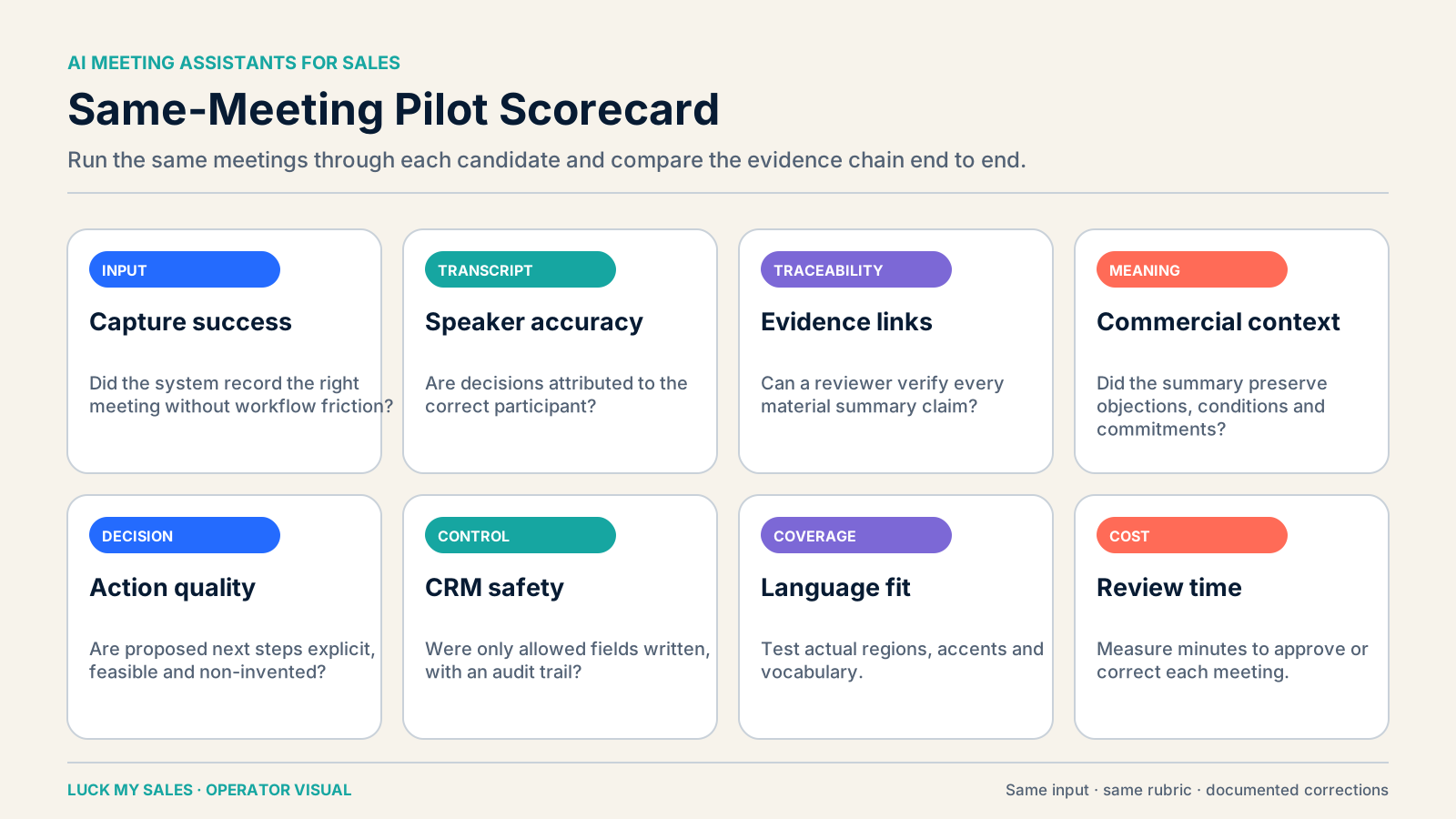
- one clean English discovery call;
- one call with your regional accent or language;
- one call with overlapping speakers;
- one commercial call with price, timing and competitors;
- one weak-fit call that should not become an opportunity;
- one call where the next step is conditional.
| Dimension | Weight |
|---|---|
| Commercial facts and numbers | 20 |
| Speaker attribution | 10 |
| Objection and intent with evidence | 15 |
| Next step, owner and dependency | 15 |
| CRM write-back control | 15 |
| Language and regional performance | 10 |
| Review speed and usability | 10 |
| Total operating cost | 5 |
15 / When to pause automation
When to pause automation
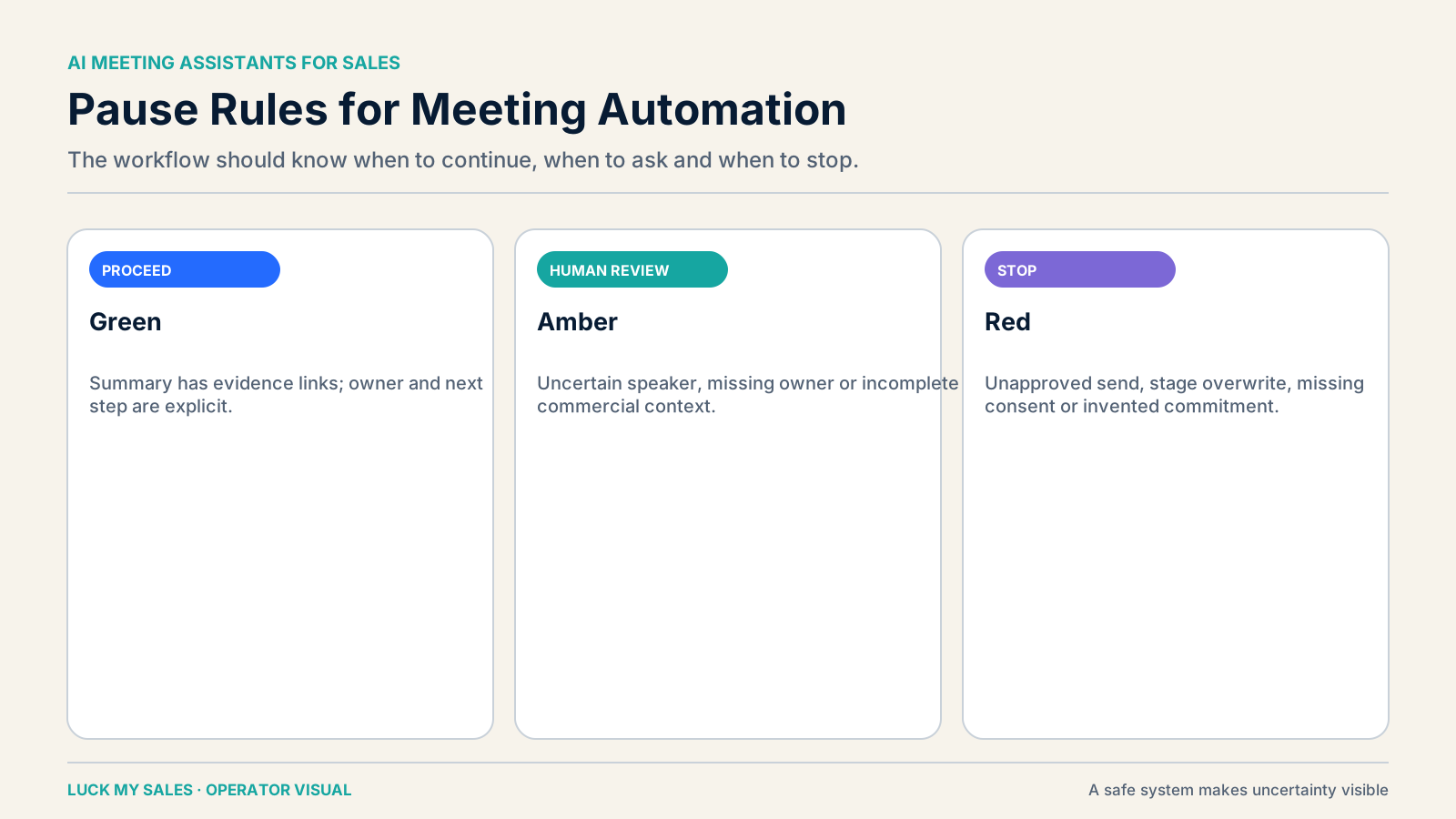
- the same transcript or classification error repeats;
- seller corrections rise after a new language, team or meeting type;
- tasks are created without clear owners;
- buyers receive follow-ups a seller did not approve;
- CRM fields conflict with seller evidence;
- recordings appear where consent should have blocked capture;
- review time is not falling;
- managers and sellers stop using the record.
16 / Twelve questions before you buy
Twelve questions before you buy
17 / A two-week operator test for the whole …
A two-week operator test for the whole sales team
Day 0: freeze the reference process
Days 1–2: test capture before intelligence
- the right meeting was captured;
- excluded meetings stayed excluded;
- every participant received the required notice;
- speakers were separated correctly;
- recording and transcript links opened for the right users;
- deleted or restricted records followed policy.
Days 3–4: compare facts with the reference
Days 5–6: test the action layer
- the buyer suggests two possible dates;
- the owner mentioned on the call is unavailable;
- the meeting belongs to an existing opportunity;
- the buyer asks for a discount;
- legal review must happen before a pilot;
- no explicit next step was agreed.
Days 7–8: connect CRM in a safe mode
Days 9–10: measure human review
- cosmetic wording;
- missing context;
- wrong commercial fact;
- wrong next step;
- wrong CRM object or field;
- wrong owner or pipeline treatment.
Days 11–12: test exceptions and recovery
Days 13–14: decide by operating fit
18 / The manager's weekly review loop
The manager's weekly review loop
- Which meeting platforms and capture modes work in our environment?
- Which languages and accents have we tested ourselves?
- Can every consequential summary claim link to evidence?
- Does the tool distinguish observation from inference?
- Which CRM fields can it create, fill or overwrite?
- Can follow-up remain a seller-approved draft?
- How are task owner and date validated?
- What is the consent and recording notice process?
- What are retention, deletion and access controls?
- What is included in the plan, and what consumes AI credits?
- How much seller and manager review remains?
- Which metric or error triggers a pause?
19 / FAQ
FAQ
What is the best AI meeting assistant for sales?
What is the best AI meeting assistant for Google Meet?
Can an AI meeting assistant send follow-up emails automatically?
Should meeting summaries write to CRM automatically?
Is an AI meeting assistant the same as conversation intelligence?
How should a sales team evaluate transcript accuracy?
What should never be delegated to a meeting assistant?
20 / Final recommendation
Final recommendation
Research note
Methodology
- 01Fathom and Fireflies were used in real sales work; Gong was used in a broader enterprise conversation-intelligence context.
- 02Other shortlist entries are bounded to current official documentation, and no formal same-meeting benchmark across every product is claimed.
- 03The comparison is organized by workflow job, capture constraint, evidence quality, CRM authority and total operating burden—not by paid placement.
Source ledger
Sources & editorial notes
- 01Fathom overview
Fathom · Official product or documentation source used for bounded capability or pricing claims; current packaging, prices and features may change.
- 02Fireflies Business tier
Fireflies.ai · Official product or documentation source used for bounded capability or pricing claims; current packaging, prices and features may change.
- 03Fireflies HubSpot integration
Fireflies.ai · Official product or documentation source used for bounded capability or pricing claims; current packaging, prices and features may change.
- 04Fireflies for sales
Fireflies.ai · Official product or documentation source used for bounded capability or pricing claims; current packaging, prices and features may change.
- 05Fireflies CRM Deal Intelligence
Fireflies.ai · Official product or documentation source used for bounded capability or pricing claims; current packaging, prices and features may change.
- 06Gong implementation guide
Gong · Official product or documentation source used for bounded capability or pricing claims; current packaging, prices and features may change.