Weekly industry intelligence · No noiseSubscribe to the Luck My Sales newsletterFree briefing

Independent operator-led media on AI in B2B sales

Menu

Conversation intelligence pillar · Conversation intelligence

AI Conversation Intelligence for Sales: What It Analyzes and What Sellers Still Need to Verify

See how AI conversation intelligence turns calls into reviewable evidence, recommendations and CRM actions without hiding the human sales decision.
Editorial disclosure

AI may assist research organization and drafting. A human editor reviews every published page, checks material claims against the cited sources and owns the final decision. No company paid for placement in this article.

AI use policy

Agent-ready brief

AI takeaways

Keep the key points here, or take a source-aware text brief into Claude, ChatGPT or another AI workspace.
  1. 01A fluent summary is not a decision; the source evidence and uncertainty must remain visible.
  2. 02Transcript, speaker, language, brand-name and number errors can propagate into scores and CRM actions.
  3. 03AI may prepare recommendations and approved write-back, while pricing, promises and accountable commercial decisions remain human.
  4. 04A Conversation Evidence Contract makes source, confidence, owner and correction fields explicit.
  5. 05Teams should redesign the surrounding data path instead of attaching one AI tool to incomplete infrastructure.
Includes summary, takeaways, sources and a use note.
AI conversation intelligence for sales records or imports a customer conversation, turns it into a transcript, summarizes what happened, and recommends what a seller should do next. A capable system can also score the call, surface objections, update approved CRM fields, and create a task or calendar action.
That description sounds more autonomous than the workflow should be.
The useful unit is not an AI summary. It is a reviewable chain of evidence: consent, recording, transcript, cited call moments, recommendation, rule check, proposed CRM action, and a named human owner. If any link is missing, the system may produce fluent output that is difficult to trust.
I have worked with conversation records that moved from a website or call workflow into HubSpot. The best results did not come from asking one AI tool to “understand the customer.” They came from redesigning the surrounding data flow so the model could see the right evidence and humans could inspect the result.
My operating rule is simple: AI may prepare and organize the decision. It should not hide who made the commercial decision.

Conversation intelligence is trustworthy only when consent, evidence, recommendations, actions and human ownership remain visible in one reviewable chain.

01 / What AI conversation intelligence i…

What AI conversation intelligence is — and is not

Conversation intelligence software captures and analyzes calls, meetings, emails, or other seller–buyer interactions. Depending on the product and setup, it may provide:
  • recordings and searchable transcripts;
  • speaker separation and topic tracking;
  • summaries, questions, objections, and action items;
  • call or rubric scores;
  • deal and pipeline signals;
  • coaching observations;
  • CRM notes, tasks, or field updates;
  • follow-up drafts and recommended next steps.
Gong describes conversation intelligence as capturing, transcribing, and analyzing customer interactions. HubSpot connects voice data to its Smart CRM. Salesloft Conversations can link summaries, action items, and key moments to deals. These are useful capabilities, but capability does not equal decision authority.
A transcript does not prove that a prospect is qualified. A detected pricing objection does not prove that price is the real blocker. A recommended next step does not authorize a discount, promise, forecast commitment, or opportunity-stage change.
The system is an evidence-processing layer. The seller and sales organization still own commercial interpretation.
That distinction matters because buyers often hear “conversation intelligence” and imagine a manager that never misses anything. In practice, the technology can inspect far more interactions than a human manager. It can still miss context in a perfectly grammatical sentence.

02 / The evidence pipeline behind a trus…

The evidence pipeline behind a trustworthy workflow
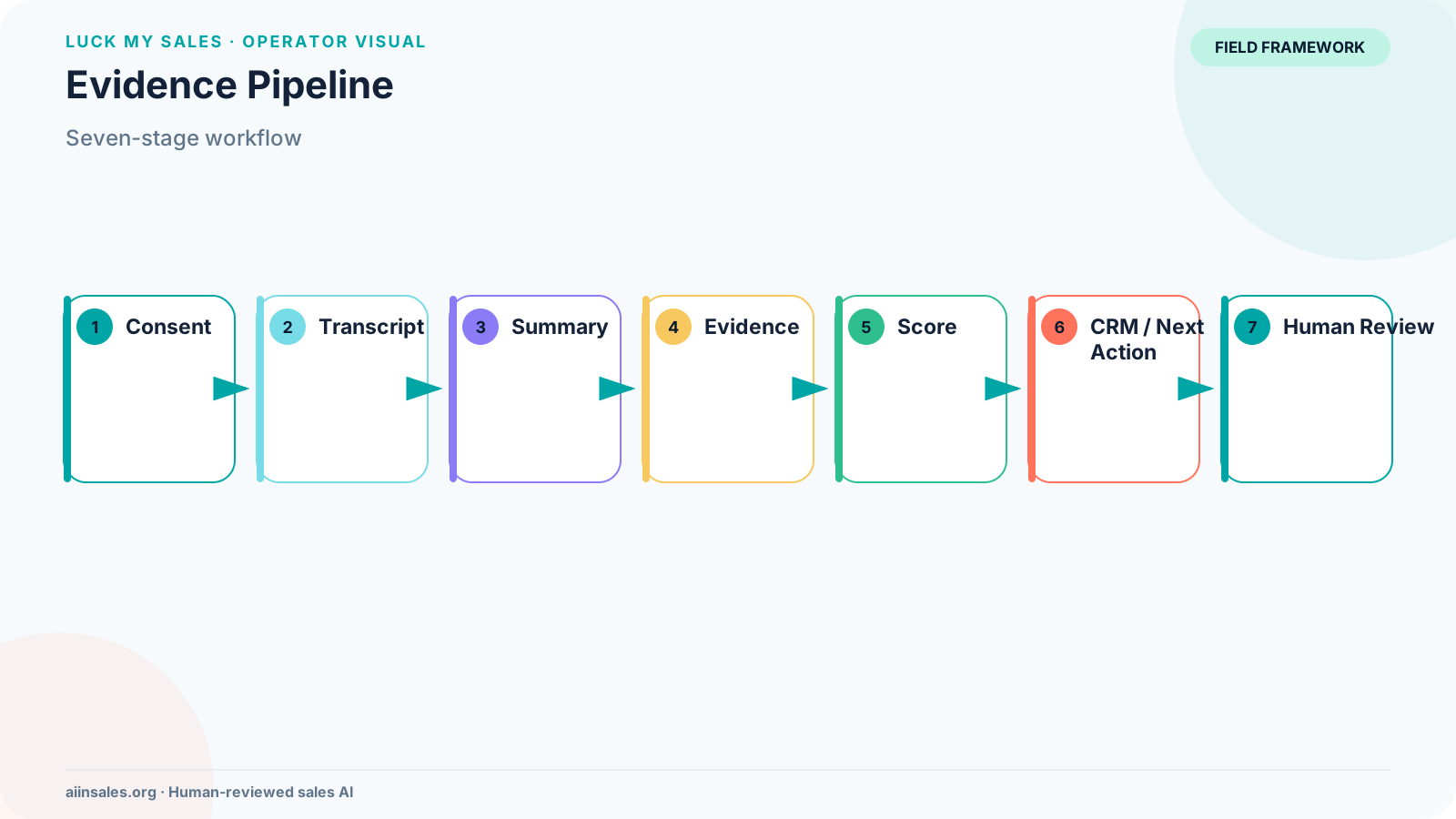
Seven-step conversation intelligence workflow from consent and transcript to CRM action and human review.
A summary is only one stage in the evidence-to-action workflow.
  1. Recording and consent. The organization decides whether the interaction can be recorded, how notice or consent is collected, and how long the data is retained.
  2. Transcript. The system converts speech into text and attributes words to speakers.
  3. Summary. AI compresses the conversation into a readable account.
  4. Evidence. Each important claim points back to a timestamp, quotation-sized excerpt, message, CRM record, or other source.
  5. Score or recommendation. A rubric or model converts the evidence into a proposed assessment.
  6. CRM or next action. Approved rules turn the recommendation into a task, field proposal, owner notification, or calendar step.
  7. Human review. A seller or manager accepts, corrects, rejects, or escalates the proposed action.
Most weak implementations jump from step three to step six. The summary sounds plausible, so the team lets it write to the CRM. That is where errors become operational rather than editorial.
The evidence stage is the control point. If the system says the buyer has budget, the reviewer should be able to see what the buyer actually said. If it proposes a follow-up next Tuesday, the reviewer should see whether Tuesday was agreed or invented. If it flags a competitor, the reviewer should know whether the buyer uses that competitor, merely evaluated it, or mentioned it as an example.

03 / The Conversation Evidence Contract

The Conversation Evidence Contract
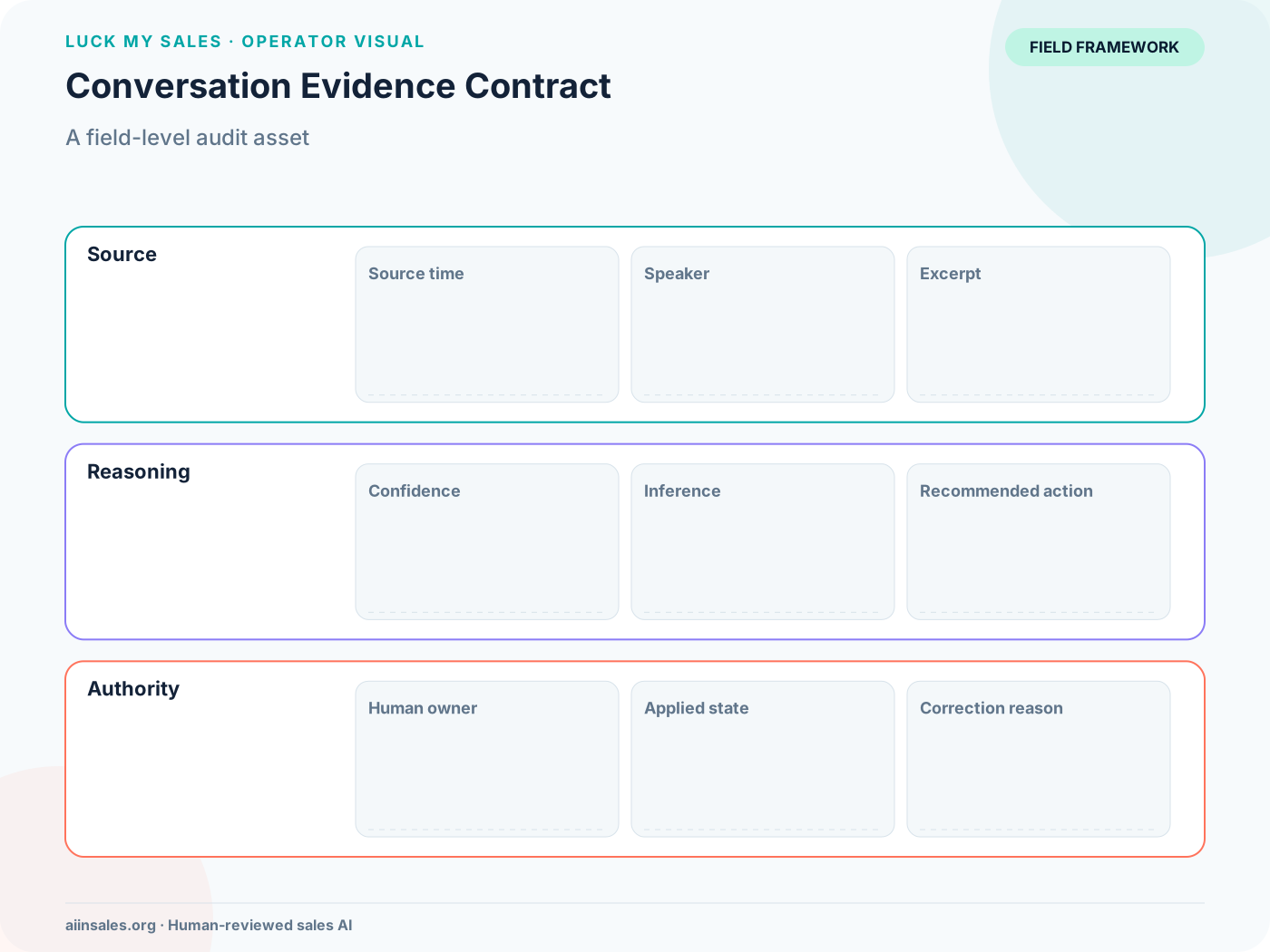
Conversation Evidence Contract showing source, confidence, recommendation, human owner and correction fields.
The contract keeps evidence, inference and applied action auditable.
OutputMinimum evidence requiredAI may doHuman must verify
Transcriptrecording, channel, speakers, languagetranscribe and separate speakersmaterial names, numbers, and speaker errors
Summarytranscript plus linked momentsdraft a concise accountomitted commercial context and contradictions
Qualificationapproved criteria plus evidence for each criterionpropose fit and missing informationfinal qualification or disqualification
Objectionexact call moment plus nearby contextclassify and group objectionswhether it is the real blocker
Next stepexplicit agreement or clearly labeled recommendationdraft task and suggested datecommitment, owner, timing, and wording
ForecastCRM history, stage rules, buyer evidence, activitysurface risk and recommend reviewcommit category and probability
Pricinghuman-authored price book and approved rulesretrieve approved informationfinal offer, discount, exception, and promise
CRM write-backapproved field map and rule checkpropose or write low-risk fieldscommercial fields and exceptions
This is not a request for a human to reread every transcript. It is a way to make review proportional to risk. A clean transcript tag may pass automatically. A forecast change, pricing statement, or account-owner change should not.

04 / Recording, consent, access, and ret…

Recording, consent, access, and retention come first

Conversation intelligence begins before the first word is analyzed. The company needs a recording policy that matches its jurisdictions, channels, and customer agreements.
Gong’s own consent documentation states that recording and consent laws vary and that customers are responsible for configuring their practices. The important lesson applies across products: a recording button is not a legal policy.
At minimum, define:
  • which calls or meetings may be recorded;
  • how participants receive notice or provide consent;
  • whether different countries, states, or customer types require different treatment;
  • who can access audio, video, transcripts, summaries, and exports;
  • how long each artifact is retained;
  • when deletion must propagate to connected systems;
  • whether model providers may use the data for training;
  • how sensitive information is excluded, redacted, or restricted.
Access should be based on work, not curiosity. A manager may need team-level coaching data. A seller may need their own calls and assigned opportunities. A finance or legal reviewer may need a small subset. “Everyone in sales can search every call forever” is not a mature default.
Retention also affects model quality. If the organization deletes recordings but keeps unsupported summaries, later reviewers cannot inspect the evidence. If it keeps everything indefinitely, it creates unnecessary privacy and security exposure. The data architecture should preserve the audit link for the approved period and then remove it consistently.

05 / Transcript quality: speakers, langu…

Transcript quality: speakers, languages, names, and numbers
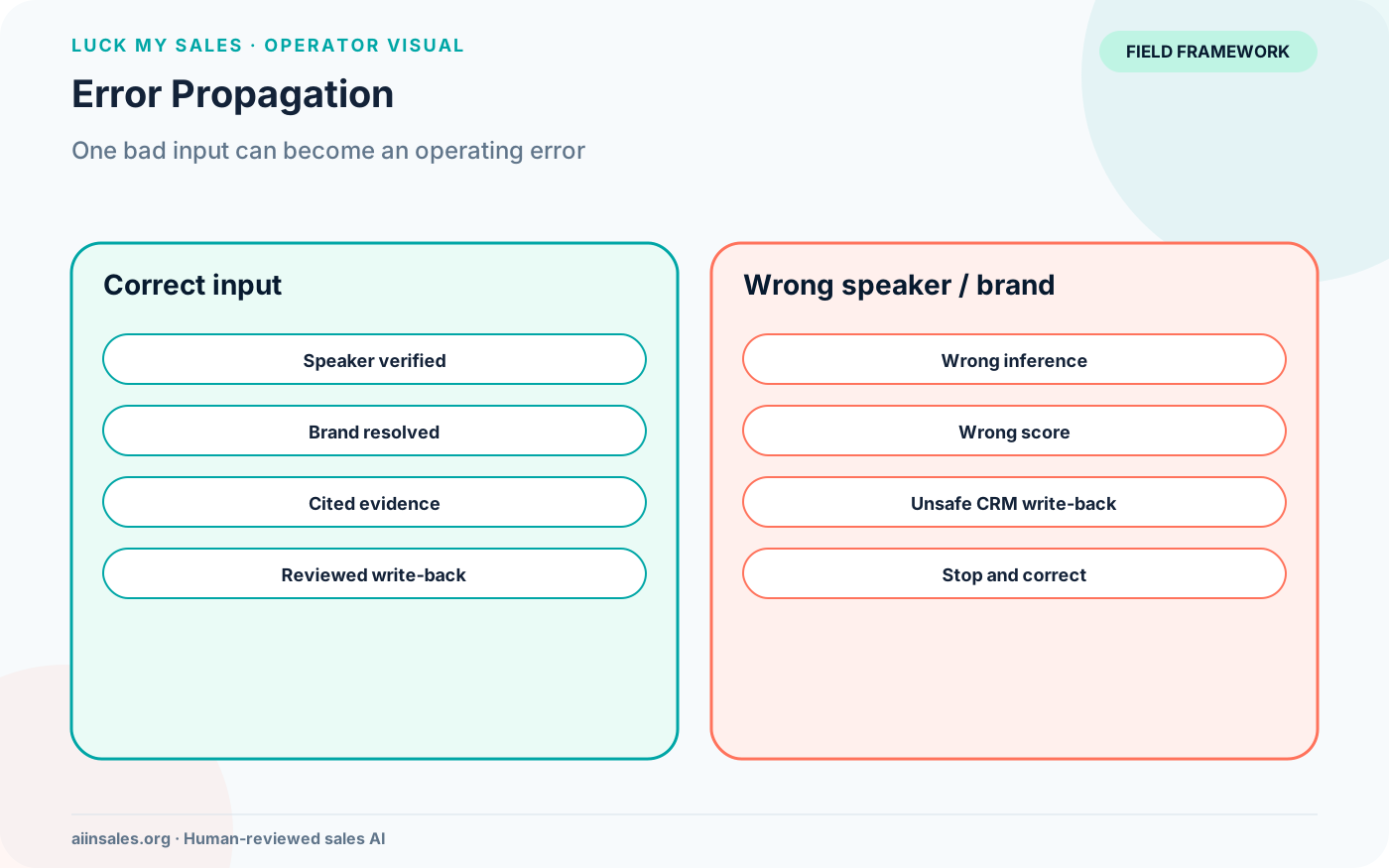
Correct and incorrect input paths showing how transcript errors can affect scores and CRM write-back.
Input errors become operating errors when every downstream step trusts them.
English transcripts are often usable across established tools, but teams should test their actual calls. Regional accents, mixed languages, background noise, poor microphones, industry vocabulary, product names, and overlapping speakers change the result.
We have seen young brand names and unfamiliar project names interpreted poorly. A generic model may “correct” an unusual name into a familiar word. The fix is not to tell the seller to ignore every proper noun. We add known names, aliases, terminology, and evaluation rules to the knowledge layer, then require the system to preserve uncertainty rather than confidently normalize what it does not know.
Speaker attribution deserves the same attention. If a transcript swaps the buyer and seller, talk-time statistics, question detection, objection classification, and coaching scores may all be wrong at once. A single low-level error can contaminate several polished outputs.
Before relying on a system, test:
  • names, companies, products, currencies, and dates;
  • interruptions and overlapping speech;
  • calls with more than two participants;
  • the languages and accents your team actually uses;
  • transfers between an AI agent and a human;
  • phone calls with IVR, hold music, or poor audio;
  • whether the source audio and timestamp remain available for review.
The target is not an abstract transcript-accuracy percentage. The target is accurate capture of the details that change a sales decision.

06 / A summary is useful only when evide…

A summary is useful only when evidence remains visible

Summaries save time. They also create a dangerous sense of completeness.
A good summary should separate at least five things:
  1. what the buyer stated;
  2. what the seller stated;
  3. what was explicitly agreed;
  4. what remains unknown;
  5. what the system recommends.
Those categories should not blend. “The buyer will review pricing next week” is evidence if the buyer said it. “Follow up next week” may be a reasonable recommendation, but it is not an agreement unless the conversation supports it.
The most frequent failure is not bizarre hallucination. It is lost commercial context caused by incomplete inputs. An AI system may receive the transcript but not the account’s current owner, previous deal, product eligibility, region, contract restriction, or recent email. Its summary can be locally accurate and operationally wrong.
That is why the output should expose source links or timestamps. Reviewers need to move from claim to evidence without searching an hour-long recording.
For important fields, use a structured format:
  • Claim: buyer is evaluating a Q4 launch.
  • Evidence: timestamp and transcript excerpt.
  • Confidence: high, medium, or low.
  • Missing evidence: approved budget and decision process.
  • Recommended action: ask who owns launch approval.
  • Decision owner: assigned seller.
This turns the summary into a work surface rather than a replacement for judgment.

07 / Scores and recommendations need exp…

Scores and recommendations need explicit rules

An AI score is only as useful as the rubric behind it.
If the team asks a model to “score call quality from 1 to 10,” it will fill the ambiguity with generic sales assumptions. Different managers will interpret the result differently, and sellers will quickly stop trusting it.
A reviewable rubric uses observable questions:
  • Did the seller confirm the buyer’s current process?
  • Did the buyer describe a measurable problem?
  • Was a decision owner identified?
  • Was an explicit next step agreed?
  • Did the seller make an unapproved commercial promise?
Each criterion should define acceptable evidence, insufficient evidence, and exceptions. “Good discovery” is not a criterion. “The buyer described the current process and one consequence in their own words” is closer.
AI can then propose a score and show the supporting moments. Managers should sample and correct it. If corrections cluster around one rule, improve that rule rather than blaming the model or the seller.
Scores should guide review, coaching, or prioritization. They should not directly determine compensation, discipline, termination, or promotion. Those decisions include human and organizational context that a call-scoring model does not own.

08 / CRM and calendar actions: automate…

CRM and calendar actions: automate the preparation, not the accountability

Conversation intelligence becomes valuable when it changes the next action. It becomes risky when it writes broadly into the system of record without field-level controls.
A practical sequence is:
conversation → evidence package → proposed action → rule check → CRM or calendar write → owner notification → review log
Low-risk actions can often be automated after testing:
  • attach the recording and transcript;
  • create a draft summary;
  • store detected topics;
  • suggest a follow-up task;
  • draft a meeting recap;
  • notify the current owner that evidence is incomplete.
Higher-risk actions need human approval:
  • qualify or disqualify the lead;
  • change an opportunity stage;
  • change forecast category or probability;
  • commit a next step to the buyer;
  • change account ownership;
  • issue pricing, discounts, terms, or commercial promises.
AI may retrieve a human-approved price book or assemble facts a human needs. It should not create the commercial proposal. Sales owns the final account-owner change.
The distinction is not anti-automation. It prevents a bad transcript or missing input from silently changing pipeline reporting.

09 / Decision-right matrix

Decision-right matrix
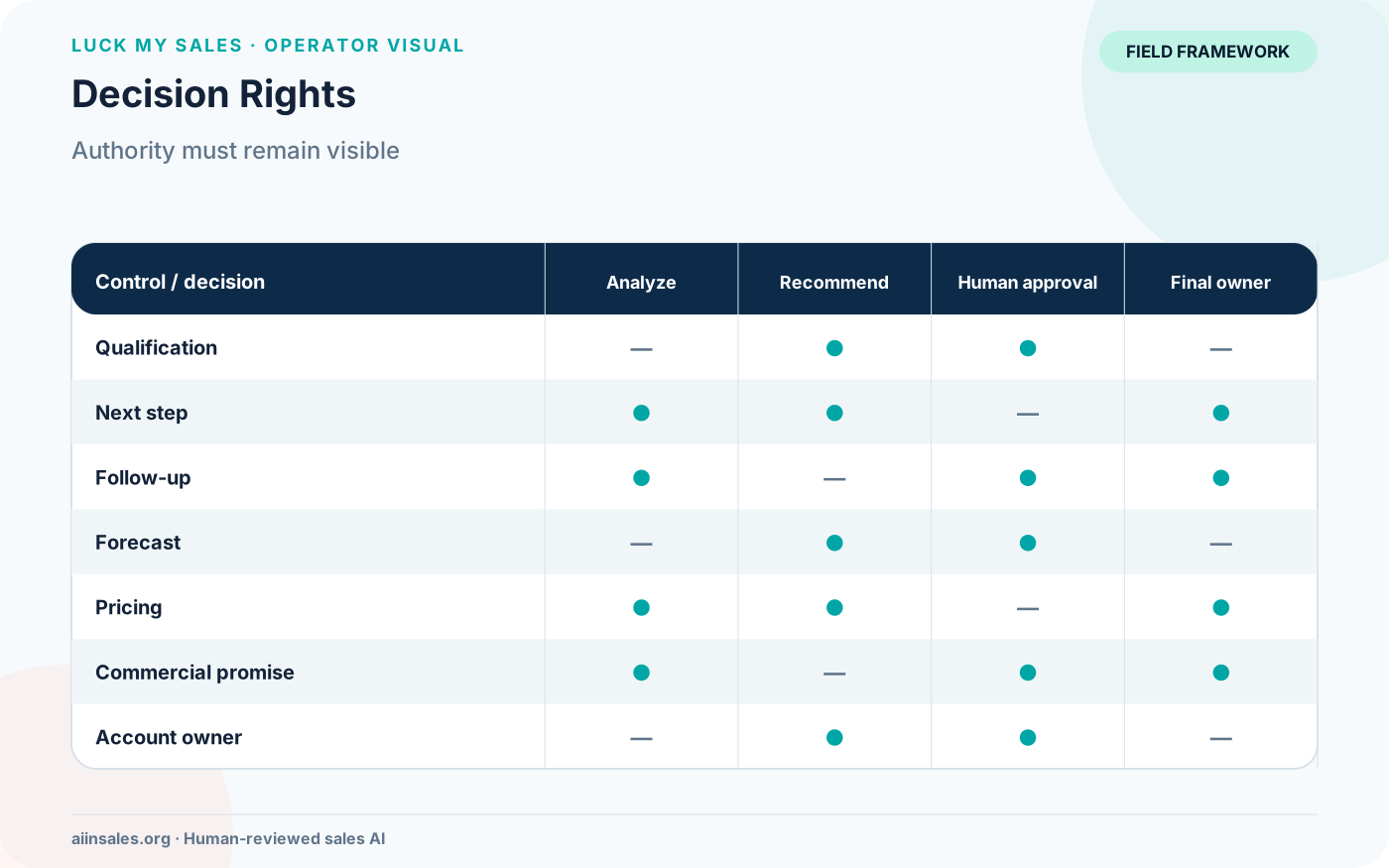
Decision-rights matrix for AI analysis, recommendations and human-owned sales actions.
Automation should expose authority, not hide it inside a workflow toggle.
If a vendor cannot explain how these controls work, the question is not whether its AI is intelligent. The question is whether the team can safely operate it.

10 / Operator case: when incomplete inpu…

Operator case: when incomplete inputs created incomplete intelligence
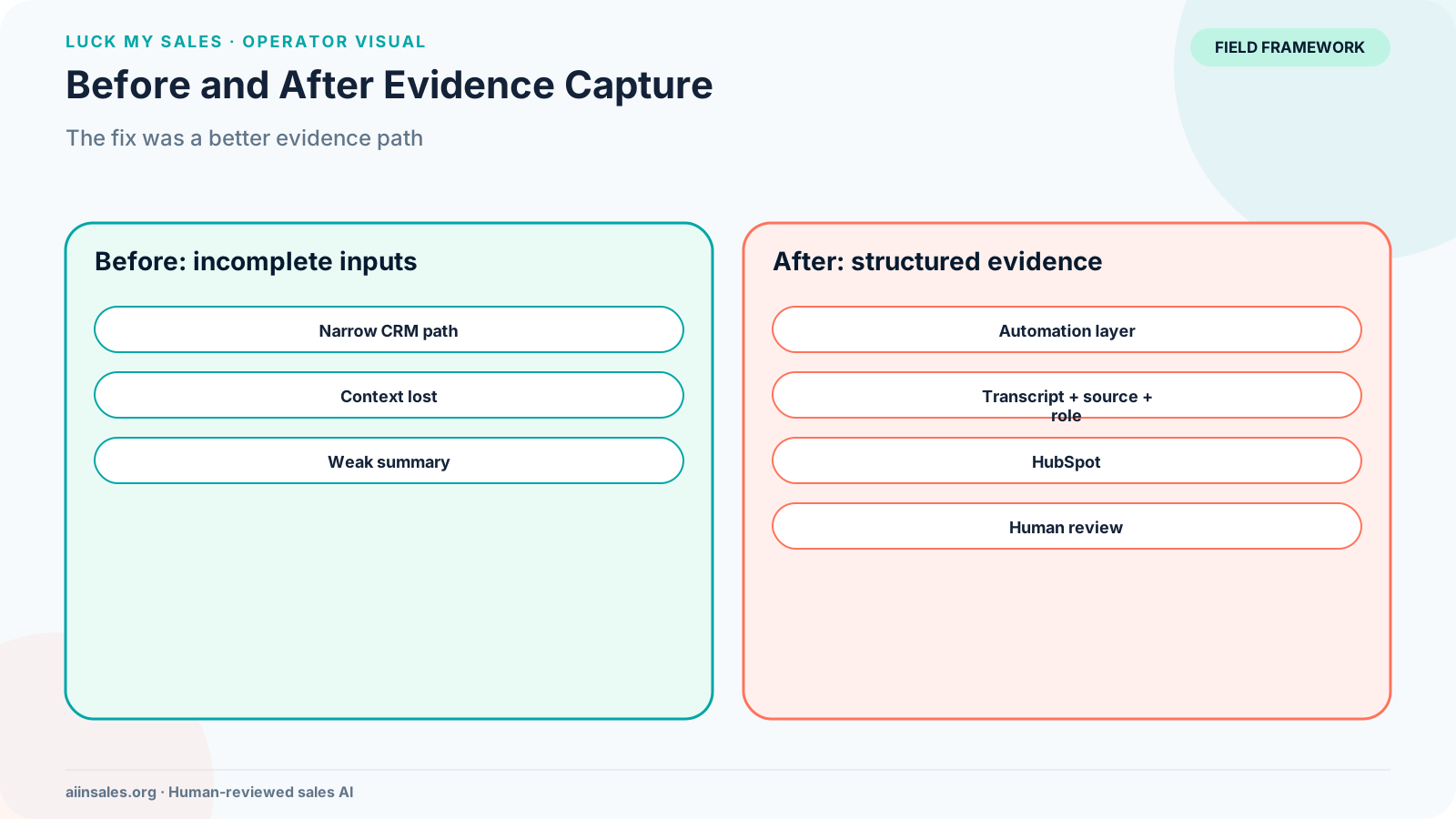
Before-and-after diagram showing an automation layer collecting complete evidence before HubSpot review.
The fix was not a better summary prompt; it was a better evidence path.
The problem was architectural. The model did not have a reliable path for writing and reading the full set of inputs in the CRM. A summary might correctly say that the visitor gave a phone number, while still lacking enough evidence about company, need, project, budget, or buying intent. The output looked complete because it was written in full sentences.
We changed the flow instead of adding a longer prompt.
An n8n automation gathered the available inputs, normalized them, connected them to the correct record, and then passed the structured evidence to HubSpot. The AI could propose a category, fit assessment, and next action from a broader evidence set. A human still reviewed the result before a meaningful commercial action.
This taught us two things.
First, one AI feature cannot simply be bolted onto an old infrastructure and expected to repair missing data paths. The site, capture layer, CRM objects, permissions, and automation need to be AI-friendly as a system.
Second, an empty field is evidence. When the visitor has not stated a product need, purchase intent, support issue, partnership interest, or job-related question, the correct output is “unknown” or “other,” not an invented opportunity.
The screenshots from this workflow can be used only as fully anonymized, redrawn evidence. Names, emails, phone numbers, URLs tied to individuals, and other identifying details should never appear in the published asset.

11 / Failure modes that should pause aut…

Failure modes that should pause automation

The most common problems are repeatable, not random:
  • the prompt asks for a conclusion without supplying the required evidence;
  • the same missing CRM fields affect every record;
  • unfamiliar brand names are normalized incorrectly;
  • speaker attribution reverses buyer and seller;
  • the summary omits a commercial restriction;
  • a recommendation is presented as an agreed next step;
  • a rubric rewards the wrong behavior at scale;
  • a CRM mapping writes the right value into the wrong field;
  • the system cannot show where a claim came from.
Pause or narrow automation when:
  • the evidence link is missing for material claims;
  • transcript quality fails on the team’s languages or names;
  • correction rates rise sharply after a prompt, model, channel, or integration change;
  • CRM write-backs create repeated cleanup;
  • sellers cannot distinguish buyer statements from AI recommendations;
  • the model starts producing pricing or promises outside approved inputs;
  • consent, access, or retention controls are unclear.
Do not wait for a spectacular failure. Repeated small errors are enough. An error that touches one summary is inconvenient. A rule that repeats the error across every call becomes process debt.

12 / How to measure quality

How to measure quality

Vendor dashboards often emphasize hours recorded or calls analyzed. Those metrics show usage, not commercial quality.
Track a smaller operating set:
  • evidence coverage: percentage of material claims linked to a source moment;
  • transcript correction rate: material corrections to names, numbers, speakers, or meaning;
  • recommendation acceptance: percentage of suggestions accepted without material change;
  • CRM correction rate: automated fields that humans must reverse or repair;
  • missing-input rate: records where the model correctly identifies insufficient evidence;
  • review time: minutes required to validate an output;
  • next-step completion: approved actions completed on time;
  • stage conversion: whether improved behavior is followed by movement in the CRM;
  • privacy exceptions: recordings or records that violated configured policy.
Measure by language, channel, use case, and team. A single average can hide a product that works well for English Zoom calls and poorly for regional phone conversations.
Do not treat correlation as proof. If conversion improves after implementation, check changes in lead mix, team composition, offers, seasonality, and pipeline rules before crediting the software.

13 / Readiness before buying or building

Readiness before buying or building

Conversation intelligence needs a closed operational loop. At minimum:
  • the lead or account has a reliable source;
  • recording and consent rules are defined;
  • the conversation can be connected to the correct record;
  • stages and ownership are clear;
  • the CRM contains the fields needed for the decision;
  • next actions have named owners;
  • completed actions and outcomes return to the CRM;
  • humans can inspect and correct AI output;
  • corrections can improve rules, prompts, or mappings.
If calls disappear into personal notes, opportunity stages mean different things to each seller, and the CRM cannot show what happened after a recommendation, adding AI will produce more artifacts rather than more intelligence.
Start with one narrow use case. For example: summarize discovery calls, cite budget and decision-process evidence, and draft a follow-up task. Measure corrections. Then expand.
The goal is not maximum autonomy. It is a faster, more complete decision loop with visible ownership.

14 / A staged implementation that keeps…

A staged implementation that keeps errors visible

Trying to automate the full journey on day one makes diagnosis difficult. When the transcript, prompt, rubric, CRM mapping, and follow-up action all change together, the team cannot tell which layer produced a bad result.
I prefer five stages.

Stage 1: capture and inspect

Record only the approved interactions, create transcripts, and connect them to the correct people, companies, and opportunities. Do not score or update commercial fields yet.
Review a mixed sample, not only the cleanest calls. Include short calls, long calls, poor audio, several speakers, different accents, objections, pricing conversations, and calls that should never have entered the sales workflow. Build a correction log around material errors.
The deliverable is a trusted evidence base. If the team cannot reliably find the source conversation, later automation has no stable foundation.

Stage 2: summarize with citations

Define a summary structure that reflects how the team sells. A generic recap may be readable but omit decision process, current system, urgency, risk, or an explicitly rejected requirement.
Require citations for material statements and a separate “unknown” section. Compare the summary to the call, then compare it to the seller’s manual note. Disagreement is useful: it reveals either a model error, a seller omission, or an unclear operating definition.
The deliverable is not a perfect paragraph. It is a repeatable evidence package that a seller can verify quickly.

Stage 3: recommend without writing

Add qualification, risk, objection, and next-step recommendations, but keep them outside the final CRM fields. Make the seller accept, edit, or reject each material proposal.
Log the reason for corrections. “Wrong” is not enough. Use categories such as missing evidence, wrong speaker, stale CRM context, ambiguous rule, incorrect product mapping, or unsupported inference. The categories show which layer needs work.
The deliverable is a measured recommendation workflow. At this stage the team should know which outputs are consistently safe and which remain context-heavy.

Stage 4: automate low-risk actions

Allow the system to attach artifacts, create internal draft tasks, populate descriptive fields, or send owner notifications after rule checks. Keep a visible audit trail and make reversal easy.
Do not automate a field simply because the API allows it. Automate it when errors are detectable, consequences are limited, and a named person owns exceptions.
The deliverable is saved administrative time without hidden commercial decisions.

Stage 5: expand by proven decision class

Only after stable operation should the team add more channels, languages, coaching rubrics, or workflow actions. Re-test when a model, prompt, CRM schema, telephony provider, consent flow, or sales process changes.
The deliverable is controlled expansion. “We enabled AI for all calls” is not an implementation milestone. “This evidence class can trigger this action under these rules with this owner” is.

15 / Build, buy, or combine tools?

Build, buy, or combine tools?

There is no universal answer. The decision depends on the job the team needs to own.
An established platform is attractive when the organization needs broad recording coverage, permissions, search, mature scorecards, manager workflows, and supported CRM integrations. It may be the fastest route for a larger team with standard processes.
A lighter product can be better when the team mainly needs notes, transcripts, or a narrow post-call workflow. Paying for a complete revenue platform to solve one administrative problem creates adoption and cost pressure.
A custom workflow becomes reasonable when the evidence sources, decision rules, regional languages, CRM objects, or AI-agent handoffs are specific to the business. Custom does not mean building speech recognition from scratch. It can mean combining a reliable recording or transcription layer with an orchestration workflow, approved prompts, structured evidence, and controlled CRM actions.
The real comparison is not “vendor versus custom.” Compare:
  • which evidence the system can access;
  • which actions it can take safely;
  • how decisions are explained;
  • how exceptions are handled;
  • how much manager and seller time it saves;
  • the total cost of licenses, integration, maintenance, review, and correction;
  • whether the workflow can change when the sales process changes.
Do not buy a platform because its demo produces a beautiful summary. Use a representative call and ask it to find the facts that affect your next decision. Then inspect how those facts reach the CRM and who can correct them.

16 / What managers and sellers should see

What managers and sellers should see

Managers and sellers need different views of the same evidence.
A seller view should answer: What did the buyer say? What is missing? What did we agree? What should I do next? What must I verify before contacting the buyer?
A manager view should answer: Which calls need review? Which rubric criteria are repeatedly weak? Where does AI confidence fall? Which recommendations are sellers correcting? Are changed behaviors followed by movement in the CRM?
Neither view should become an endless dashboard. A practical interface prioritizes exceptions:
  • high-value opportunities with unsupported next steps;
  • pricing or competitor moments that need review;
  • calls where speaker or transcript confidence is low;
  • records with missing ownership or duplicate context;
  • AI scores that conflict with opportunity movement;
  • repeated corrections to the same rule.
This is where conversation intelligence earns its name. It reduces the distance between a conversation, an inspectable fact, and a responsible action. A dashboard full of call counts does not.

17 / Worked example: one discovery call…

Worked example: one discovery call through the evidence pipeline

Consider a first discovery call with a growing service company. The buyer says its team loses some enquiries after business hours. The buyer also says the current CRM is poorly maintained. A budget has not been approved. The seller agrees to send a short workflow outline and meet again with the operations lead.
The recording is only the starting point. The system must first identify the buyer and seller correctly. It must preserve the exact sections about after-hours demand, CRM quality, budget, and the next meeting. If a company name or amount is uncertain, the transcript should show that uncertainty. It should not silently replace an unfamiliar name with a familiar one.
The summary can now separate facts from interpretation. A fact is that enquiries arrive outside business hours. Another fact is that the buyer described weak CRM hygiene. The possible commercial problem is slower response and lost demand, but that remains an inference until the buyer confirms its impact. “Qualified opportunity” would be an even stronger inference because no budget or buying process was confirmed.
A useful recommendation is narrow. The system can suggest sending the agreed workflow outline. It can suggest inviting the operations lead and preparing questions about volume, ownership, and current response time. It can also recommend leaving the forecast unchanged. These suggestions follow from the recorded evidence.
The system should not invent a proposal, discount, implementation promise, or close date. It should not move the opportunity because the summary “sounds positive.” Those actions change commercial state. A seller or manager must approve them.
The CRM write-back should follow the same boundary. A low-risk action may create a draft task linked to the right contact and meeting. A review screen should show the proposed summary, source timestamps, recommended next step, destination record, and field changes. The seller can approve, edit, or reject each write.
This example also shows why more data is not always better. A long generic summary can hide the few facts that control the next decision. The evidence contract should favor traceable commercial facts over a polished narrative.
The later outcome closes the loop. If the second meeting happens, the system can compare the recommendation with the action taken. If the buyer never responds, that outcome also matters. It helps the team test whether the recommended next step was useful. It does not prove that the original call was bad.
This small case is the minimum standard for AI conversation intelligence. The workflow must preserve what was said, expose what was inferred, limit what can change, and record what happened next.

18 / Final operator check before enablin…

Final operator check before enabling an action

Open one real record before switching an automation on. Confirm the call, people, account, and opportunity. Read the cited evidence. Check what the model inferred. Check the proposed destination and field. Name the person who can approve the change.
Now test the failure path. Remove one source. Change one CRM value. Use an unfamiliar company name. Add a second opportunity. The system should expose uncertainty and stop a risky write.
Do not enable the action if the team cannot answer three questions: What evidence caused it? Who owns the decision? How can we reverse it? These checks are more useful than a generic confidence score.
Finally, review the outcome later. A correct write is not proof that the recommendation helped. The team needs the next customer or seller action. That result improves the rule and keeps automation tied to sales work.

19 / Limits and disclosure

Limits and disclosure

This guide reflects first-hand operator experience with HubSpot-connected conversation workflows and hands-on use of Gong, combined with official product documentation for other capabilities. It does not claim that every named product was tested under identical conditions.
The author/team is affiliated with NextLevel.AI. Its workflow is included as first-party operator evidence, not as an independently ranked recommendation.
There are no affiliate payments, sponsorships, free-access arrangements, consulting benefits, or other commercial relationships with the third-party products referenced in this guide.
Product features, integrations, packaging, and policies change. Verify current details in official documentation and run a pilot using your calls, languages, CRM objects, consent requirements, and decision rules.

20 / Frequently asked questions

Frequently asked questions

What is AI conversation intelligence for sales?

It is software that captures or imports seller–buyer interactions and uses AI to transcribe, summarize, search, score, and extract evidence or recommended actions. The useful output should remain connected to the source conversation and the correct CRM record.

Is conversational intelligence the same as call recording?

No. Recording preserves the interaction. Conversation intelligence adds transcription, analysis, search, scoring, coaching, and workflow actions. Those added layers also create additional opportunities for error and require controls.

Can AI update the CRM automatically after a call?

Yes, for approved fields and low-risk actions after testing. Material decisions such as qualification, opportunity stage, forecast, pricing, commercial promises, and account ownership should remain reviewable and human-owned.

Can AI decide the next sales step?

It can recommend a next step and draft a task or follow-up. A seller should verify whether the buyer actually agreed, whether the timing is correct, and whether the action fits the account context.

How accurate should a sales-call transcript be?

Test material accuracy rather than relying only on a global percentage. Names, numbers, products, dates, speakers, languages, and commercial statements matter more than harmless punctuation errors.

What should stop a conversation-intelligence automation?

Missing consent, inaccessible evidence, repeated transcript or CRM errors, unclear decision ownership, unsupported commercial claims, or a sharp rise in human corrections should pause or narrow the workflow.

Does a small sales team need conversation intelligence?

Often it needs reliable recording, structured notes, and a closed CRM loop first. A lightweight or custom workflow may be enough. Larger platforms become easier to justify when call volume, pipeline, coaching, and governance needs exceed what managers can inspect manually.

What is the most important implementation rule?

Keep buyer evidence, AI inference, and human decision visibly separate. That one design choice makes summaries, scores, CRM actions, and coaching much easier to audit.

Research note

Methodology

  1. 01The workflow reflects Anastasiia's first-hand work with call and website evidence moving into HubSpot-centered sales workflows.
  2. 02Product capabilities are bounded to current official vendor sources; operator observations are identified as first-party evidence.
  3. 03The guide separates captured evidence, AI inference, proposed action, rule check and accountable human decision.
Read the full methodology

Source ledger

Sources & editorial notes

  1. 01
    Gong conversation intelligence

    Gong · Official product or documentation source used for bounded capability claims; current packaging and features may change.

  2. 02
    Gong recording consent guidance

    Gong Help · Official product or documentation source used for bounded capability claims; current packaging and features may change.

  3. 03
    HubSpot conversation intelligence

    HubSpot · Official product or documentation source used for bounded capability claims; current packaging and features may change.

  4. 04
    Salesloft Conversations

    Salesloft · Official product or documentation source used for bounded capability claims; current packaging and features may change.

  5. 05
    Salesloft Conversations API

    Salesloft Developers · Official product or documentation source used for bounded capability claims; current packaging and features may change.

  6. 06
    Avoma conversation intelligence

    Avoma · Official product or documentation source used for bounded capability claims; current packaging and features may change.

Corrections or primary material: contact the corrections desk.

About the author

Anastasiia Krynytska

Anastasiia Krynytska is a LeadGen Team Lead at Softermii and the lead editor of Luck My Sales. She covers AI-assisted outbound, account research, qualification, messaging, CRM handoffs and revenue workflows from a practitioner’s perspective.View author profile LinkedIn

Continue reading

01 · News analysis

AI sales is moving from assistant to operating layer

The category is expanding from drafting support into research, pipeline decisions, recommended actions and controlled execution.

Read news
02 · Field analysis

In AI sales, the handoff may be the product

Models are becoming accessible; durable value sits in the controlled transition from signal to seller action.

Read analysis
03 · Research framework

Sales AI Workflow Signals 2026

A launch framework for mapping the products, controls and buying questions shaping AI-enabled revenue work.

Read reports

Luck My Sales briefing

Useful context, once a week.

News, explanations and original research from this desk. No noise.
The newsletter is still being built. We will contact you when the first edition is ready.