Weekly industry intelligence · No noiseSubscribe to the Luck My Sales newsletterFree briefing

Independent operator-led media on AI in B2B sales

Menu

Commercial comparison and buyer guide · Sales AI comparisons

I Evaluated Sales Enablement Software and Leaner Stacks—Here’s What I’d Pick by Team Size

I evaluated sales enablement software and leaner stacks. Compare 10 options by team size, bottleneck, access level, operating cost and adoption risk.
Editorial disclosure

AI may assist research organization and drafting. A human editor reviews every published page, checks material claims against the cited sources and owns the final decision. No company paid for placement in this article.

AI use policy

Agent-ready brief

AI takeaways

Keep the key points here, or take a source-aware text brief into Claude, ChatGPT or another AI workspace.
  1. 01Define whether the job is content, readiness, knowledge, conversation evidence, buyer collaboration or CRM-native guidance before comparing products.
  2. 02Keep guided evaluation, operated use and documentation review as separate evidence labels.
  3. 03Smaller teams should prove the workflow with CRM, governed knowledge and narrow automation before buying a broad platform.
  4. 04Implementation, integration, migration, administration, adoption and exit cost belong in the comparison.
  5. 05A no-buy decision is valid when the bottleneck, owner or evidence is missing.
Includes summary, takeaways, sources and a use note.
The best sales enablement software fixes a measured problem and appears inside the seller’s real workflow. More modules do not make a product better by default.
I evaluated Highspot, Seismic, Guru and Gong through guided access and reviewed a Notion knowledge setup in use; for the remaining products, I checked current official documentation, including Showpad, Mindtickle, Allego, Dock, HubSpot and Salesforce; this was not a controlled ten-product test, so unequal access cannot become a numerical score.
My short answer is:
Up to about 20 reps: start with your CRM, a governed knowledge base and conversation evidence. Add a narrow automation before buying a broad platform.
Roughly 20–100 reps: shortlist Highspot or Guru based on whether the main job is broad enablement or in-flow knowledge. Keep CRM delivery central.
Enterprise: Highspot is my current preference when content, training, coaching, governance and measurement genuinely need one operating layer. Run a documented pilot before a long contract.
Call coaching: Gong can be the more useful first purchase when the bottleneck is conversation evidence rather than content distribution.
Those thresholds are operating heuristics, not market standards, and team needs can move the decision. Key factors include region, risk and product count. Channels and admin capacity matter too.

Choose sales enablement software by the measured bottleneck, seller workflow, governance load and total operating cost—not by module count.

01 / Quick shortlist: best fit by sales-team problem

Quick shortlist: best fit by sales-team problem

Sales-team problemMy starting shortlistWhy it belongsEvidence label
Unified enterprise enablementHighspot; SeismicBroad content, training, coaching and program layersGuided evaluation plus current official documentation
Content-led and field sellingShowpadContent, readiness, buyer engagement and field-oriented deliveryOfficial-document review
Readiness and onboardingMindtickle; AllegoLearning, practice, coaching and readiness are centralOfficial-document review
Conversation and deal coachingGongStarts from real calls and related CRM contextGuided evaluation and operated integration context

Focused and lean starting points

Sales-team problemMy starting shortlistWhy it belongsEvidence label
In-flow verified knowledgeGuruDelivers owned, verified knowledge where reps workGuided evaluation plus current official documentation
Buyer collaboration and roomsDockConnects internal content and learning with customer workspacesOfficial-document review
CRM-native starting pointHubSpot; SalesforceKeeps guidance and activity close to the system of recordOperated HubSpot workflow / official-document review
Small-team no-buy optionNotion wiki + CRM + meeting evidence + narrow automationCovers the knowledge and workflow basics without a broad platformGuided evaluation and owner operating judgment
This table is a routing aid, not a final recommendation. The products overlap, and their packaging changes. The important question is which job must become better and what evidence will prove it.

02 / Master comparison table

Master comparison table

Pricing changes too fast for one fixed seat-price column, and most broad platforms require a quote. Setup, services, system links and admin work can change the total. The table shows price visibility and purchase scope. It does not invent a false comparison.
ProductCore job in this comparisonBest-fit contextCurrent official scopePricing visibility checked 26 Aug 2026Main limitation to testAccess level
HighspotUnified enablementMid-market to enterpriseContent, training, coaching, plays, buyer engagement, analyticsContact/pricing requestAdmin model, seller retrieval and rollout ownershipGuided evaluation
SeismicEnterprise enablement cloudComplex enterpriseContent, learning/coaching, program execution, buyer engagementQuote-ledAdministration, configuration and actual field adoptionGuided evaluation

Content-led and readiness platforms

ProductCore job in this comparisonBest-fit contextCurrent official scopePricing visibility checked 26 Aug 2026Main limitation to testAccess level
ShowpadContent and field enablementDistributed or field teamsContent, readiness, buyer engagement, analyticsPricing page/demoFit between field workflow and program breadthOfficial-doc review
MindtickleReadiness and coachingTeams with formal readiness programsLearning, coaching, content and readiness packagesQuote-ledProgram ownership and proof of changed behaviorOfficial-doc review
AllegoLearning, content and coachingTeams prioritizing practice and readinessLearning, content, coaching, digital selling and AIDemo/quoteAdoption outside scheduled trainingOfficial-doc review

Focused workflow and CRM options

ProductCore job in this comparisonBest-fit contextCurrent official scopePricing visibility checked 26 Aug 2026Main limitation to testAccess level
GongConversation and deal coachingTeams with sufficient call volumeRecording, analysis, coaching context and CRM workflowQuote-ledConsent, coverage, manager action and data accessGuided evaluation
GuruIn-flow knowledgeSMB to mid-market, distributed knowledgeSearch, verified knowledge, workflow deliveryPublic pricing entry point plus sales pathContent ownership and verification disciplineGuided evaluation

Buyer collaboration and CRM-native options

ProductCore jobBest fitOfficial scopePricing visibilityMain limitationAccess
DockBuyer rooms and connected enablementSales and CS collaborationDeal rooms, content, playbooks, courses and AI agentPublic pricing pageWhether internal enablement or buyer workflow is primaryOfficial-doc review
HubSpotCRM-native sales workflowSmall and growing HubSpot teamsCRM, sales tools and connected activityPublic tiers; promotions and limits changeNot a full replacement for enterprise enablement governanceOperated related workflow + official docs
SalesforceCRM-native programsSalesforce-centered enterpriseIn-app guidance, milestones, analytics and programsSales Programs publicly listed at $100/user/month annually; related apps may be extraTotal Salesforce dependency and add-on scopeOfficial-doc review
The Salesforce figure comes from its official Sales Programs pricing page. I checked it on 26 August 2026. The figure covers one annual-contract edition and excludes Sales Cloud, conversation intelligence, services and other add-ons. HubSpot’s Sales Hub pricing page showed a free tier and a limited offer; recheck both during procurement instead of freezing temporary prices in a planning model.

03 / What counts as sales enablement software

What counts as sales enablement software

Sales enablement software helps customer-facing teams apply content, training, knowledge or coaching; the category remains messy. Several adjacent product types can solve the same job.

Content management and delivery

These platforms govern sales assets and recommend useful content. They also help sellers share approved material. Highspot, Seismic and Showpad are broad examples.

Learning, readiness and coaching

These systems assign learning, practice and coaching. Some also manage evidence of proficiency. Mindtickle and Allego center this job, though broad platforms may include it.

Conversation intelligence

Conversation platforms record and analyze calls, then surface evidence for coaching or deal review; Gong is not a content platform, yet it may solve the first problem more directly.

Knowledge management

Knowledge systems help reps find trusted answers inside their normal tools. Guru or a governed Notion wiki can serve that job without becoming a full suite.

Digital sales rooms and buyer collaboration

These systems organize buyer content, mutual plans and collaboration. Dock links that workspace with content and learning. Test it as a workflow rather than an internal library.

CRM-native guidance

HubSpot and Salesforce place guidance near the CRM record and reduce tool switching. They may still lack the program, content-governance or learning depth of a dedicated platform.
This is why generic “top 10” lists mislead. A call tool can beat a content platform when the coaching problem lives in calls. A wiki can beat an enterprise suite for a 15-person team. It can win because it is easier to govern. Category breadth does not determine fit.
For the operating side, read the separate AI sales enablement guide. It presents the workflow, human checkpoint and measurement model I would establish before procurement.
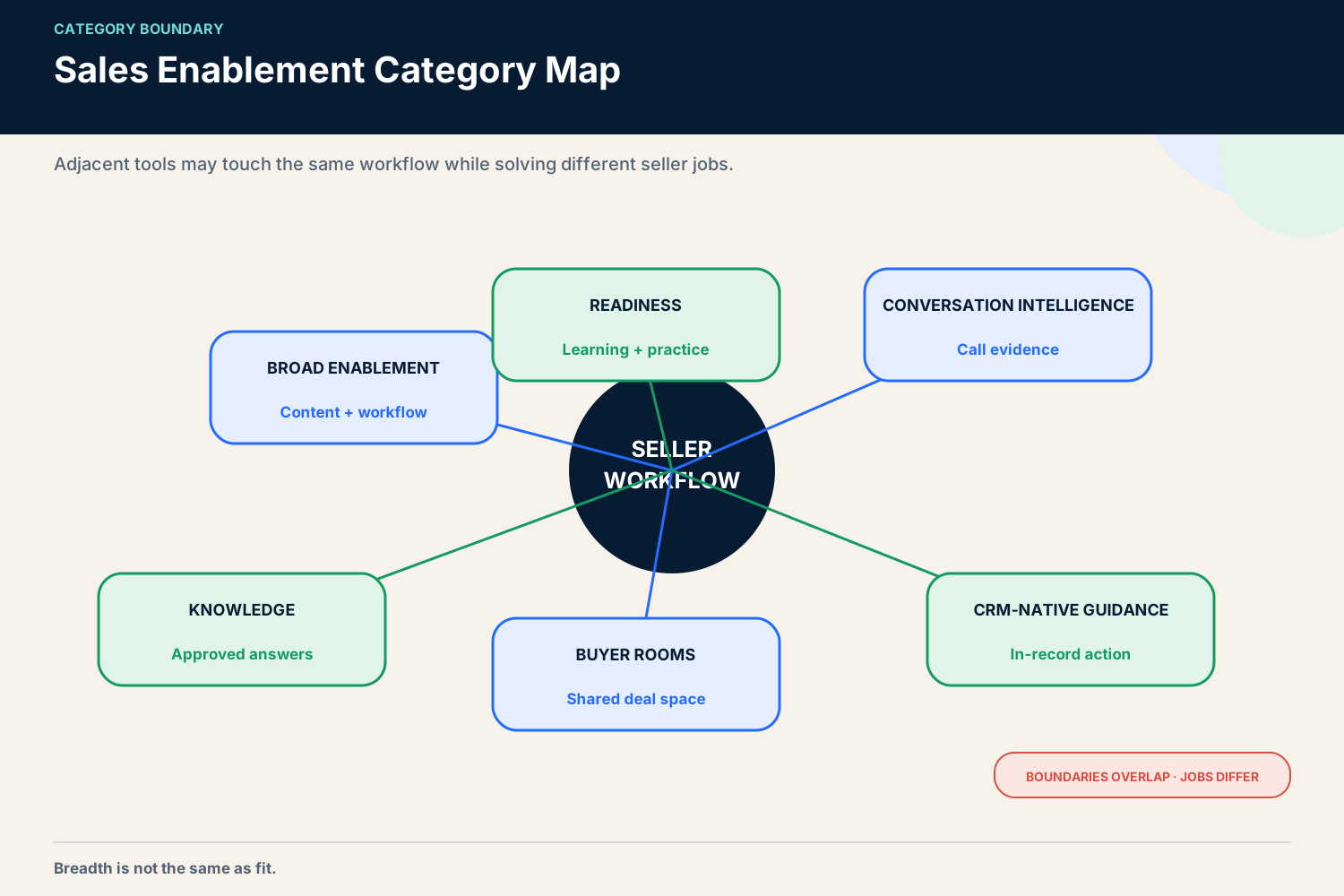
A category map separating broad sales enablement, readiness, conversation intelligence, knowledge management, buyer rooms and CRM-native guidance.
Adjacent tools solve different enablement jobs; breadth is not the same as fit.

04 / How I evaluated the platforms

How I evaluated the platforms

I used five criteria and kept the evidence level visible.

1. Bottleneck fit

First, identify the job: content, readiness, coaching, knowledge, buyer collaboration or CRM guidance. A strong product can still miss the team’s actual problem. A broad market rank cannot fix that mismatch.

2. In-flow delivery

Where does the rep encounter the guidance, and must the seller remember another destination; I checked search quality, CRM delivery, browser access, call context and buyer-workspace relevance.

3. Governance

Who owns and verifies content, controls access and retires stale material, especially when AI can spread a wrong answer faster than a file?

4. Evidence and measurement

Can the team observe the target workflow? That may involve retrieval, coaching, training or buyer collaboration. Vendor results can guide discovery, but they do not predict your result.

5. Operating cost

I include licenses, setup and migration alongside content cleanup, admin work, training and upkeep. A cheap plan can still cost more when it creates another unused tool.
The access labels are:
  • Guided evaluation: the owner saw the product in a guided setting, but products did not share one scripted test.
  • Operated related workflow: the product supported an adjacent workflow, but the whole suite was not tested here.
  • Official-document review: the analysis uses current vendor documents and does not claim hands-on use.
I have no commercial relationship with the listed vendors. I accepted no payment for placement. I did not treat public review averages as controlled performance data.
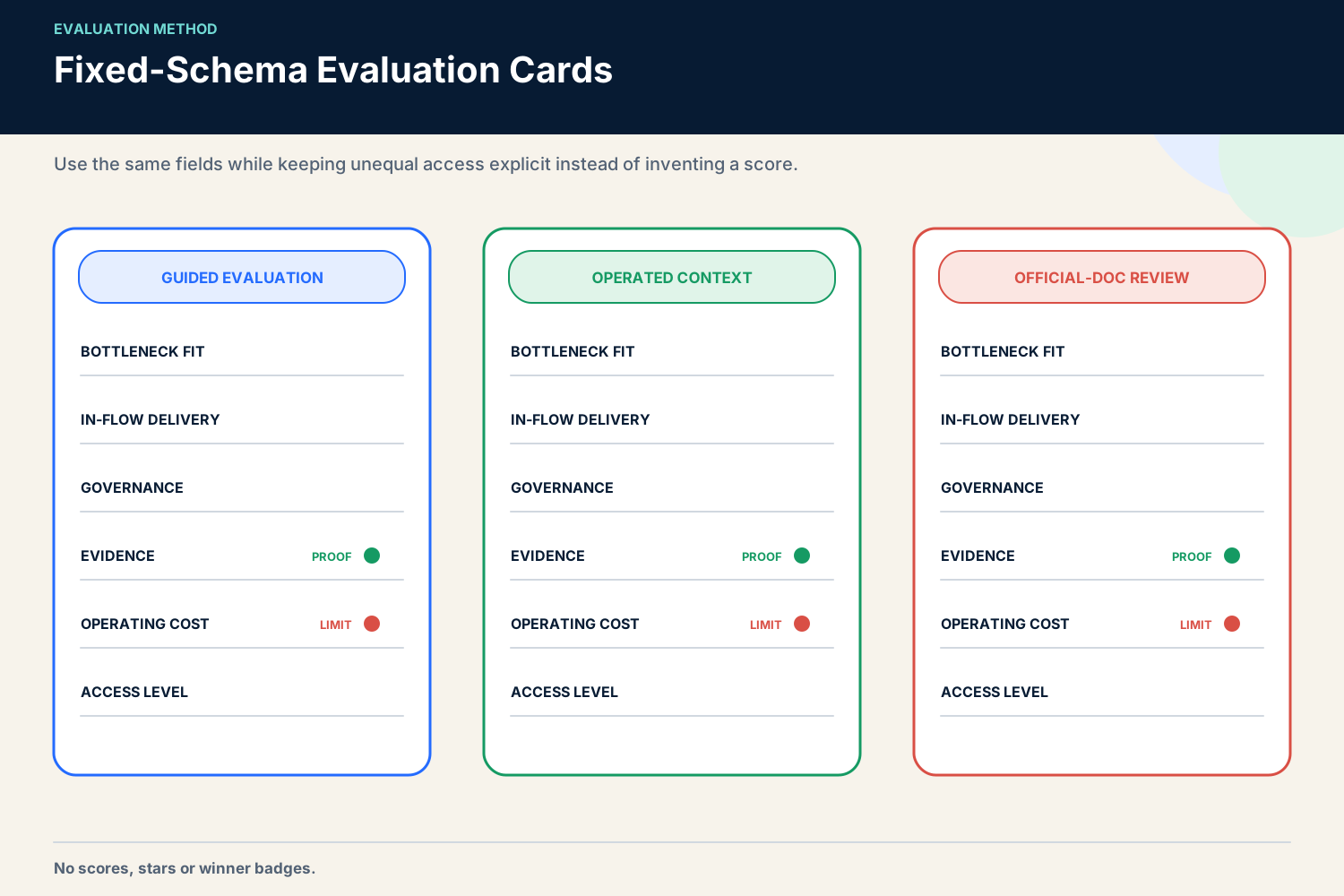
A fixed evaluation card showing bottleneck fit, in-flow delivery, governance, evidence, operating cost and access level.
Use one schema and keep the evidence label visible; do not turn unequal access into a fake score.

05 / Highspot: my enterprise starting point

Highspot: my enterprise starting point

Best for: teams that need one governed layer for content, learning and coaching.
Highspot’s official sales enablement page lists content, training, coaching, plays, buyer engagement, analytics and CRM delivery; that breadth can help a mature enablement team, though people and process must still operate it.
My current enterprise preference is Highspot, subject to a documented pilot. This is not a universal technology claim. In the guided review, it linked governed assets and learning with seller execution.
The risk is buying the architecture before earning adoption. Test retrieval during a live deal and content upkeep. Then check whether program analytics change a real decision.
Highspot’s site now says Highspot is part of Seismic. Confirm current commercial terms and the roadmap. Older comparisons may show a past product boundary.
Pilot proof: a seller completes three real retrieval jobs while an owner publishes and retires content. A manager launches one program, then the team traces use to an agreed behavior.

06 / Seismic: powerful scope with a heavier operating

Seismic: powerful scope with a heavier operating question

Best for: complex firms that can fund setup, controls and admin work.
Seismic’s official Enablement Cloud page describes one layer for content, training and coaching; its scope includes learning, meeting intelligence, digital sales rooms and program strategy, and Seismic says the platform has more than 150 integrations, though these vendor facts describe scope rather than implementation simplicity.
In my guided review, Seismic felt administration-heavy. Reps could still default to desktop files. That behavior weakens the promise of one governed platform. This observation comes from one context and does not describe every customer.
The case gets stronger with more regions, products, content producers and complex permissions. A dedicated design team also helps. It weakens for one narrow workflow or when nobody owns content operations.
Pilot proof: track search, use and desktop-file fallback while recording time for one controlled content change. Count admin hours and CRM use because a successful demo is not enough.

07 / Showpad: a content-led and field-selling candidate

Showpad: a content-led and field-selling candidate

Best for: field teams that need content, readiness and buyer work together.
Showpad’s current enablement page lists readiness, content, buyer engagement, analytics and integrations. Its stated scope also includes courses, paths and role play. Authoring tools and seller-facing agents appear there too.
I would shortlist it for field sellers who need content and training together. I would not treat vendor outcomes as expected results. Test mobile access, offline use where relevant, version control, CRM flow and asset search time.
Main test: does it become the seller’s working surface or a library that sellers bypass?

08 / Mindtickle: readiness as a managed program

Mindtickle: readiness as a managed program

Best for: teams with a clear readiness standard and active coaching.
Mindtickle centers its platform on training, content, coaching and role play; it also lists conversation intelligence and a Readiness Index. Its official service description gives a more precise package map than a broad marketing list.
I would evaluate Mindtickle for measured onboarding and skill-development problems. “AI coaching” alone is not a buying case. The firm needs a competency model and reviewers. It also needs a clear definition of readiness in customer work.
Pilot proof: choose one role and skill map, then run one practice path. Check the skill in real calls or deals because completion alone is not behavior change.

09 / Allego: learning and coaching in everyday work

Allego: learning and coaching in everyday work

Best for: teams that put practice and coaching beside sales content.
Allego’s current platform site lists learning, content, coaching and digital selling. It also lists AI in daily workflows. That makes it a sound option for a readiness shortlist.
Vendor case studies cover named customers. I would not apply their numbers to a new buyer. Ask whether managers review practice and keep content current. Then check whether learning appears when reps need it.
Main test: adoption after launch, because a platform can look strong during onboarding and then vanish from active selling. Managers and daily workflows must reinforce it.

10 / Gong: my first choice when the bottleneck

Gong: my first choice when the bottleneck is real calls

Best for: teams that need call evidence and wider coaching coverage.
Gong stood out because coaching begins with real conversations. The official Calls API documentation lists action items, topics, trackers and interaction details; Gong’s CRM integration documentation covers imported context, activity exports and selected field changes.
Gong does not replace content governance or structured learning, but it helps when managers cannot inspect enough calls or call outcomes fail to reach the CRM.
The team must address recording consent, access, call coverage and CRM associations; analytics do not coach a rep alone, so managers need a repeatable action after each signal.
For a narrower tool comparison, see AI tools for sales call analysis. For the program layer, see AI sales coaching.

11 / Guru: the strongest lean candidate for in-flow

Guru: the strongest lean candidate for in-flow knowledge

Best for: SMB and mid-market teams that need trusted answers in daily work.
Guru delivers answers inside the tools where people work. Its official sales solution lists browser delivery, verified knowledge, triggers and CRM context. Expert review is part of the stated model. Search quality cannot exceed source ownership and freshness.
I would shortlist Guru when reps repeatedly ask about product, security, process or objections. The knowledge still needs a content owner. Guru may fit better than a broad platform when formal learning and buyer rooms are secondary.
Pilot proof: define 25 high-value seller questions and name an owner for each source. Test correct answers in the real CRM or browser flow, then track missed and disputed answers as content work.

12 / Dock: a buyer-collaboration-first option

Dock: a buyer-collaboration-first option

Best for: teams that want one buyer space across sales and onboarding.
Dock’s sales enablement page lists deal rooms, content tools, playbooks, courses and an AI agent; it also documents HubSpot and Salesforce integrations, and content can sync from common repositories.
I would test Dock when the buyer workspace is part of daily work. An optional buyer-room feature is not enough. Dock differs from an internal knowledge tool. A useful pilot would follow one real deal from shared content into onboarding.
Main test: does the team need an external work layer, or could a lighter system solve internal search?

13 / HubSpot: a practical CRM-native starting point

HubSpot: a practical CRM-native starting point

Best for: growing HubSpot teams that want guidance near the CRM record.
I have used HubSpot in call-to-CRM workflows. Its value is proximity to the record. Tasks, notes and automation can support a useful first version. They may remove the need for a separate enablement destination.
The current pricing page shows free and paid tiers, but plan limits and promotions change. Check needed features, credits, seats, onboarding and related hubs on the purchase date.
HubSpot does not replace every broad platform job because enterprise content governance, formal readiness and global program management may need more. Yet HubSpot can be a better starting point until the team proves broader needs.
The best AI CRM platforms comparison covers the broader CRM decision.

14 / Salesforce Sales Programs: native enablement for a

Salesforce Sales Programs: native enablement for a Salesforce center of gravity

Best for: Salesforce teams that want sales guidance inside the CRM.
Salesforce lists milestones, a guidance center and program data. It also lists templates, in-app coaching and automated programs. The public price was $100 per user each month. That price required annual billing on 26 August 2026. The page warns that prices can change.
The advantage is native CRM context. The risk is a false total. One add-on does not represent the whole Salesforce environment.
Pilot proof: run one program tied to an agreed seller behavior and deliver it inside the CRM; track participation and the next outcome, then confirm every license and link in writing.

15 / The lean stack I would use before

The lean stack I would use before buying a platform

For a team of up to about 20 reps, I would begin with a smaller operating system:
  1. CRM as the system of record.
  2. A governed knowledge base in Notion or Guru.
  3. Gong or another meeting/conversation layer if call evidence is the bottleneck.
  4. Narrow automations for pre-call briefs, call summaries, action extraction or content retrieval.
  5. A simple measurement and approval log.
Notion’s official wiki guide supports owners, review periods and expiry alerts; this does not make Notion a full enablement platform, but it makes a governed wiki stronger than an open folder.
The build-versus-buy point comes from Anastasiia’s Great SaaS Unbundling thesis. Coding agents can make narrow internal tools easier to build. Teams should therefore compare a small build with a broad plan. The thesis does not say SaaS is dead. It does not say internal tools are free.
OpenAI’s guide to running Codex safely stresses clear limits, approvals, network rules and audit logs; Anthropic’s 2026 Agentic Coding Trends report covers use beyond software teams. Human review and secure design remain core themes. These sources support controls for internal scripts; they do not prove lower cost, better safety or greater reliability than a vendor.
An internal workflow still needs design and access rules. It also needs tests, monitoring and upkeep. A named owner must remain accountable. If you cannot fund those jobs, “build” is not lean.

16 / How to choose by bottleneck

How to choose by bottleneck

Do not begin with logos; use this diagnostic sequence.

If sellers cannot find approved content

Start with Guru for in-flow knowledge or Highspot/Seismic/Showpad for broader content governance; test retrieval in the seller’s current environment and stale-content handling.

If onboarding and readiness are inconsistent

Start with Mindtickle or Allego, then compare the learning and coaching depth of Highspot, Seismic and Showpad; define the competency and real-work proof before the demo.

If managers lack call evidence

Start with Gong or another conversation intelligence platform; confirm consent, coverage, CRM association and the manager action that follows a signal.

If buyer collaboration is fragmented

Start with Dock and test a live deal-to-onboarding workflow. Do not score buyer-room features if sellers will keep using email attachments.

If sellers ignore separate tools

Start with HubSpot or Salesforce-native delivery, or require every shortlisted product to prove its CRM/browser workflow. Adoption is part of the product decision.

If the problem is only one repetitive step

Do not buy a platform yet; pilot a narrow, governed workflow using the stack you already own; the AI sales enablement implementation guide provides the approval and measurement model.

17 / How to choose by team size and

How to choose by team size and maturity

Team size is a proxy for the variables that matter: complexity and operating capacity.

Up to about 20 reps

My default is no separate platform: use the CRM, governed knowledge, meeting evidence and small automations; buy a specialized product only for a clear bottleneck, such as Gong for call coaching or Guru for verified knowledge.
Before adding software, prove that content has owners, CRM fields have definitions and managers reinforce the workflow. Small teams feel administration cost quickly.

Roughly 20–100 reps

My shortlist is Highspot or Guru, depending on breadth: Highspot fits when content, plays, training and analytics need one operating layer; Guru fits when the primary job is current knowledge in the flow of work, and a conversation platform may sit beside either.
Require a named admin, content owners, CRM integration and a 60–90-day pilot with adoption and quality evidence.

Enterprise

My current preference is Highspot, subject to requirements and the current Highspot/Seismic commercial context; Seismic, Showpad, Mindtickle and Allego may be the better fit for specific governance, field, readiness or regional requirements.
Enterprise selection must cover security, identity and access together with data location, integrations and content moves; check local language needs, services, support and exit plans because a feature grid alone is not an enterprise decision.
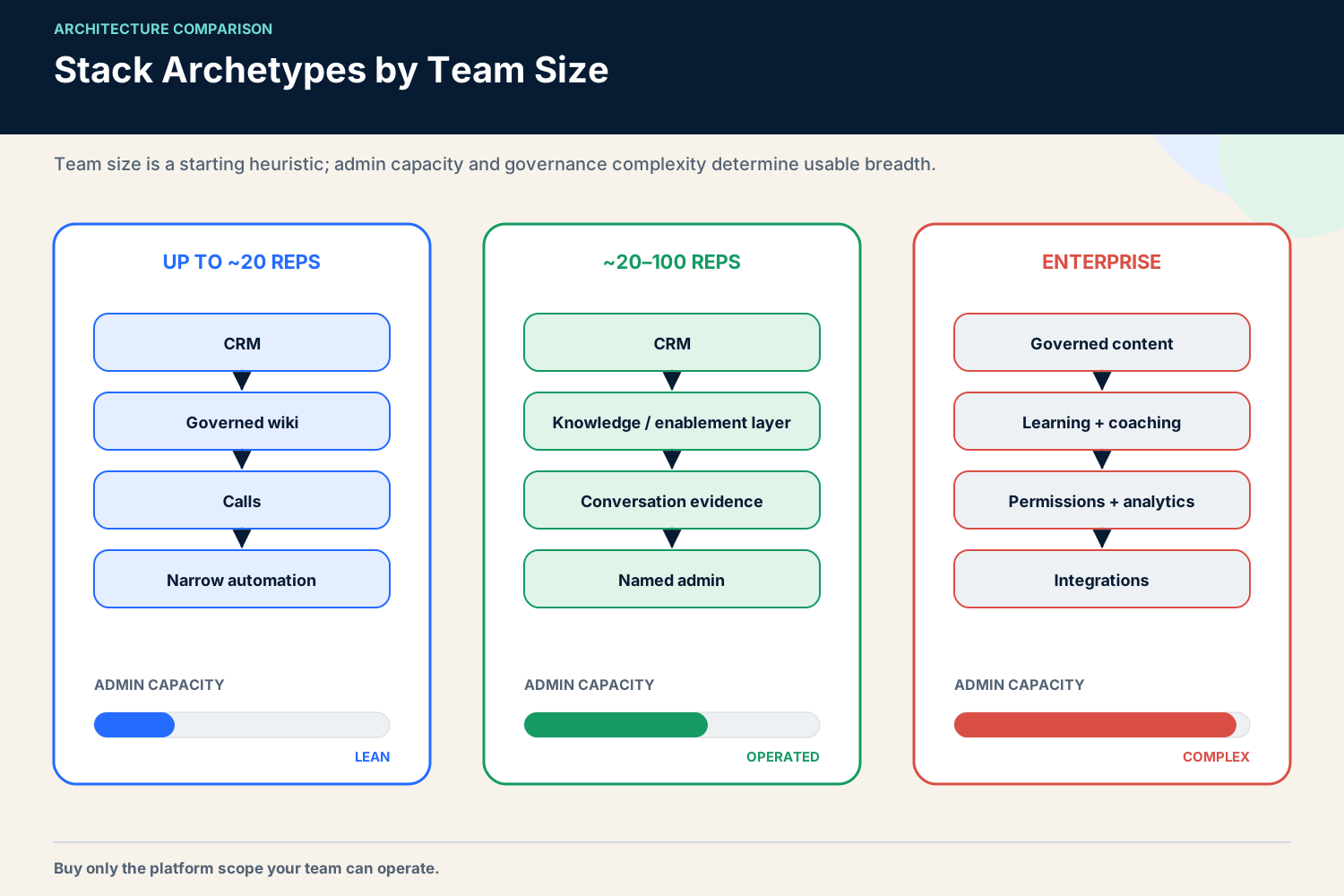
Three stack archetypes for teams up to 20 reps, 20 to 100 reps and enterprise organizations.
Team size is a heuristic; governance complexity and admin capacity determine how much platform you can use.

18 / Total cost, rollout and adoption

Total cost, rollout and adoption

I did not publish three earlier owner observations as market facts. They covered seat price, setup cost and low adoption. The packet lacks dated, comparable evidence across this market.
Instead, build a scoped total-cost worksheet.

Direct commercial cost

Include the plan, minimum seats, added modules and AI use or credit costs. Check test environments, support and contract length, then ask which demo features require another product.

Implementation cost

Include discovery, setup, identity work, CRM links, content moves and the content map. Add data setup, tests and training, then confirm what each party owns.

Ongoing operating cost

Include platform administration and content checks alongside learning design, manager review and integration upkeep. Reporting also takes time, so estimate monthly hours for each role.

Switching and exit cost

Include export formats and buyer-room history. Add learning records, data, content labels and workflow links. Ask how long read access lasts after the contract.

Adoption evidence

Avoid one broad adoption rate. Use workflow metrics:
  • eligible seller actions;
  • content searches that produced a useful result;
  • assets used in active deals;
  • program participation and manager follow-through;
  • coaching moments reviewed;
  • buyer rooms used for actual collaboration;
  • CRM-surfaced guidance accepted;
  • fallback to desktop files, chat or email.
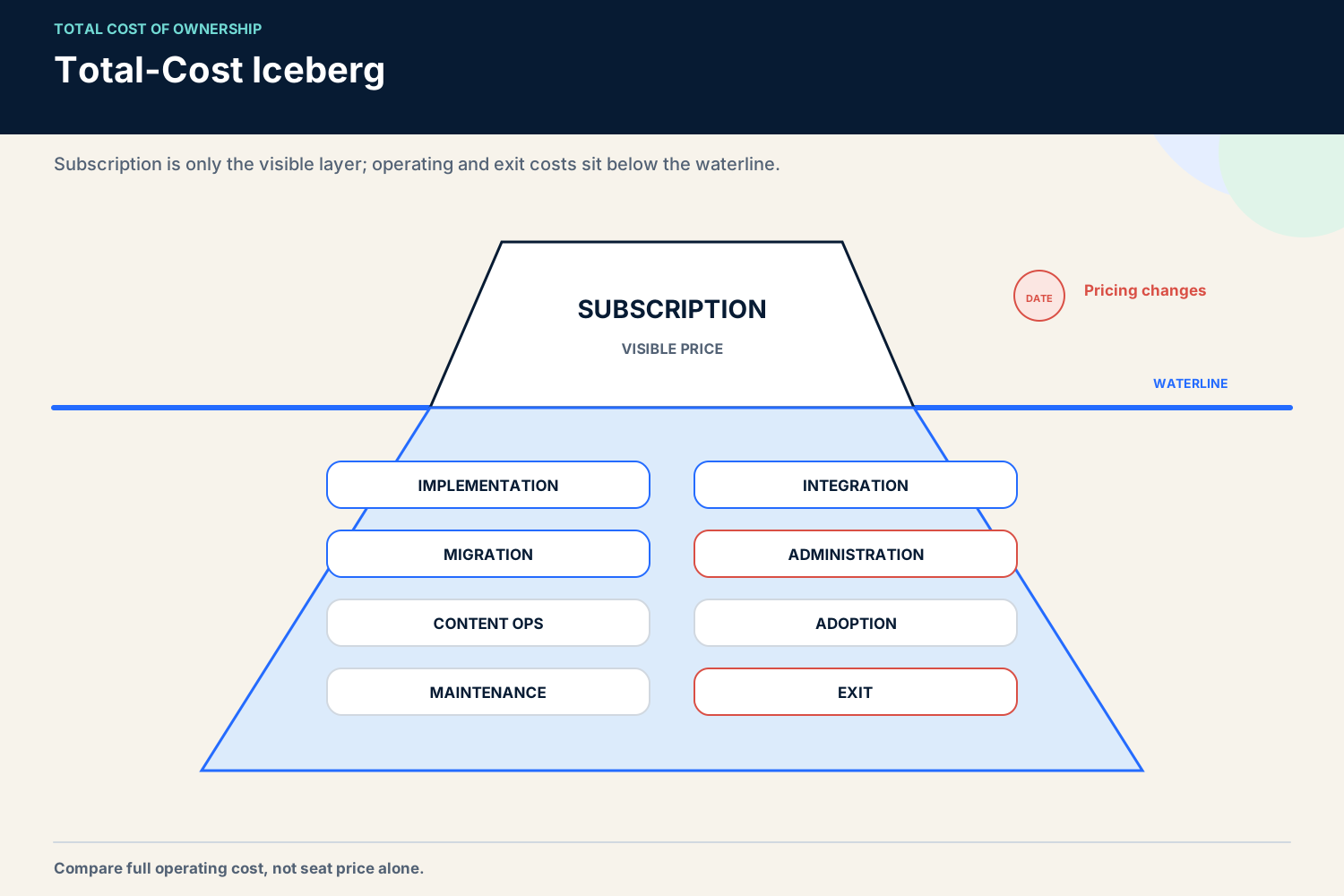
The last metric matters most because a platform can report active users while real sales work still happens elsewhere.
An iceberg showing subscription price above water and implementation, integration, migration, administration, adoption and exit cost below water.
Compare full operating cost, not the visible seat price alone.

19 / A pilot scorecard I would actually use

A pilot scorecard I would actually use

Choose two or three real workflows rather than touring every feature, then score each workflow on evidence.
CriterionProof required
Time to useful resultA seller completes a real job without vendor assistance
Source trustThe answer or asset shows owner, freshness and source
In-flow deliveryThe job works in CRM, browser, call or buyer workspace as designed
Admin effortInternal owner records configuration and maintenance time
Permission controlTest users see only authorized content and records
Correction pathA seller flags an error and the owner can fix the source
MeasurementThe team can observe the chosen behavior or process outcome
PortabilityThe buyer demonstrates export and dependency boundaries
Use the same case for each shortlisted product while keeping screens, results, errors and administration time; a vendor demo can teach the product but cannot replace your own workflow proof.

20 / The due-diligence questions I would send before

The due-diligence questions I would send before the demo

A fixed question set makes demos easier to compare. I would send the workflow and proof rules before the demo. The vendor must show the answer in the product. A roadmap statement is not proof.

Content and knowledge

Who can publish, approve and retire content? Can every asset have an owner and review date? What happens when one fact appears in several files? Show how a seller flags a wrong answer. Then show how the correction reaches search and AI answers.
Ask the vendor to find one exact answer from sample content. Include one old file and one current file. A useful system should show its source and date. It should not blend both with false confidence.

AI behavior

Which AI features are live today? Which are optional, beta or limited by plan? Which customer data trains a model? Can administrators choose sources, limit actions and review logs? What happens when evidence is missing?
Ask for a live failure, not just a perfect answer. Remove a needed source. See whether the product stops, asks for help or invents an answer. Repeat the test with a user who has limited access.

CRM and workflow

Which CRM objects can the product read or write? Which fields and activities are in scope? Can writes use append, create and propose modes? When is overwrite allowed? How are duplicates and deal links handled? Can the integration be tested in a sandbox?
Ask the vendor to complete one full workflow. Find current guidance in the CRM. Use it in a real task. Record the action and show the result. An integration logo is not enough.

Learning and coaching

Can a program follow role, region or stage? How does the system separate completion from real behavior? What can managers review? Who can see sensitive coaching data? Can call proof guide coaching without an automatic performance judgment?
Ask the product to trace one skill from learning to live work. A manager should observe the final moment. If the link is only a dashboard trend, say so.

Buyer collaboration

What can buyers see, upload or download? How does access expire? Can the team revoke it immediately? Can a buyer space move into onboarding without internal notes? What data returns to the CRM?
Ask the vendor to run the full external-user flow. Internal preview mode often hides the friction a buyer experiences.

Commercial and exit terms

Request the exact edition and seat types in writing. Include minimums, AI credits, storage and support. Add setup, renewal terms and overages. Ask which demo features need another product. Request a sample export. Mark any data without a useful export.
These questions reduce surprise. They also reveal fit with daily work. A vendor should show access, correction and export behavior. If it cannot, the workflow is not ready for high trust. Polished output does not close that gap.

21 / Common implementation failures

Common implementation failures

Migrating the mess

Teams often move every old deck, recording and playbook into the new platform. Search improves temporarily, then stale and duplicate material overwhelm trust. Start with a small governed collection and expand after ownership works.

Designing for enablement instead of sellers

An elegant taxonomy can be useless during a live deal, so observe the actual seller job: what question appears, where the rep is working, how much time is available and what evidence is required. Configure around that moment.

Treating launch as adoption

Training attendance and logins do not prove that sellers apply the system, so measure the target workflow, fallback behavior and manager reinforcement; remove old paths where appropriate, but do not hide adoption problems by forcing meaningless clicks.

Buying analytics without a decision

Dashboards create cost when nobody knows what action follows a signal, so name the owner, review frequency and possible decision for every metric; if no decision changes, do not collect the metric merely because the product can.

Underfunding administration

Broad platforms require content operations, permissions and integration care together with program design and change management; assign the hours and owner before the contract, or the tool becomes a library maintained by one overwhelmed person.

Confusing vendor evidence with your forecast

Customer stories can show what is possible in a named context. They do not establish your expected ramp time, win rate or revenue. Build a local baseline and report vendor claims as vendor claims.

Allowing AI to outrun governance

AI answers, summaries and coaching signals scale the source system, so weak permissions, freshness and correction let AI distribute the weakness faster. Begin with source ownership and bounded actions.

Ignoring the exit

The contract may end while workflows, buyer rooms and learning records remain operational dependencies. Test export and ownership before purchase. The team should know how it can leave.

22 / When sales enablement software is not worth

When sales enablement software is not worth buying

Do not buy a dedicated platform yet when:
  • the team cannot name the bottleneck;
  • content has no owner or lifecycle;
  • CRM data and ownership are unreliable;
  • no one will administer the platform;
  • managers will not use the coaching or readiness output;
  • the workflow can be solved with a governed wiki or existing CRM capability;
  • procurement requires a revenue promise the pilot cannot support;
  • sellers already avoid the tools you own and no adoption mechanism will change.
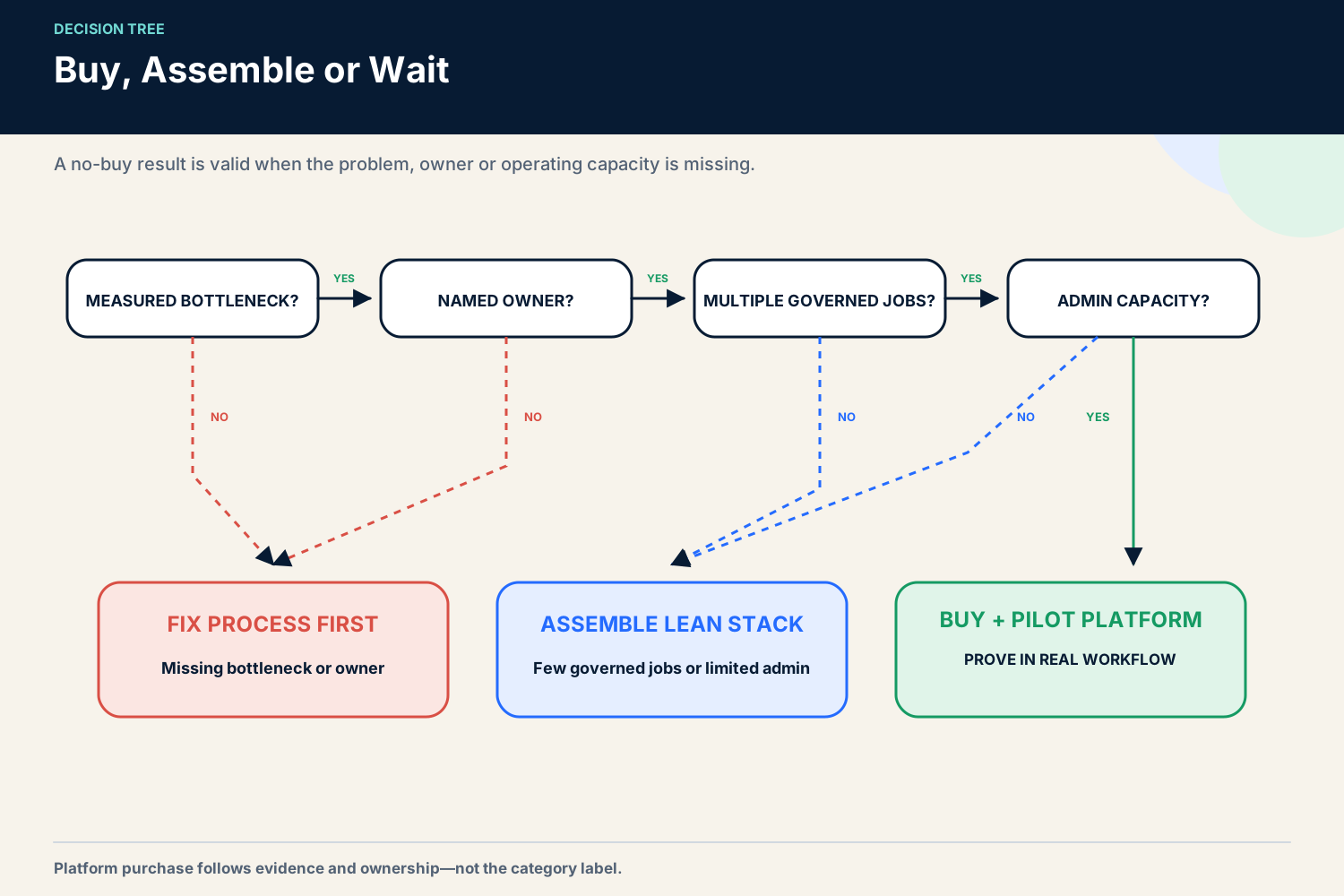
This is not an argument against platforms; it is an argument for sequencing. Process ownership, content governance and a baseline make a platform more valuable; without them, software amplifies disorder.
A decision tree that routes a team to buy a platform, assemble a lean stack or wait and fix process first.
The no-buy result is valid when the bottleneck, owner or evidence is missing.

23 / FAQ

FAQ

What is sales enablement software?

Sales enablement software helps sellers find and apply content, knowledge, training, coaching or process guidance. Broad platforms cover several jobs. Focused products address calls, knowledge, readiness, CRM guidance or buyer work.

What is the best sales enablement software for a B2B team?

There is no universal winner. My enterprise starting point is Highspot. My in-flow knowledge pick is Guru, and my conversation-coaching pick is Gong. My small-team default is a lean CRM, knowledge and meeting-evidence stack. Validate every choice against a measured workflow.

How is sales enablement software different from a CRM?

A CRM is the system of record for accounts, contacts, opportunities and activity; enablement software supplies or governs content, learning, coaching and process guidance; CRM-native products blur the boundary, but the responsibilities remain different.

Which sales enablement features matter most?

The most important features are tied to your bottleneck. Across categories, I still require named sources and clear access. I also require workflow delivery, correction, useful data and export.

Can sales enablement software handle training and onboarding?

Yes: Mindtickle and Allego emphasize readiness and coaching, while Highspot, Seismic and Showpad include learning capabilities in broader platforms; test whether completion connects to observed seller behavior.

How much does sales enablement software cost?

Most broad platforms use quote-led pricing. Total cost covers seats, modules and AI use; setup, migration, administration and content operations add more. Salesforce publicly listed Sales Programs at $100 per user per month billed annually on the review date; related Salesforce products can add cost, so recheck every figure at purchase time.

Is a full platform worth it for a small team?

Usually not as the first move in my framework: up to about 20 reps, I would start with the CRM, a governed knowledge base, meeting evidence and targeted automation; buy a platform when workflow proof, complexity and an operating owner justify it.

24 / My final recommendation

My final recommendation

Choose the bottleneck before the category and the category before the vendor.
For a small team, I would assemble the lean stack and prove the workflow. For a mid-market team, I would compare Highspot and Guru based on breadth, with Gong where call evidence matters; for enterprise, I would start with Highspot but require a pilot that proves retrieval, governance, in-flow delivery, admin effort and changed seller behavior.
Do not buy a broad platform to avoid making an operating decision. Make the decision first. Then ask the software to prove it can carry that decision into real sales work.

Research note

Methodology

  1. 01The comparison combines guided evaluations of Highspot, Seismic, Guru and Gong, an observed Notion setup and current official documentation for the remaining products.
  2. 02It is not a common-input ten-product test; unequal access prevents a numerical rank or universal winner.
  3. 03Pricing visibility and product scope were checked on 26 August 2026 and must be reconfirmed for the exact plan, region and implementation.
Read the full methodology

Source ledger

Sources & editorial notes

  1. 01
    Sales Programs Pricing

    Salesforce · official pricing page; reviewed 2026-08-26. Specific edition only; Pricing subject to change; Related Salesforce apps, base products and services may add cost

  2. 02
    Sales Software Pricing

    HubSpot · official pricing page; reviewed 2026-08-26. Promotions, prices, credits, limits and bundle requirements can change; Not a complete enablement-platform TCO

  3. 03
    Highspot for sales enablement teams

    Highspot by Seismic · official product page; reviewed 2026-08-26. Vendor-authored; Customer outcomes are not independent benchmarks; Commercial packaging requires live confirmation

  4. 04
    Seismic Enablement Cloud

    Seismic · official product page; reviewed 2026-08-26. Vendor-authored; Does not establish implementation effort or adoption

  5. 05
    Showpad for Enablement Teams

    Showpad · official product page; reviewed 2026-08-26. Vendor-authored; No hands-on access claimed; Vendor outcome claims excluded from expected results

  6. 06
    Official Subscription Services Description

    Mindtickle · official product/service description; reviewed 2026-08-26. Vendor-authored; Packaging and entitlements require current commercial confirmation; No hands-on access claimed

  7. 07
    Allego Sales Enablement Software and Sales Training Platform

    Allego · official product page; reviewed 2026-08-26. Vendor-authored; Customer outcomes excluded from expected results; No hands-on access claimed

  8. 08
    Calls

    Gong API Documentation · official product documentation; reviewed 2026-08-26. Plan and permission boundaries may apply; Vendor documentation is not accuracy evidence

  9. 09
    CRM integrations

    Gong Help · official product documentation; reviewed 2026-08-26. Feature availability depends on plan and configuration; Gong connects to one CRM at a time

  10. 10
    Guru for Sales teams

    Guru · official product page; reviewed 2026-08-26. Vendor-authored; Retrieval quality depends on source ownership and verification

  11. 11
    Sales Enablement Software That Reps & Buyers Love

    Dock · official product page; reviewed 2026-08-26. Vendor-authored; No hands-on access claimed; Comparative vendor claims excluded

  12. 12
    Wikis & verified pages

    Notion Help Centre · official product documentation; reviewed 2026-08-26. Some verification features depend on plan; Notion is not treated as a full sales enablement platform

  13. 13
    Running Codex safely at OpenAI

    OpenAI · official product safety and operations article; reviewed 2026-08-26. Supports internal-build governance framing only; Does not prove sales workflow performance or lower TCO

  14. 14
    2026 Agentic Coding Trends Report

    Anthropic · official vendor report; reviewed 2026-08-26. Vendor-authored trend report; Does not prove custom tooling is free, universally preferable or a replacement for SaaS

Corrections or primary material: contact the corrections desk.

About the author

Anastasiia Krynytska

Anastasiia Krynytska is a LeadGen Team Lead at Softermii and the lead editor of Luck My Sales. She covers AI-assisted outbound, account research, qualification, messaging, CRM handoffs and revenue workflows from a practitioner’s perspective.View author profile LinkedIn

Continue reading

01 · News analysis

AI sales is moving from assistant to operating layer

The category is expanding from drafting support into research, pipeline decisions, recommended actions and controlled execution.

Read news
02 · Field analysis

In AI sales, the handoff may be the product

Models are becoming accessible; durable value sits in the controlled transition from signal to seller action.

Read analysis
03 · Research framework

Sales AI Workflow Signals 2026

A launch framework for mapping the products, controls and buying questions shaping AI-enabled revenue work.

Read reports

Luck My Sales briefing

Useful context, once a week.

News, explanations and original research from this desk. No noise.
The newsletter is still being built. We will contact you when the first edition is ready.