
Operator-led pipeline pillar · AI sales forecasting
AI Pipeline Management: Deal Evidence, Stage Control and Human Review
AI may assist research organization and drafting. A human editor reviews every published page, checks material claims against the cited sources and owns the final decision. No company paid for placement in this article.
AI use policyAgent-ready brief
AI takeaways
Keep the key points here, or take a source-aware text brief into Claude, ChatGPT or another AI workspace.- 01Treat every stage as a claim that requires a defined buyer-evidence contract.
- 02Use AI to collect evidence, flag exceptions and draft recommendations—not to silently move deals.
- 03Review missing next steps, overdue actions, proposal inactivity and repeated close-date changes every week.
- 04Keep stage changes, disqualification, forecast removal, pricing and ownership behind human gates.
- 05Measure whether the workflow reduces stale deals and review time without increasing correction rate or hidden write-back errors.
AI should make pipeline evidence easier to inspect and correct; it should not make commercial decisions invisible.
01 / What AI pipeline management should do
What AI pipeline management should do
- assemble evidence: connect opportunity history, email, calendars, calls, proposals and approved enrichment to the correct account and contact;
- test rules: compare each stage against required evidence and freshness rules;
- surface exceptions: find missing next steps, overdue actions, contradictory buyer signals, duplicate records and unsupported close dates;
- prepare review: summarize the evidence and recommend an action to the responsible seller or manager.
02 / Define a stage-evidence contract
Define a stage-evidence contract
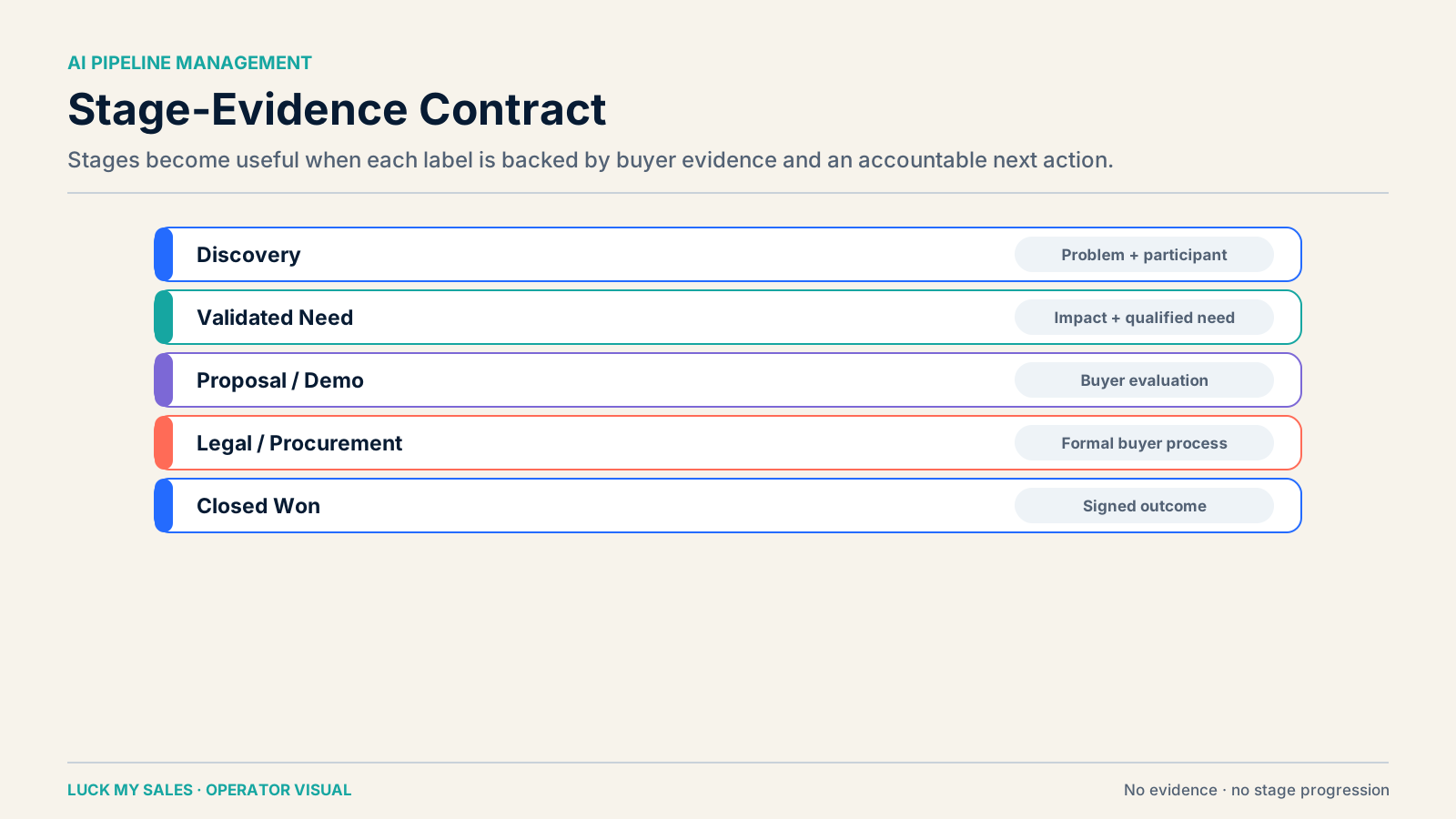
- Discovery;
- Validated Need;
- Proposal or Demo;
- Legal or Procurement;
- Closed Won.
| Stage | Minimum evidence | Common contradiction | Decision owner |
|---|---|---|---|
| Discovery | correct account and contact, reason for the conversation, agreed follow-up | seller logged activity but buyer never engaged | seller |
| Validated Need | buyer-described problem, business relevance and plausible decision path | only a product demo request with no validated need | seller and manager for high-value deals |
| Proposal or Demo | agreed solution scope, buyer participants and a dated next action | proposal sent, but no two-way response | seller |
| Legal or Procurement | buyer-side commercial, legal or procurement activity | internal seller task presented as buyer progress | manager or RevOps for forecast category |
| Closed Won | executed agreement or approved commercial equivalent | verbal enthusiasm without completed acceptance | authorized commercial owner |
- the opportunity and account it belongs to;
- the buyer or seller actor;
- a source link or record identifier;
- a timestamp;
- the claim it supports;
- the extraction confidence when AI created it;
- the person who can correct it;
- an expiry or freshness rule.
Calibrate the contract on real opportunities
- hide the seller's forecast category and probability;
- inspect the buyer-side evidence and its date;
- identify the latest commercial commitment or contradiction;
- assign the stage that the evidence supports;
- compare that decision with the current CRM value;
- record why the two values differ.
Treat missing and negative evidence differently
03 / Remove zombie deals from the working view
Remove zombie deals from the working view
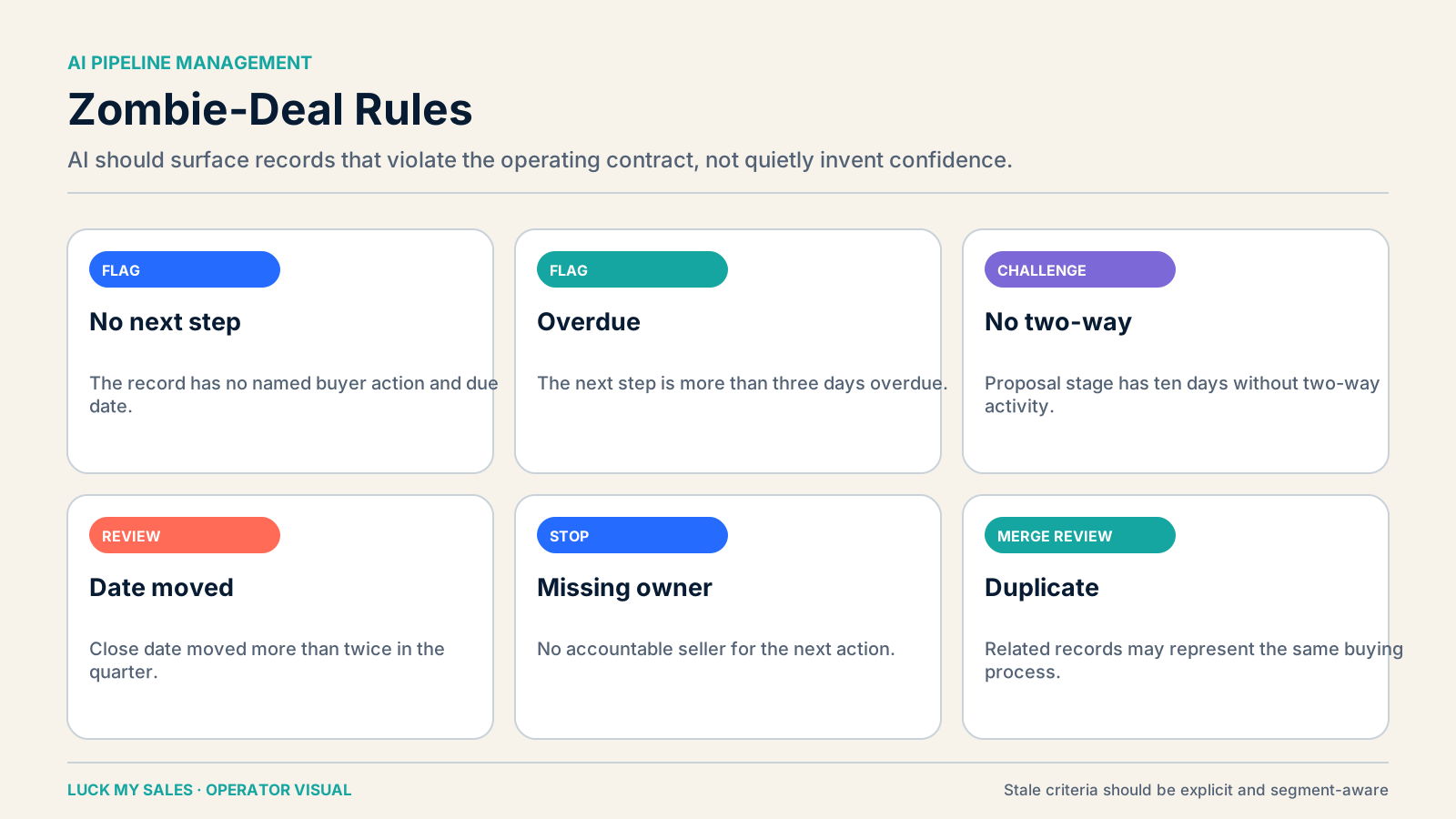
- no next step recorded;
- the next-step date overdue by more than three days;
- ten or more days without two-way activity at Proposal or Demo;
- a close date moved more than twice in the same quarter.
Missing evidence
Contradictory evidence
Confirmed inactivity or loss
- current stage and age;
- current next step and due date;
- latest buyer-side evidence;
- latest seller-side activity;
- number of close-date changes;
- identified contradiction or missing field;
- recommended review action;
- evidence links;
- responsible reviewer.
04 / Run the Tuesday pipeline review
Run the Tuesday pipeline review
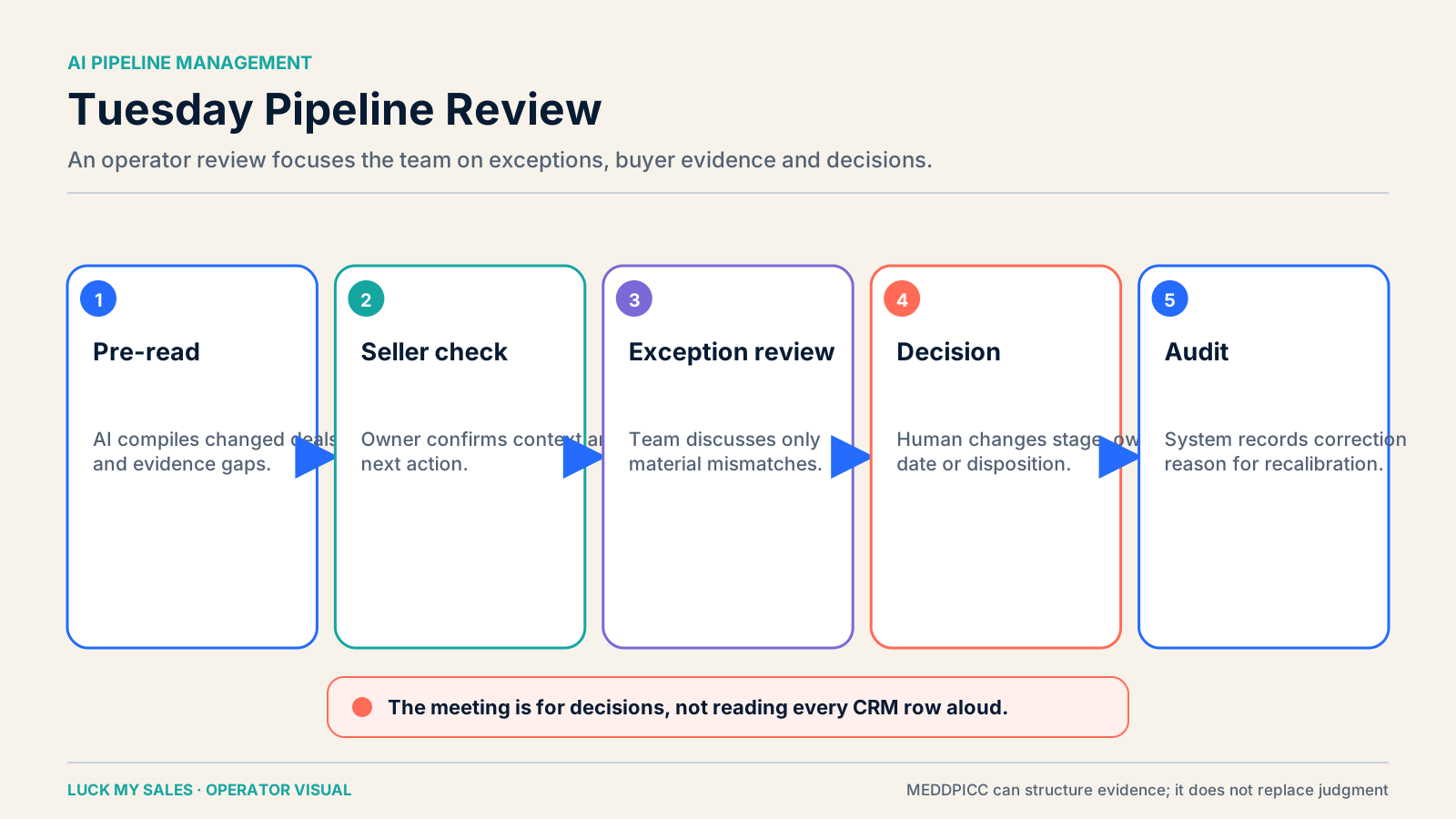
Before the meeting
- unsupported stage;
- overdue or missing next step;
- proposal inactivity;
- close-date movement;
- missing decision participant;
- conflicting call, email or CRM evidence;
- potential duplicate;
- owner mismatch.
During the meeting
- What has the buyer done?
- Which source proves it?
- What changed since the previous review?
- What is the next buyer-relevant action?
- Who owns it and when is it due?
- Does the stage still describe reality?
- Does the forecast category still describe the evidence?
After the meeting
Store a decision record for every material exception
- the value before review;
- the evidence and rule that created the exception;
- the AI recommendation, if one existed;
- the seller's response;
- the final human decision;
- the reviewer and review date;
- the reason code;
- the approved next action and due date;
- the date of the next audit.
Prioritize the queue by consequence
05 / Give automation explicit rights
Give automation explicit rights
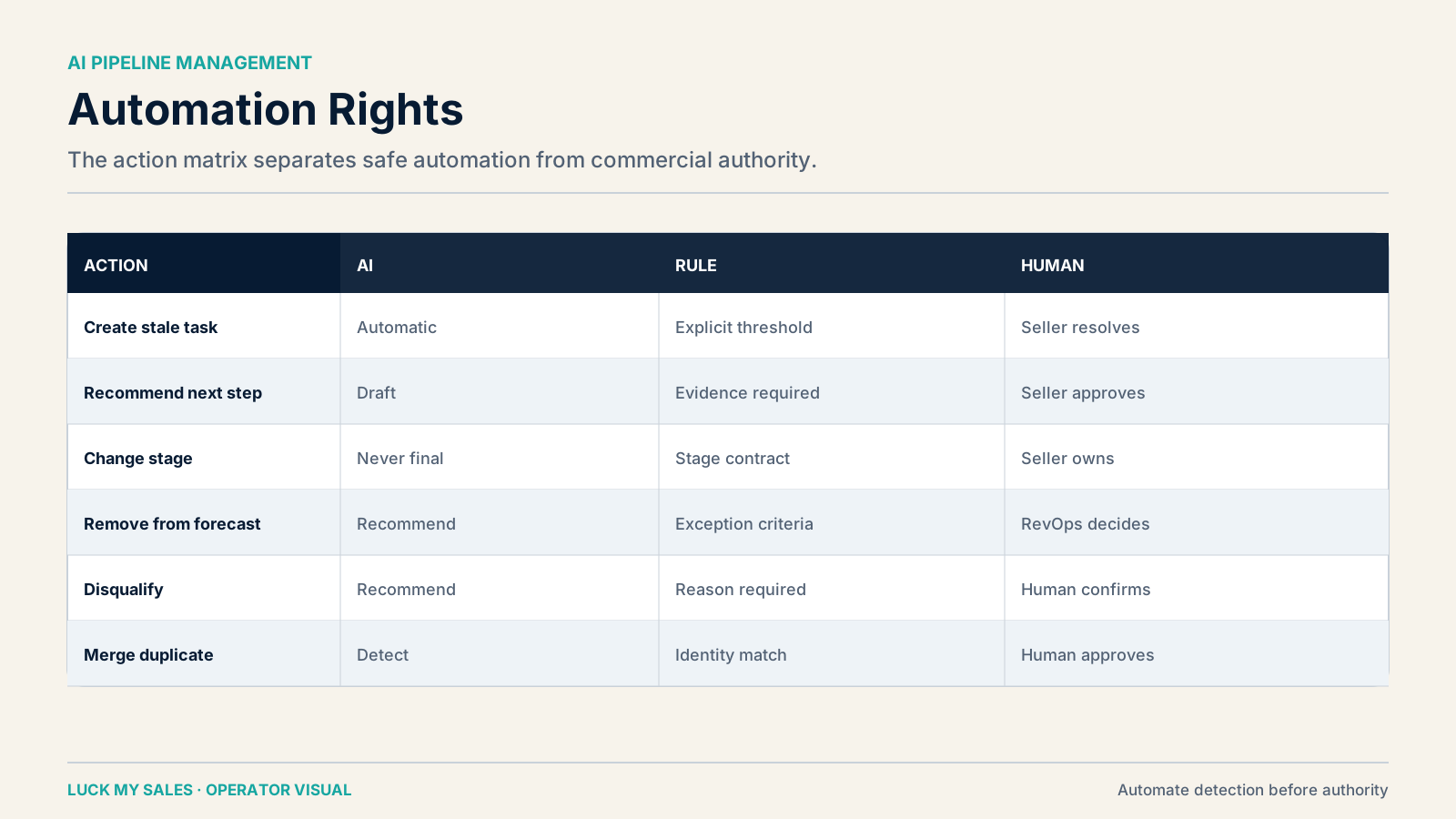
| Action | Control model | Practical rule |
|---|---|---|
| create review task | automatic | AI may create a task when a published rule is triggered |
| add stale or risk flag | automatic | flag must show the evidence and rule |
| summarize new evidence | automatic with source links | reviewer must be able to open the source |
| recommend next step | AI recommends, seller approves | no invented buyer promise or commercial commitment |
| move opportunity stage | human only | AI may recommend, but the responsible seller or manager changes it |
| remove from forecast | AI recommends, manager or RevOps approves | preserve the previous state and reason |
| disqualify opportunity | human approval | use an explicit disposition and evidence |
| change amount or pricing | authorized human only | AI may not create a commercial offer |
| change account owner | sales management | routing or account rules may suggest the owner |
| merge duplicates | deterministic match plus human confirmation | never lose notes, contacts or attribution silently |
- source matching becomes unreliable;
- transcript or speaker attribution degrades;
- duplicate volume rises unexpectedly;
- correction rate exceeds the approved threshold;
- an integration writes to the wrong object or field;
- audit links disappear;
- the same error repeats across records.
06 / Design CRM write-back as a contract
Design CRM write-back as a contract
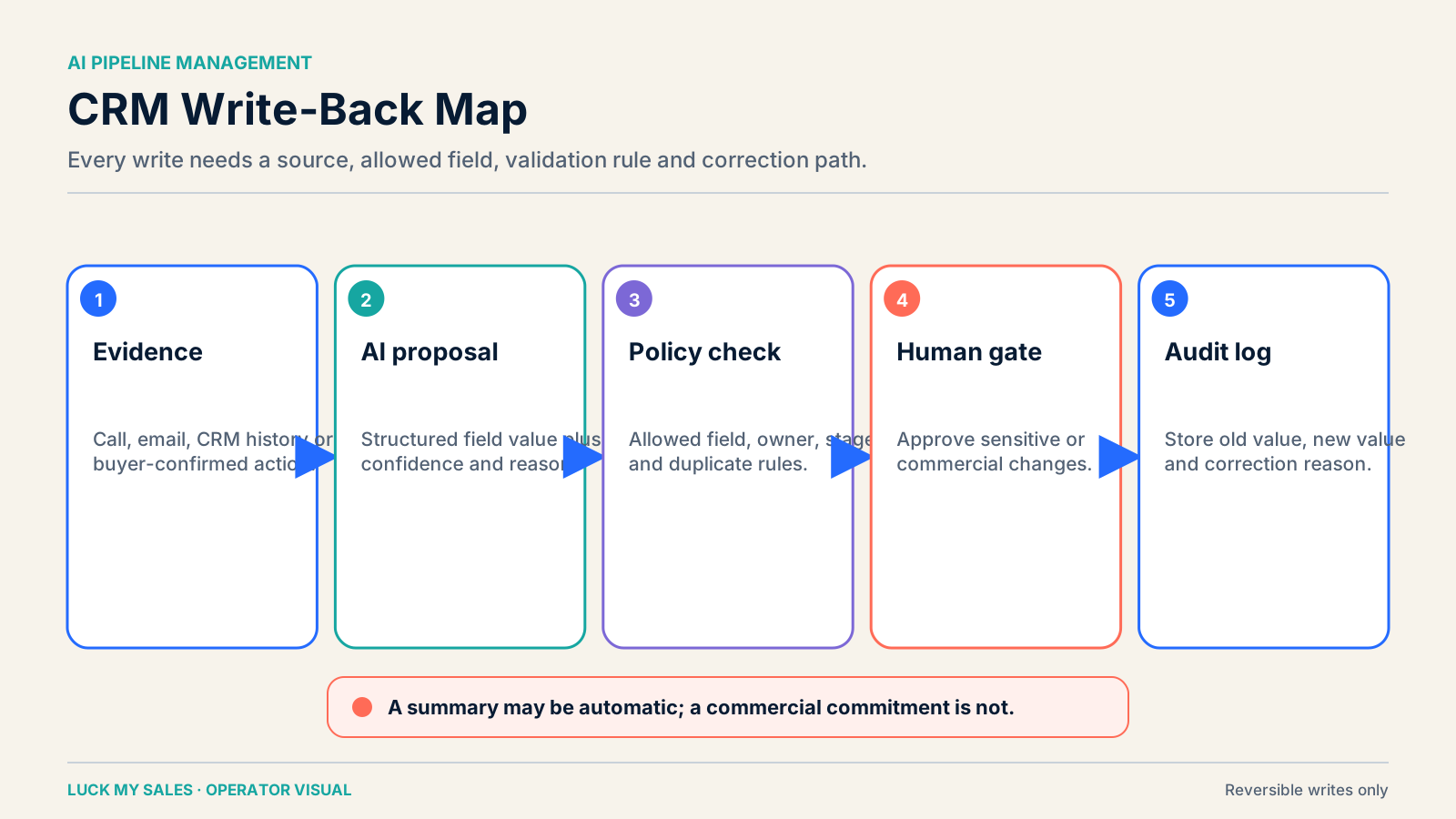
- source object;
- target object and field;
- allowed values;
- transformation rule;
- required evidence;
- permission level;
- approval state;
- conflict behavior;
- rollback method;
- audit history.
Machine-owned inspection fields
Recommended fields
Protected commercial fields
07 / Connect evidence without confusing activity with progress
Connect evidence without confusing activity with progress
- seller activity from buyer activity;
- one-way follow-up from a two-way exchange;
- an email open from a meaningful response;
- a scheduled internal task from a buyer-confirmed meeting;
- a transcript mention from an agreed commitment;
- a proposal sent from a proposal reviewed or redlined;
- a stage update from evidence that supports the stage.
- current owner;
- stage and stage-entered date;
- amount and currency;
- next step, owner and due date;
- latest meaningful buyer interaction;
- decision participants where known;
- forecast category and reviewer;
- change history.
08 / Match tools to the workflow
Match tools to the workflow
- what counts as current buyer evidence;
- who owns each field;
- how a seller corrects an extraction;
- when a recommendation becomes a CRM change;
- how review time and errors are measured.
09 / Measure pipeline quality, not automation volume
Measure pipeline quality, not automation volume
- percentage of material opportunities with a current next step;
- stale opportunities by stage and segment;
- close-date movement frequency;
- stage corrections after review;
- time spent preparing and running the pipeline review;
- AI recommendation acceptance and correction rate;
- unsupported stage rate;
- duplicate and owner errors;
- forecast variance by horizon and segment;
- progression from validated stages to actual outcomes.
- source missing;
- source matched to the wrong record;
- extraction wrong;
- speaker wrong;
- rule unsuitable;
- approved exception;
- human decision changed after new evidence.
Measure coverage, accuracy and action separately
Use cohort views instead of one global pipeline average
- new business from expansion;
- SMB from mid-market or enterprise;
- direct sales from partner-led deals;
- early-stage opportunities from procurement-stage opportunities;
- high-velocity motions from long buying cycles.
10 / Implement in controlled stages
Implement in controlled stages
Week 1: define the pipeline contract
Week 2: connect evidence in read-only mode
Weeks 3–4: run shadow mode
After the shadow period: automate low-risk inspection
Only after stable review: consider broader write-back
11 / Failure modes to expect
Failure modes to expect
Vague inputs
Missing commercial context
Wrong record matching
One-sided activity presented as buyer intent
Recommendations becoming facts
Review fatigue
Model drift by segment
12 / The operating principle
The operating principle
Research note
Methodology
- 01The operating model comes from pipeline workflows Anastasiia Krynytska personally managed, including a five-stage MEDDPICC-based pipeline and a Tuesday review cadence.
- 02The stale-deal thresholds are operator rules used to create a review queue, not universal benchmarks. Teams should recalibrate them by sales cycle and segment.
- 03Product statements are limited to current official sources. The article does not claim that a tool caused a business outcome or that one vendor is universally best.
Source ledger
Sources & editorial notes
- 01Pipeline Inspection
Salesforce · Official documentation used to bound Salesforce pipeline-inspection claims.
- 02Pipeline Inspection metrics and fields
Salesforce · Official documentation used for current field and metric context.
- 03Use the forecast tool
HubSpot · Official documentation used for bounded CRM forecast workflow claims.
- 04Revenue forecasting software
Gong · Official product source used for current conversation-evidence claims.
- 05Forecast
Clari · Official product source used for current forecast-workflow claims.