Weekly industry intelligence · No noiseSubscribe to the Luck My Sales newsletterFree briefing

Independent operator-led media on AI in B2B sales

Menu

Evidence-state comparison · AI sales forecasting

Best Sales Forecasting Tools for Pipeline Accuracy

A workflow-first comparison of CRM forecasting, conversation evidence, revenue orchestration and planning tools for SMB and mid-market sales teams.
Editorial disclosure

AI may assist research organization and drafting. A human editor reviews every published page, checks material claims against the cited sources and owns the final decision. No company paid for placement in this article.

AI use policy

Agent-ready brief

AI takeaways

Keep the key points here, or take a source-aware text brief into Claude, ChatGPT or another AI workspace.
  1. 01CRM-native forecasting is often enough when the process is disciplined and the evidence already lives in the CRM.
  2. 02Conversation intelligence adds commercial context but should not become the only source of truth.
  3. 03Planning platforms solve a different problem from frontline opportunity inspection.
  4. 04Require evidence citations, correction logs, permissions and rollback before automatic write-back.
  5. 05The correct comparison is best by workflow and readiness, not an absolute ranking.
Includes summary, takeaways, sources and a use note.
Most sales forecasting tool comparisons start with feature grids. That is backwards. Forecasting fails less often because a dashboard lacks a widget and more often because the pipeline has no stable evidence contract.
A tool can own CRM roll-ups, conversation evidence, forecast calls, pipeline inspection or company planning. Those jobs overlap, but they are not interchangeable.
This comparison maps products to those jobs, discloses the evidence state behind each assessment and keeps the final choice tied to workflow, readiness and cost.

Choose a sales forecasting tool by the evidence and decision workflow it must own, not by an advertised AI accuracy score.

01 / Short answer

The short answer

For an SMB or mid-market team with fewer than roughly 50 sellers, start with the system already closest to the forecast decision.
  • Choose HubSpot when the team already runs a clean HubSpot pipeline and needs categories, submissions and manager roll-ups without a separate platform.
  • Choose Salesforce Pipeline Inspection and forecasts when Salesforce is the operational source of truth and the organization can maintain its configuration.
  • Evaluate Gong when recorded conversations contain decisive commercial context that the CRM does not capture well.
  • Evaluate Clari, Outreach, BoostUp or Aviso when forecast calls, roll-ups, pipeline inspection and multi-source revenue workflows justify another operational layer.
  • Evaluate Forecastio as a more focused forecasting option, but validate evidence traceability and integration depth against the actual use case.
  • Evaluate Anaplan or Pigment when the problem is company-level planning and scenarios, not merely seller opportunity inspection.
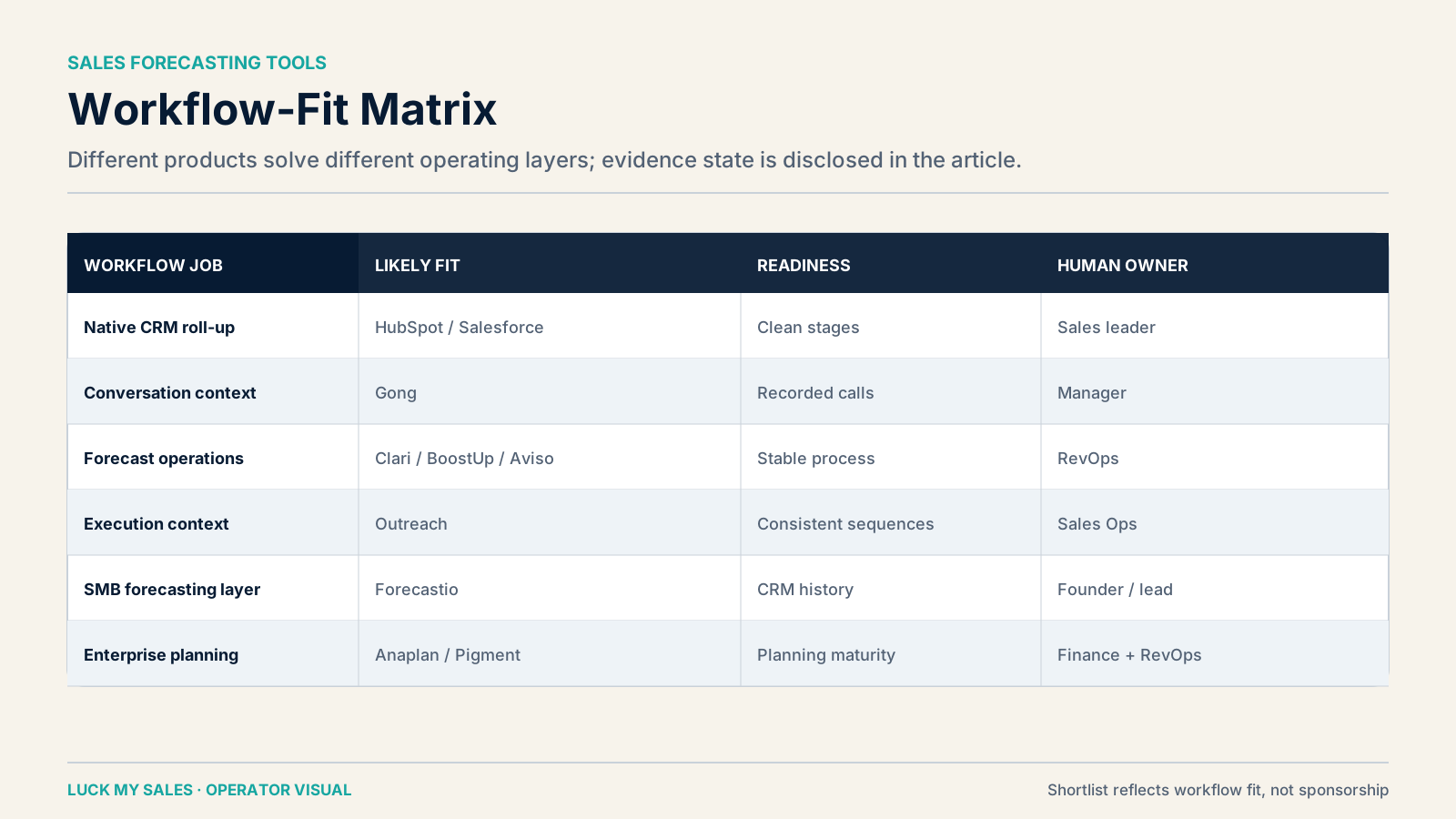
That is not a ranking from one to ten. A planning platform can be powerful and still be the wrong answer for a six-person sales team. A CRM forecast can be basic and still be sufficient when its data and weekly review are disciplined.
Sales forecasting tools mapped to CRM roll-up, conversation evidence, revenue workflow and planning jobs.
Products overlap, but their primary workflow ownership is different.

02 / How we compared the tools

How we compared the tools

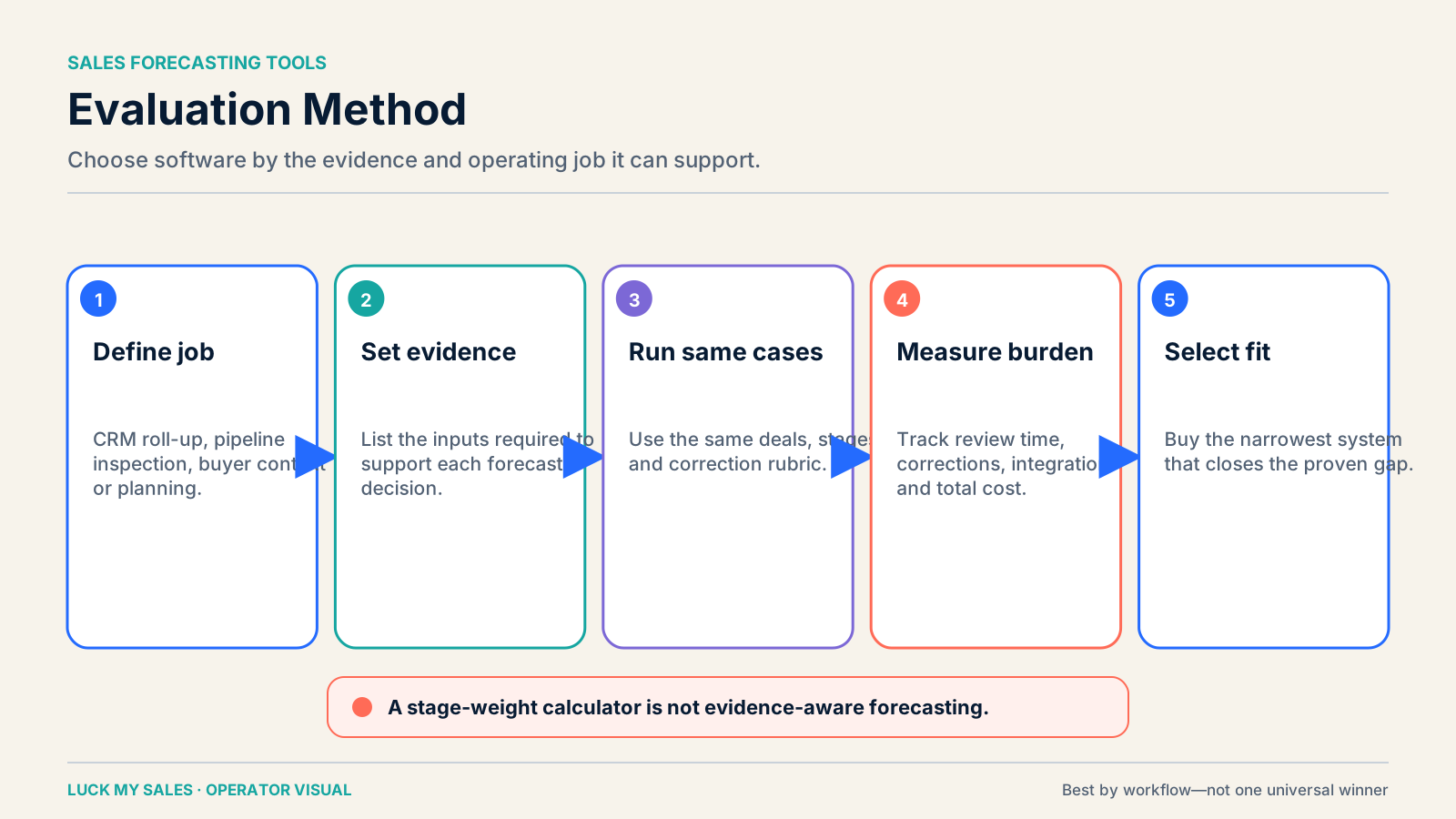
The comparison uses five questions.

1. What job does the product own?

Is it the CRM forecast, an inspection layer, a conversation source, a forecast-call workspace or a corporate planning system? A product should not receive credit for a job the buyer does not need.

2. What evidence can a reviewer inspect?

We look for opportunity history, buyer communication, calls, meetings, proposal activity, stage movement and named next steps. A score without evidence is difficult to correct.

3. What can the system change?

Recommendations, tasks and exception flags are lower risk. Silent changes to stage, close date, probability, forecast category or ownership are higher risk. The product and implementation need permissions, approval and rollback.

4. What does the team need before launch?

Stable stages, owners and CRM records matter more than feature count. Conversation intelligence needs recording coverage and consent. Planning platforms need models, governance and implementation capacity.

5. What is the total operating cost?

License cost is only one component. Add implementation, integrations, administration, AI or usage credits, data work, manager review time and seller adoption.

Start with an evidence-source test, not a feature demo

Before building a shortlist, take ten recently closed opportunities and ten still-open opportunities. For each one, identify where the strongest commercial evidence actually lives. It may be in the CRM, a call recording, a two-way email thread, a proposal or a procurement update. This exercise usually reveals the real product requirement faster than a feature grid.
If the evidence already reaches the CRM in a consistent structure, a native forecast may be enough. If the decisive evidence remains inside calls, a conversation-intelligence layer may be useful. If managers spend the forecast call reconciling several teams and systems, a revenue workflow platform may earn its cost. If the decision is about headcount, territories and company scenarios, the requirement has moved into planning.
The same test also exposes an integration fantasy. A vendor may technically connect to the CRM while failing to match the correct contact, opportunity or account. Ask the vendor to demonstrate the full lineage on your records: source event, matched entity, interpreted evidence, recommendation and any proposed write-back. A green integration badge is not evidence that this chain works.

Separate prediction from operating control

Some tools emphasize a predicted number. Others emphasize inspection, roll-ups, exception queues or planning. Those are different jobs.
  • A prediction estimates an outcome from available inputs.
  • An inspection workflow helps a manager find contradictions and stale records.
  • A roll-up collects human forecast categories through a hierarchy.
  • A planning system connects revenue expectations with resources and scenarios.
A small team often needs inspection and disciplined roll-up more than another model. A forecast that is marginally more sophisticated but difficult to review can be less useful than a simpler calculation with clear buyer evidence and named decision rights.
Five-part method for evaluating sales forecasting tools.
A responsible comparison includes evidence, rights, readiness and operating cost.

03 / Evidence state and limitations

Evidence state and limitations

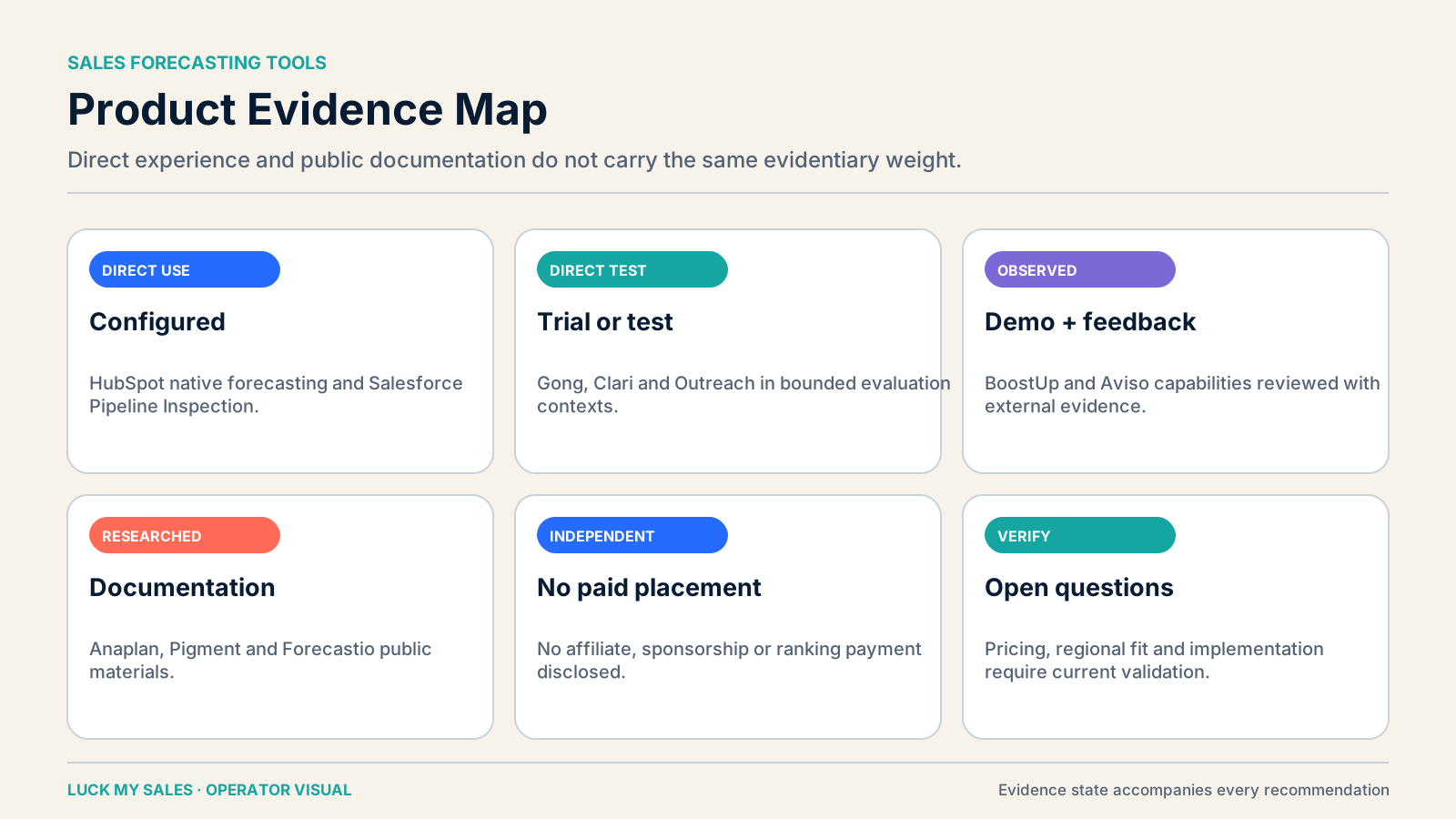
Product comparisons become misleading when a demo, a trial and daily use are treated as equal evidence.
My evidence state is:
ProductEvidence state used hereWhat that permits us to say
HubSpotpersonally used and configuredoperator observations plus current official documentation
Salesforce Pipeline Inspectionpersonally used and configuredoperator observations plus current official documentation
Gongtrialed or tested; used in real sales workflowsoperator observations bounded to the tested workflow and official claims
Claritrialed or testedproduct-fit observations, not a universal outcome claim
Outreachtrialed or testedworkflow observations plus official roll-up documentation
BoostUpdemo and user feedbackshortlist guidance, not a hands-on winner claim
Avisodemo and user feedbackshortlist guidance, not a hands-on winner claim
Forecastioofficial documentation reviewcapability mapping only
Anaplanofficial documentation reviewcategory and readiness mapping only
Pigmentofficial documentation reviewcategory and readiness mapping only
We did not run the same set of opportunities through every product. We therefore do not claim that one forecast model is more accurate than another. Accuracy claims also depend on horizon, segment, exclusions and the customer's own data, so a vendor percentage cannot be imported into another team's forecast.
Evidence-state map separating hands-on use, tests, demos and documentation-only review for sales forecasting products.
The strength of a recommendation should not exceed the strength of the underlying evidence.

04 / CRM-native forecasting

CRM-native forecasting: HubSpot and Salesforce

HubSpot

HubSpot's official forecast documentation describes forecast categories, team views and submissions inside the CRM. For many founder-led and SMB teams, that is enough operational surface.
HubSpot is the practical choice when:
  • opportunity data already lives there;
  • the sales hierarchy is simple;
  • managers need a weekly roll-up rather than another analytics implementation;
  • the team can enforce stage, next-step and close-date rules;
  • conversation evidence can be linked or summarized into the record.
Its limitation is not necessarily the forecast page. The limitation is what the CRM record contains. If the team records optimistic dates and generic next steps, the native forecast will faithfully aggregate weak inputs.
My heuristic is that HubSpot or Salesforce can cover the core need for roughly 80% of smaller teams when strict validations and a real review cadence are in place. That is an operator estimate, not a measured market share or vendor success rate.

Salesforce

Salesforce Pipeline Inspection is useful for teams that already treat Salesforce as the operational source of truth. It brings changes and pipeline context into the same environment and can support more complex processes than a lightweight CRM.
Salesforce is the better fit when:
  • the company has an established Salesforce implementation;
  • opportunity and hierarchy rules are more complex;
  • RevOps or administrators can maintain the configuration;
  • forecast workflows need to align with broader Salesforce permissions and reporting.
The danger is implementation weight. A complex platform does not create clean stages by itself. If the company cannot maintain ownership, required evidence and change history, the extra configuration becomes expensive ceremony.

05 / Conversation evidence

Conversation evidence: Gong

Gong's forecasting product page describes forecasts informed by customer-interaction and deal data. That category makes sense when important buyer evidence lives in recorded calls and messages.
In my work, Gong was useful because it was not tied to a ZoomInfo infrastructure decision and because it exposed commercial context the CRM did not consistently capture. The value was not a magical score. It was being able to inspect whether the buyer discussed timing, budget, risk, competition or a next step.
Gong is a reasonable shortlist candidate when:
  • the team records a high share of meaningful calls;
  • recording consent and retention are resolved;
  • managers will inspect cited moments rather than accept a score blindly;
  • the active pipeline and coaching need can justify the cost;
  • CRM matching is reliable.
For a very small team, it can be too expensive relative to the pipeline. My practical heuristic is to consider it only when the active pipeline is already above roughly USD 20,000 and the team has enough recorded commercial activity to use the context. That is not a formal ROI threshold.
Conversation intelligence will also become easier to assemble with custom AI workflows, transcription services and coding agents. That may reduce the need for a large standalone platform in some small teams. It is a direction of travel, not a claim that current products are already obsolete.

06 / Revenue workflow platforms

Revenue workflow platforms: Clari, Outreach, BoostUp and Aviso

Clari

Clari Forecast focuses on forecast workflows, roll-ups and revenue inspection. It belongs on the shortlist when the organization has several teams or hierarchies and the forecast call itself needs a dedicated operating layer.
The buyer should test whether Clari exposes the evidence behind a recommendation, handles the actual hierarchy and reduces review time. A polished roll-up is not enough if managers still reconstruct the deal from another system.

Outreach

Outreach's forecast roll-up documentation shows how forecasts can be rolled up inside its revenue workflow. It is most logical for teams already operating their sales execution in Outreach.
The integration advantage disappears if the opportunity source of truth, conversation history and forecast decisions remain fragmented. Check how category changes, user permissions and historical submissions are handled in the real account.

BoostUp

BoostUp positions its product around forecasting and pipeline management. Based on demos and user feedback rather than a same-input hands-on comparison, it is worth evaluating for teams that want multi-source inspection and a forecast workspace.
Demand a live demonstration with the team's fields, hierarchy and exception rules. Generic sample data does not prove the implementation will resolve entity matching or stage inconsistency.

Aviso

Aviso describes revenue forecasting inside a broader revenue platform. As with BoostUp, our evidence is demo and user-feedback level, so we treat it as a candidate by workflow rather than a tested winner.
The important questions are evidence traceability, role permissions, workflow customization, regional and language support where conversation data is used, and total implementation cost.

07 / Focused forecasting and planning

Focused forecasting and planning: Forecastio, Anaplan and Pigment

Forecastio

Forecastio describes an AI sales forecasting product with a more focused positioning than broad revenue platforms. Our assessment is documentation-led, so it belongs in a discovery shortlist rather than a performance ranking.
For a pilot, verify CRM support, field mapping, evidence citations, historical backtesting, correction workflows, permissions and export. Focused products can be simpler to adopt, but simplicity should not hide how the recommendation was produced.

Anaplan

Anaplan's sales forecasting application sits within a connected planning category. This can be valuable when sales forecasts must connect with financial, workforce or territory planning.
It is usually excessive for a small company that mainly needs cleaner opportunity inspection. The implementation and governance are part of the product decision.

Pigment

Pigment's revenue-planning material similarly addresses broader planning and scenarios. It should be evaluated by finance and revenue-planning requirements, not compared as if it were only a seller forecast screen.
My estimate is that Anaplan or Pigment is more platform than roughly 95% of small sales organizations need for frontline forecasting. That is a practical audience-fit judgment, not a verified market statistic.

08 / Comparison by workflow

Comparison by workflow

ToolPrimary workflow fitEvidence strength in this reviewBest whenMain risk to test
HubSpotCRM categories and roll-uphands-onSMB team already in HubSpotweak CRM inputs
Salesforcecomplex CRM pipeline inspectionhands-onestablished Salesforce operationadministration and inconsistent process
Gongconversation-led evidencehands-on/testcalls contain decisive contextcost, recording coverage and matching
Clariforecast calls and hierarchytrial/testmulti-team revenue workflowanother layer without cleaner evidence
Outreachexecution plus forecast roll-uptrial/testteam already uses Outreachfragmented source of truth
BoostUpforecasting and pipeline inspectiondemo/feedbackmulti-source inspection needimplementation fit unproven until pilot
Avisobroader revenue workflowdemo/feedbackforecasting inside a revenue platformcost and workflow complexity
Forecastiofocused forecastingdocsbuyer wants narrower implementationvalidate evidence and integration depth
Anaplanconnected enterprise planningdocssales forecast feeds company planningexcessive complexity for a small team
Pigmentrevenue and financial planningdocsscenarios and cross-functional planningbuying a planning platform for a CRM problem
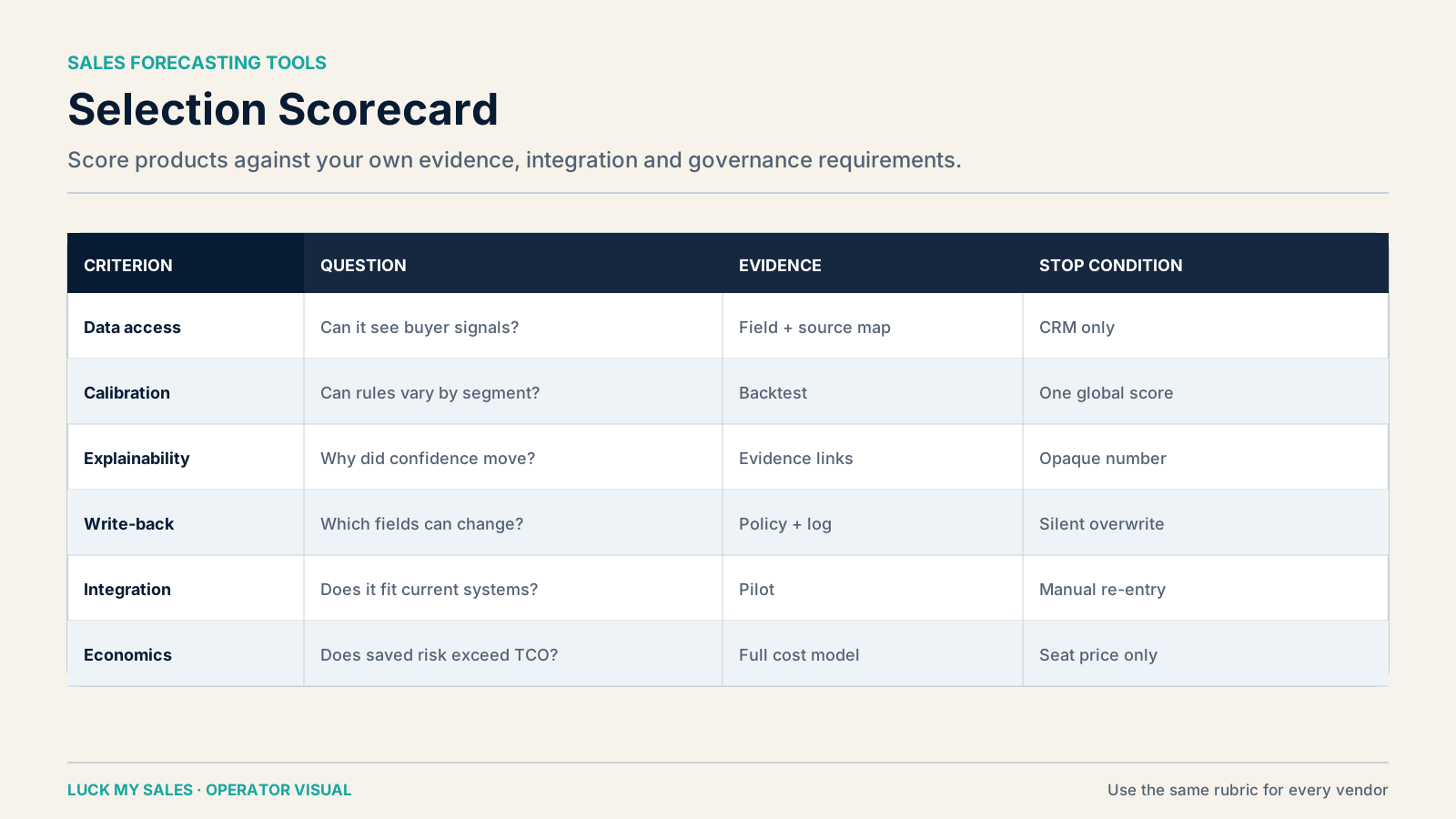
Scorecard for selecting sales forecasting tools by workflow, evidence, permissions, readiness and total cost.
Score the implementation you need, not the demo you were shown.

09 / Readiness before purchase

Minimum readiness before purchase

Do not buy a separate forecasting product until the team can answer:
  • What buyer action defines each stage?
  • Who owns next step, stage, amount, probability, close date and commit?
  • Which evidence systems can be connected lawfully and reliably?
  • What does the weekly forecast meeting decide?
  • How will recommendations be corrected and logged?
  • What actual outcome will validate the forecast?
  • Which fields may be written automatically?
  • How will the workflow be paused or rolled back?
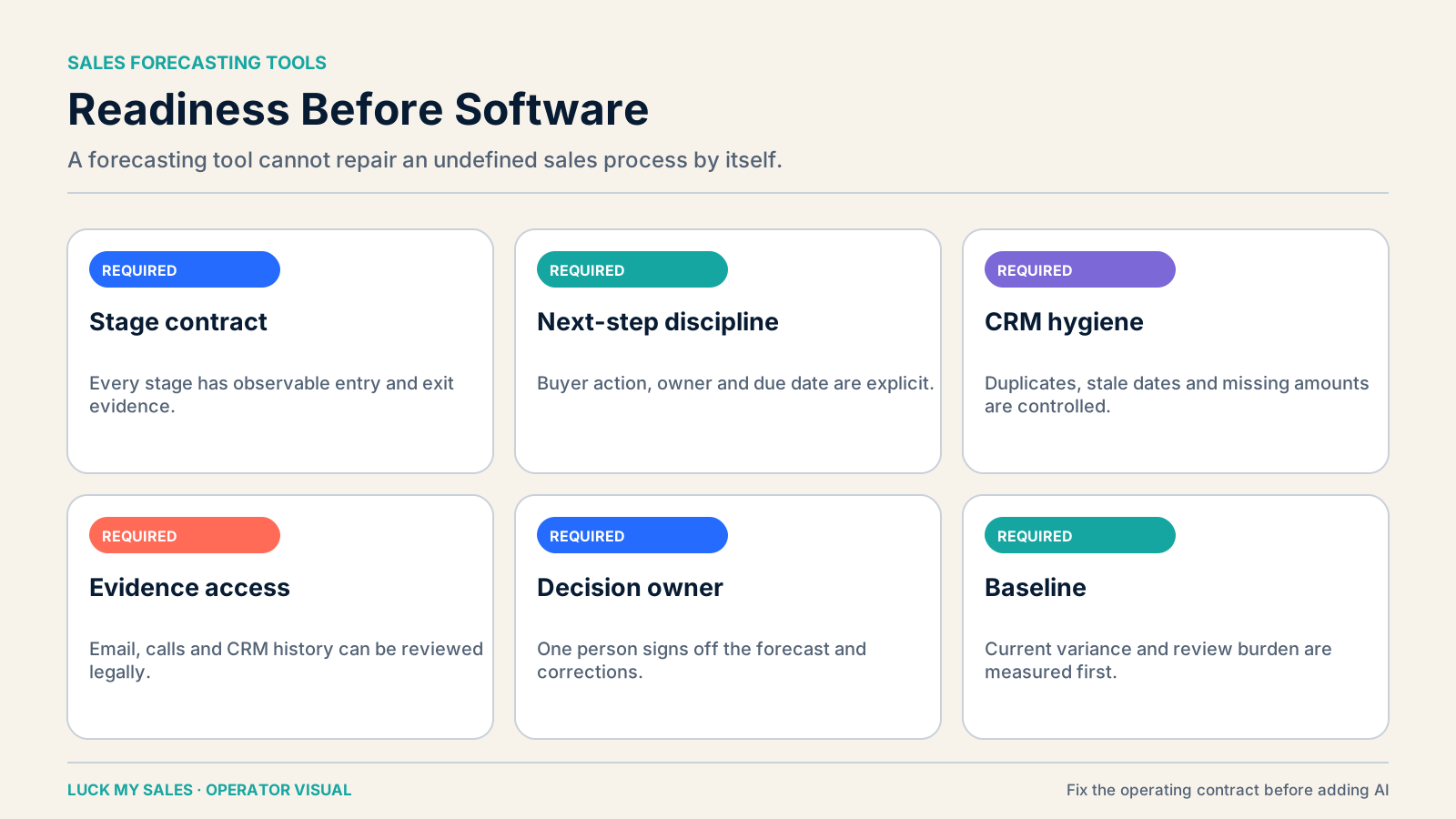
Readiness checklist before buying sales forecasting software.
A new product cannot substitute for a defined forecast operating system.
If those answers are missing, run a process and data audit first. A tool bought too early often becomes another dashboard beside the CRM.

10 / Pilot scorecard

How to run a responsible pilot

Use the same opportunity sample and forecast horizon for every shortlisted product. Keep the stage definitions, evidence set and human reviewers constant.
Measure:
  • usable recommendation coverage;
  • evidence citation rate;
  • material correction rate and cause;
  • review time per deal;
  • false upgrades and downgrades;
  • forecast variance against outcomes;
  • stale-deal detection;
  • integration and administration time;
  • seller and manager adoption;
  • total operating cost.
Run in read-only shadow mode before write-back. Include normal deals, strategic deals, stale opportunities, new segments and known edge cases. A pilot that contains only clean, active deals proves very little.
Disqualify a product if it cannot show why it made a consequential recommendation or if the team cannot control who may change the record. Stage weight multiplied by amount is a calculator; branding it as AI does not make it an evidence system.

A practical 30-day evaluation sequence

Week 1: define the contract. Freeze the forecast horizon, categories, stage definitions, required buyer evidence and decision owners. Choose a representative opportunity sample. Record the current review time and the baseline forecast so the team has something real to compare.
Week 2: connect in read-only mode. Check entity matching, field mapping, permissions and evidence lineage. Review whether the system cites the correct call, email or CRM event. Do not allow automatic stage, close-date, probability, category or owner changes.
Week 3: run the normal forecast meeting. Let managers use the product during the same weekly process they already run. Track which recommendations they accept, correct or ignore and why. A useful product should reduce reconstruction work without hiding disagreement.
Week 4: compare outcomes and operating cost. Measure recommendation coverage, correction rate, time saved or added, unresolved integration work and the cost of maintaining the workflow. Review misses, not only the examples the vendor presents well. Keep the product in shadow mode if the sample is too small to judge outcomes.
At the end of the pilot, require a written decision. It should name the job the product will own, the systems that remain authoritative, the fields it may read and write, the human approval gates, the expected review cadence and the conditions that pause automation. “The dashboard looked good” is not a purchase case.

Calculate time to trust, not only time to launch

Fast setup can be useful, but the expensive part is often the time required before managers trust the recommendation. Include these costs:
  • cleaning and mapping historical opportunities;
  • resolving duplicate contacts and accounts;
  • connecting call, email and CRM evidence;
  • defining permissions and rollback;
  • training managers to review cited evidence;
  • correcting recurring classification errors;
  • maintaining stage and field rules when the sales process changes.
For a team with fewer than 50 sellers, a platform that requires permanent specialist administration can cost more in operating attention than it returns. Conversely, the cheapest CRM-native option can be expensive if managers still spend hours reconstructing every deal. Compare the total recurring workflow, not the subscription page.

Use hard disqualifiers

Remove a product from the shortlist when it cannot:
  • trace a material recommendation to reviewable evidence;
  • preserve a history of human corrections;
  • separate read, recommend and write permissions;
  • match evidence reliably to the right opportunity;
  • export the underlying records and decisions;
  • support the required hierarchy and forecast horizon;
  • explain how customer data is retained and protected;
  • produce an implementation and operating-cost estimate.
These are not enterprise-only requirements. Smaller teams have less capacity to repair silent write-back errors, investigate unexplained scores or maintain an extra system that sellers avoid.

11 / Final recommendation

Final recommendation

For most smaller teams, the first question is not “Which AI forecasting platform should we buy?” It is “Can our existing CRM produce a trustworthy forecast if we enforce evidence and review?”
If yes, use the CRM and invest in the operating discipline. Add conversation evidence only where it changes decisions. Add a dedicated forecast platform when hierarchy, multi-source inspection or review scale justifies it. Add a planning platform when finance and company planning—not only pipeline accuracy—require it.
The best tool will not eliminate forecast judgment. It will make the evidence easier to inspect, the disagreement easier to resolve and the final decision easier to audit.

Research note

Methodology

  1. 01Anastasiia Krynytska personally used or configured HubSpot native forecasting and Salesforce Pipeline Inspection; trialed or tested Gong, Clari and Outreach; reviewed demos or user feedback for BoostUp and Aviso; and limited Anaplan, Pigment and Forecastio assessment to official documentation unless otherwise stated in the article.
  2. 02No same-input test was run across every product, so this is a best-by-workflow comparison rather than an absolute performance ranking.
  3. 03The author and publisher report no affiliate payment, sponsorship, free access, consulting or other commercial relationship with the compared vendors. Product packaging and prices can change and must be verified directly.
Read the full methodology

Source ledger

Sources & editorial notes

  1. 01
    Use the forecast tool

    HubSpot · Official documentation used for HubSpot forecast workflow claims.

  2. 02
    Pipeline Inspection

    Salesforce · Official documentation used for Salesforce pipeline-inspection claims.

  3. 03
    Revenue forecasting software

    Gong · Official product source used for current Gong capability claims.

  4. 04
    Forecast

    Clari · Official product source used for current Clari workflow claims.

  5. 05
    How to use the forecast rollup

    Outreach · Official documentation used for Outreach roll-up claims.

  6. 06
    Forecasting and pipeline management

    BoostUp · Official product source used for bounded BoostUp capability claims.

  7. 07
    Revenue forecasting

    Aviso · Official product source used for bounded Aviso claims.

  8. 08
    AI sales forecasting

    Forecastio · Official product source used for bounded Forecastio claims.

  9. 09
    Sales forecasting application

    Anaplan · Official product source used to distinguish planning workflows.

  10. 10
    Revenue planning

    Pigment · Official product source used to distinguish revenue-planning workflows.

Corrections or primary material: contact the corrections desk.

About the author

Anastasiia Krynytska

Anastasiia Krynytska is a LeadGen Team Lead at Softermii and the lead editor of Luck My Sales. She covers AI-assisted outbound, account research, qualification, messaging, CRM handoffs and revenue workflows from a practitioner’s perspective.View author profile LinkedIn

Continue reading

01 · News analysis

AI sales is moving from assistant to operating layer

The category is expanding from drafting support into research, pipeline decisions, recommended actions and controlled execution.

Read news
02 · Field analysis

In AI sales, the handoff may be the product

Models are becoming accessible; durable value sits in the controlled transition from signal to seller action.

Read analysis
03 · Research framework

Sales AI Workflow Signals 2026

A launch framework for mapping the products, controls and buying questions shaping AI-enabled revenue work.

Read reports

Luck My Sales briefing

Useful context, once a week.

News, explanations and original research from this desk. No noise.
The newsletter is still being built. We will contact you when the first edition is ready.