Weekly industry intelligence · No noiseSubscribe to the Luck My Sales newsletterFree briefing

Independent operator-led media on AI in B2B sales

Menu

Practical implementation guide · AI sales forecasting

How to Incorporate AI Into Sales Pipeline Forecasting

A 30-day, read-only implementation sequence for adding AI to pipeline forecasting without letting it rewrite stages, dates or commitments before the evidence is trustworthy.
Editorial disclosure

AI may assist research organization and drafting. A human editor reviews every published page, checks material claims against the cited sources and owns the final decision. No company paid for placement in this article.

AI use policy

Agent-ready brief

AI takeaways

Keep the key points here, or take a source-aware text brief into Claude, ChatGPT or another AI workspace.
  1. 01Define the decision, evidence and human owner before connecting a model.
  2. 02Require stable opportunity IDs, stage rules, amount, next step, close-date history and observed outcomes.
  3. 03Use 30-day shadow mode as a practical starting point, not as a universal guarantee.
  4. 04Track corrections by cause instead of celebrating a single accuracy score.
  5. 05Automate low-risk tasks before stage, probability, date or commit changes.
Includes summary, takeaways, sources and a use note.
Do not begin by buying a forecasting model. Begin by deciding what the model is allowed to observe, recommend and change.
The safest first implementation is a 30-day shadow workflow: CRM and buyer evidence go in, recommendations come out, and nothing consequential is written back without a human decision.
This short guide gives the implementation order I would use with HubSpot or Pipedrive, an automation layer such as n8n and an optional conversation-intelligence source.

AI belongs beside the forecast process before it belongs inside the CRM write path.

01 / Start with the decision

1. Start with the decision, not the model

Write down one forecast decision the system should improve. A good first scope is: “Which open opportunities need review before the weekly 90-day forecast?” It is narrow, measurable and does not require AI to own the number.
Define the human owner at the same time. In a practical workflow:
  • the seller owns the next step and supplies missing context;
  • the sales manager approves stage and account ownership;
  • RevOps owns data rules, exceptions and calibration;
  • the forecast leader owns probability, category, close date and the final commit.
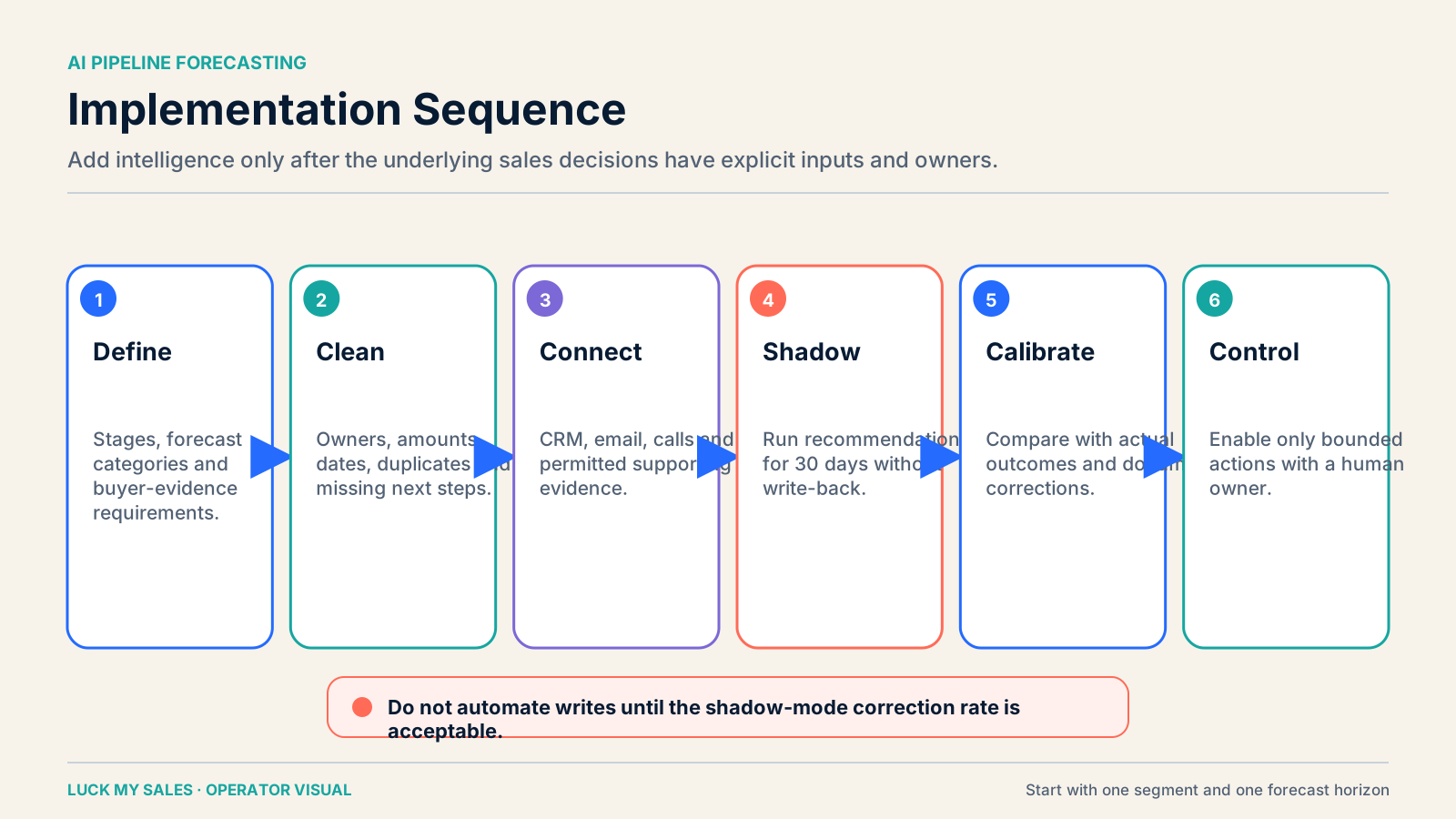
AI may recommend changes to those values. It should not silently finalize them.
Implementation sequence from forecast decision to controlled AI write-back.
The implementation starts with governance and evidence, not a product connection.

02 / Set the minimum data contract

2. Set the minimum data contract

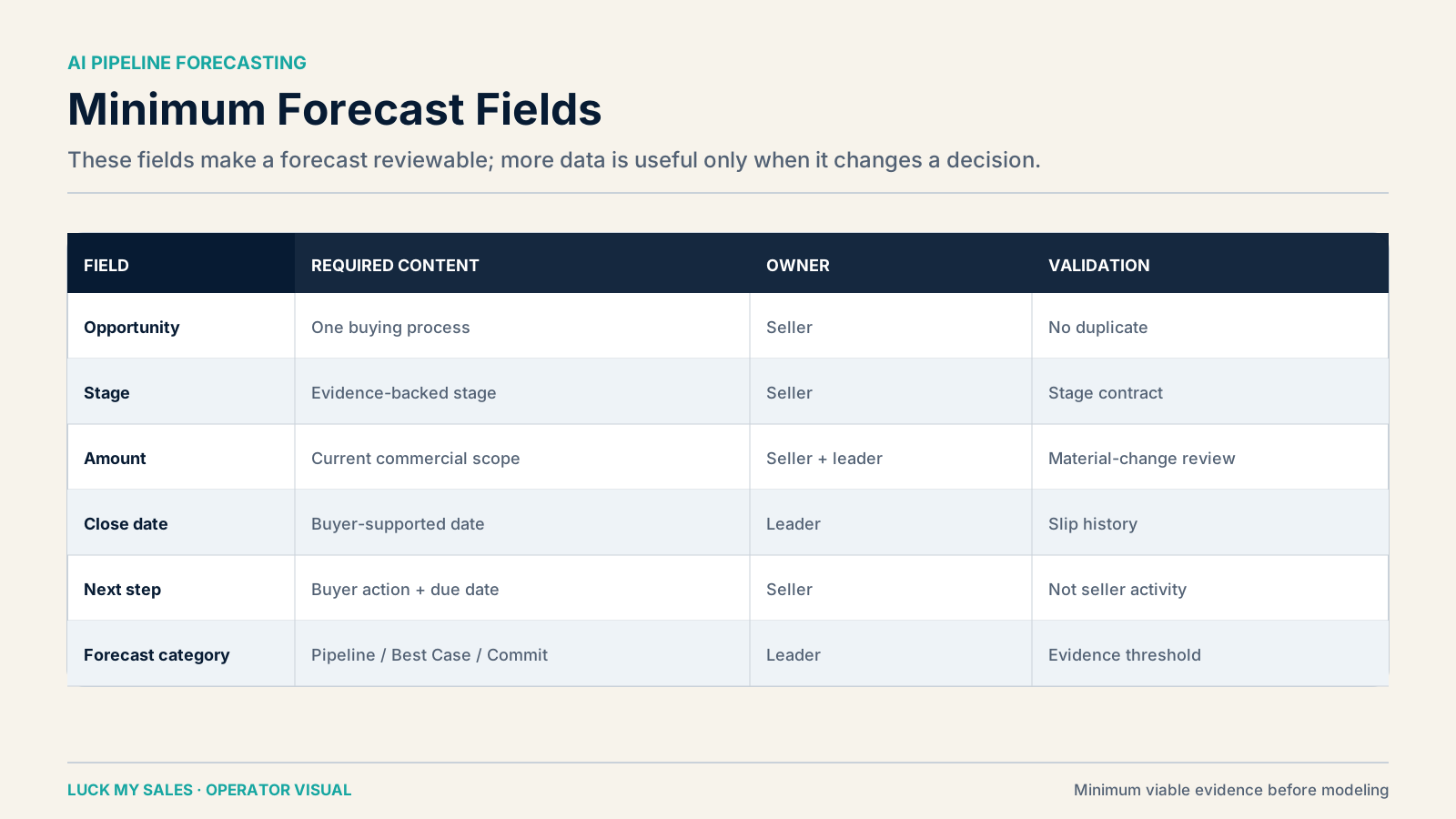
Do not add forecasting AI to a CRM where the stages mean different things to different sellers. First require:
  • a stable account and opportunity ID;
  • one accountable owner;
  • explicit stage entry and exit evidence;
  • amount, currency and close-date history;
  • a specific next step with owner and due date;
  • loss, delay and disqualification reasons;
  • links to relevant meetings, email or calls;
  • a final observed outcome.
A populated field is not necessarily useful data. “Follow up” is not a next step. A date selected to satisfy a required field is not buyer timing.
The first AI output should be allowed to say “insufficient evidence.” That is more useful than an invented probability.

Test identity before scoring

Before the model assigns a probability, give it 20–30 opportunities that include the awkward cases: duplicate accounts, renamed companies, several contacts on one deal, former employees and sellers who work across more than one business. Check whether every email, meeting and transcript attaches to the correct account and opportunity.
Record evidence coverage separately from forecast confidence. A model can sound certain while seeing only the CRM fields and none of the buyer communication. The review card should therefore show which expected sources were available, which were missing and when each source was last updated. If identity or coverage is uncertain, route the opportunity to a data queue. Do not let the forecast score hide a matching problem.
Minimum CRM fields required before AI sales pipeline forecasting.
AI needs a closed evidence loop, not merely more populated fields.

03 / Connect evidence read-only

3. Connect evidence in read-only mode

Connect the sources that materially support the forecast: opportunity history, meetings, two-way email and—when consent and retention are resolved—call transcripts. An optional conversation-intelligence product can help expose buyer language, but it does not repair poor CRM structure.
HubSpot's forecast tool can provide categories and submissions inside HubSpot. Salesforce Pipeline Inspection provides a pipeline-inspection surface inside Salesforce. Gong describes forecasting linked with conversation data. These are different workflow layers; none removes the need for your own evidence rules.
For each AI recommendation, store the source, timestamp, opportunity, claim and confidence. If the source cannot be shown to a reviewer, the recommendation should not change the forecast.

04 / Run 30-day shadow mode

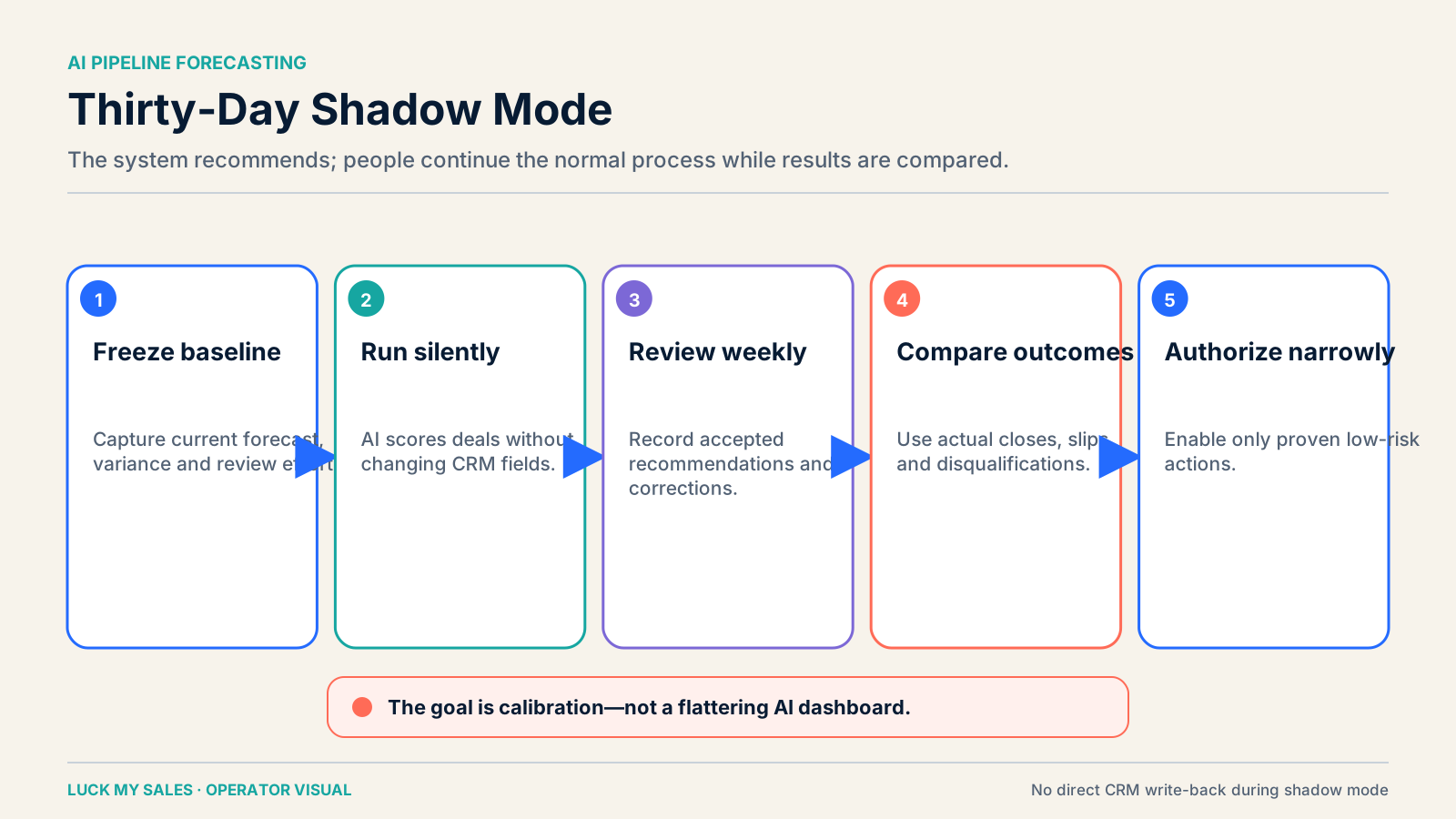
4. Run a 30-day shadow period

For the first 30 days, let AI create a parallel recommendation without CRM write-back. If the sales cycle is longer than a month, extend the period until the team has seen meaningful outcomes.
Compare:
  • the seller's current category and date;
  • the AI recommendation and cited evidence;
  • the manager's final decision;
  • what actually happened later.
Require a correction reason whenever a person changes the recommendation: missing data, wrong entity match, transcript error, bad rule, approved exception or model interpretation.
End the shadow period with one of three explicit decisions. Go means the narrow action is consistent across the tested segments. Narrow go means it is safe only for a defined motion, deal-size band or evidence state. Stop means the team must repair data or rules before another model test. A useful pilot can end in “stop”: it has identified the layer that would otherwise have scaled the error.
Thirty-day AI forecast shadow mode comparing model recommendations with human decisions and actual outcomes.
Shadow mode reveals the error pattern before the model can alter operational records.

05 / Measure and gate

5. Measure the error pattern

Track evidence citation, recommendation coverage, human correction rate, review time, stale deals, close-date movement and forecast error against actual revenue. Break corrections down by cause and segment.
Do not enable broad write-back because the average accuracy looks good. A system can be reliable on low-value renewals and unsafe on new enterprise deals.
My practical order is:
  1. allow AI to create review tasks;
  2. allow it to draft a next-step recommendation;
  3. allow a person to accept the recommendation into CRM;
  4. consider narrow automatic actions only after the correction pattern is stable;
  5. keep stage, probability, close date and commit behind human approval.
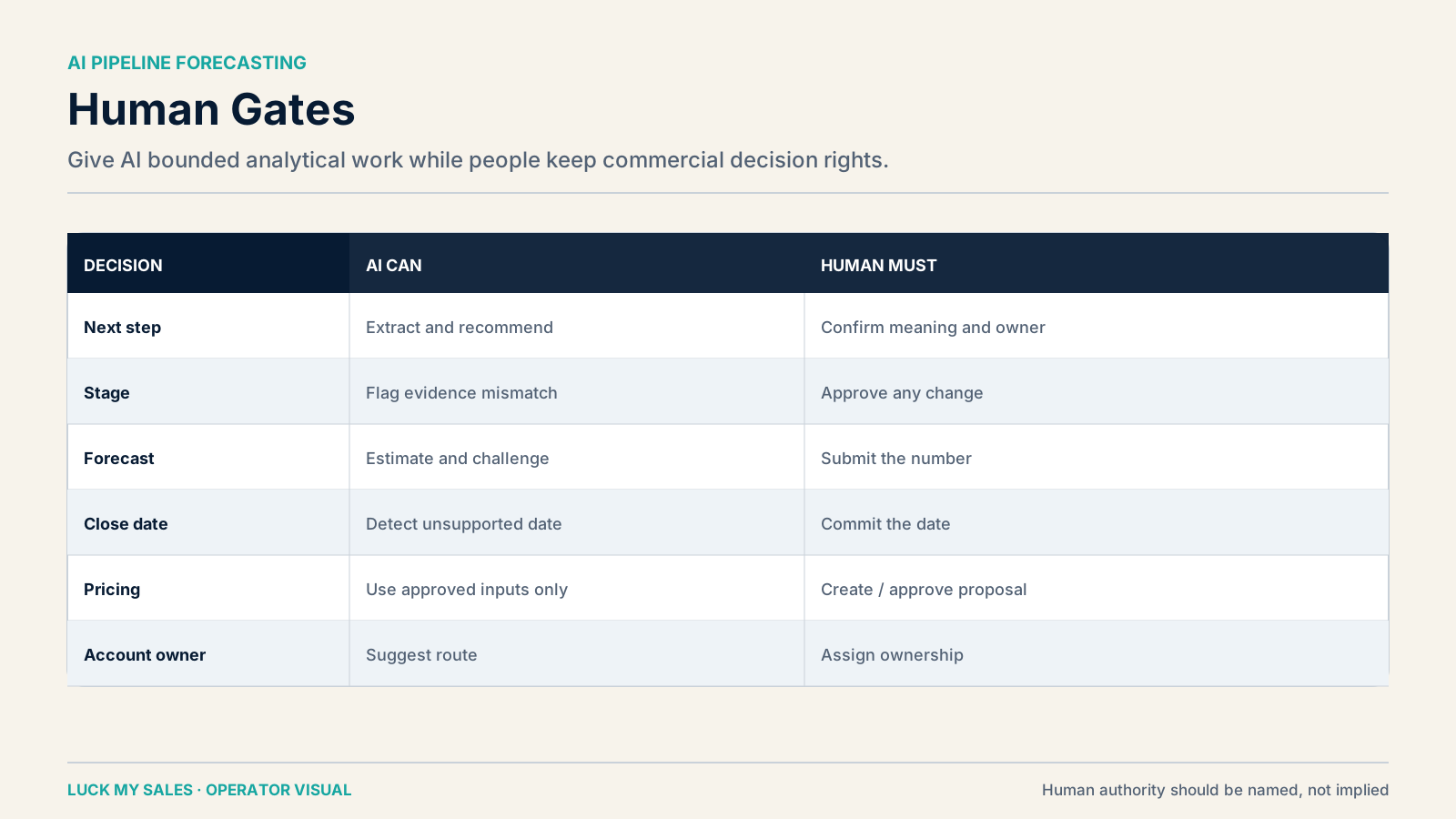
Human approval gates for forecast tasks, next steps, stages, probability and commit.
Risk rises as an action moves from a task to a commercial commitment.

06 / First 30 days

A practical 30-day checklist
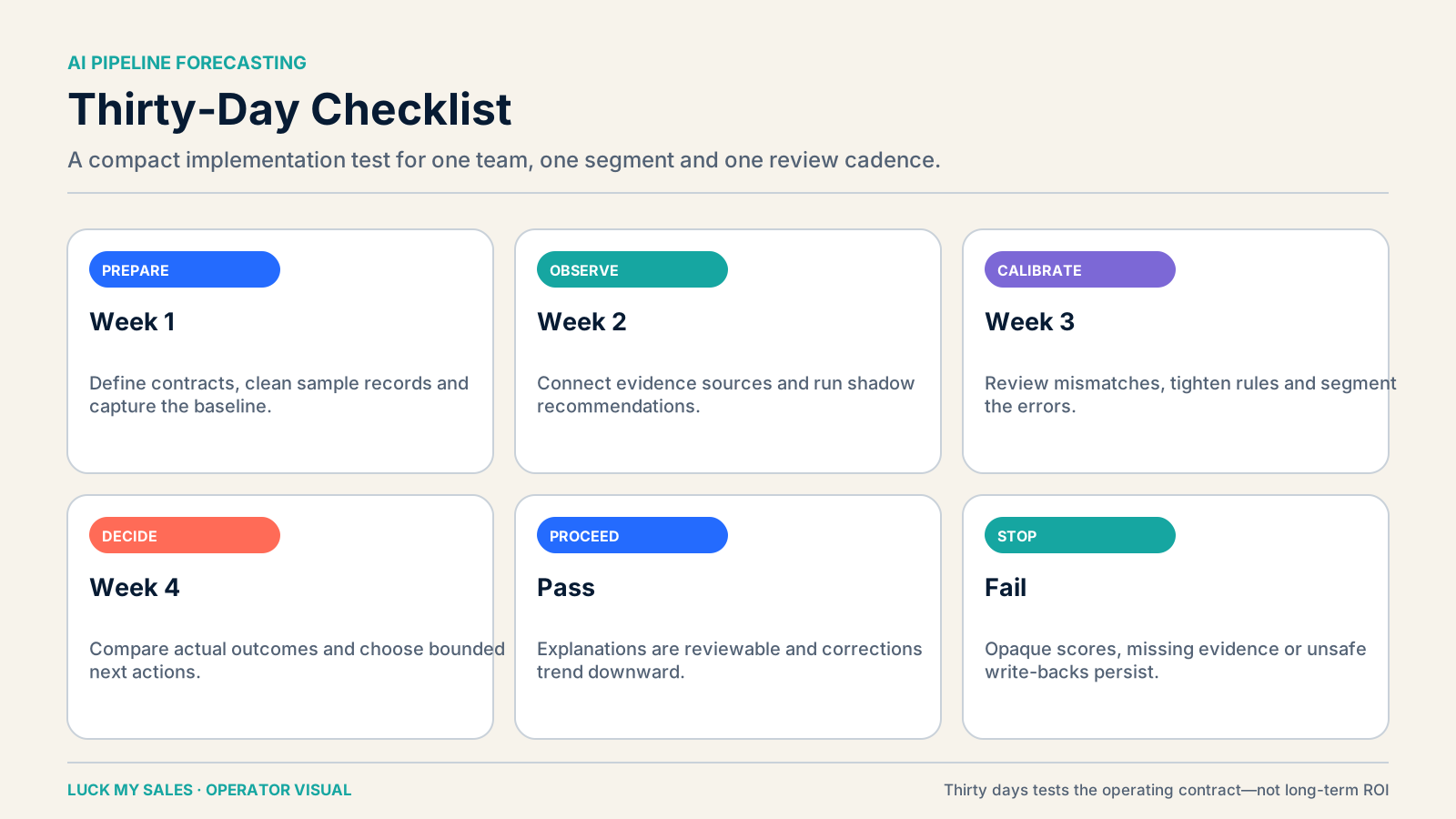
Days 1–5: define the forecast horizon, categories, evidence hierarchy, field owners and prohibited automatic actions.
Days 6–10: audit a cross-section of records against actual buyer communication. Fix stage definitions, identity matching and unusable required fields.
Days 11–15: connect approved evidence read-only. Test permissions, timestamps, transcript speakers and rollback.
Days 16–25: run recommendations in shadow mode. Review exceptions and record every correction reason.
Days 26–30: compare recommendations with decisions and available outcomes. Approve only a narrow next automation, usually a task or accepted recommendation—not a silent stage or forecast overwrite.
Thirty-day checklist for introducing AI into sales pipeline forecasting.
A short pilot should end with a clear go, narrow-go or stop decision.
The implementation is successful when the forecast becomes easier to inspect and correct. It is not successful merely because the dashboard contains an AI score.

Research note

Methodology

  1. 01The workflow is based on Anastasiia Krynytska's direct work with HubSpot, Pipedrive and custom AI/n8n automations.
  2. 02Thirty days is an operator starting point for shadow mode, not an audited benchmark. Teams with longer cycles may need more time.
  3. 03No vendor is presented as a universal implementation winner.
Read the full methodology

Source ledger

Sources & editorial notes

  1. 01
    Use the forecast tool

    HubSpot · Official documentation used to bound HubSpot forecast categories and submissions.

  2. 02
    Pipeline Inspection

    Salesforce · Official documentation used for the current pipeline-inspection context.

  3. 03
    Revenue forecasting software

    Gong · Official product source used only for bounded conversation-evidence capability claims.

Corrections or primary material: contact the corrections desk.

About the author

Anastasiia Krynytska

Anastasiia Krynytska is a LeadGen Team Lead at Softermii and the lead editor of Luck My Sales. She covers AI-assisted outbound, account research, qualification, messaging, CRM handoffs and revenue workflows from a practitioner’s perspective.View author profile LinkedIn

Continue reading

01 · News analysis

AI sales is moving from assistant to operating layer

The category is expanding from drafting support into research, pipeline decisions, recommended actions and controlled execution.

Read news
02 · Field analysis

In AI sales, the handoff may be the product

Models are becoming accessible; durable value sits in the controlled transition from signal to seller action.

Read analysis
03 · Research framework

Sales AI Workflow Signals 2026

A launch framework for mapping the products, controls and buying questions shaping AI-enabled revenue work.

Read reports

Luck My Sales briefing

Useful context, once a week.

News, explanations and original research from this desk. No noise.
The newsletter is still being built. We will contact you when the first edition is ready.