
Commercial comparison and implementation guide · Sales AI comparisons
I Evaluated Competitive Intelligence Software—Here’s the Battlecard Setup I’d Use to Help Reps Win
AI may assist research organization and drafting. A human editor reviews every published page, checks material claims against the cited sources and owns the final decision. No company paid for placement in this article.
AI use policyAgent-ready brief
AI takeaways
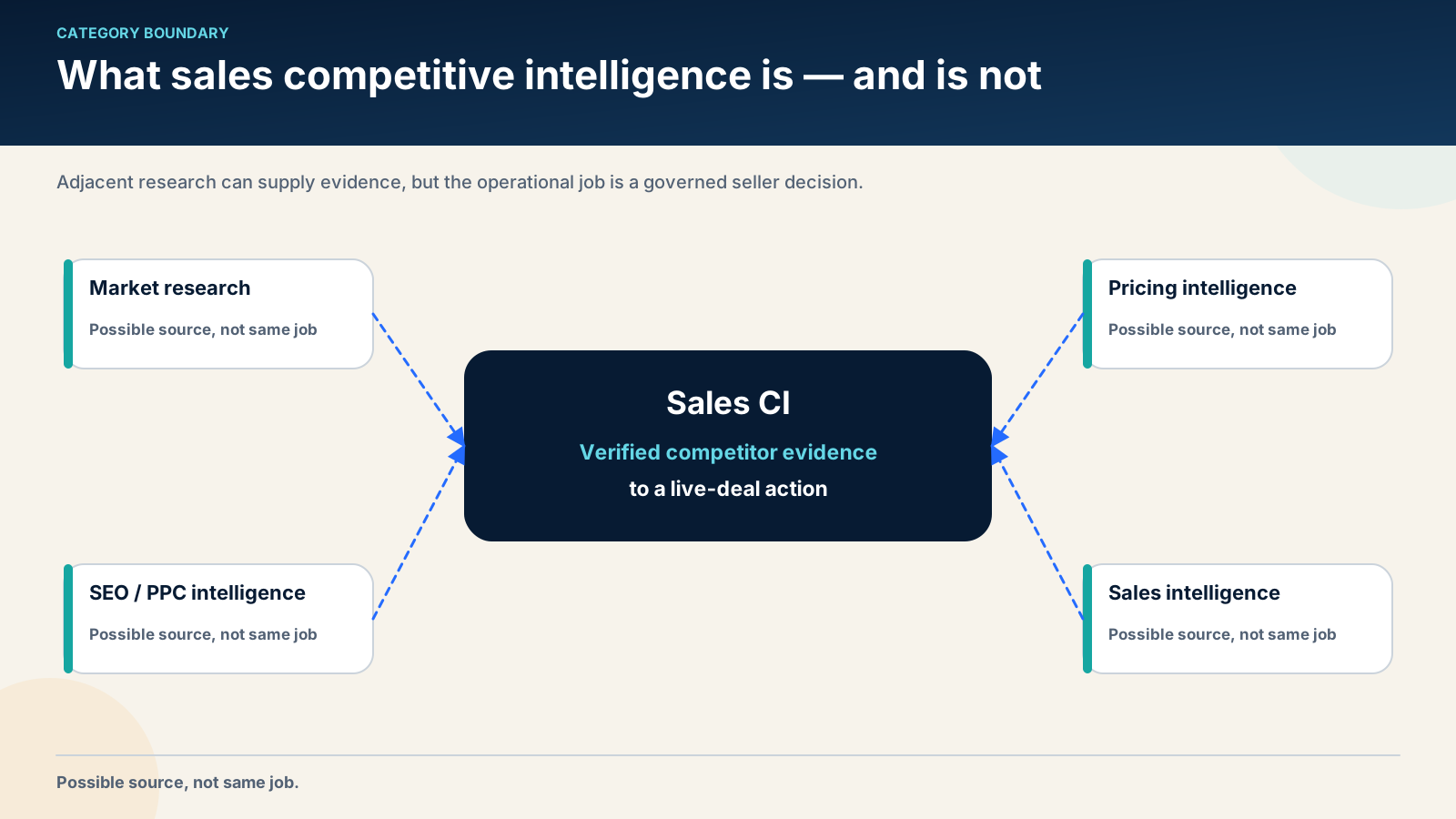
Keep the key points here, or take a source-aware text brief into Claude, ChatGPT or another AI workspace.- 01Separate sales competitive intelligence from SEO, market research, pricing intelligence and broad sales intelligence.
- 02Monitoring is not useful until a named person validates and translates the change for a live deal.
- 03Every battlecard needs provenance, freshness, ownership and a correction route.
- 04A narrow custom monitor can fit one stable change type, but maintenance and review remain human-owned.
- 05Pilot on one evidence path and let critical freshness or provenance failures override the total score.
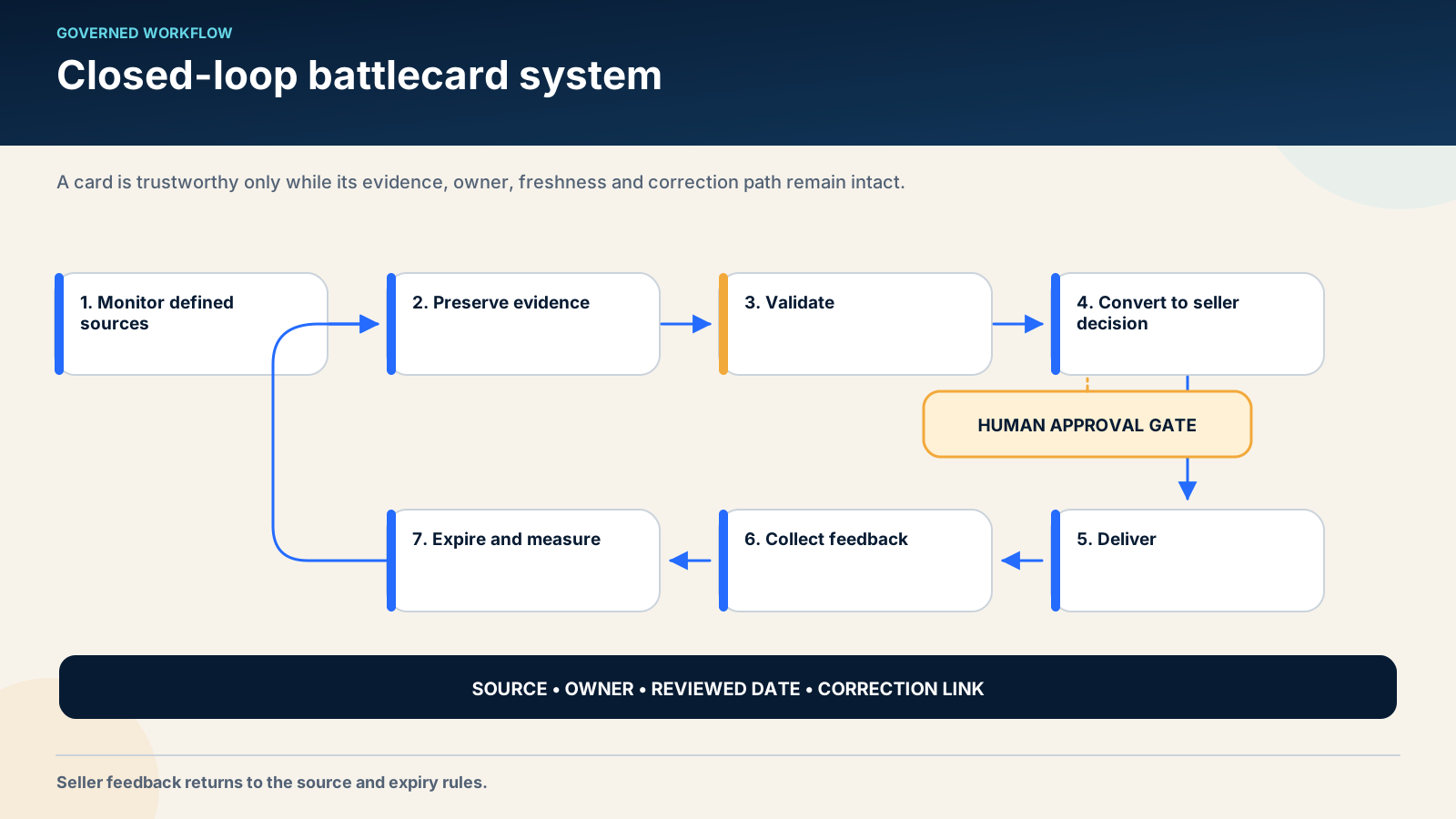
Sales competitive intelligence is a closed loop that validates a competitor change, gives it an owner and expiry, delivers a short sourced answer to the rep and learns from corrections.
01 / Quick picks by sales job
Quick picks by sales job
| If the recurring sales problem is… | Start with… | What the pilot must prove |
|---|---|---|
| Reps cannot find a current one-page answer in a deal | Klue or Crayon | The card is correct, findable and trusted at the moment of use |
| Competitor evidence is buried in calls | Gong CI plus an owned validation workflow | Trackers surface useful clips without turning mentions into unsupported conclusions |
| Product, pricing and messaging changes arrive too late | Crayon, Kompyte, Contify or a narrow custom monitor | Relevant changes reach an owner with manageable noise |
| If the recurring sales problem is… | Start with… | What the pilot must prove |
|---|---|---|
| CI lives in several systems and needs governed distribution | Klue, Kompyte or Contify | Slack, CRM or enablement delivery preserves source, owner and freshness |
| A small team tracks only a few high-value competitor pages | Custom monitor plus a reviewed battlecard | The maintenance burden remains lower than the platform burden |
| The team cannot name a CI owner | None yet | Ownership and correction policy exist before software is added |
02 / How I evaluated competitive intelligence software
How I evaluated competitive intelligence software
- capture an external competitor change or internal deal signal;
- preserve the source and date;
- route the item to a responsible reviewer;
- turn the validated item into a battlecard, talk track or deal answer;
- deliver that answer where a seller works;
- collect field feedback;
- refresh or retire the artifact;
- connect usage to a defined commercial outcome without claiming causation.
- Which evidence types can the system collect?
- Can a reviewer see where an assertion came from?
- Does the workflow create a usable sales artifact rather than another dashboard?
- Can the artifact reach Slack, Microsoft Teams, Salesforce or the enablement layer with context?
- Who owns validation, expiration and correction?
- Can the team measure freshness, adoption and competitive outcomes separately?
03 / What competitive intelligence software should do for
What competitive intelligence software should do for sales
- the competitor and relevant segment;
- the change or recurring deal pattern;
- the original source and capture date;
- what is verified, what is inferred and what is still unknown;
- the buyer question or objection this affects;
- an approved response in plain language;
- pricing context without unsupported promises;
- two discovery questions;
- a “do not say” box;
- the content owner;
- the last-reviewed date and next review date;
- a visible correction link.
04 / The closed-loop battlecard setup I would use
The closed-loop battlecard setup I would use
1. Monitor only defined sources
2. Preserve the original evidence
3. Validate before distribution
- confirmed by a current primary source;
- corroborated by two independent observations;
- field report requiring verification;
- interpretation;
- rejected as irrelevant, duplicate or unreliable.
4. Convert the change into a seller decision
5. Deliver the smallest useful artifact
6. Collect correction and usefulness feedback
7. Expire and measure
05 / The stale-card incident and the fix
The stale-card incident and the fix
06 / Competitive intelligence software compared
Competitive intelligence software compared
| Product | Evidence access | Best-fit job | Documented sales workflow | Main caveat |
|---|---|---|---|---|
| Klue | Guided evaluation plus official documentation | Governed enterprise CI and battlecards | Collection, curation, battlecards, Slack/Teams/Salesforce delivery and win-loss | Platform value depends on program ownership and content operations |
| Crayon | Guided evaluation plus official documentation | External monitoring plus enablement | Competitor monitoring, analysis and battlecard workflows | Monitoring breadth can create noise without a strict source and validation policy |
| Gong CI | Guided evaluation plus official help documentation | Call-derived competitor evidence and win-loss analysis | Competitor trackers, mentions, clips and analytics | Conversation evidence reflects what people said, not necessarily verified fact |
| Product | Evidence access | Best-fit job | Documented sales workflow | Main caveat |
|---|---|---|---|---|
| Kompyte | Documentation review | Monitoring connected to sales enablement | Automated updates, battlecards, integrations and adoption or win-loss reporting | Official capability claims need a pilot in the exact CRM and enablement stack |
| Contify | Documentation review | Broader market and competitive intelligence | External and internal sources, human checkpoints, battlecards, alerts and integrations | Broader M&CI scope may exceed a small team’s live-deal requirement |
| Custom monitor | Operational evidence from one narrow workflow | A few high-value, stable page checks | Page diff, evidence capture, Slack alert and human approval | Maintenance, false alerts, page changes and missing governance remain your problem |
Klue: my pick for a mature closed-loop CI program
Crayon: my pick for monitoring-led competitive enablement
Gong Competitive Intelligence: my pick for call-derived evidence
Kompyte: connected monitoring and sales delivery
Contify: broader intelligence with sales activation
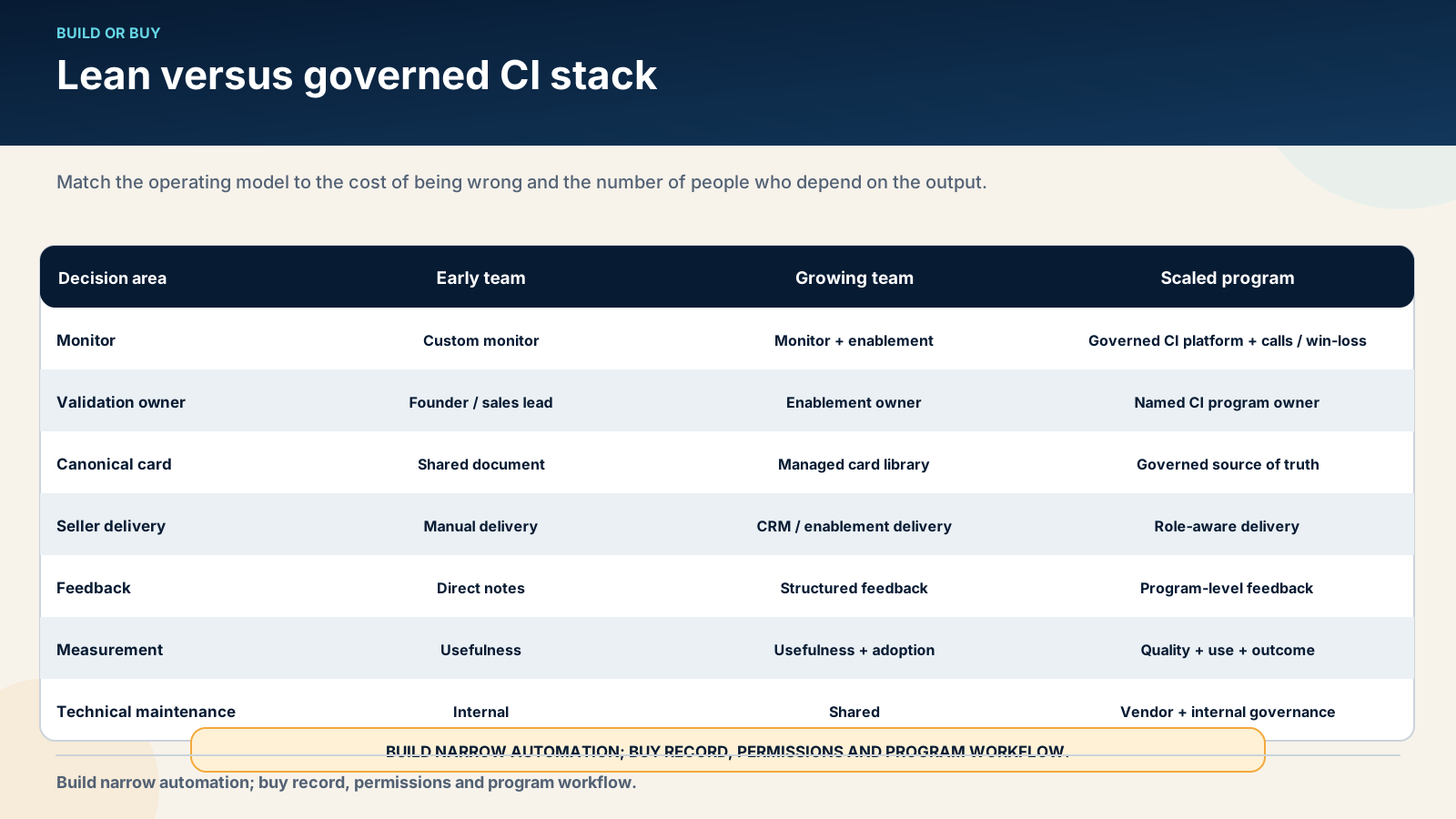
07 / Which setup I would use by team
Which setup I would use by team stage
Early team: owner plus a narrow monitor
Growing team: monitoring plus the enablement system
Scaled team: governed CI platform plus call and win-loss evidence
08 / Rollout plan and ownership
Rollout plan and ownership
| Work item | Accountable | Responsible | Consulted | Informed |
|---|---|---|---|---|
| Source register | Head of Product Marketing | CI owner | Product, Security, Legal | Sales leaders |
| Fact validation | Domain owner | CI analyst or PMM | Legal/Finance as needed | Enablement |
| Battlecard message | Product Marketing | PMM | Sales leaders, Product | Sellers |
| CRM/Slack delivery | RevOps | Sales systems owner | Enablement | Sellers |
| Rep training | Enablement leader | Enablement manager | PMM | Sales managers |
| Correction queue | CI owner | PMM/analyst | Reporter and domain owner | Affected sellers |
| Metric definition | RevOps leader | Revenue analyst | Finance, Sales Ops, PMM | Leadership |
09 / Metrics that matter
Metrics that matter
System health
- percentage of active cards with a current owner;
- percentage reviewed before expiry;
- median time from verified change to approved update;
- correction backlog and median correction time;
- alert-to-action ratio;
- retrieval success in a timed seller test.
Seller use
- unique sellers who opened the relevant card;
- card use in competitor-tagged opportunities;
- helpful or incorrect feedback rate;
- manager-observed use in deal review;
- time to find the answer.
Commercial outcomes
- competitive win rate by segment and named competitor;
- average sales-cycle duration for competitor-known deals;
- stage conversion for the defined cohort;
- reason-code completeness;
- influenced pipeline, clearly labeled as association rather than attribution.
10 / My two-week pilot scorecard
My two-week pilot scorecard
Inputs
- three competitors;
- ten monitored primary-source pages;
- twenty approved existing battlecard claims;
- ten anonymized call clips or loss notes;
- five seller questions;
- one deliberately stale claim;
- one ambiguous regional pricing change;
- one irrelevant high-volume news source.
Tasks
- Detect the seeded page change.
- Preserve the source and visible diff.
- Route it to the correct owner.
- Prevent the ambiguous claim from publishing automatically.
- Update the affected card.
- Deliver the card in the chosen seller surface.
- Let a rep report a correction.
- Show the audit trail.
- Expire the deliberately stale claim.
- Export the evidence and content.
Scoring
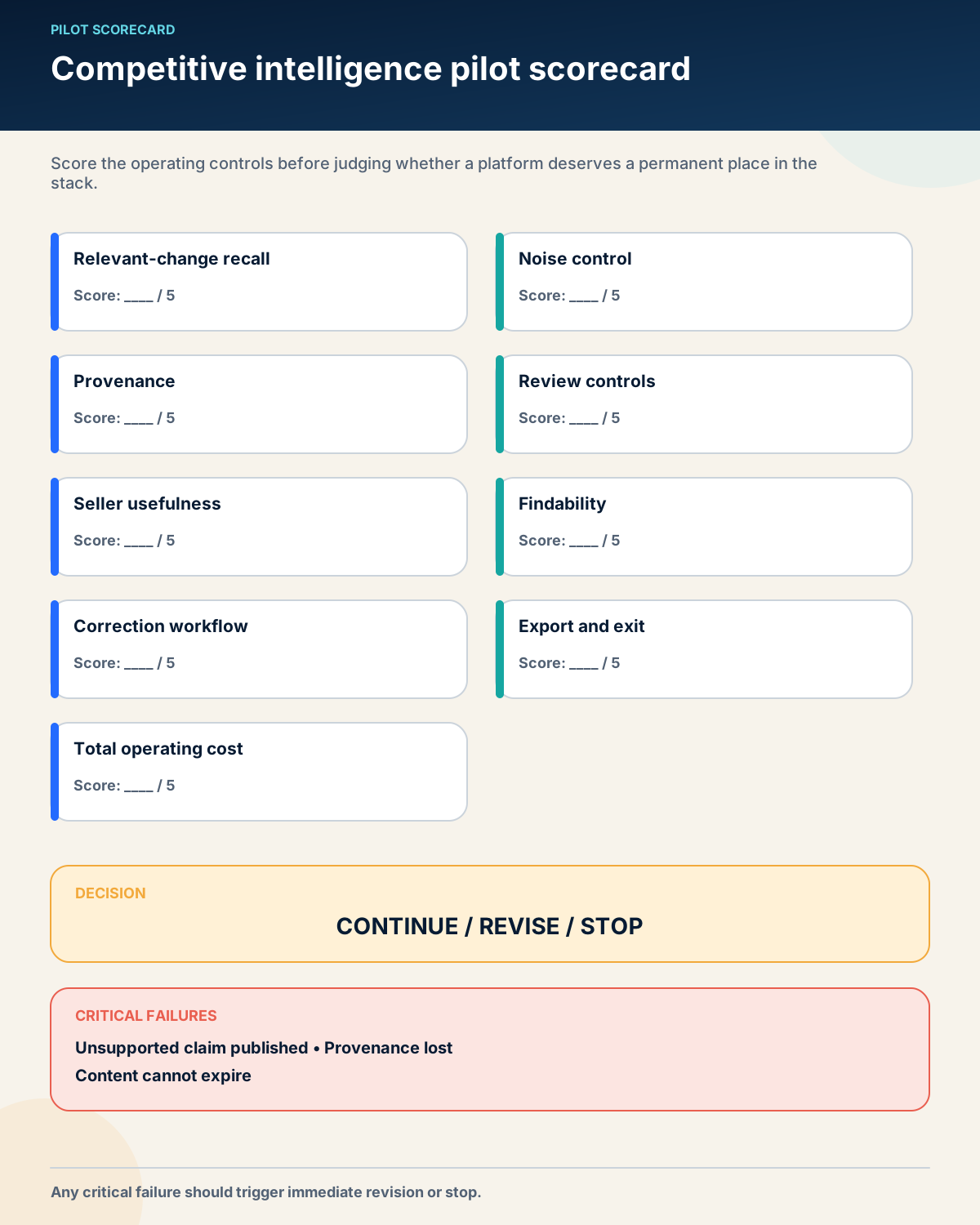
| Dimension | Weight | Pass condition |
|---|---|---|
| Relevant-change recall | 15 | High-impact seeded changes are found |
| Noise control | 10 | Irrelevant source does not dominate review |
| Provenance | 15 | Source, date and captured difference remain visible |
| Review controls | 15 | Unverified content cannot reach approved state |
| Seller usefulness | 15 | Reps answer the scenario correctly from the card |
| Dimension | Weight | Pass condition |
|---|---|---|
| Findability | 10 | Target card is found in under one minute |
| Correction workflow | 10 | Reporter, version, owner and decision are recorded |
| Export and exit | 5 | Data and cards can be exported in a usable form |
| Total operating cost | 5 | Quote includes implementation and retained human work |
11 / Common failure modes
Common failure modes
| Failure | What it looks like | Control |
|---|---|---|
| Stale pricing or packaging | Rep repeats an old offer | Short expiry, named owner and high-impact change alert |
| Alert overload | Reviewers ignore the feed | Source register, relevance rules and discard-rate review |
| Call hearsay becomes fact | Buyer statement appears on a card | Label call evidence and require external validation |
| Battlecard becomes a wiki | Rep cannot use it live | One-page decision format with linked depth |
| Failure | What it looks like | Control |
|---|---|---|
| Multiple copies drift | CRM, Slack and hub disagree | One canonical record with referenced delivery |
| No correction path | Sellers complain privately | One-click error report tied to version and deal |
| Vanity measurement | Opens are called revenue impact | Separate health, use and outcome metrics |
| Custom monitor is abandoned | Page changes break extraction | Named technical owner, tests, alerts and exit plan |
12 / A live-deal walkthrough
A live-deal walkthrough
13 / Frequently asked questions
Frequently asked questions
What is competitive intelligence software?
Which competitive intelligence software tools belong on a sales shortlist?
How is competitive intelligence different from sales intelligence?
Which is the best competitive intelligence software for a small team?
Must the software include battlecards?
How do teams keep battlecards current?
Which integrations matter most?
How should ROI be measured?
Can AI maintain competitive intelligence automatically?
Research note
Methodology
- 01The comparison combines guided evaluations of Klue, Crayon and Gong Competitive Intelligence, one stale-battlecard incident and current first-party documentation.
- 02Other products are documentation-reviewed; the guide is not a controlled five-product test or universal rank.
- 03Capabilities, integrations, packaging and pricing were checked on 26 August 2026 and require fresh verification before purchase.
Source ledger
Sources & editorial notes
- 01Competitive Intelligence
Klue · first-party product page; reviewed 2026-08-26. Vendor positioning and outcomes are not independent evidence; verify the exact package and workflow.
- 02Create Competitive Content and Battlecards
Klue · first-party product page; reviewed 2026-08-26. A documented feature does not prove content quality, adoption or freshness in a buyer deployment.
- 03Crayon’s State of CI material
crayon.co · cited source; reviewed 2026-08-26. Recheck mutable scope, pricing and availability before implementation.
- 04Understanding Your Competitive Landscape
Gong · first-party help documentation; reviewed 2026-08-26. Conversation evidence records what participants said; it does not independently verify a competitor fact.
- 05Competitive Intelligence Automation
Kompyte · first-party product page; reviewed 2026-08-26. Vendor claims and customer outcomes require plan-level verification and a controlled buyer pilot.
- 06Competitive Intelligence
Contify · first-party product page; reviewed 2026-08-26. Vendor outcomes and broad capability claims are not independent proof; the article uses only bounded workflow descriptions.