
Operator workflow guide · Lead enrichment
Sales Data Enrichment: How to Validate B2B Records Before Outreach or CRM Write-Back
AI may assist research organization and drafting. A human editor reviews every published page, checks material claims against the cited sources and owns the final decision. No company paid for placement in this article.
AI use policyAgent-ready brief
AI takeaways
Keep the key points here, or take a source-aware text brief into Claude, ChatGPT or another AI workspace.- 01Start with the seller action and required evidence, not the provider or number of fields.
- 02A correct company and valid email can still be the wrong commercial prospect.
- 03Keep cold records in a staging layer until reply or another explicit admission event justifies CRM write-back.
- 04Review early batches heavily because AI errors become cheaper to scale only after the rules are stable.
- 05Report accepted yield and rejection reasons against the full input denominator.
Separate sourcing, enrichment, verification, qualification and CRM admission so that a technically clean record cannot masquerade as a commercially useful lead.
01 / What sales data enrichment actually
What sales data enrichment actually means
- Sourcing finds candidate companies or people.
- Enrichment adds fields or evidence from additional sources.
- Verification checks whether a value—such as an email, role or domain—is valid and current enough to use.
- Cleansing standardizes formats, removes duplicates and resolves obvious errors.
- Qualification decides whether the record matches the commercial requirements for a particular motion.
- Intent analysis looks for evidence that may indicate a current buying situation.
- Activation sends the accepted record into an outreach, routing or sales workflow.
02 / Start with the action not
Start with the action, not the provider
- a current business domain;
- a relevant company and geography;
- a current decision-maker or operator;
- a deliverable business email;
- evidence that the company or its clients experience the problem in the offer;
- exclusions for competitors, current customers, partners and unsuitable business models.
- the submitted form and free-text request;
- existing account and opportunity ownership;
- CRM history;
- product, region, language and capacity rules;
- enough evidence to recommend a route without overwriting the named owner.
action → required fields → acceptable evidence → freshness limit → conflict rule → reviewer → correction path03 / The seven states of a
The seven states of a sales record
| State | What it means | What it does not mean |
|---|---|---|
| Raw | A candidate identifier exists | The company is real, current or relevant |
| Sourced | The record came from a named source at a known time | The source is correct |
| Enriched | Additional fields or evidence were added | The added values agree or are current |
| Verified | Critical identity or contact fields passed defined checks | The record is commercially suitable |
| Current | Role, company and relevant evidence are fresh enough for the action | The person wants contact |
| ICP-fit | The record satisfies the campaign's business rules | The evidence is strong enough to activate automatically |
| Seller-accepted | A permitted reviewer approved the record for the named action | The record is permanently correct or suitable for every future motion |
enriched with qualified because one score crossed a threshold. Do not use one field called status to combine deliverability, qualification, campaign progress and opportunity stage.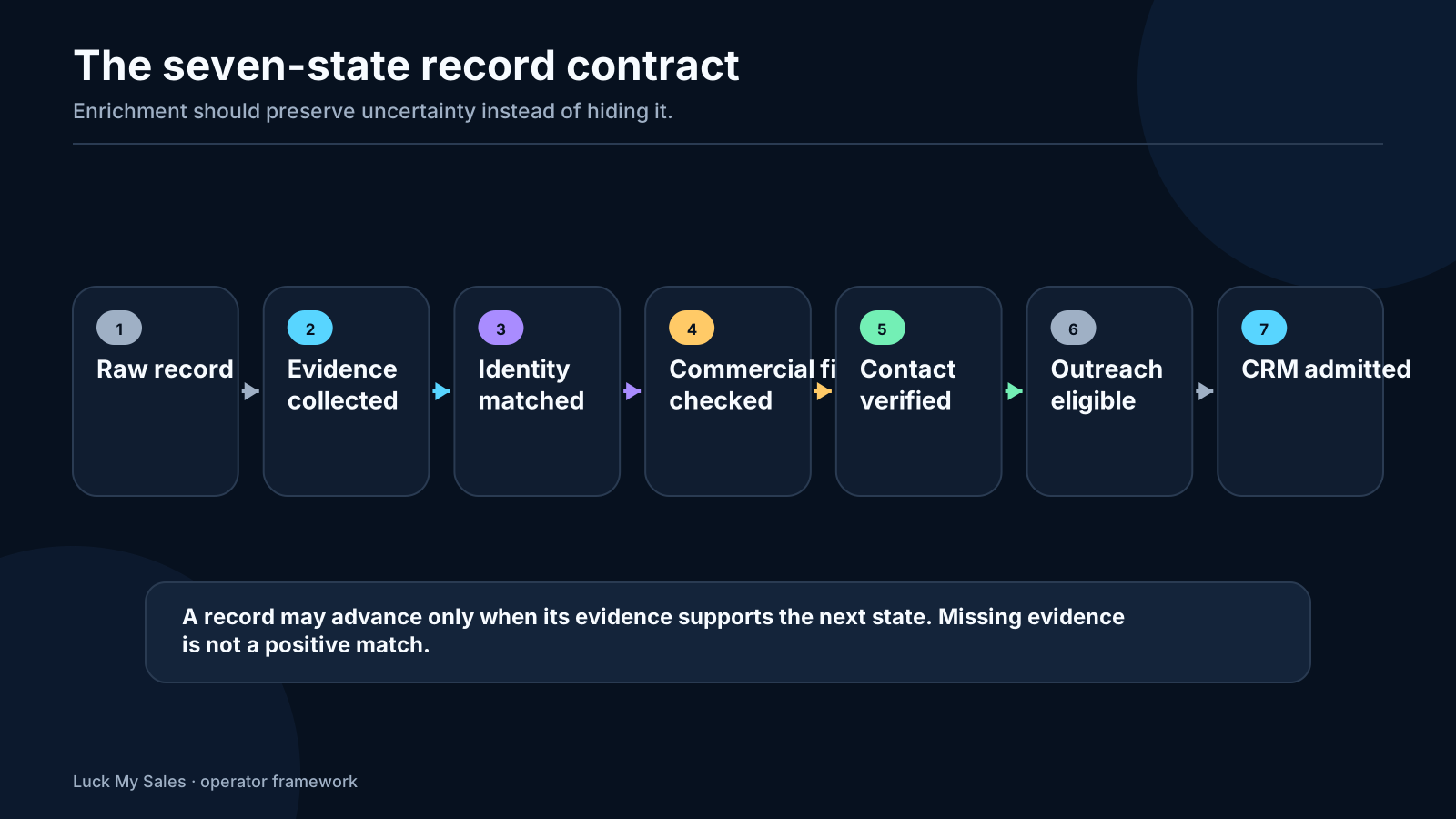
04 / The operator workflow Clay plus
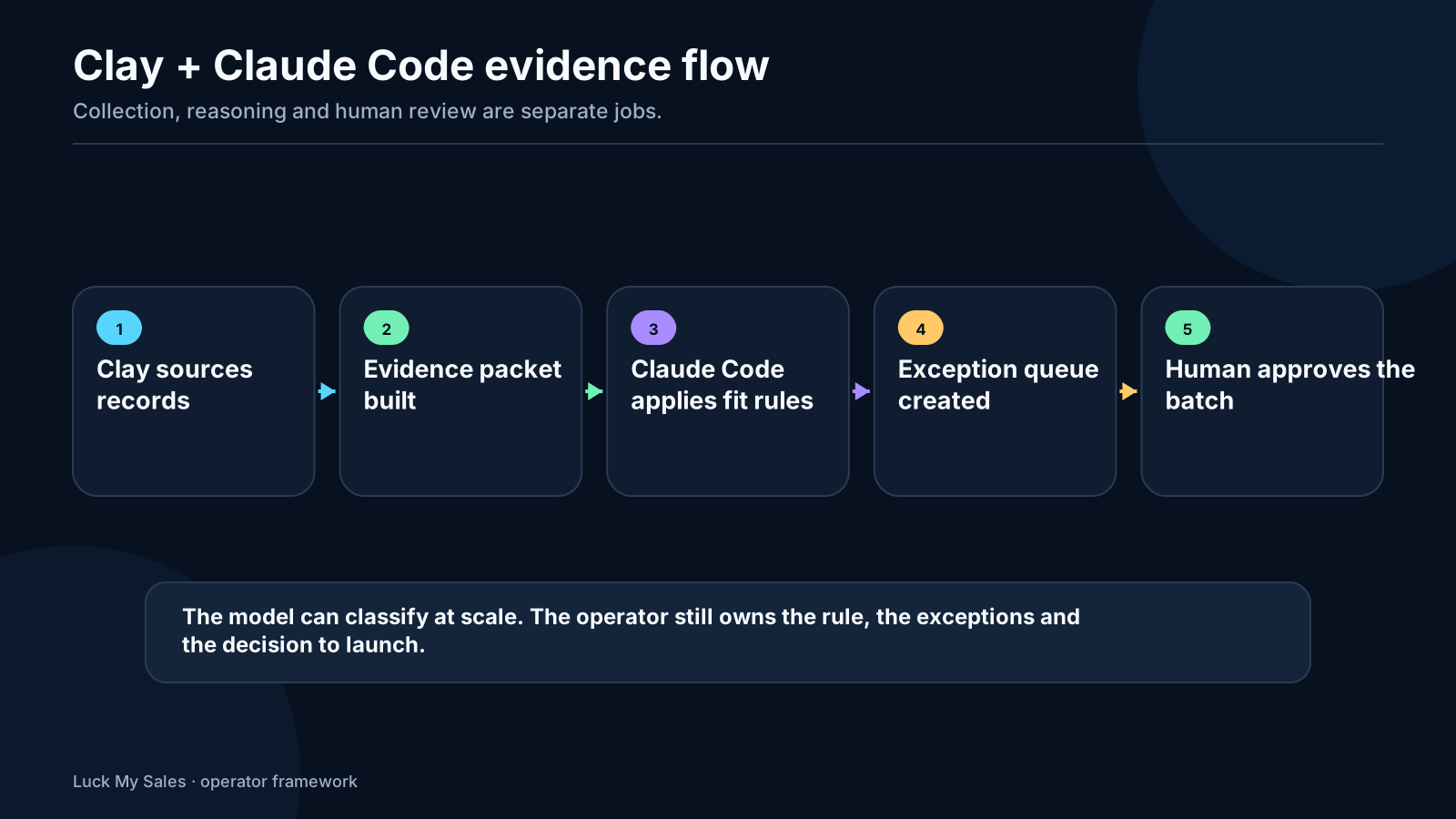
The operator workflow: Clay plus Claude Code
1. Define the ICP and evidence rules
- meaningful inbound calls or enquiries;
- appointment, reservation or booking flows;
- lead qualification or sales-development work;
- customer support or receptionist demand;
- dispatch, scheduling, reactivation or high-value lead follow-up;
- a business model where missed calls or slow response plausibly caused lost revenue.
2. Source a broad candidate set
source rows ≠ unique companies ≠ enriched records ≠ seller-approved records3. Normalize and deduplicate
Company A Ltd becomes Company A, the system needs both the raw value and normalized value so a reviewer can audit the change.4. Fetch company-level evidence
| Field | Example structure |
|---|---|
| Claim | “Agency serves dental clinics with patient-recall campaigns” |
| Source URL | Exact page used |
| Observed at | Date and time |
| Evidence type | Service page, case study, client list, testimonial |
| Confidence | High, medium or low |
| Commercial meaning | Why this supports or weakens the reseller use case |
insufficient evidence, not a confident guess.5. Apply the qualification rubric with Claude Code
- client profile;
- evidence found;
- plausible product use cases;
- reseller potential;
- confidence;
- score;
- reasoning;
- disqualification reason where relevant.
6. Review in batches
- Are the rules producing the intended commercial interpretation?
- Are strong scores supported by evidence rather than category assumptions?
- Are competitors and adjacent providers excluded?
- Are multi-business founders evaluated by their current relevant work, not a legacy company?
- Are uncertain records clearly marked?
- Are rejection reasons useful enough to improve the next batch?
7. Activate only the approved set
05 / Correct identity wrong commercial fit
Correct identity, wrong commercial fit
For multi-company founders, inspect current headline and active commercial identity; exclude direct AI-automation competitors even when a legacy agency fits.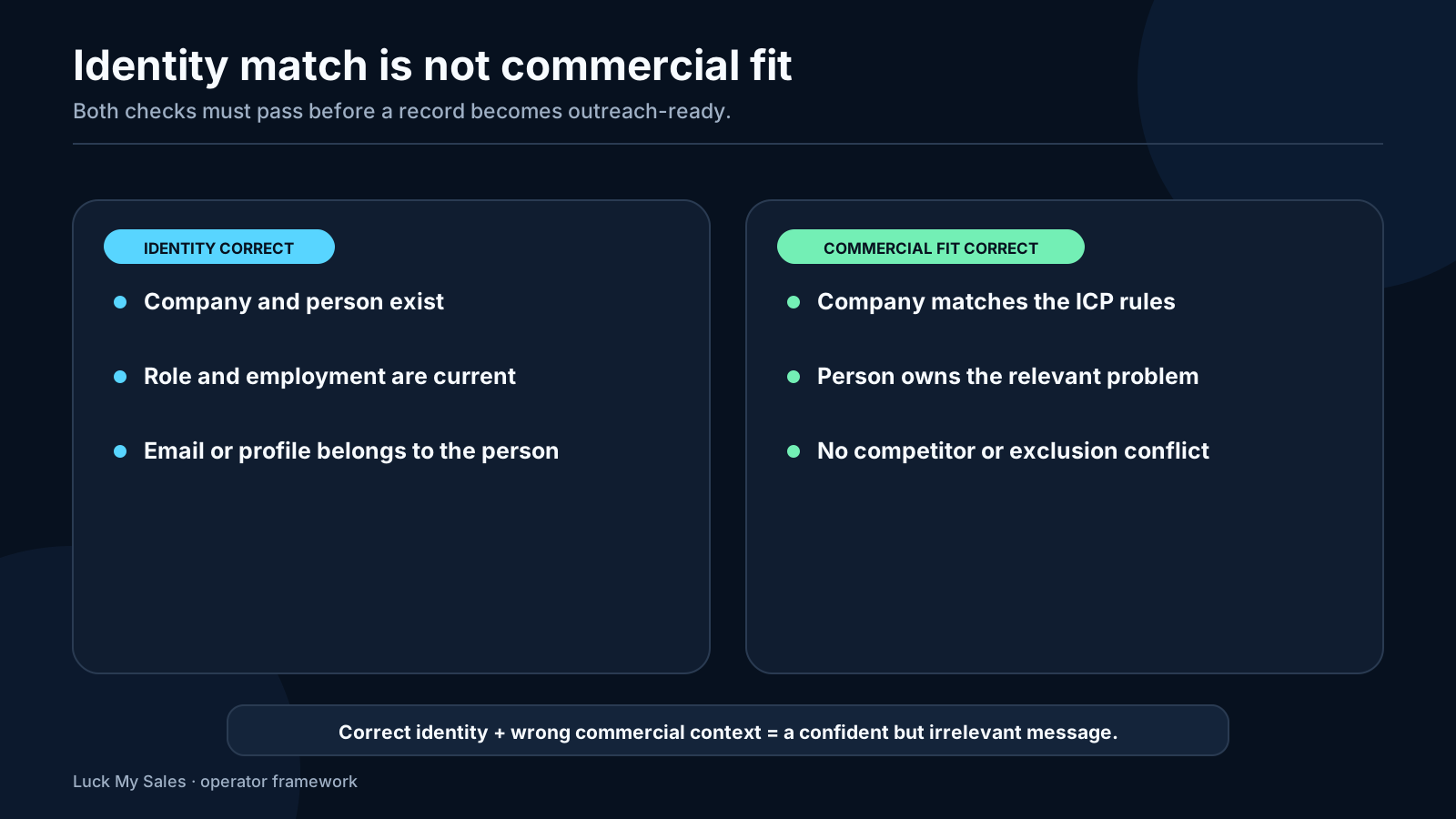
06 / The preoutreach gate and the
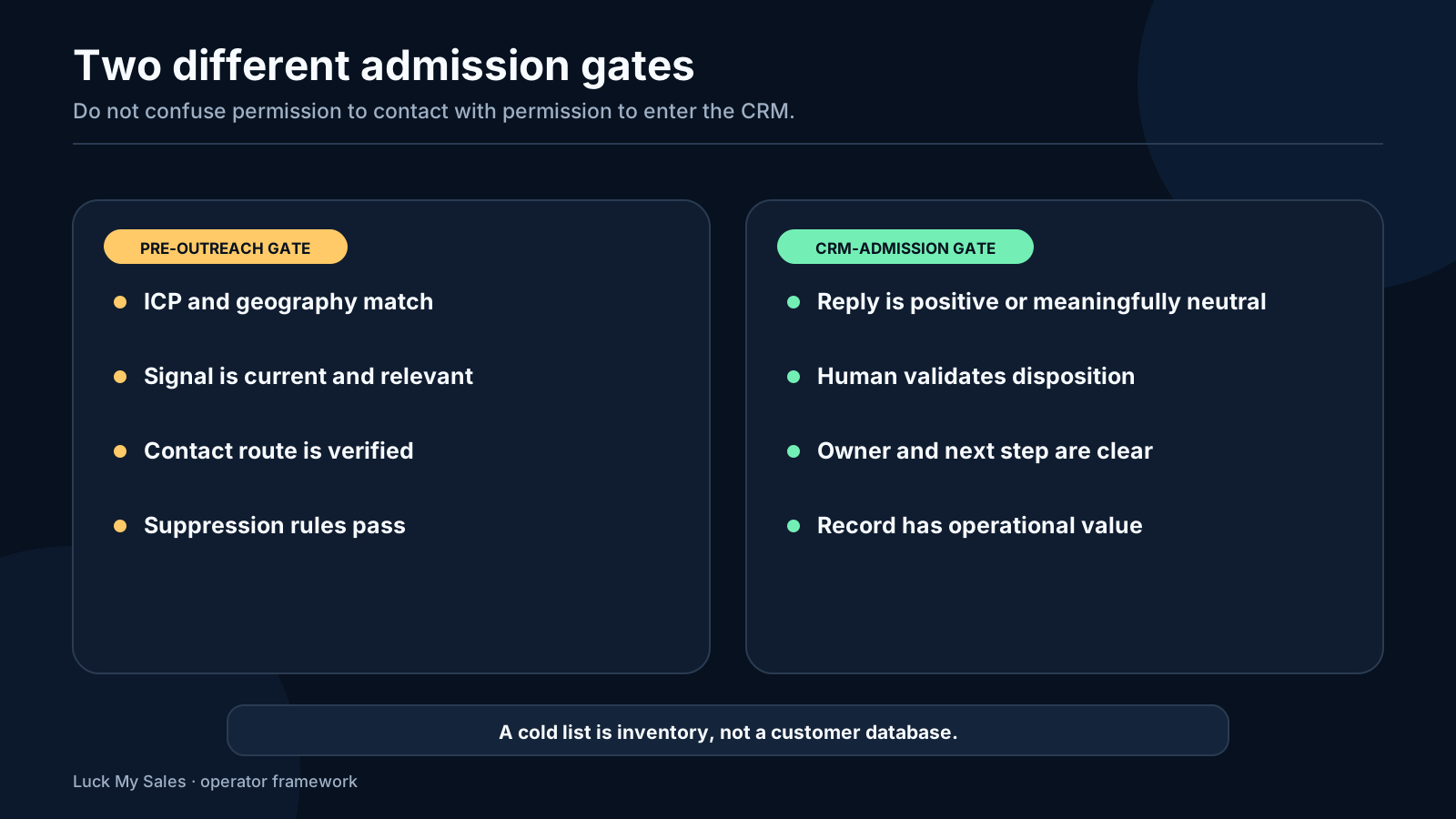
The pre-outreach gate and the CRM-admission gate
Pre-outreach gate
- company and person identity;
- current commercial fit;
- contactability;
- exclusions and suppression;
- source and freshness;
- evidence for the message angle;
- campaign-specific acceptance.
CRM-admission gate
- positive reply;
- neutral reply requiring follow-up;
- meeting request;
- verified inbound form or conversation;
- partner referral;
- explicit account-research decision by a seller.
07 / Controlled CRM writeback
Controlled CRM write-back
- candidate value;
- previous value;
- source URL or provider;
- observation date;
- confidence;
- rule version;
- reviewer or automation identity;
- final applied value;
- correction reason if rejected.
- Draft: propose the value without changing the canonical field.
- Append: add evidence or a note while preserving existing data.
- Reversible update: change a field while keeping history and rollback.
- Blocked overwrite: prevent automation from changing owner, pricing, opportunity state or another protected field.
08 / Activate accepted records outside the
Activate accepted records outside the CRM first
- Which evidence made this record eligible?
- Which campaign, offer and message version may use it?
- Which channel is allowed, and which sender owns the contact?
- Which event stops all automated contact?
- Which response is strong enough to admit the person to CRM?
Keep qualification and messaging versions together
Promote a record only after a meaningful event
09 / Build a correction loop not
Build a correction loop, not a static enrichment job
10 / How to measure enrichment without
How to measure enrichment without hiding the denominator
| Metric | Denominator | What it diagnoses |
|---|---|---|
| Source coverage | candidate records | Whether the source can find required evidence |
| Verification pass | enriched records | Whether critical fields are usable |
| ICP acceptance | verified records | Whether sourcing matches the commercial definition |
| Seller acceptance | AI-recommended records | Whether recommendations survive human review |
| Correction rate | reviewed or activated records | Whether the logic creates repeatable errors |
| Review time | accepted records | Whether automation actually reduces operator effort |
| Cost per accepted record | seller-accepted records | Whether provider and model spend is economically useful |
| Meaningful reply rate | delivered contacts | Whether accepted data supports relevant outreach |
| Held meetings | accepted contacts or replies | Whether the motion progresses beyond activity |
11 / A 100record pilot
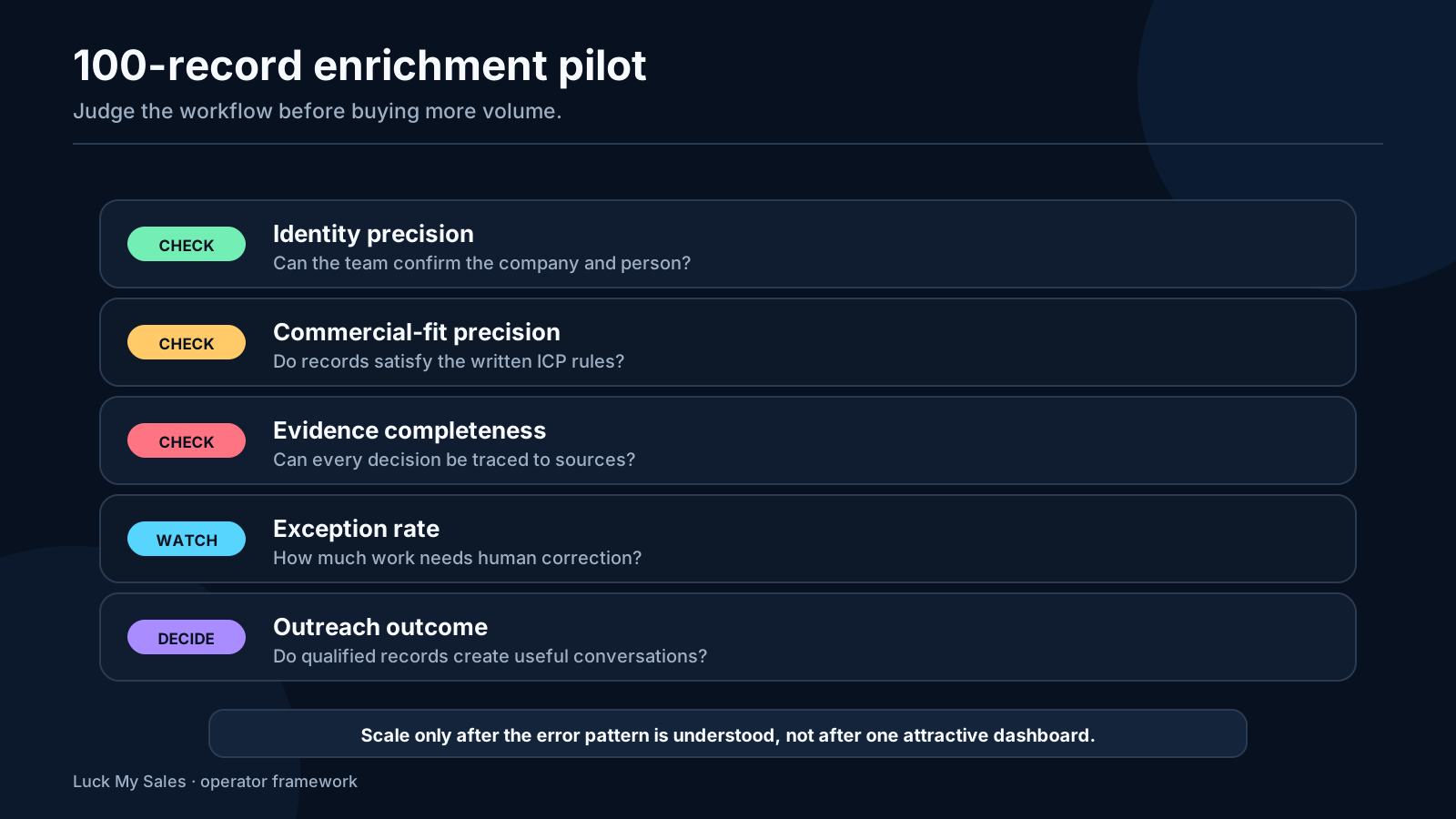
A 100-record pilot
Step 1: select a representative sample
Step 2: define the required evidence
insufficient evidence means.Step 3: run the full workflow
Step 4: review the decisions
Step 5: revise the rules
Step 6: activate a bounded set
Step 7: decide whether to scale
12 / Common failure modes
Common failure modes
Treating enrichment as truth
Qualifying from category labels
Scoring without evidence
Importing cold candidates into CRM
Overwriting seller-confirmed values
Hiding rejection
Scaling before the first batches are stable
13 / Frequently asked questions
Frequently asked questions
What is data enrichment in B2B sales?
How does enriched data improve sales calls?
Should every enriched lead go into CRM?
Can AI automate sales data enrichment?
What is the difference between enrichment and qualification?
What should I compare in sales data enrichment providers?
14 / The practical rule
The practical rule
Research note
Methodology
- 01The workflow is based on Anastasiia's direct operating experience with Clay, Claude Code and company-by-company commercial-fit validation.
- 02First-party counts are anonymized and presented with their original scope; they are not universal enrichment benchmarks.
- 03Official Clay, Apollo and EU sources support bounded product and data-governance claims.
Source ledger
Sources & editorial notes
- 01official enrichment documentation
Apollo · Official, primary or category source used for the bounded claim cited in this guide; current feature scope may change.
- 02waterfall documentation
Clay · Official, primary or category source used for the bounded claim cited in this guide; current feature scope may change.
- 03General Data Protection Regulation
European Union · Official, primary or category source used for the bounded claim cited in this guide; current feature scope may change.
- 0410 B2B Data Enrichment Providers and Tools Compared by the Record You Need
Luck My Sales · Existing first-party comparison defining seller-accepted records and field-level evidence.
- 05How AI Lead Scoring Works Across Gmail and CRM
Luck My Sales · Existing first-party guide separating source evidence, recommendation, human decision and CRM action.
- 06AI Lead Routing: How to Assign Inbound Leads Without Hiding the Sales Decision
Luck My Sales · Existing first-party guide defining decision contracts and human ownership precedence.