Commercial comparison and workflow guide · Sales AI comparisons
My AI Proposal Software Setup Cut a First Draft From 2 Hours to 15 Minutes—Here’s What I Still Keep Human
AI may assist research organization and drafting. A human editor reviews every published page, checks material claims against the cited sources and owns the final decision. No company paid for placement in this article.
AI use policyAgent-ready brief
AI takeaways
Keep the key points here, or take a source-aware text brief into Claude, ChatGPT or another AI workspace.- 01Proposal software, formal RFP response, CPQ, digital sales rooms and e-signature are adjacent but different jobs.
- 02The source pack and approval model matter more than prose fluency.
- 03Keep legal terms, final discount and statement-of-work scope human-owned.
- 04Measure review-ready output, edit burden and critical errors on one frozen source pack.
- 05The two-hour to 15-minute observation is one scoped workflow result, not a vendor benchmark.
Use AI to assemble a proposal from a controlled source pack while keeping price, discount, legal language, scope and send authority with named people.
01 / Quick answer: match AI proposal software to
Quick answer: match AI proposal software to the proposal job
| Job that needs help | Starting shortlist | Human authority that stays |
|---|---|---|
| Assemble a branded quote or proposal from CRM data | PandaDoc, Qwilr, Proposify | Approved source fields, price, discount and send decision |
| Create an interactive buyer experience | Qwilr or GetAccept | Commercial narrative, offer, commitments and next step |
| Standardize templates and stop rogue edits | PandaDoc, Proposify, Better Proposals | Template ownership, locked blocks and approval policy |
| Combine proposal, engagement and e-signature | PandaDoc, GetAccept, Proposify, Better Proposals | Contract review, signer authority and exception handling |
| Answer a formal multi-question RFP or DDQ | Responsive or Loopio | SME, Security and Legal signoff |
| Build a highly specific internal drafting layer | Bounded coding agent plus an existing document system | Data access, tests, approval and final delivery |
02 / How I evaluated the tools
How I evaluated the tools
- the CRM opportunity record and named account fields;
- discovery notes from approved Gong or Fathom transcripts;
- the customer’s stated objectives and constraints;
- an approved solution and service catalog;
- a controlled price matrix;
- current proof points with permitted wording;
- brand and tone guidance;
- approved legal blocks;
- an SOW scope template;
- a list of prohibited or escalation-only claims.
- input grounding and source traceability;
- CRM variables and data mapping;
- reusable approved content;
- pricing-table or CPQ behavior;
- document design and mobile experience;
- internal approval and permission controls;
- engagement analytics and buyer collaboration;
- e-signature, export and audit trail;
- setup, integration, review and retained-human cost.
03 / Proposal software versus RFP, CPQ and digital
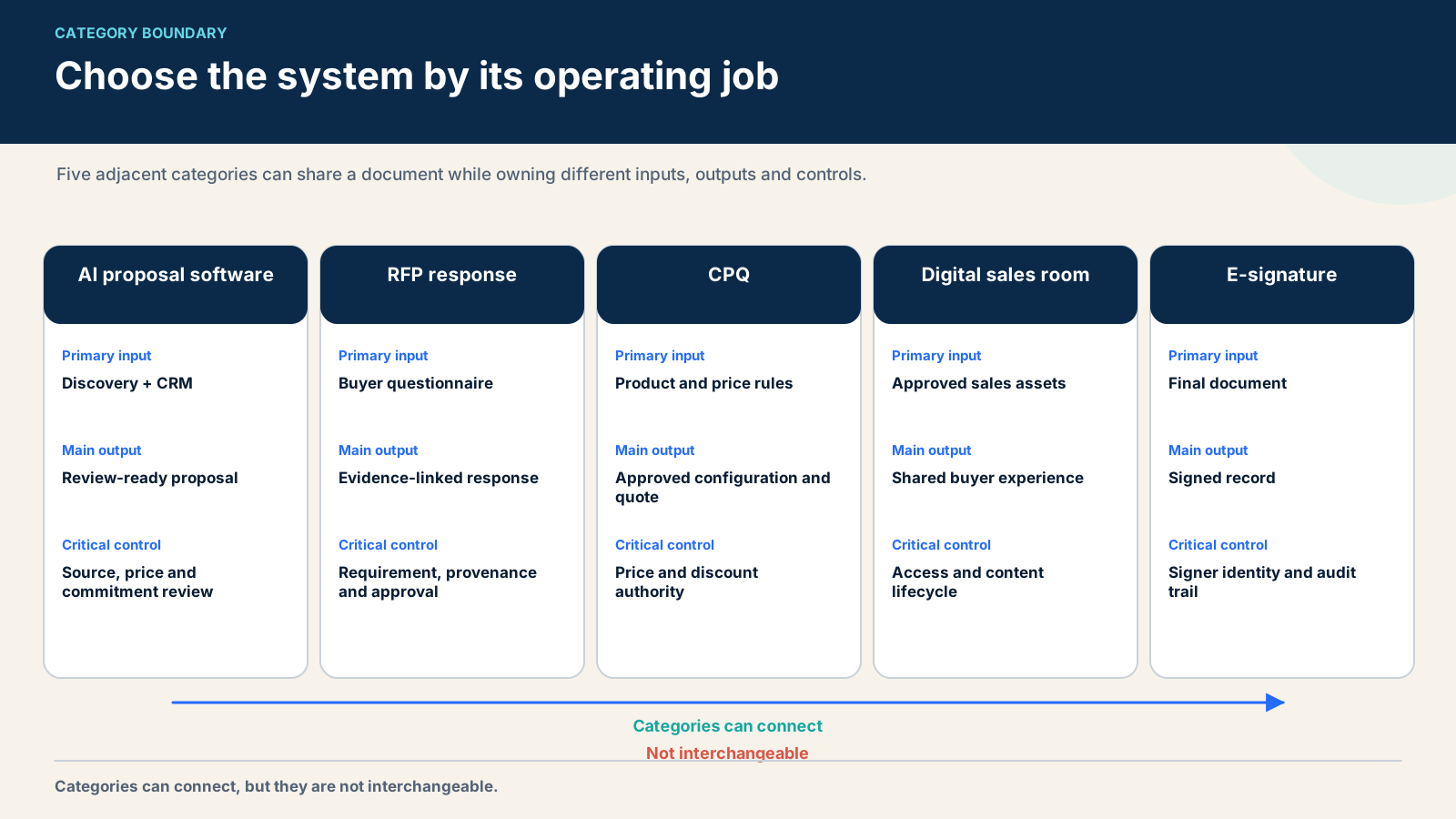
Proposal software versus RFP, CPQ and digital sales rooms
| Category | Primary job | Typical input | Critical control |
|---|---|---|---|
| AI proposal software | Build and deliver a tailored commercial proposal | CRM, call notes, approved content, price matrix | No unsupported commitments |
| RFP response software | Coordinate answers to a formal buyer questionnaire | RFP file, answer library, external sources, SME inputs | Provenance, assignment and signoff |
| CPQ | Configure valid products and calculate an approved quote | Product rules, bundles, price books, discounts | Deterministic commercial rules |
| Digital sales room | Coordinate buyer content, stakeholders and next steps | Proposal, mutual plan, files, messages, engagement | Access, version and buyer journey |
| E-signature | Execute an agreement and preserve signature evidence | Final approved document and signer data | Identity, consent and audit trail |
04 / The three tool lanes I would consider
The three tool lanes I would consider
Lane 1: AI drafting layer
- summarize discovery notes;
- map buyer objectives to approved capabilities;
- choose permitted proof points;
- propose an outline;
- create a first version of non-binding narrative;
- flag missing source fields;
- compare the draft with the source pack.
Lane 2: commercial document platform
Lane 3: formal response platform
05 / AI proposal software compared
AI proposal software compared
| Product | Evidence access | Best-fit job | Documented control surface | Main caveat |
|---|---|---|---|---|
| PandaDoc | Operational/guided evaluation plus official pages | End-to-end sales documents and quotes | Templates, variables, pricing tables, approvals, tracking, e-signature and API | Verify which AI, approval and integration features belong to the chosen plan |
| Qwilr | Operational/guided evaluation plus official pages | Interactive web proposals and personalized buyer experience | CRM and transcript inputs, sales rules, modular pages, pricing and engagement | Interactive design does not replace source, price or legal governance |
| GetAccept | Documentation review | Proposal inside a digital sales room | AI editor, knowledge base, meeting summary, content, chat and e-signature | Broader room can be excess scope if only document generation is needed |
| Product | Evidence access | Best-fit job | Documented control surface | Main caveat |
|---|---|---|---|---|
| Proposify | Documentation review | Controlled templates, quoting and approvals | Content library, locked elements, CRM variables, discount approvals, tracking and e-signature | AI depth is not the reason to shortlist it; process control is |
| Better Proposals | Documentation review | Simpler SMB proposal workflow | Templates, content library, pricing, analytics, signature and tiered permissions | Test governance and integration depth for a larger sales operation |
| Responsive/Loopio | Historical first-hand lane context plus current documentation | Formal RFP and questionnaire response | Content library, drafting, assignment, review and export | Not a direct substitute for a short interactive sales proposal |
06 / PandaDoc: my starting point for an all-in-one
PandaDoc: my starting point for an all-in-one sales document workflow
07 / Qwilr: my pick for interactive, design-led proposals
Qwilr: my pick for interactive, design-led proposals
08 / GetAccept: my pick when the proposal lives
GetAccept: my pick when the proposal lives in a digital sales room
09 / Proposify: my control-first alternative
Proposify: my control-first alternative
10 / Better Proposals: a simpler public-price option
Better Proposals: a simpler public-price option
11 / My source-controlled workflow from discovery to signature
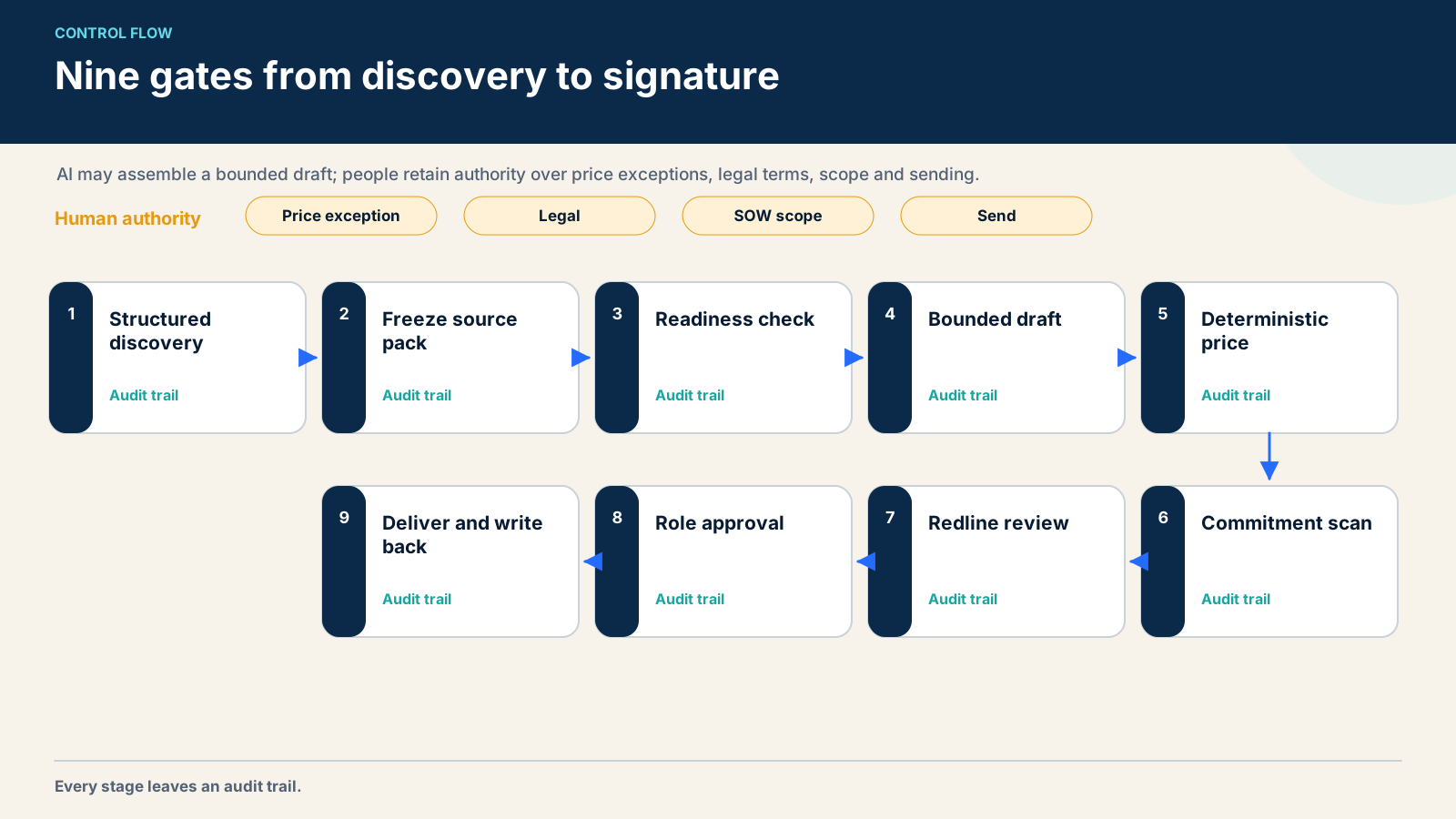
My source-controlled workflow from discovery to signature
1. Close discovery with a structured record
2. Freeze the source pack
3. Run readiness checks
4. Generate only bounded sections
5. Calculate price outside the model
6. Run the commitment scan
- legal or compliance guarantees;
- non-standard support response;
- unapproved discount;
- customer-specific integration promise;
- implementation date without capacity confirmation;
- SOW deliverable outside the approved template;
- unsupported performance result;
- confidential customer reference.
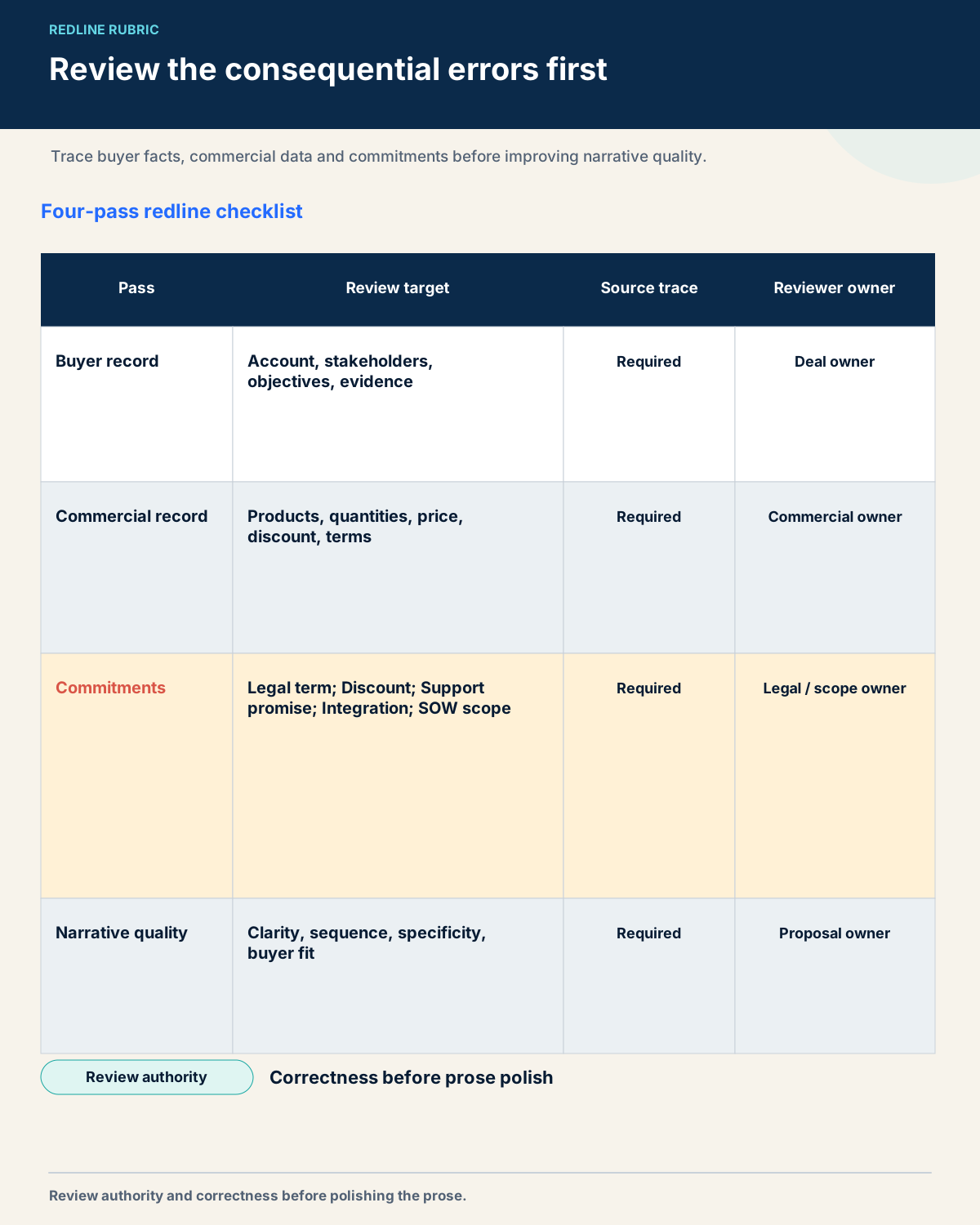
7. Review the diff, not only the document
8. Apply role-based approval
9. Deliver, sign and write back
12 / How I test AI draft quality
How I test AI draft quality
| Dimension | Test | Failure example |
|---|---|---|
| Grounding | Every factual claim maps to an approved source | Model invents an integration |
| Specificity | Buyer goals and constraints are accurately reflected | Generic benefits replace discovery |
| Commercial correctness | Price and option match the controlled matrix | Unsupported discount appears |
| Scope correctness | Deliverables match the approved SOW template | Extra implementation work is promised |
| Legal safety | Only approved clauses appear | New termination or warranty language |
| Dimension | Test | Failure example |
|---|---|---|
| Client isolation | No content from another account | Prior customer detail leaks |
| Proof quality | Proof point has approved wording and permission | Unverified performance claim |
| Brand voice | Language is clear and credible | Inflated, robotic superlatives |
| Edit burden | Material changes are categorized | Low edit count hides factual errors |
| Traceability | Reviewer can find source and version | Final sentence has unknown origin |
What the redline should reveal
13 / Must-have features
Must-have features
- field-level CRM mapping with validation;
- reusable approved content and expiration;
- locked legal and pricing blocks;
- deterministic pricing or CPQ integration;
- discount and deal-value approval rules;
- roles and permissions;
- version history and redline;
- account isolation;
- clear source or input traceability;
- engagement and signature audit;
- export in a usable format;
- API or integration support for the real stack;
- an easy way to disable AI for sensitive sections;
- a tested recovery path when an integration fails.
14 / My two-week pilot
My two-week pilot
- one normal opportunity;
- one missing CRM field;
- one transcript with contradictory dates;
- one unapproved discount request;
- one invented support expectation;
- one out-of-scope SOW request;
- one expired proof point;
- one buyer name similar to another account;
- one final change after approval.
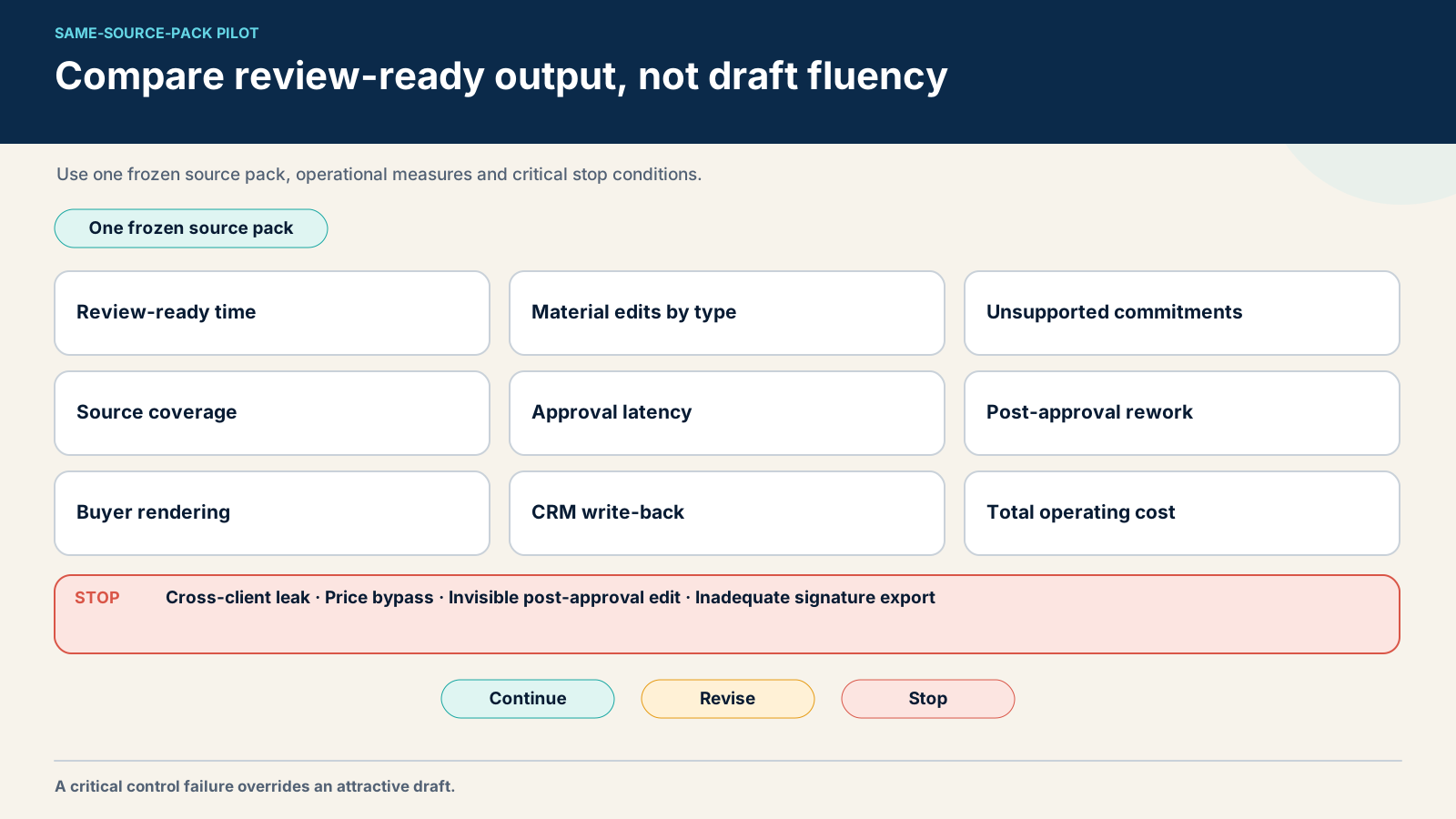
| Metric | Definition |
|---|---|
| Time to review-ready draft | From complete source pack to draft ready for seller review |
| Material edit ratio | Changed words or blocks, labeled by error type |
| Unsupported commitments | Legal, price, scope, support or proof claims without authority |
| Source coverage | Required buyer facts correctly represented |
| Approval latency | Time waiting for the correct human decision |
| Rework after approval | Material changes that force reapproval |
| Buyer rendering | Mobile, desktop, PDF/export and accessibility checks |
| CRM write-back accuracy | Approved final fields returned without duplicates or overwrites |
| Total operating cost | Subscription, implementation, integrations, review and maintenance |
15 / Pricing, total cost and build versus buy
Pricing, total cost and build versus buy
- platform subscription;
- AI or usage add-ons;
- CRM, Salesforce or CPQ add-ons;
- implementation and template migration;
- brand and legal content setup;
- training;
- retained seller and approver time;
- monitoring and support;
- signature or payment costs;
- export and migration risk.
16 / Common mistakes
Common mistakes
Asking the model to fill gaps
Letting transcripts override approved records
Measuring only first-draft speed
Treating engagement as intent
Buying RFP software for short proposals
Letting sellers bypass the approved path
17 / A proposal walkthrough from source pack to
A proposal walkthrough from source pack to approval
18 / Frequently asked questions
Frequently asked questions
What features should AI proposal software include?
What is the difference between proposal and RFP software?
Can AI proposal software use CRM and call data?
How do teams prevent hallucinations and wrong-client content?
Which tool is best for a small B2B team?
Is AI proposal software worth it?
Can AI replace a proposal writer?
Are “AI proposal writing tools software” lists useful?
Research note
Methodology
- 01The guide combines first-hand evaluation or use of PandaDoc AI, Qwilr and historical RFP360 with current official documentation for the broader shortlist.
- 02No common-input, long-term market test is claimed; the timing and edit observations lack a preserved formal protocol.
- 03Current product, pricing and packaging facts were checked on 26 August 2026 and require verification for the buyer's plan and region.
Source ledger
Sources & editorial notes
- 01PandaDoc AI
PandaDoc · first-party product page; reviewed 2026-08-26. Platform and performance statements are vendor claims; verify exact plan and enabled AI behavior.
- 02Pricing Table
PandaDoc · first-party feature page; reviewed 2026-08-26. A pricing-table feature does not establish deterministic CPQ behavior or approval scope; test the chosen configuration.
- 03Smart Proposal Engine
Qwilr · first-party product page; reviewed 2026-08-26. Vendor capability claim; source control, approval and result quality require buyer testing.
- 04Qwilr Pricing
Qwilr · first-party pricing page; reviewed 2026-08-26. Pricing is mutable and incomplete without users, CRM, implementation, support and required plan features.
- 05GetAccept Pricing
GetAccept · first-party pricing page; reviewed 2026-08-26. Vendor packaging does not establish outcome, accuracy or fit; add-ons and implementation require confirmation.
- 06Proposal Software
Proposify · first-party product and plan page; reviewed 2026-08-26. Vendor outcome and creation-time claims are excluded; current AI scope and plan access require verification.
- 07Better Proposals Pricing
Better Proposals · first-party pricing page; reviewed 2026-08-26. Public feature list does not establish enterprise governance or integration quality; test the intended workflow.
- 08About Responsive
Responsive · first-party company page; reviewed 2026-08-26. Company-authored history; use acquisition and rebrand announcements for dated provenance.
- 09Loopio AI
Loopio · first-party product and governance page; reviewed 2026-08-26. Vendor security and performance claims require review of applicable reports, scope, terms and configuration.