
Revenue intelligence pillar · Revenue intelligence
Revenue Intelligence: What It Is and Which Sales Decisions It Should Support
AI may assist research organization and drafting. A human editor reviews every published page, checks material claims against the cited sources and owns the final decision. No company paid for placement in this article.
AI use policyAgent-ready brief
AI takeaways
Keep the key points here, or take a source-aware text brief into Claude, ChatGPT or another AI workspace.- 01The minimum system is a closed loop from source and identity through activity, decision and outcome.
- 02Facts, inferences and actions must be visible as different objects.
- 03Forecast, qualification and next-step recommendations need evidence and an accountable human owner.
- 04Pricing and account ownership remain human decisions.
- 05A weekly evidence review is more useful than a dashboard tour.
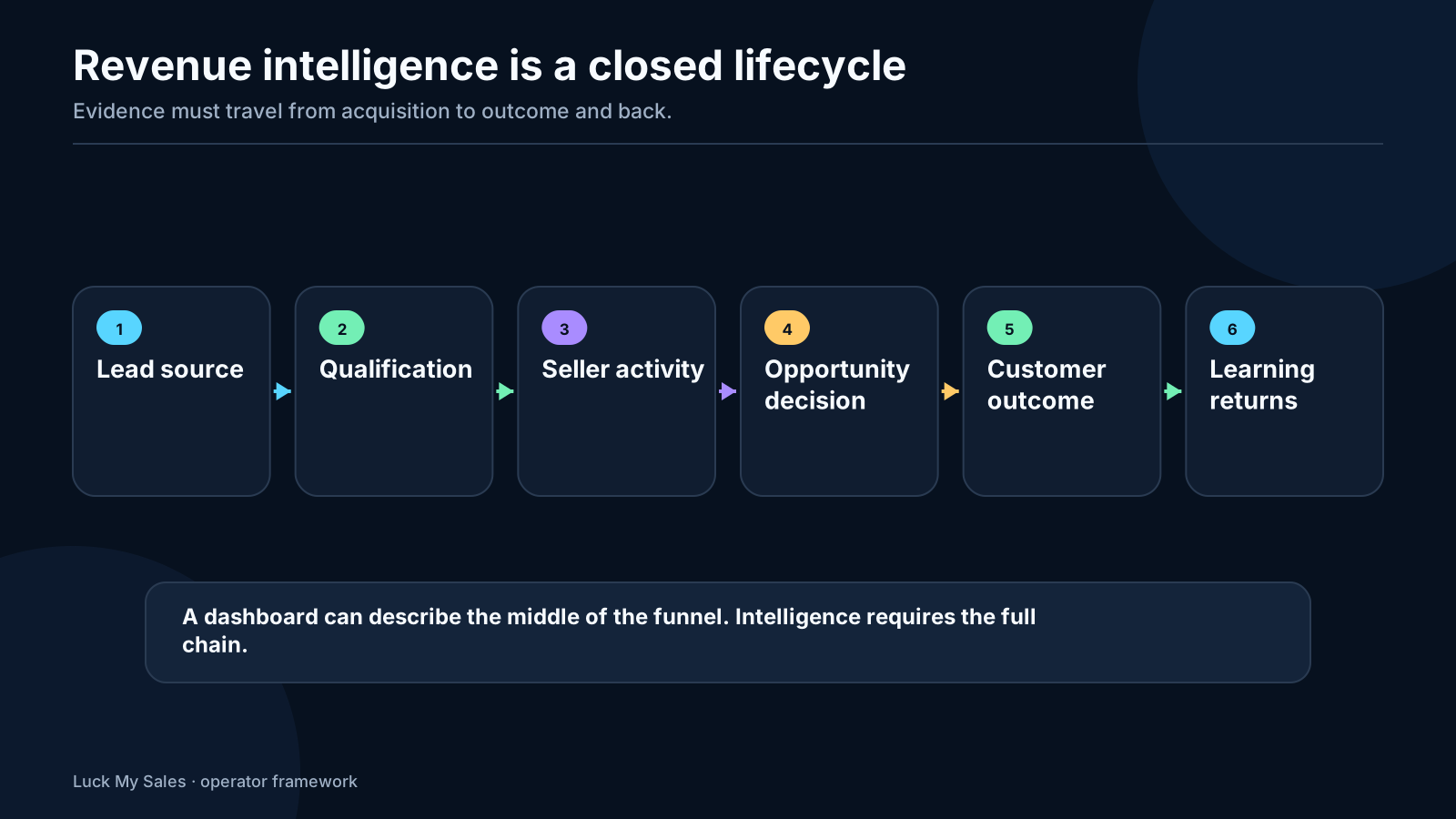
source or trigger → CRM identity → evidence → interpretation → decision owner → action → customer or loss outcomeRevenue intelligence is useful when it exposes evidence and uncertainty for accountable decisions; it fails when an incomplete CRM becomes a confident dashboard.
01 / What revenue intelligence is
What revenue intelligence is
- Capture: collect relevant customer and seller events.
- Context: resolve them to the right company, person, opportunity and time.
- Interpretation: identify facts, missing evidence, risk, momentum and possible next action.
- Action and learning: put the insight in the workflow, record the human decision and observe the result.
02 / What revenue intelligence is not
What revenue intelligence is not
It is not the CRM
It is not sales intelligence
It is not conversation intelligence
It is not business intelligence
It is not generic automation
03 / The closed loop is the
The closed loop is the prerequisite
1. Source or trigger
2. Identity
3. Segmentation and ownership
4. Activity
5. Buyer evidence
6. Opportunity and forecast
7. Outcome
04 / Which evidence sources matter
Which evidence sources matter
- delivered message;
- automated reply or out-of-office;
- meaningful buyer reply;
- positive interest;
- objection;
- referral;
- explicit suppression request;
- seller response and response time.
Calls and transcripts
LinkedIn and professional context
CRM history
Website activity
Enrichment
Stage and field changes
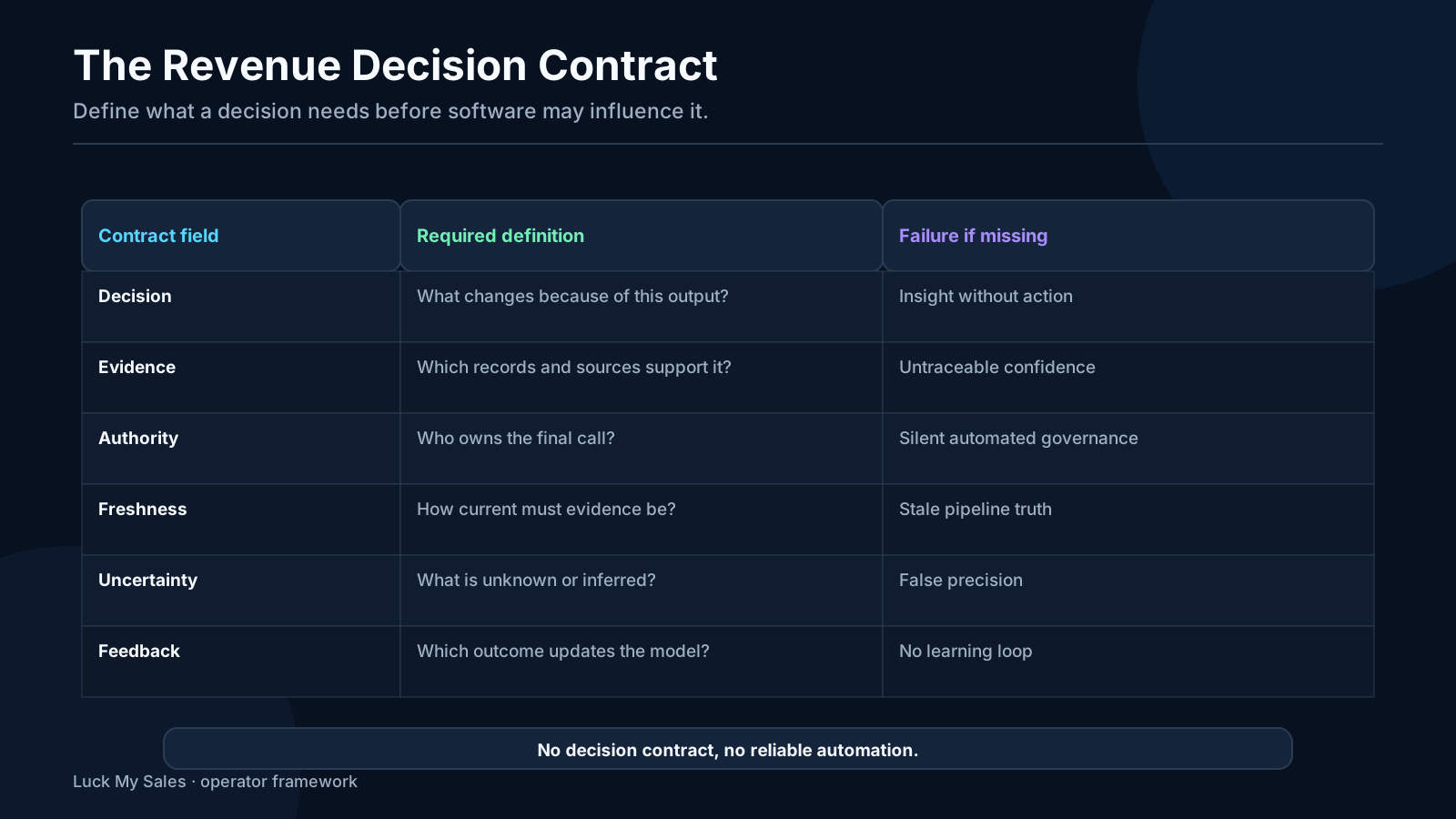
05 / The Revenue Decision Contract
The Revenue Decision Contract
| Layer | Required content |
|---|---|
| Fact | What was directly observed and where |
| Coverage | Which expected sources were present or missing |
| Inference | What the system believes the evidence may mean |
| Recommendation | The proposed decision or next action |
| Authority | The human or approved rule allowed to decide |
| Applied action | What actually changed, by whom and when |
| Outcome | What happened later |
Fact
- “Buyer replied on 18 August and asked for security documentation.”
- “The last recorded meeting has no agreed next step in the transcript.”
- “Close date moved from 30 September to 31 October.”
Coverage
- last two calls were not recorded;
- email sync began only this month;
- one stakeholder uses a different domain;
- website identity is unresolved;
- seller notes are incomplete.
Inference
Recommendation
Authority
Action and outcome
06 / A worked example from source
A worked example from source to decision
What a weak system does
What a revenue-intelligence loop does
- The form event resolves to the existing company and likely person.
- The card shows the prior event source, current form request and any relevant email history.
- AI extracts the requested product, business problem, geography and timing.
- The system checks for an existing owner, opportunity, partner or named-account rule.
- Enrichment adds current company context but does not overwrite the first-party form.
- AI recommends the segment and owner, labels missing evidence and proposes a response SLA.
- An SDR reviews the card, accepts the segment and changes one weak inference.
- A task and response draft are created.
- The buyer replies and books a call; the conversation is linked to the same record.
- The call summary separates buyer statements from the model's qualification inference.
- Sales accepts or rejects the opportunity and records the next step.
- The original recommendation, human correction and eventual outcome remain connected.
The decision card a seller should see
| Section | Content |
|---|---|
| Identity | Company, person, match confidence and any duplicate risk |
| Trigger | Form, event, reply, call or other source with timestamp |
| Buyer language | Relevant verbatim request or transcript moments |
| Commercial context | Product, problem, timing, geography and current relationship |
| Ownership | Current owner and applicable precedence rules |
| Coverage gaps | Missing email, unrecorded call or stale CRM history |
| AI inference | Segment, risk or opportunity interpretation with confidence |
| Recommendation | Specific next action, owner and due time |
| Human decision | Accepted, corrected, held or rejected with reason |
| Outcome | Reply, meeting, stage, win, loss or disqualification |
07 / Decisions I use revenue evidence
Decisions I use revenue evidence to support
Pipeline review
- current stage and time in stage;
- last meaningful buyer interaction;
- stakeholder coverage;
- unresolved questions or objections;
- agreed next step and date;
- close-date changes;
- forecast state;
- missing evidence;
- recommended owner action.
Qualification
Next step
Forecast
- seller category;
- stage and historical movement;
- buyer engagement;
- stakeholder and decision-process evidence;
- next-step quality;
- close-date changes;
- similar past outcomes.
Resource allocation
08 / When the evidence contradicts the
When the evidence contradicts the CRM
Negotiation while the last three emails discuss initial security requirements. A seller may call a deal Commit even though no decision-maker has joined a meeting. A transcript may contain a clear next step while the CRM field is empty. A close date may remain this month even though the buyer stated that procurement begins next quarter.| Conflict | Default handling |
|---|---|
| Buyer statement vs old enrichment | Preserve buyer statement; flag stale external value |
| Transcript next step vs empty CRM field | Propose the extracted next step for seller confirmation |
| CRM stage vs weak conversation evidence | Flag mismatch; opportunity owner decides stage |
| Seller forecast vs model risk | Show evidence and difference; manager or owner decides commit |
| Existing owner vs capacity recommendation | Preserve owner unless an approved precedence rule allows change |
| Two conflicting identity matches | Hold for review; do not merge or route automatically |
09 / The data model behind the
The data model behind the loop
Core entities
- company or account;
- person or contact;
- lead or intake event;
- opportunity;
- conversation;
- activity or task;
- evidence object;
- recommendation;
- human decision;
- outcome.
Minimum event fields
Why decisions need their own record
next step, the team loses the original proposal and human response. A decision record makes it possible to ask:- Which recommendations did sellers accept?
- Which were corrected and why?
- Did acceptance differ by segment or evidence coverage?
- Which actions happened on time?
- What outcomes followed?
10 / Put intelligence into operating cadence
Put intelligence into operating cadence
Daily seller view
Weekly pipeline review
Forecast call
Monthly process review
Quarterly governance review
11 / Run a weekly evidence review
Run a weekly evidence review, not a dashboard tour
- What new fact changed our view of this opportunity?
- Which existing CRM statement is now contradicted or unsupported?
- What does the buyer appear to have agreed to, and what remains inference?
- Which human owns the next commercial action?
- When will the result return to the system?
Review coverage before reviewing scores
Challenge stale next steps
Preserve the seller's disagreement
12 / When forecast evidence conflicts
When forecast evidence conflicts
- Expose the difference. Show the human category, model output and current evidence together.
- Check coverage. Confirm which calls, emails, meetings and CRM events the system can and cannot see.
- Name the assumption. Ask what must be true for the human call or model estimate to hold.
- Assign a verification action. Set a specific owner and event that will confirm or reject the assumption.
Keep forecast categories operational
commit differently, more AI will not fix the forecast. The system will learn or automate an inconsistent label. Revenue intelligence becomes useful only after category meaning is stable enough to test against outcomes.13 / Define ownership for the intelligence
Define ownership for the intelligence system
14 / AI prepares humans own consequence
AI prepares; humans own consequence
- collect events from connected systems;
- resolve likely identities;
- transcribe and summarize;
- extract buyer questions, objections and commitments;
- compare current and previous state;
- identify missing evidence;
- prepare segments and next actions;
- assemble a pipeline review queue;
- report accepted, rejected and corrected recommendations.
- pricing and commercial terms;
- account ownership and strategic allocation;
- final forecast commitment;
- material opportunity-stage decisions;
- disqualification where consequences are significant;
- exception handling;
- changes to ICP, qualification or forecast rules;
- relationship judgment.
15 / Fact inference and action must
Fact, inference and action must look different
- Fact: The buyer has not replied for 14 days.
- Fact: The last meeting transcript contains a request for legal terms.
- Fact: No legal task is recorded.
- Inference: The deal may be stalled because the requested information was not delivered.
- Recommendation: Confirm whether legal received the request and send an owner-backed update today.
- Authority: Opportunity owner.
- Action: Seller creates legal task and emails buyer.
- Outcome: Buyer schedules review or remains silent.
high risk. The label is not wrong, but it is less useful than the decision chain.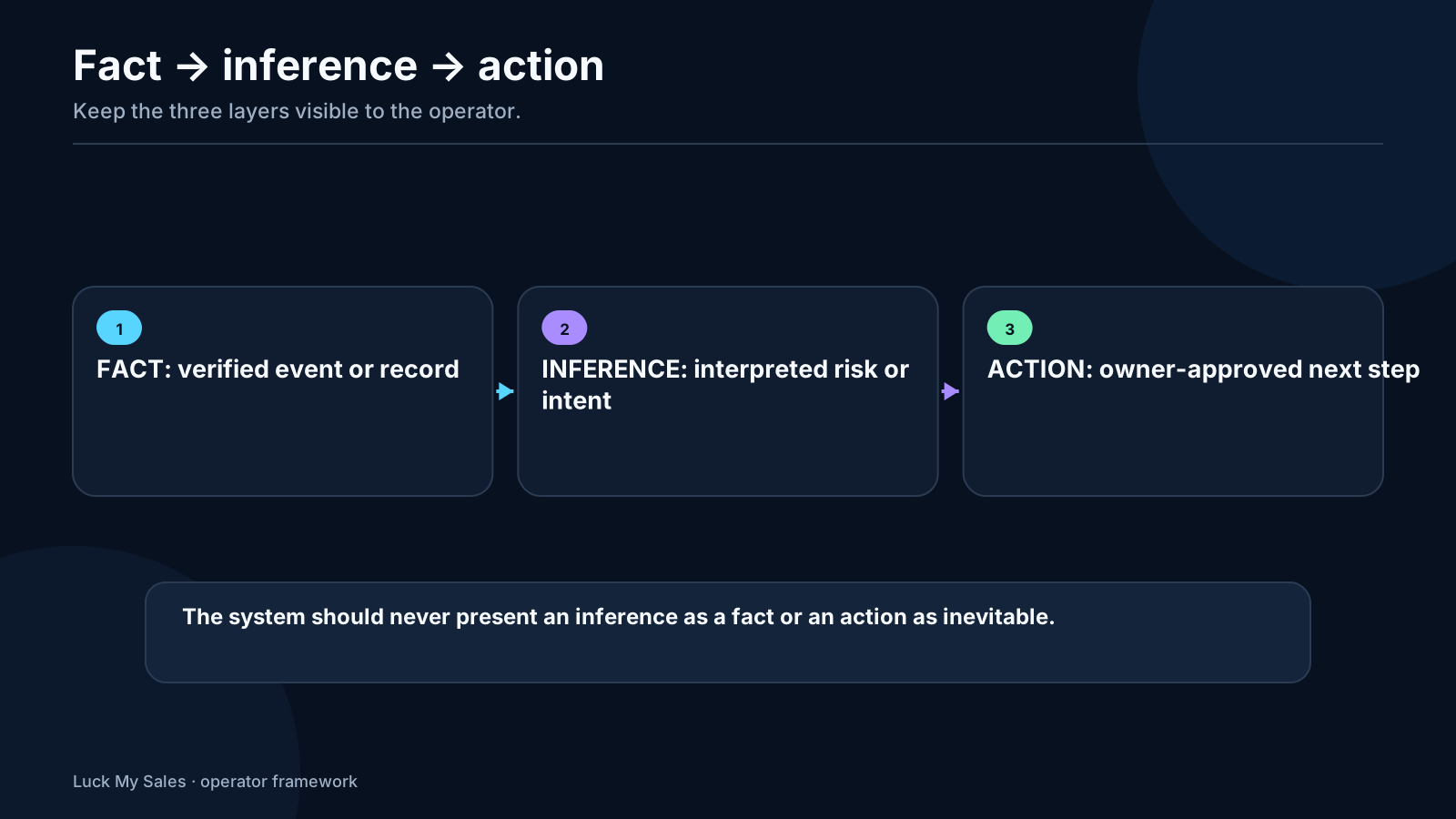
16 / Humanonly and namedowner decisions
Human-only and named-owner decisions
Pricing
Account ownership
Forecast commitment
Disqualification
Material stage change
17 / Implement revenue intelligence in stages
Implement revenue intelligence in stages
Stage 1: close the data loop
Stage 2: create evidence cards
Stage 3: support one decision
Stage 4: integrate the action
Stage 5: compare outcomes
Stage 6: expand carefully
18 / A practical 60day rollout
A practical 60-day rollout
Days 1–10: choose one decision
Days 11–20: connect and reconcile
Days 21–30: generate read-only cards
Days 31–45: embed in one cadence
Days 46–60: evaluate and decide
19 / How to measure usefulness honestly
How to measure usefulness honestly
| Metric | Denominator | Question |
|---|---|---|
| Evidence coverage | reviewed records or opportunities | Did the system see the required sources? |
| Recommendation acceptance | reviewed recommendations | Did owners find the output useful? |
| Correction rate | reviewed recommendations | Where is the model or process wrong? |
| Review time | decisions completed | Did preparation become faster? |
| Next-step completeness | active opportunities | Does each deal have an owner, action and date? |
| Response SLA | qualified inbound records | Did routing and follow-up improve? |
| Forecast changes explained | changed forecast items | Can the team explain movement? |
| Missed follow-ups | due actions | Did workflow reliability improve? |
| Outcome coverage | closed or disqualified records | Can the system learn from what happened? |
20 / Failure modes
Failure modes
Sparse CRM history
Disconnected systems
Unstructured stages
Hidden inference
Activity mistaken for progress
Seller distrust
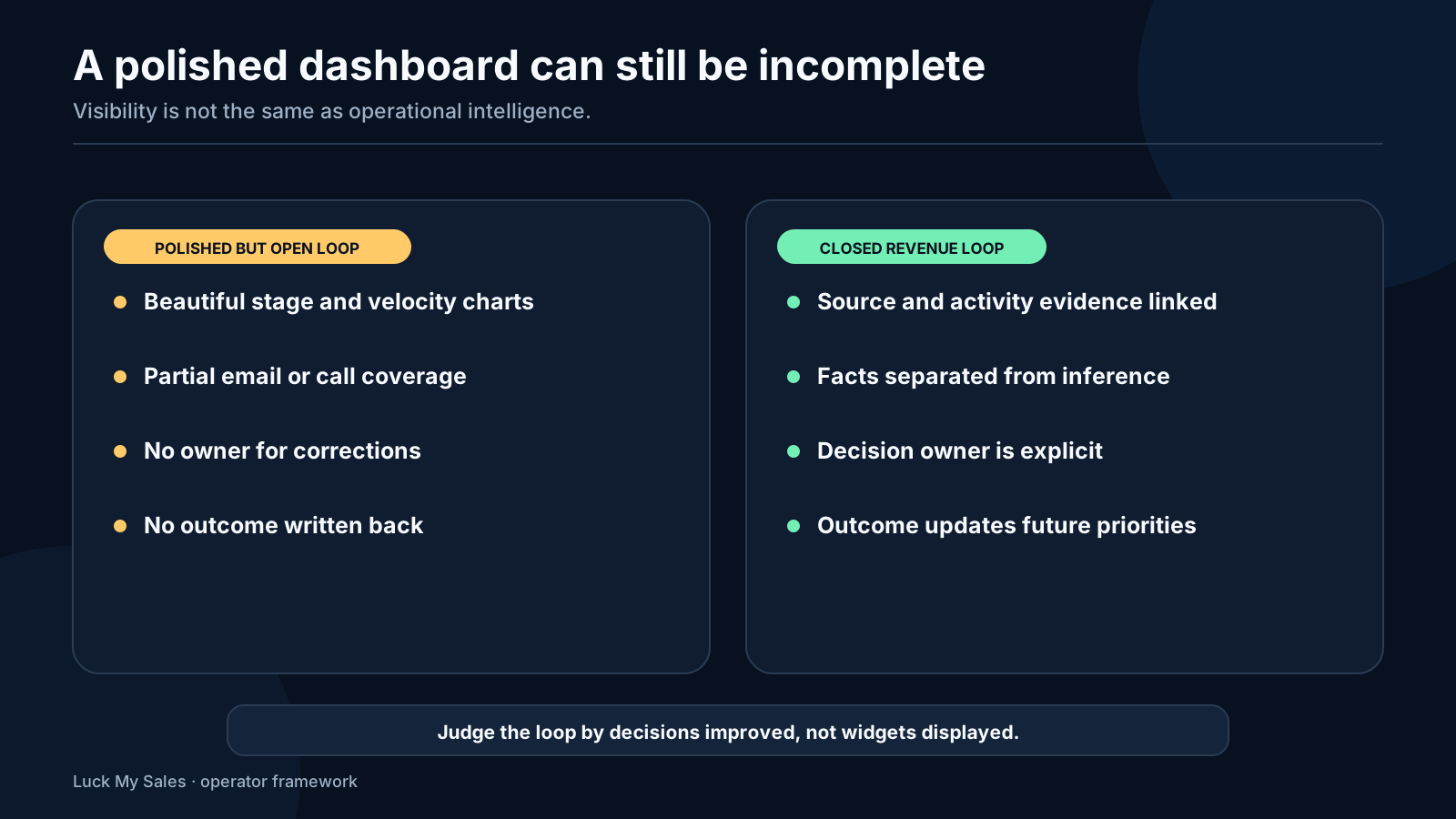
Dashboard without workflow
Automation without feedback
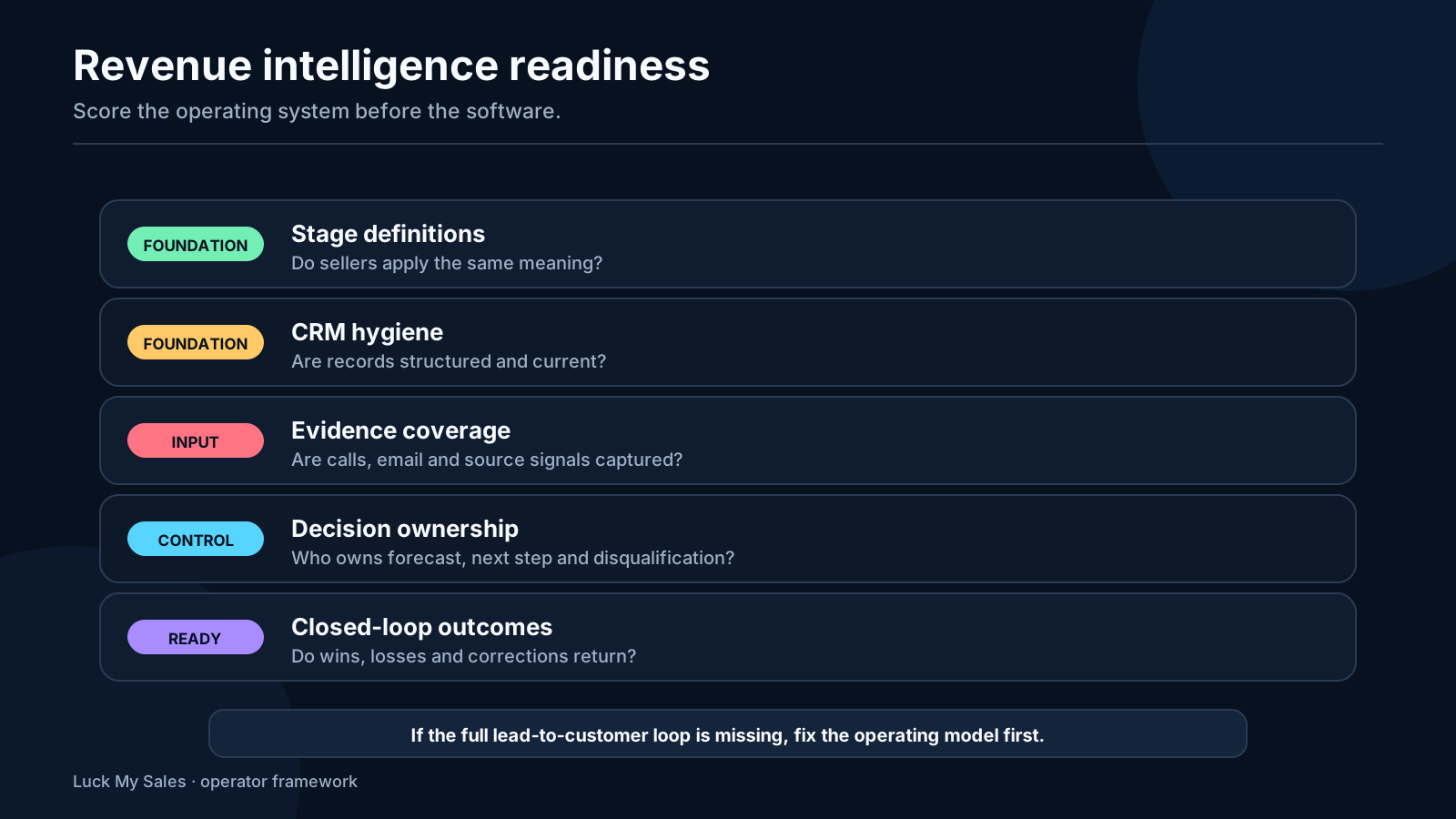
21 / Revenue intelligence readiness test
Revenue intelligence readiness test
- Can every lead be traced to a source or trigger?
- Do company, person and opportunity identities resolve reliably?
- Are lifecycle and opportunity stages defined?
- Does every active opportunity have an owner?
- Are email and meaningful calls connected to the record?
- Can the team see source coverage and sync gaps?
- Are next steps specific, owned and dated?
- Are pricing, ownership and forecast authorities named?
- Are loss and disqualification reasons captured?
- Can a CRM change be audited and reversed?
- Does the loop end in customer, loss or another explicit outcome?
- Is there one decision the team wants to improve first?
22 / Frequently asked questions
Frequently asked questions
What is revenue intelligence in sales?
How is revenue intelligence different from conversation intelligence?
Does revenue intelligence replace CRM?
What data does revenue intelligence use?
Can AI make the forecast automatically?
When is a team ready for revenue intelligence software?
23 / The practical rule
The practical rule
Research note
Methodology
- 01The operating model reflects Anastasiia's first-hand pipeline, qualification, next-step and forecast review work.
- 02First-party workflow examples are anonymized; product-category definitions are bounded to current official Salesforce documentation.
- 03The guide distinguishes observed facts, AI inference, human decision and recorded outcome throughout the loop.
Source ledger
Sources & editorial notes
- 01official definition of Revenue Intelligence
Salesforce Help · Official, primary or category source used for the bounded claim cited in this guide; current feature scope may change.
- 02How AI Lead Scoring Works Across Gmail and CRM
Luck My Sales · Existing first-party guide separating evidence, recommendation, human decision and CRM action.
- 03AI Lead Routing: How to Assign Inbound Leads Without Hiding the Sales Decision
Luck My Sales · Existing first-party guide defining a reviewable decision contract and ownership precedence.