Conversational AI platform guide · Sales AI comparisons
Conversational AI Platforms for Sales: How to Compare Voice, Chat, Workflow Control and Human Handoff
AI may assist research organization and drafting. A human editor reviews every published page, checks material claims against the cited sources and owns the final decision. No company paid for placement in this article.
AI use policyAgent-ready brief
AI takeaways
Keep the key points here, or take a source-aware text brief into Claude, ChatGPT or another AI workspace.- 01Define the post-conversation action and human owner before comparing vendors.
- 02Separate model judgment from deterministic calendar, suppression, ownership and pricing rules.
- 03Score products by workflow ownership and evidence state, not by the fluency of a demo.
- 04Pilot the complete route from channel and consent to CRM evidence and human handoff.
- 05Keep kill switches for unsupported answers, failed actions, weak evidence and rising correction rates.
Treat conversational AI as an operating layer, not a chatbot leaderboard: the real comparison is who controls evidence, actions, handoff and correction.
01 / What counts as a conversational AI plat…
What counts as a conversational AI platform for sales
| Category | Primary object | Typical finish line | Main sales risk |
|---|---|---|---|
| Chatbot builder | A conversation or flow | Answer delivered | No accountable downstream action |
| Voice infrastructure | A programmable call | Call completed | Engineering burden and fragmented evidence |
| Service AI agent | A support request | Resolution or handoff | Qualification logic may not match sales |
| Meeting assistant | A recorded meeting | Notes and tasks | Summary treated as source of truth |
| Conversation intelligence | A corpus of calls | Insight, coaching or forecast signal | Too much platform for a small workflow |
| Sales conversational platform | A buyer conversation plus action state | Valid booking, qualified handoff or accepted CRM action | Automation can commit the wrong decision |
02 / The channel-to-revenue layer map
The channel-to-revenue layer map
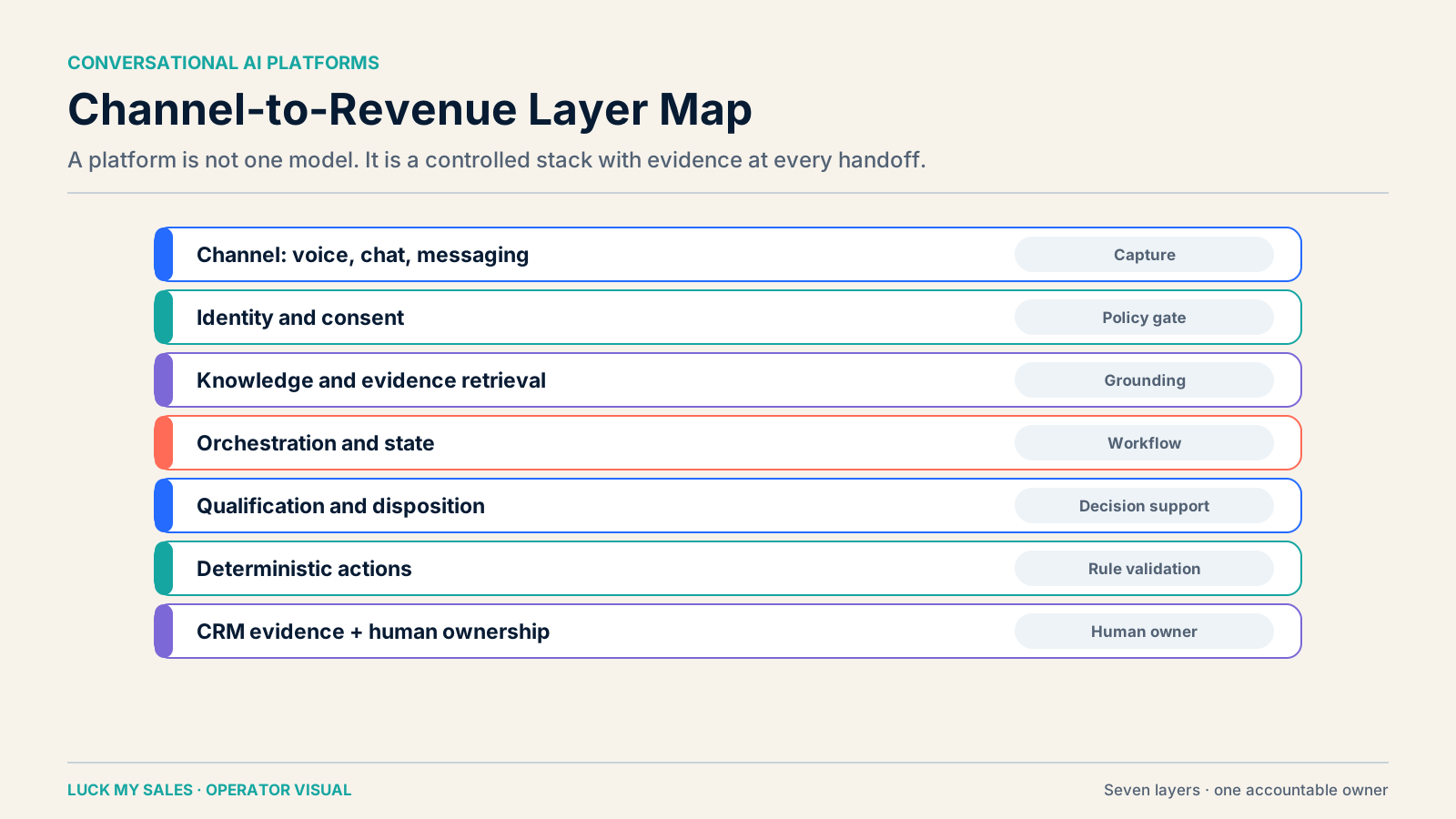
1. Channel
2. Identity and consent
3. Knowledge and retrieval
- approved commercial rules and product facts;
- account-specific CRM context that the agent is allowed to use;
- current website or help-center content;
- model inference, clearly treated as inference;
- human escalation when the answer would create a promise.
4. Orchestration
5. Qualification
6. Deterministic action
7. CRM evidence and human ownership
03 / Voice, chat and multimodal trade-offs
Voice, chat and multimodal trade-offs
| Workload | Default channel | Why | Required gate |
|---|---|---|---|
| Pricing or product question | Chat | Easy to cite and review | Escalate commercial exceptions |
| Urgent inbound lead | Voice or immediate callback | Low delay | Consent, identity and capacity |
| Qualification with several details | Chat plus optional voice | Structured answers with clarification | Evidence per answer |
| Appointment booking | Either | User preference matters | Deterministic calendar validation |
| Sensitive or high-value negotiation | Human | Context and authority dominate | Full handoff record |
| Cold prospecting | Usually not the first platform use case | Consent, relevance and brand risk are higher | Separate outbound strategy and controls |
04 / Knowledge, identity and unfamiliar-bran…
Knowledge, identity and unfamiliar-brand handling
- store the user’s exact wording;
- preserve the source document and retrieval timestamp;
- distinguish a confirmed fact from enrichment and inference;
- require a clarifying question when identity changes the answer;
- prohibit pricing, legal or delivery promises without approved data;
- let a human correct the entity and feed that correction back into the knowledge workflow.
05 / Qualification, routing and human handoff
Qualification, routing and human handoff
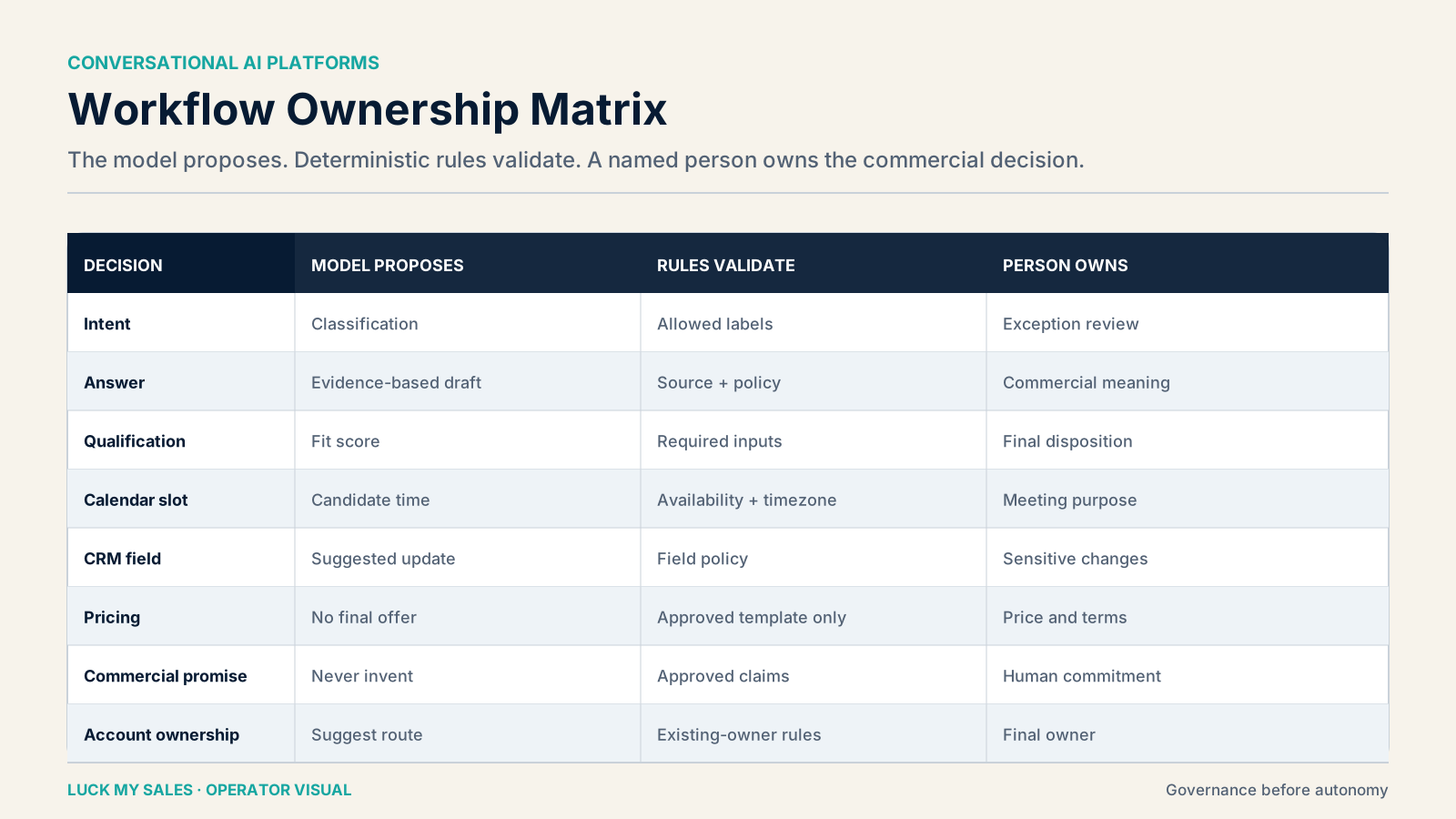
| Decision | Model may | Deterministic rule must | Person owns |
|---|---|---|---|
| Intent | Classify and show evidence | Apply allowed labels | Correct ambiguous cases |
| ICP fit | Propose score and reasons | Enforce hard exclusions | Approve unusual strategic accounts |
| Answer | Draft from approved knowledge | Block forbidden claims | Handle commercial exceptions |
| Route | Propose destination | Respect existing owner, territory and capacity | Resolve conflicts |
| Meeting | Extract requested time and details | Validate timezone, availability and policy | Own no-show/rebooking exceptions |
| CRM fields | Propose values | Validate field type and overwrite policy | Approve consequential changes |
| Pricing | Retrieve an approved price | Enforce eligibility | Approve a commercial proposal |
| Promise | Never invent | Block unapproved terms | Make and own the promise |
06 / Calendar, CRM and deterministic action …
Calendar, CRM and deterministic action validation
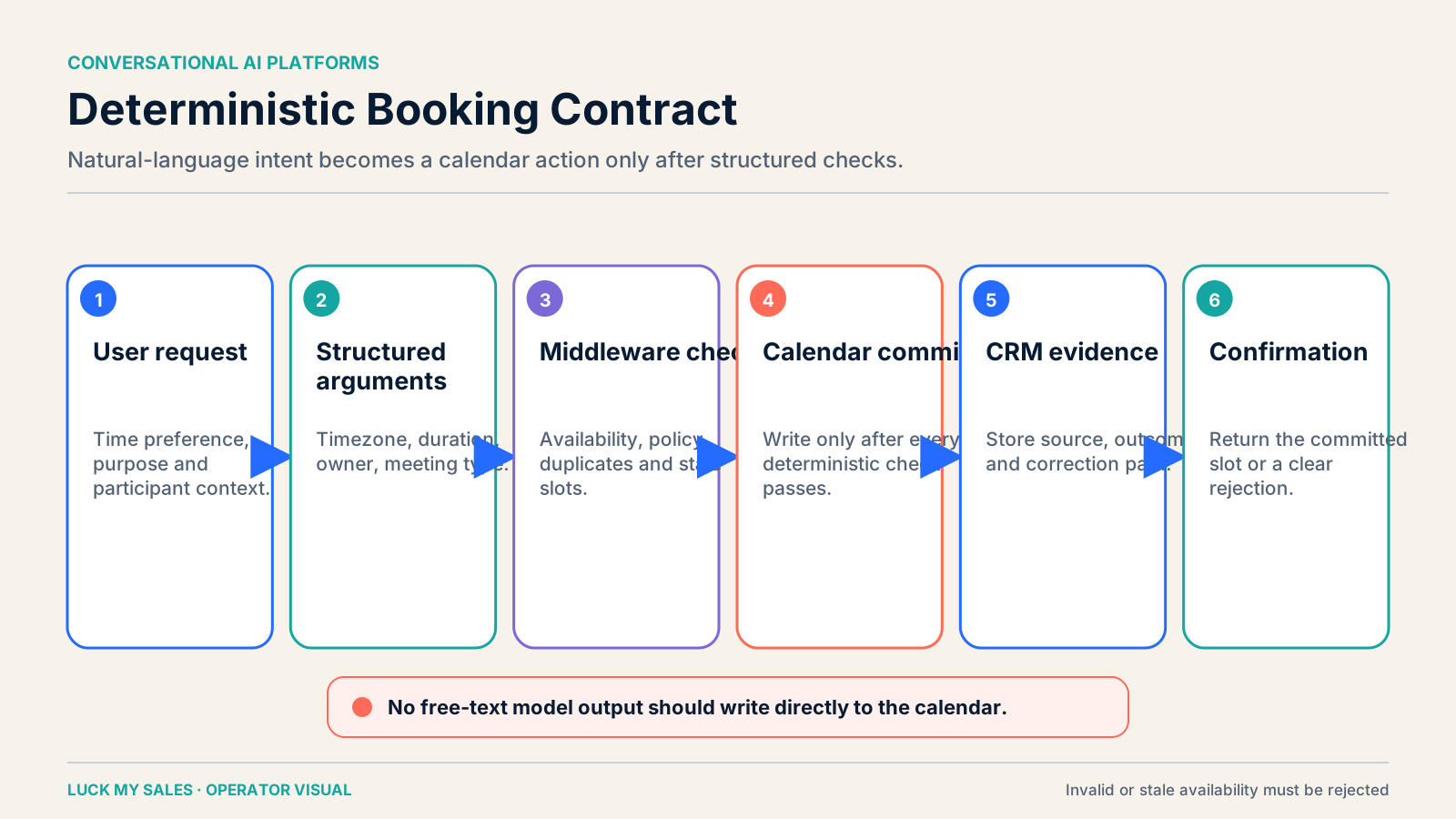
user request → model view → structured inputs → rule check → action → CRM evidence → confirmationinvalid or stale state → no action → explain constraint → request another option or hand off- record identity;
- existing account or opportunity owner;
- source and confidence;
- allowed values;
- whether the field is empty, inferred or trusted;
- whether the action is reversible;
- who receives an exception.
07 / Evidence, logs, correction and observab…
Evidence, logs, correction and observability
- What did the user say?
- What evidence did the system retrieve?
- What decision did the model propose?
- What rule accepted, changed or rejected it?
- What action occurred, and who owns the result?
- conversations with sufficient evidence;
- successful and failed human handoffs;
- proposed versus accepted qualifications;
- proposed versus accepted calendar actions;
- CRM correction rate;
- review minutes per accepted outcome;
- duplicate or suppressed contacts;
- unresolved exceptions;
- cost per meaningful conversation and accepted opportunity.
08 / Consent, retention, security and region…
Consent, retention, security and regional language questions
- Is the user told that they are interacting with AI?
- When is a call recorded, and how is consent captured?
- Which data is stored as audio, transcript, summary, embedding or model log?
- Where is it processed and retained?
- Can administrators set retention by channel or data type?
- Can a user request deletion, and does deletion reach derived records?
- Which employees, vendors and subprocessors can access the data?
- Can sensitive fields be redacted before model processing?
- Does the system support role-based access and audit logs?
- How does it handle regional languages, mixed-language conversations, accents and brand names?
- What happens when language confidence is low?
09 / Conversational AI platforms to shortlis…
Conversational AI platforms to shortlist by workflow
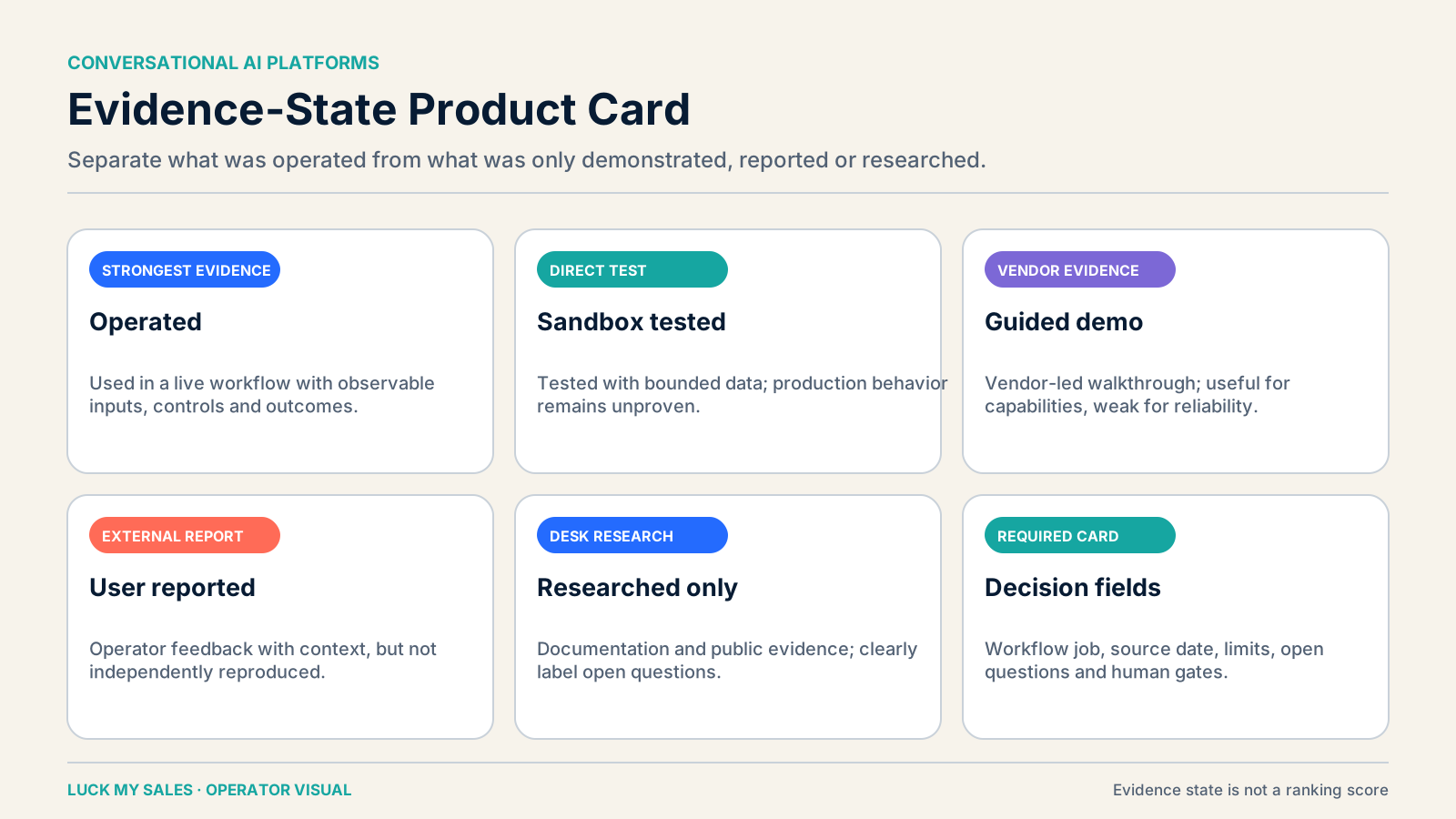
NextLevel.AI: first-party operated sales workflow
Intercom Fin: outcome-priced service-agent model with sales-adjacent qualification
Bland AI: minute-priced voice deployment
Retell AI: programmable voice and chat with explicit add-on layers
Vapi: modular developer-oriented voice stack
Sierra: cross-channel service-agent architecture
Decagon: integration-led enterprise agent
Ada: researched cross-channel automation option
Drift, Crescendo and LivePerson
10 / Compare deployment models, not just pro…
Compare deployment models, not just product names
Build on programmable voice or agent infrastructure
Configure a packaged agent
Buy a managed outcome
Adopt an enterprise customer-interaction platform
11 / Architecture questions that reveal oper…
Architecture questions that reveal operational fit
- Can the platform call deterministic tools before it commits an action?
- Can a tool result override the model's interpretation?
- Does every qualification field retain its evidence?
- How are knowledge sources versioned and rolled back?
- Can the team replay a failed conversation after a rule change?
- What prevents two channels from contacting the same person?
- Can high-value accounts bypass automation immediately?
- Is there one exception queue with an accountable owner?
- Can the agent degrade safely when CRM, calendar or enrichment is unavailable?
- Can we export the conversation, tool calls, decisions and corrections?
12 / Evaluation matrix: workflow ownership b…
Evaluation matrix: workflow ownership before feature count
- 20 points: channel reliability and user experience;
- 15: knowledge grounding and source visibility;
- 15: qualification and handoff control;
- 15: deterministic calendar and CRM action validation;
- 10: evidence, logs and correction workflow;
- 10: consent, security, retention and access;
- 10: language and regional performance on your calls;
- 5: total operating cost under the tested workload.
13 / A controlled four-week pilot with human…
A controlled four-week pilot with human gates
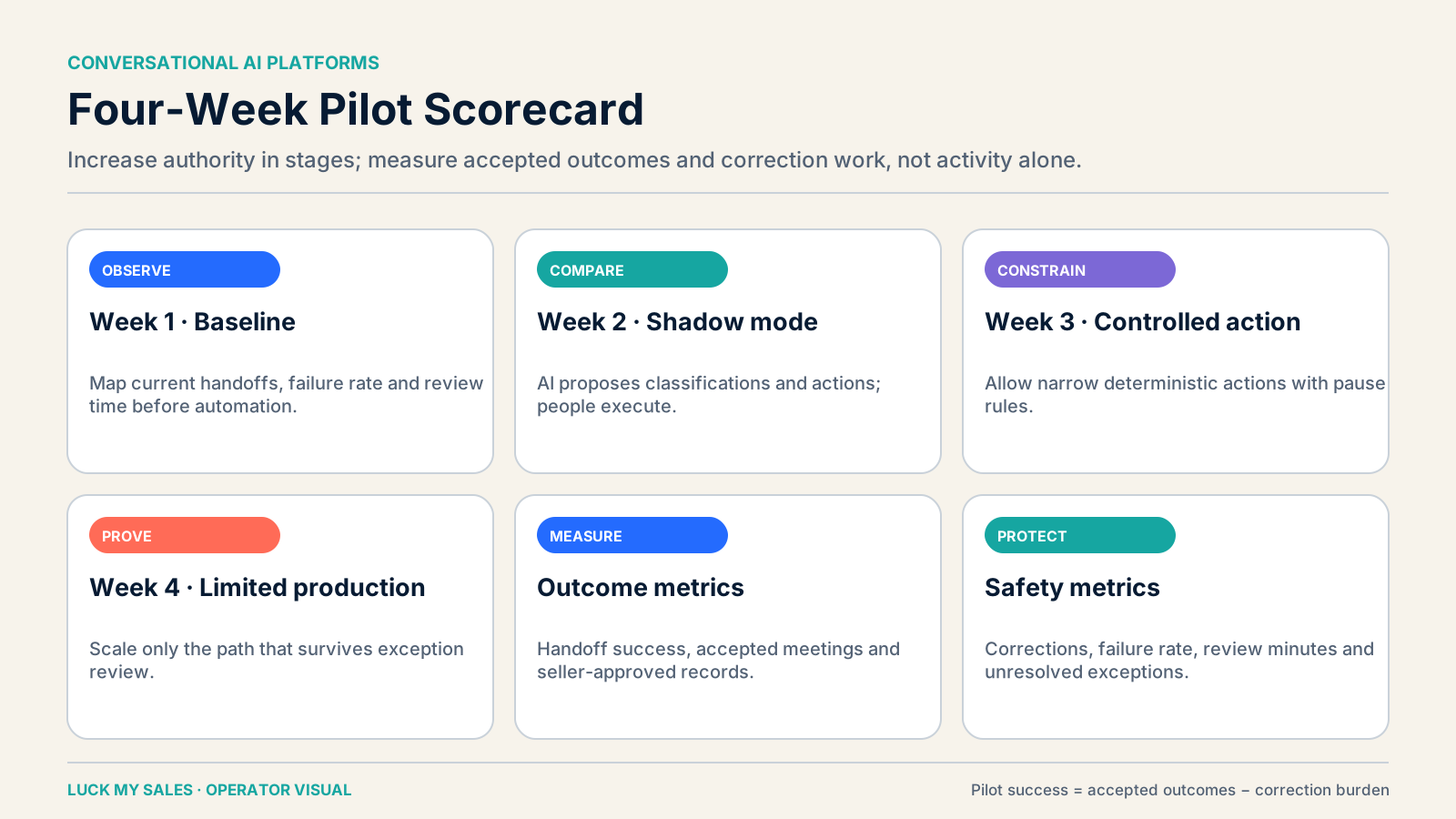
Week 0: baseline
Week 1: shadow mode
Week 2: controlled conversation
Week 3: validated actions
Week 4: limited production
14 / Failure modes and kill switches
Failure modes and kill switches
| Failure | Immediate action | System correction |
|---|---|---|
| Wrong or stale answer | Stop that answer path | Fix source ownership and freshness |
| Misidentified person/company | Do not qualify or route | Require identity confirmation |
| Invalid calendar slot | Do not book | Deterministic timezone and availability check |
| Duplicate contact | Suppress sequence | Shared identity and contact ledger |
| Unapproved price/promise | Hand off | Locked commercial knowledge and permissions |
| CRM overwrite | Revert and pause writes | Field-level write contract |
| Low language confidence | Clarify or hand off | Regional evaluation set |
| Missing consent | Do not record/contact | Channel-specific consent gate |
| Handoff without context | Keep case open | Required evidence payload |
| Correction rate spikes | Pause expansion | Root-cause inputs, rules and knowledge |
15 / Buying checklist by team maturity
Buying checklist by team maturity
- Which exact conversation and action will launch first?
- What is the evidence source for every qualification field?
- Which actions are deterministic?
- Which fields can the system write, and can it overwrite?
- How does a seller take over?
- What is logged when a tool call fails?
- How are consent and deletion handled?
- Which languages have been tested on our vocabulary?
- What does the price exclude?
- What metric triggers a pause?
16 / Operator playbook: test the whole route…
Operator playbook: test the whole route, not the demo
Write the entry rule
Define what the agent may learn
Write the question plan
Design the handoff packet
Test calendar actions
Test CRM actions
Test channel failure
Review the first live batch
Decide whether to expand
Keep the human role explicit
17 / FAQ
FAQ
What is the best conversational AI platform for sales?
What is the difference between a conversational AI platform and a voice AI platform?
Should a small sales team buy an enterprise platform?
Can conversational AI qualify leads automatically?
Can it book meetings without human review?
How should conversational AI connect to CRM?
How do I compare conversational AI platform pricing?
Are meeting assistants conversational AI platforms?
18 / Final recommendation
Final recommendation
Research note
Methodology
- 01Products are compared by sales workflow ownership, evidence state, deterministic controls and human handoff rather than a universal feature ranking.
- 02Hands-on and first-party operator observations are identified in the article; remaining capability claims are bounded to official sources accessed on 24 August 2026.
- 03No same-input benchmark exists across the full shortlist, so the article provides a reproducible pilot instead of naming an unsupported overall winner.
Source ledger
Sources & editorial notes
- 01Fin AI Agent outcomes
Intercom · Official product or documentation source used for bounded capability or pricing claims; current packaging, prices and features may change.
- 02AI Agent disclosure
Intercom · Official product or documentation source used for bounded capability or pricing claims; current packaging, prices and features may change.
- 03Bland AI billing
Bland AI · Official product or documentation source used for bounded capability or pricing claims; current packaging, prices and features may change.
- 04Retell AI pricing
Retell AI · Official product or documentation source used for bounded capability or pricing claims; current packaging, prices and features may change.
- 05Retell conversation flow overview
Retell AI · Official product or documentation source used for bounded capability or pricing claims; current packaging, prices and features may change.
- 06Vapi FAQ
Vapi · Official product or documentation source used for bounded capability or pricing claims; current packaging, prices and features may change.
- 07Meet your Sierra agent
Sierra · Official product or documentation source used for bounded capability or pricing claims; current packaging, prices and features may change.
- 08Decagon integrations
Decagon · Official product or documentation source used for bounded capability or pricing claims; current packaging, prices and features may change.
- 09Ada integrations
Ada · Official product or documentation source used for bounded capability or pricing claims; current packaging, prices and features may change.