
Controlled automation guide · AI CRM
AI CRM Automation: What to Automate, Review and Never Overwrite Blindly
AI may assist research organization and drafting. A human editor reviews every published page, checks material claims against the cited sources and owns the final decision. No company paid for placement in this article.
AI use policyAgent-ready brief
AI takeaways
Keep the key points here, or take a source-aware text brief into Claude, ChatGPT or another AI workspace.- 01A closed source-to-outcome loop is the prerequisite for useful CRM automation.
- 02The AI may prepare and classify evidence, but field-level authority must be explicit.
- 03Draft, append, propose and execute are four different write modes with different risk.
- 04Test duplicates, missing evidence, stale owners and contradictory replies before trusting success paths.
- 05Measure corrections, approvals, follow-up latency and outcomes—not records touched.
manual proof → controlled automation → monitored outcome → reversible correctionAutomate a stable human process with explicit field authority, failure tests, audit history and rollback—not an unclear process that happens to be in a CRM.
01 / What AI CRM automation is
What AI CRM automation is
Rules
Copilots
Agents
02 / The closedloop prerequisite
The closed-loop prerequisite
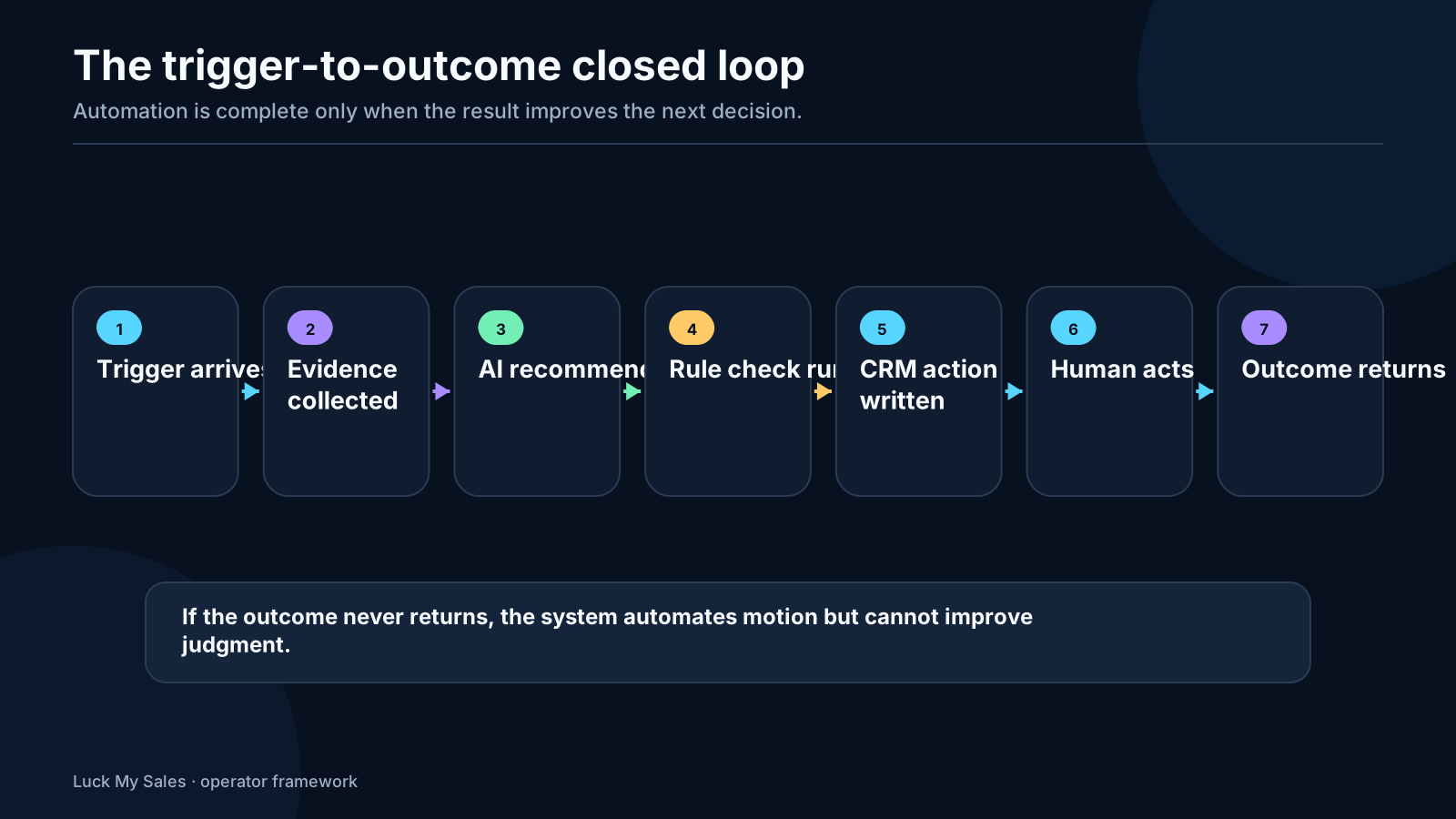
source or trigger → CRM identity → evidence → segment and owner → seller action → buyer response → opportunity outcome → feedback- a website form, chat, call, trial, event, email or referral produces a recorded trigger;
- the trigger resolves to a company and person without silently creating duplicates;
- the CRM or staging layer knows the source and observation time;
- a segment and next action are defined;
- SDR and sales activity is captured;
- positive, neutral and negative outcomes have distinct states;
- a customer, disqualification or loss reason closes the loop.
03 / A firsthand inboundrouting workflow
A first-hand inbound-routing workflow
1. Trigger: the lead enters the working database
- whether the company or person already exists;
- whether an opportunity is open;
- whether a named account or partner owner already applies;
- which consent, source and region rules apply;
- whether the input contains enough evidence to proceed.
2. Evidence assembly
- form answers and free text;
- website chat or call transcript;
- CRM history;
- first-party website activity;
- enrichment evidence;
- current account and opportunity ownership;
- territory, product, language and capacity state.
3. AI recommends a score and segment
- proposed segment;
- fit score and confidence;
- evidence used;
- missing evidence;
- disqualifying or conflicting facts;
- recommended next action;
- proposed owner after precedence rules;
- escalation reason.
4. Deterministic rule check
existing account/opportunity owner → named account → partner ownership → territory/product → language/skill → availability/capacity → round robin5. Human batch review
- the source input;
- relevant evidence;
- recommendation and confidence;
- owner and rule result;
- differences from the current record;
- proposed action.
6. Accepted leads enter an action plan
7. AI evaluates the result and returns feedback
- response time;
- seller acceptance or reassignment;
- contact outcome;
- meeting held;
- opportunity created;
- stage movement;
- disqualification or loss reason;
- correction to the original score or segment.
04 / The evidence contract
The evidence contract
| Layer | Example |
|---|---|
| Observed fact | Buyer selected “50–200 employees” in the form |
| External evidence | Company site describes two target products |
| Inference | Request likely belongs to the mid-market product segment |
| Recommendation | Route to product specialist A |
| Applied action | Human approved and owner changed at 10:14 |
05 / Who may change which CRM
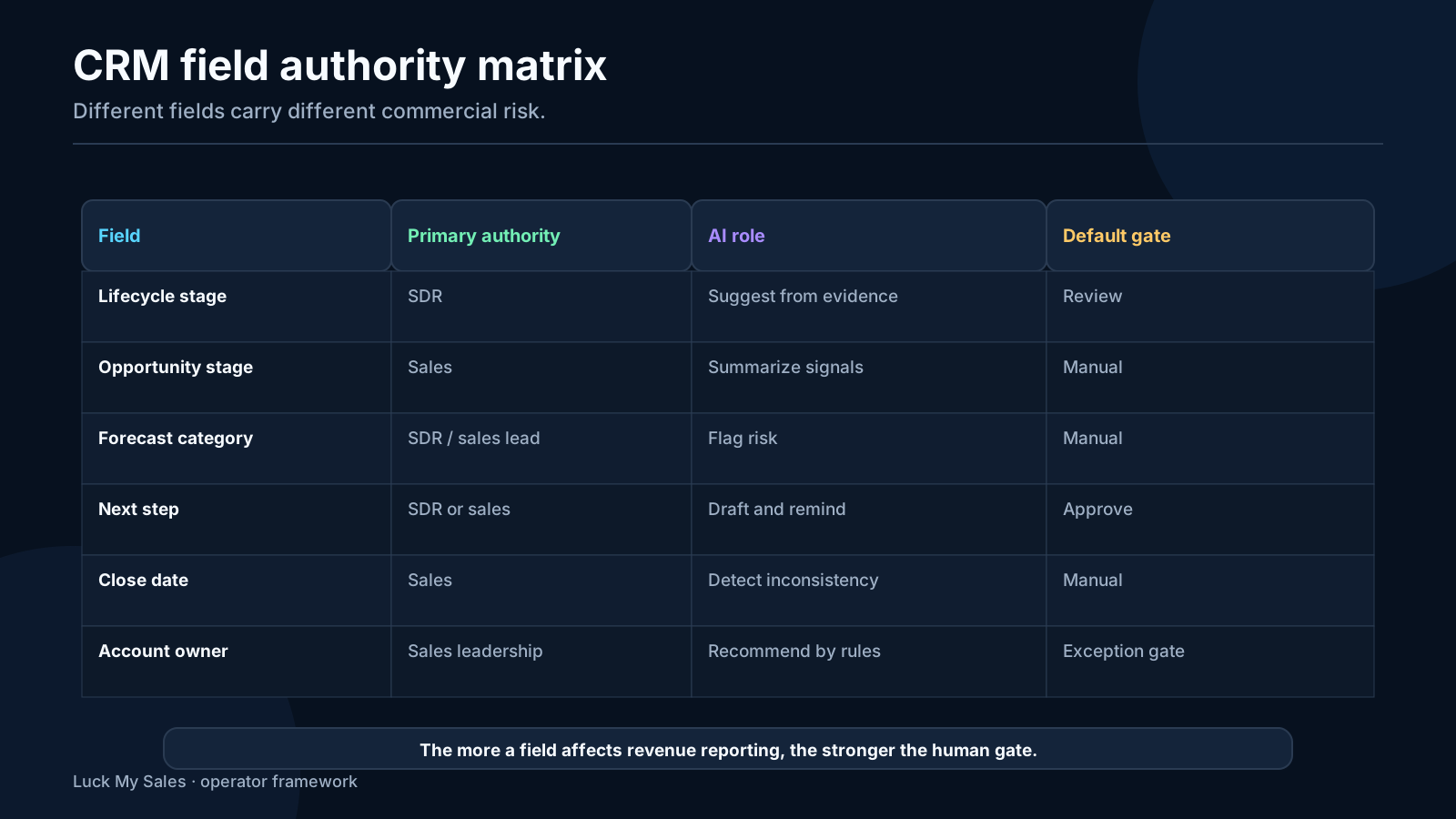
Who may change which CRM fields
| Field or action | Primary authority | AI role |
|---|---|---|
| Lifecycle stage | SDR | Recommend; apply only within approved transitions |
| Opportunity stage | Sales/AE | Summarize evidence and propose; do not silently advance |
| Forecast category | SDR in this operating model | Prepare evidence; local governance choice, not universal practice |
| Next step | SDR or sales | Draft, extract from conversation and create after review |
| Close date | Sales/AE | Flag inconsistency; seller confirms change |
| Pricing | Sales/authorized commercial owner | Never set or alter without human authority |
| Account ownership | Named sales/RevOps authority | Recommend according to precedence; never bypass existing ownership |
| Suppression/unsubscribe | Compliance and communication rule | Stop relevant communication immediately and log the event |
06 / AI synchronization across channels
AI synchronization across channels
- submits a website form;
- speaks to a voice agent;
- replies to an outbound email;
- connects on LinkedIn;
- already belongs to an open account.
- one canonical identity or explicit unresolved state;
- event timestamps;
- source authority rules;
- cross-channel reply and suppression state;
- current owner precedence;
- record-level audit history;
- idempotent actions so retrying an integration does not duplicate work.
07 / Build the control plane before
Build the control plane before adding more agents
A practical precedence order
- legal, consent and suppression states;
- explicit human correction or approved commercial decision;
- existing account and opportunity ownership;
- current customer or active-opportunity evidence;
- verified source evidence with an observed date;
- AI inference or recommendation;
- stale imported values.
Prevent loops and duplicate actions
Separate recommendation, approval and applied action
MQL with score 82 because the company fits the ICP and requested pricing. The SDR may approve qualification but assign it to a partner motion. The applied action may therefore be a partner-owned lifecycle path rather than the default inbound queue. A single overwritten stage field would erase the useful history.08 / Define an exception operating model
Define an exception operating model
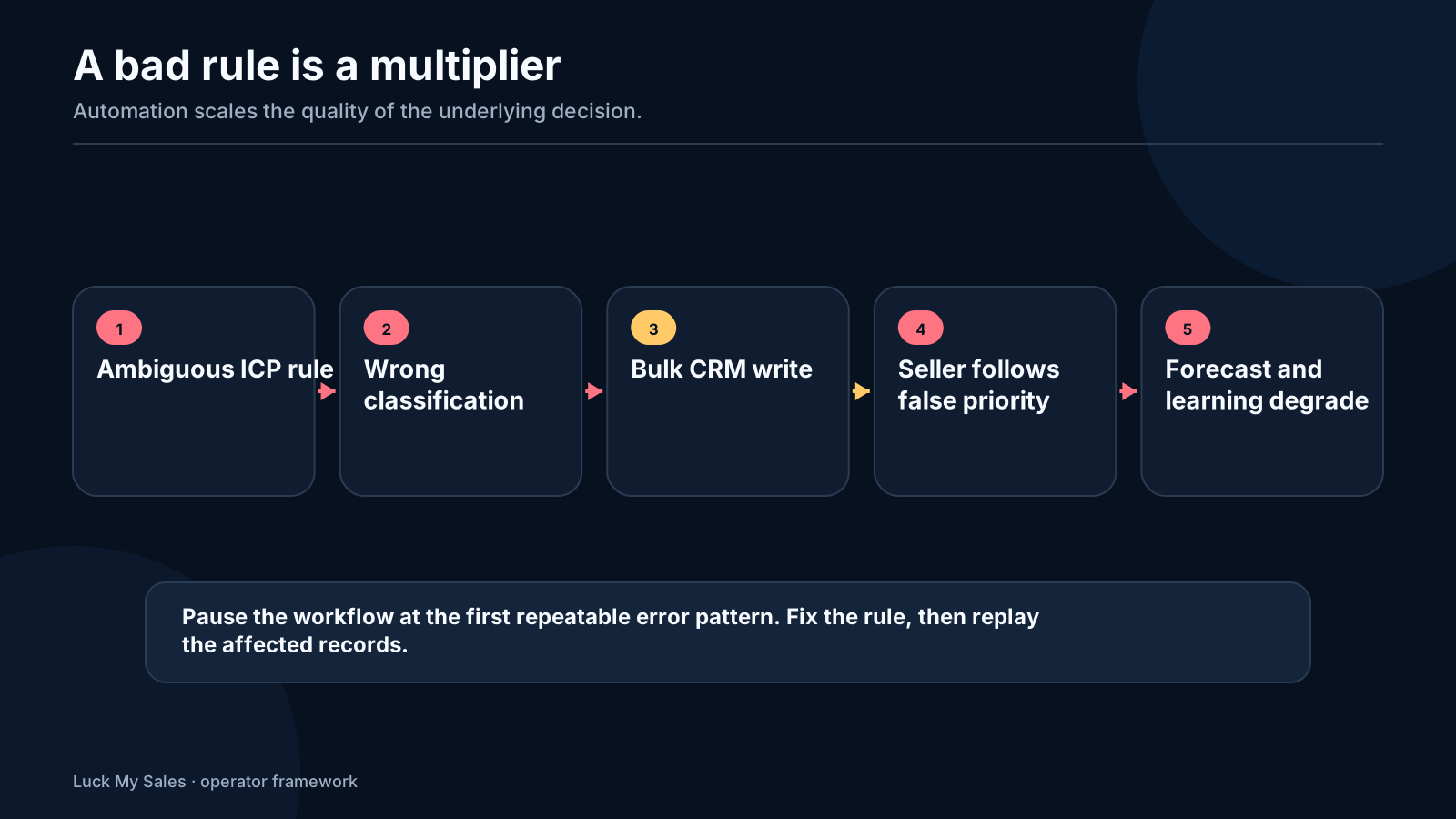
09 / Test failure before trusting success
Test failure before trusting success
10 / What a reviewable inbound decision
What a reviewable inbound decision card should contain
| Decision-card field | Example |
|---|---|
| Trigger | Website form submitted at 09:42 |
| Identity | Existing contact at Acme; no open opportunity |
| Buyer request | “Need multilingual support for three stores” |
| First-party context | Viewed integration and pricing pages |
| Enrichment | 85 employees; e-commerce; UK and EU presence |
| Conflicts | Employee count differs across two sources |
| Proposed segment | Mid-market e-commerce |
| Proposed owner | French-speaking product specialist with capacity |
| Precedence check | No named account, partner or existing owner conflict |
| Confidence | Medium-high; geography and product fit supported |
| Required human action | Approve route and call within 30 minutes |
segment correction, not merely replace the value.What not to put in the card
11 / Designing the batchreview queue
Designing the batch-review queue
- Auto-ready, sampled: high-confidence recommendations that do not conflict with ownership or protected fields. A defined percentage is still reviewed.
- Evidence conflict: sources disagree, identity is ambiguous or the recommendation depends on a weak inference.
- Named or strategic: existing customer, partner, open opportunity or named account.
- Consequential change: proposed owner, opportunity state, forecast, close date or another protected field.
- No-action: insufficient evidence, duplicate, suppression or non-commercial request.
12 / Rules for replies and communication
Rules for replies and communication stops
- Positive interest: stop automation and assign a human owner.
- Objection: stop the sequence; let the owner respond with context.
- Referral or wrong person: stop; validate the referred contact before new outreach.
- “Not now”: stop current touches and record an approved future trigger.
- Unsubscribe or explicit negative: suppress immediately.
- Out-of-office: pause and apply a defined return-date rule; do not treat it as buying interest.
- Ambiguous response: stop and route to review rather than letting a classifier send another pitch.
13 / A 30day implementation pilot
A 30-day implementation pilot
Week 1: map and baseline
Week 2: observe and recommend
Week 3: controlled execution
Week 4: evaluate outcomes
| Area | Scale when | Pause when |
|---|---|---|
| Evidence | Required sources are present and traceable | Summaries regularly omit or misstate key context |
| Recommendation | Seller acceptance is stable | Corrections cluster around one rule or segment |
| Ownership | Reassignments are low and explainable | Existing owners or named accounts are overwritten |
| Operations | Review time and SLA improve | Automation creates more exception work than it removes |
| Buyer experience | Replies stop automation and reach an owner | Duplicate or contradictory touches appear |
| Control | Audit and rollback work in tests | A change cannot be explained or reversed |
14 / Four safe write modes
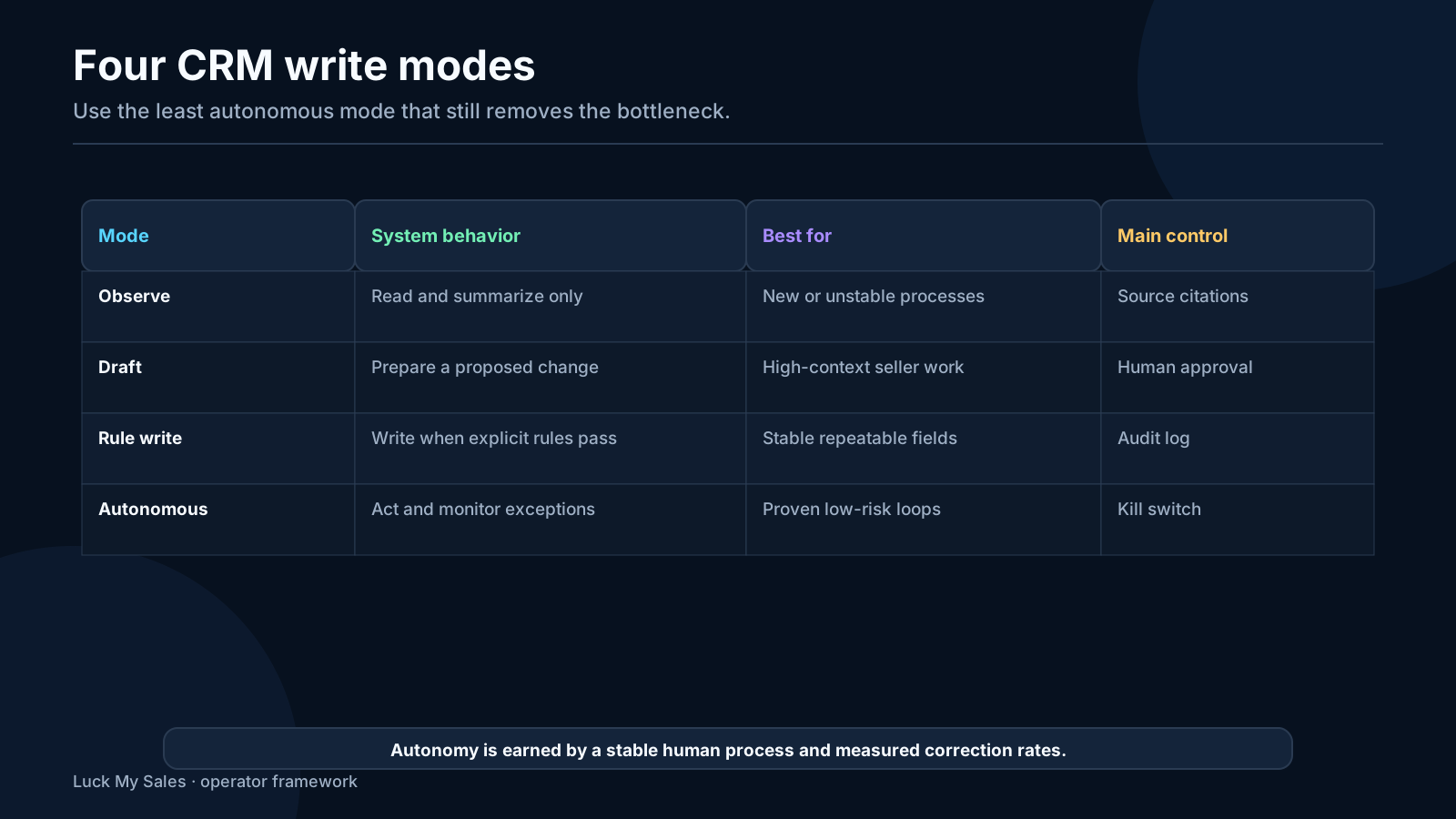
Four safe write modes
Draft
Append
Reversible update
Blocked overwrite
15 / Audit correction and rollback
Audit, correction and rollback
- trigger ID;
- input evidence IDs;
- model and rule version;
- recommendation;
- deterministic rule result;
- proposed changes;
- reviewer and decision;
- applied CRM changes;
- later corrections;
- downstream outcome.
- Record stop: block actions for one person, company or opportunity.
- Workflow stop: pause one automation when errors or metrics deteriorate.
- Global stop: disable the agent's write or communication permissions during a broader incident.
16 / What to measure
What to measure
| Metric | Why it matters |
|---|---|
| Records processed | Capacity, not value; always show the denominator and workflow boundary |
| Recommendations reviewed | Shows the human control surface |
| Seller acceptance rate | Tests whether recommendations are useful |
| Correction rate | Reveals data, prompt or rule failures |
| Review time per accepted action | Shows whether the workflow actually reduces routine work |
| Response SLA | Tests routing and task execution |
| Missed follow-ups | Finds broken handoffs |
| Reassignment rate | Diagnoses weak ownership logic |
| Opportunities and held meetings | Connects routing to sales progress |
| Audit completeness | Confirms the system can explain its actions |
17 / Where the 90 estimate applies
Where the 90% estimate applies
- assembling records from connected sources;
- deduplicating obvious matches;
- summarizing calls and email threads;
- extracting next steps;
- preparing scores and segments;
- generating tasks and drafts;
- checking required fields;
- compiling a batch for human review;
- reporting exceptions and outcomes.
- deciding ICP and offer;
- understanding a nuanced buyer;
- validating an unusual account;
- live discovery and negotiation;
- pricing and commercial terms;
- relationship ownership;
- rule changes;
- quality control and incident response.
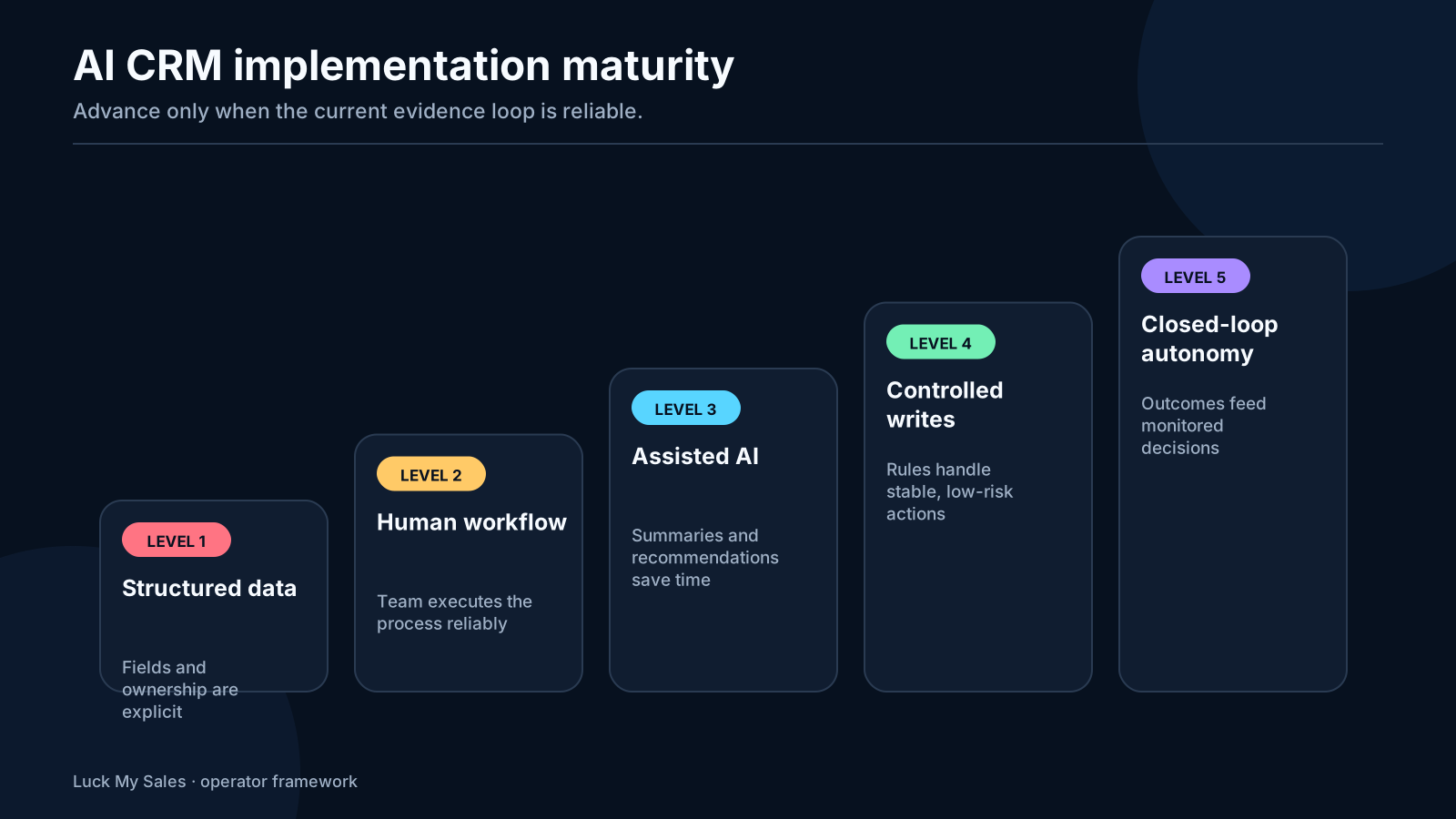
18 / Implementation stages
Implementation stages
Stage 1: observe
Stage 2: recommend
Stage 3: execute low-risk actions
Stage 4: automate bounded transitions
Stage 5: optimize the closed loop
19 / Change the workflow like production
Change the workflow like production software
20 / Common failure modes
Common failure modes
Automating undefined stages
qualified means, AI cannot apply it consistently.Letting a score become a fact
Silent cross-channel duplication
Overwriting ownership
Treating a summary as complete history
Scaling before batch review stabilizes
No rollback
21 / Frequently asked questions
Frequently asked questions
What CRM tasks can AI automate?
Can AI update opportunity stages?
What should AI never overwrite blindly?
How do I start AI CRM automation?
Does AI CRM automation replace RevOps?
22 / The practical rule
The practical rule
Research note
Methodology
- 01The core inbound-routing loop comes from Anastasiia's direct operating workflow and previously approved lead-routing evidence.
- 02The up-to-90% routine-work figure is an operator estimate for repetitive preparation and sorting, not a universal benchmark or reduction in sales judgment.
- 03The article separates recommendations, accepted actions and final CRM state so later corrections remain auditable.
Source ledger
Sources & editorial notes
- 01How AI Lead Scoring Works Across Gmail and CRM
Luck My Sales · Existing first-party guide separating source evidence, recommendation, human decision and CRM action.
- 02AI Lead Routing: How to Assign Inbound Leads Without Hiding the Sales Decision
Luck My Sales · Existing first-party guide defining the inbound routing contract reused in this workflow.
- 0310 B2B Data Enrichment Providers and Tools Compared by the Record You Need
Luck My Sales · Existing first-party comparison defining evidence states before CRM activation.