Weekly industry intelligence · No noiseSubscribe to the Luck My Sales newsletterFree briefing

Independent operator-led media on AI in B2B sales

Menu

Conversation intelligence comparison · Sales AI comparisons

Gong vs Chorus.ai for Conversation Intelligence: Compare Evidence, Coaching and CRM Workflow

Compare Gong and Chorus by ZoomInfo across evidence, coaching, CRM workflow, governance and operating cost with honest evidence labels.
Editorial disclosure

AI may assist research organization and drafting. A human editor reviews every published page, checks material claims against the cited sources and owns the final decision. No company paid for placement in this article.

AI use policy

Agent-ready brief

AI takeaways

Keep the key points here, or take a source-aware text brief into Claude, ChatGPT or another AI workspace.
  1. 01The evidence state is asymmetric: Gong is hands-on in this review, while Chorus is evaluated from official sources and ecosystem research.
  2. 02Gong fits teams seeking an independent conversation-led platform; Chorus may fit teams already committed to ZoomInfo.
  3. 03A same-call pilot should test real languages, CRM mappings, review time and manager correction—not just summaries.
  4. 04Small teams should prove that either platform solves a problem large enough to justify the operating overhead.
  5. 05Packaging, negotiated price and integration behavior must be verified in the buyer's environment.
Includes summary, takeaways, sources and a use note.
Gong and Chorus by ZoomInfo both sit in the conversation-intelligence category, but the useful buying question is not which product has the longer feature list. It is which one fits your revenue stack, evidence requirements, manager workflow, and budget without creating another system sellers ignore.
My evidence is not symmetrical. I have used Gong in real sales work. I have not operated Chorus under the same conditions; the Chorus side of this comparison is based on current official product information and ecosystem research. Therefore, this is not a winner claim or a same-input benchmark.
The short answer: Gong is the safer shortlist when a team wants a conversation-led revenue platform that is not tied to the ZoomInfo data ecosystem and already has enough pipeline and management maturity to use it. Chorus deserves a pilot when ZoomInfo is already strategic to the team and tighter ecosystem fit could remove workflow friction. Small teams should test whether either platform solves a problem large enough to justify its cost and operating overhead.

The Gong-versus-Chorus decision depends on ecosystem, evidence quality, manager workflow and total operating cost—not a generic feature count.

01 / The comparison in one table

The comparison in one table

Decision areaGongChorus by ZoomInfoWhat to verify in your pilot
Evidence state in this reviewhands-on operator experience plus official documentationofficial documentation and ecosystem researchdo not treat the evidence depth as equal
Core categoryconversation intelligence within a broader revenue-intelligence platformconversation intelligence within the ZoomInfo platformwhether you need a standalone center of gravity or ecosystem component
Capture and analysisrecords, transcribes, searches, analyzes, and surfaces call/deal signalscaptures and analyzes customer interactions and connects them to revenue workflowcoverage of your actual meeting, phone, and CRM stack
Coachingscorecards, call libraries, trackers, manager review workflowscoaching, call analysis, team performance workflowsmanager time, seller adoption, rubric control
CRM workflowactivity and evidence connected to CRM/deal contextpositioned around ZoomInfo and CRM-connected workflowfield mapping, duplicates, write-back, permissions, reversibility
Best initial buyerestablished revenue team wanting independent conversation evidence and coachingteam already invested in ZoomInfo and seeking ecosystem consolidationtotal stack fit, not a single demo feature
Main riskbuying too early and paying for a platform the team cannot operationalizechoosing for suite convenience without proving call-analysis quality and workflow fitsame-call pilot with real languages and CRM objects
This table is a shortlist tool, not a product verdict. Packaging, integrations, and product capabilities change. Confirm the current state with each vendor before procurement.

02 / How this comparison was built

How this comparison was built
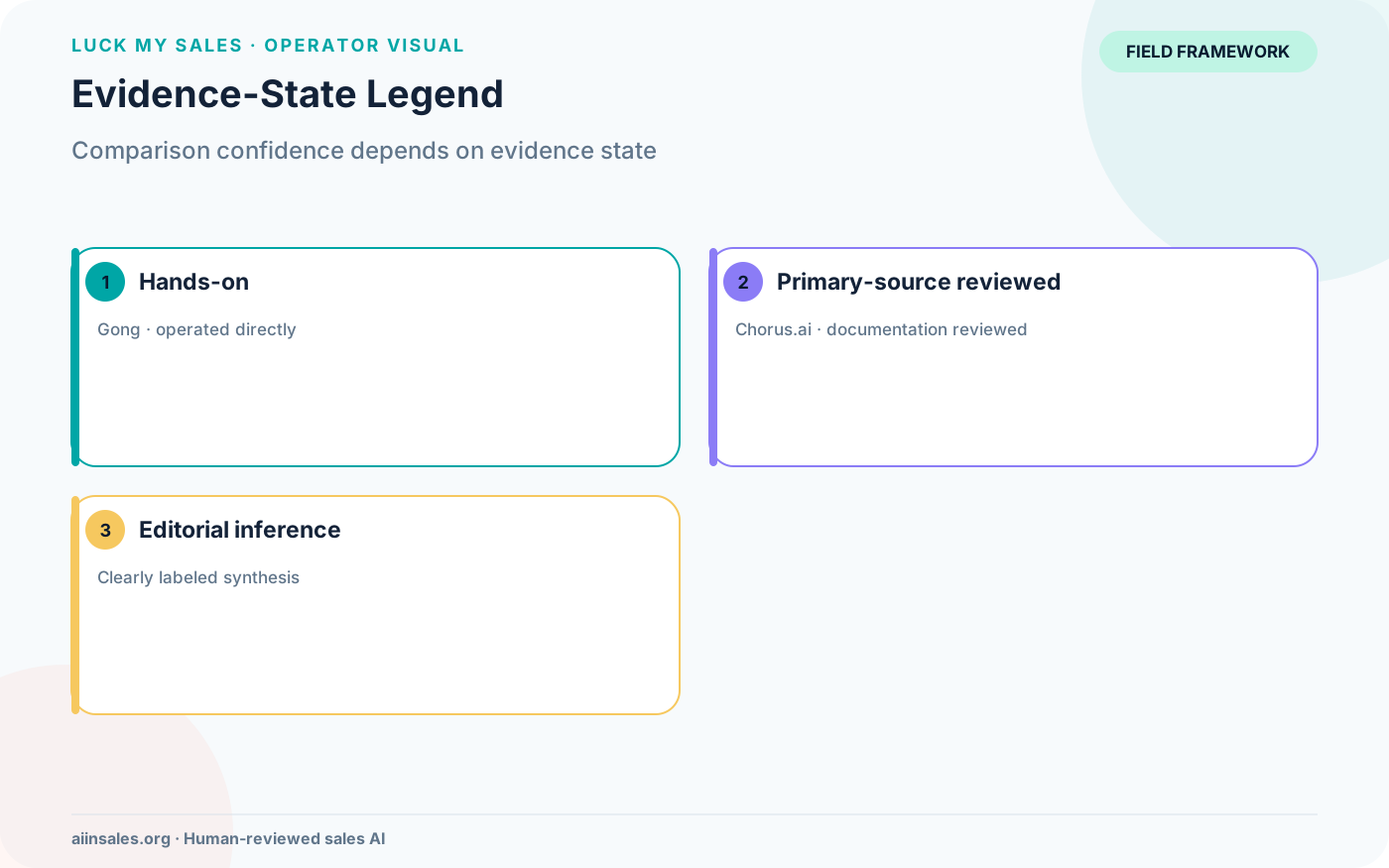
Evidence legend showing Gong as hands-on and Chorus.ai as primary-source reviewed.
Evidence state matters as much as the comparison criteria.
  • Hands-on: used in live work, with first-hand observations about workflow and limitations.
  • Officially verified: supported by current first-party documentation or product pages.
  • Requires pilot: cannot be judged credibly without the buyer’s data, languages, integrations, and team behavior.
For Gong, this article combines hands-on experience with official documentation. For Chorus, it uses official sources and research. We did not run the same set of calls through both products, did not calculate a transcript-accuracy winner, and did not compare negotiated quotes.
That limitation is important. Conversation-intelligence products can look similar in a vendor demo because summaries and topic extraction are now common. The differences appear in messy calls, permissions, CRM mappings, manager review, data retention, regional language performance, and the amount of manual work needed after the first month.
I would distrust any comparison that declares a universal winner without showing the calls, languages, scoring rules, CRM schema, correction process, and commercial assumptions behind the result.

03 / Product boundary: independent platf…

Product boundary: independent platform or ZoomInfo ecosystem component
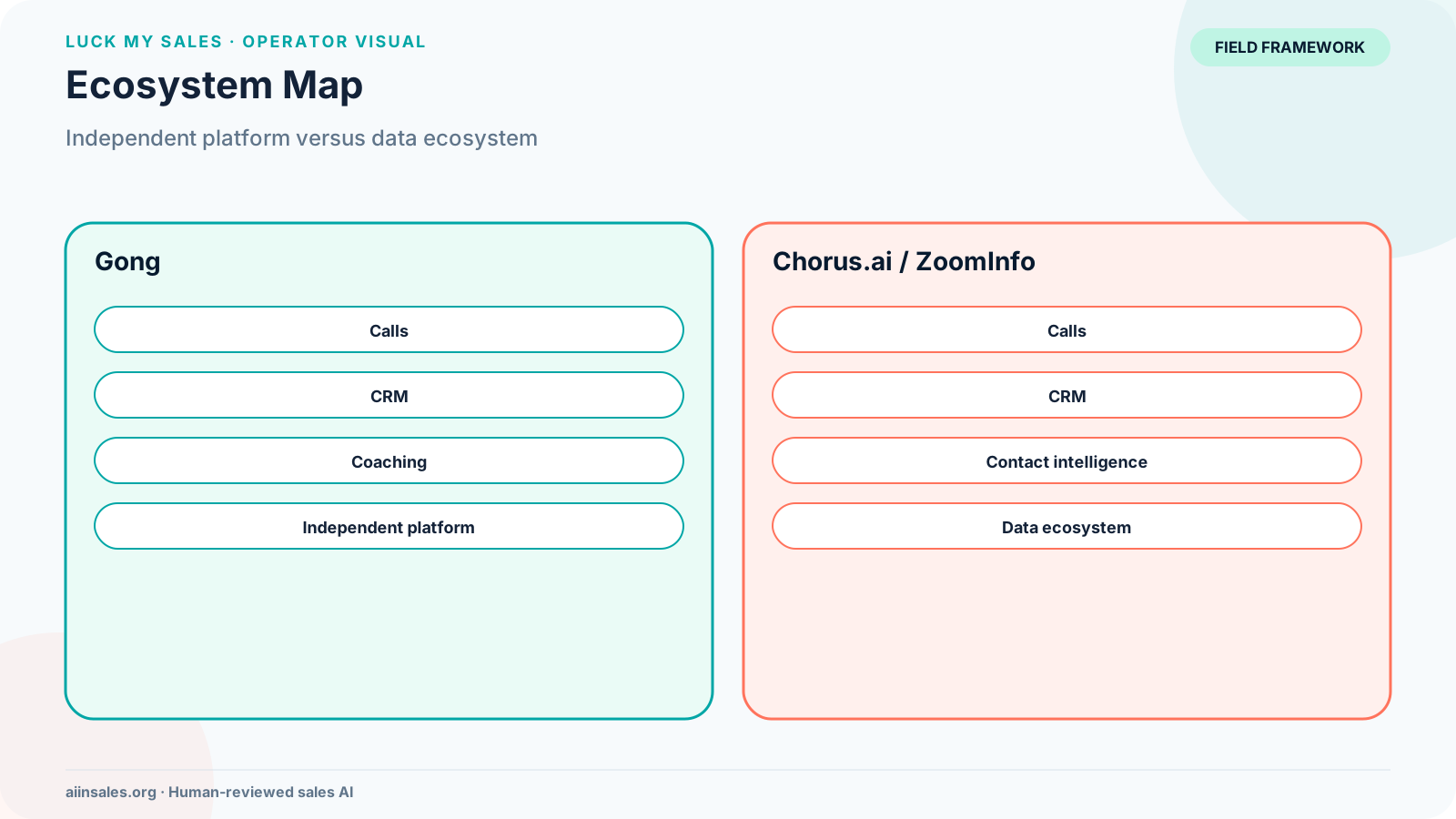
Neutral ecosystem comparison of Gong and Chorus.ai with calls, CRM, coaching and data connections.
Ecosystem ownership changes implementation and switching cost.
Chorus is a ZoomInfo product. ZoomInfo positions it as conversation intelligence that captures and analyzes customer interactions, surfaces insights, and supports sales performance within its broader go-to-market platform.
That ownership difference is not automatically good or bad. It changes the architecture question.
If ZoomInfo already supplies the team’s data and is central to its go-to-market workflow, Chorus may reduce vendor and integration fragmentation. If the company wants the conversation layer to remain independent of its data provider, Gong may be easier to evaluate as its own operating platform.
Do not turn “integrated suite” into a synonym for “integrated process.” A suite can still create duplicate records, unclear ownership, or unused dashboards. Conversely, an independent product can integrate well if the field map, permissions, and actions are carefully designed.
The buyer should map the flow:
calendar or phone system → recording and consent → transcript → evidence → coaching/deal signal → CRM action → human review
Then ask which product owns each step and where the audit trail lives.

04 / Recording, transcript, language, an…

Recording, transcript, language, and search

Both products compete in a category where recording, transcription, and searchable conversations are baseline expectations. The pilot should focus on material accuracy and coverage rather than the existence of a transcript button.
Use calls that contain:
  • regional accents and the languages your team actually sells in;
  • unfamiliar brand and product names;
  • several speakers and interruptions;
  • currencies, dates, quantities, and commercial terms;
  • objections expressed indirectly;
  • a transfer between an automated agent and a human;
  • poor phone audio and a clean video meeting;
  • a call that should not become an opportunity.
Then inspect names, speakers, numbers, agreed actions, and searchable moments. A high global accuracy claim does not help if the system mishears the product name used in every deal.
Gong’s official documentation also makes clear that recording consent is the customer’s responsibility and that requirements vary. Apply the same diligence to any vendor. Verify notice, consent, participant controls, storage location, retention, deletion, and access by jurisdiction and channel.
Search quality matters after capture. A manager should be able to find pricing discussions, competitor mentions, objections, commitments, and examples for coaching without inventing a new tagging project every week. Test whether search returns the correct moments and whether the result can be shared with the right people without exposing unrelated customer data.

05 / Summaries are the beginning, not th…

Summaries are the beginning, not the decision

Gong and Chorus can both be evaluated on the common job of turning a conversation into a usable recap. Do not score only grammar or readability.
A useful summary separates:
  • buyer statements;
  • seller statements;
  • explicit agreements;
  • unresolved questions;
  • risks and objections;
  • AI recommendations.
For every material claim, the reviewer should be able to inspect the recording or timestamped transcript. If the system says “budget confirmed,” find the exact moment. If it says “follow up in two weeks,” check whether the buyer agreed or the model inferred it.
In hands-on work, Gong has been useful because conversation evidence can support broader call and deal inspection. But even a strong platform cannot recover context it never received. Previous emails, current ownership, a parallel opportunity, product eligibility, or a regional commercial rule may live outside the call.
Test how each product combines the conversation with CRM history. Then test how it communicates uncertainty when that history is missing.

06 / Coaching: scorecards, examples, and…

Coaching: scorecards, examples, and manager behavior
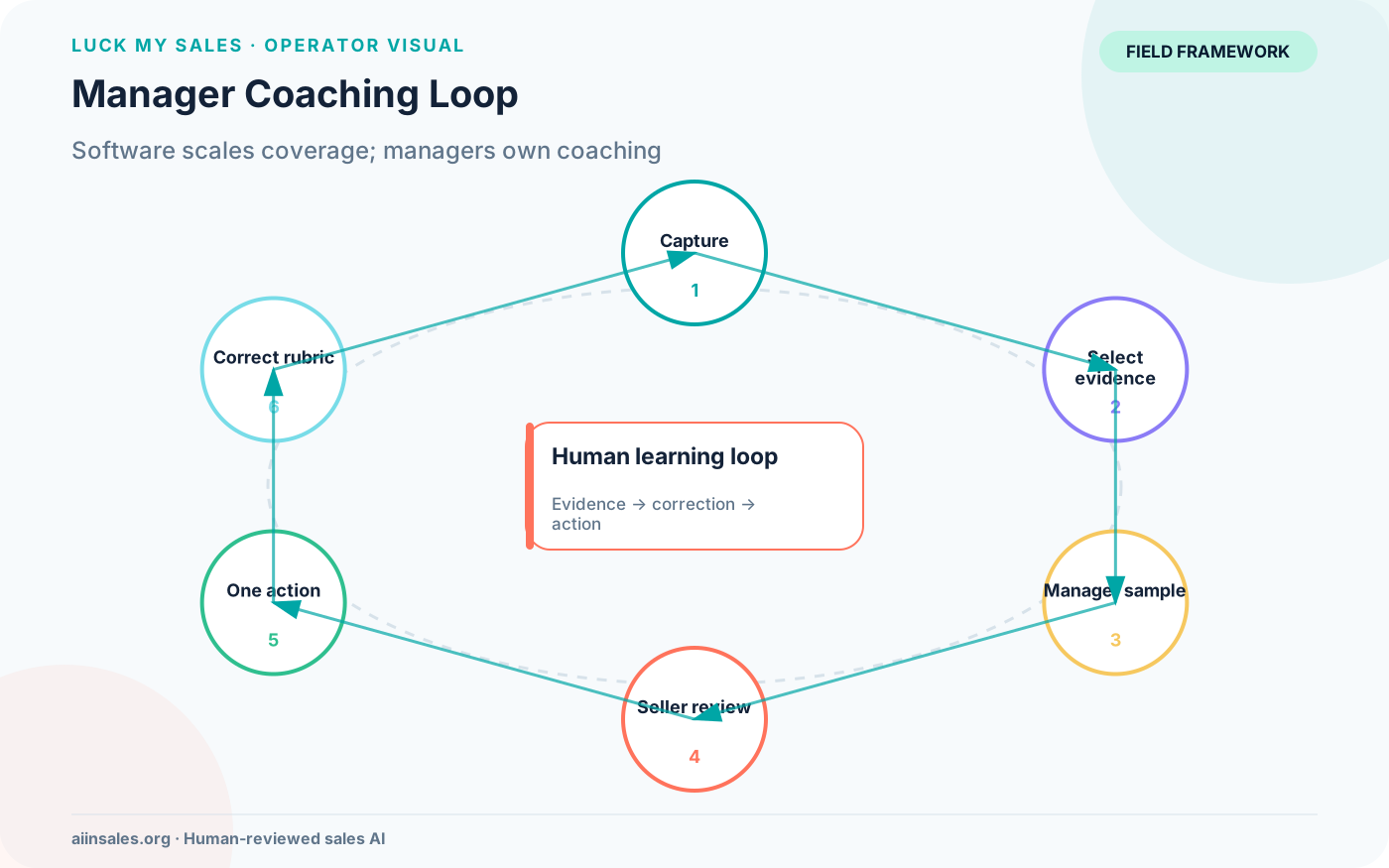
Manager-led coaching loop from captured calls through evidence review and rubric correction.
Software scales coverage; the manager still owns the coaching loop.
The team needs a rubric based on observed winning and losing behavior, not generic advice. AI can review every call against a small set of observable criteria. Managers should inspect a sample, correct errors, and discuss one useful behavior at a time with sellers.
Evaluate Gong and Chorus on the manager loop:
  1. Can enablement define or adapt the rubric?
  2. Does the system cite the call moment behind a score?
  3. Can a manager correct the score and explain why?
  4. Can sellers see their own evidence without feeling surveilled by an unexplained number?
  5. Can managers find examples worth sharing?
  6. Can the team connect a changed behavior to a downstream CRM outcome?
Gong offers scorecards and conversation libraries within its platform. Chorus is positioned around call analysis, coaching, and team performance. The feature labels are less important than the correction workflow.
If managers ignore the product after onboarding, the coaching value is zero. If sellers see scores as compensation or disciplinary machinery, adoption will fall. AI scores should support development and review, not make employment, salary, promotion, or termination decisions.

07 / Deal and CRM workflow

Deal and CRM workflow

Conversation intelligence becomes operational when evidence changes what the team does next.
Test these jobs:
  • attach the correct conversation to the correct account and opportunity;
  • identify agreed next steps and missing evidence;
  • alert the owner to risk without changing the forecast silently;
  • create a draft task or recap;
  • preserve campaign, source, and owner context;
  • prevent duplicate or conflicting write-backs;
  • show who accepted or corrected the recommendation.
AI may recommend a next step, forecast review, or follow-up. A human should finalize forecast commitments, opportunity-stage changes, pricing, commercial promises, and account ownership. Sales owns the final owner change.
Ask each vendor to demonstrate field-level controls. “CRM integration” can mean anything from attaching a note to overwriting commercial fields. Require a map of objects, fields, triggers, permissions, conflict handling, and rollback.
For teams already using ZoomInfo deeply, Chorus may have an ecosystem advantage worth testing. For teams that want the conversation system to operate across a more independent stack, Gong may fit better. Neither assumption should replace a CRM sandbox test.

08 / Governance, consent, and reviewability

Governance, consent, and reviewability

The product will hold sensitive customer conversations. Governance cannot be a security questionnaire completed after the decision.
Verify:
  • recording and consent configuration;
  • role-based access to recordings and transcripts;
  • data retention and deletion behavior;
  • export controls;
  • model-training and subprocessors policies;
  • support for regional requirements;
  • audit logs for AI and human changes;
  • controls for sensitive calls and fields;
  • whether the company can retrieve evidence after a summary is written to the CRM.
Also define internal use. Who may listen to whom? Can managers search every call? May excerpts be added to coaching libraries? Can AI scores influence performance reviews? What happens when a seller disputes a transcript or score?
The safe answer is not “legal approved the vendor.” It is a documented workflow with named owners and a correction path.

09 / Cost: quote, implementation, and op…

Cost: quote, implementation, and operating load

Neither product should be evaluated on license price alone. Commercial terms may depend on users, modules, contract length, integrations, or negotiated scope, so request current quotes directly.
Model total cost:
  • platform licenses;
  • recording or telephony dependencies;
  • CRM and data integrations;
  • security and legal review;
  • implementation and migration;
  • rubric and workflow design;
  • manager review time;
  • seller training and adoption;
  • ongoing administration;
  • correction and data-cleanup work;
  • unused overlapping tools that remain in the stack.
Gong can be valuable, but I would not treat it as a default purchase for a small team. My practical threshold is roughly USD 20,000 in monthly active pipeline before the conversation becomes serious. That is an operator heuristic, not a formal ROI study or vendor requirement. Deal size, margin, call volume, management capacity, and sales complexity may justify a different point.
Below that level, a team may get more value from reliable recording, a simpler meeting assistant, disciplined CRM notes, and direct founder or manager review. The question is whether the platform changes enough decisions to pay for itself.

10 / Best by operating context

Best by operating context
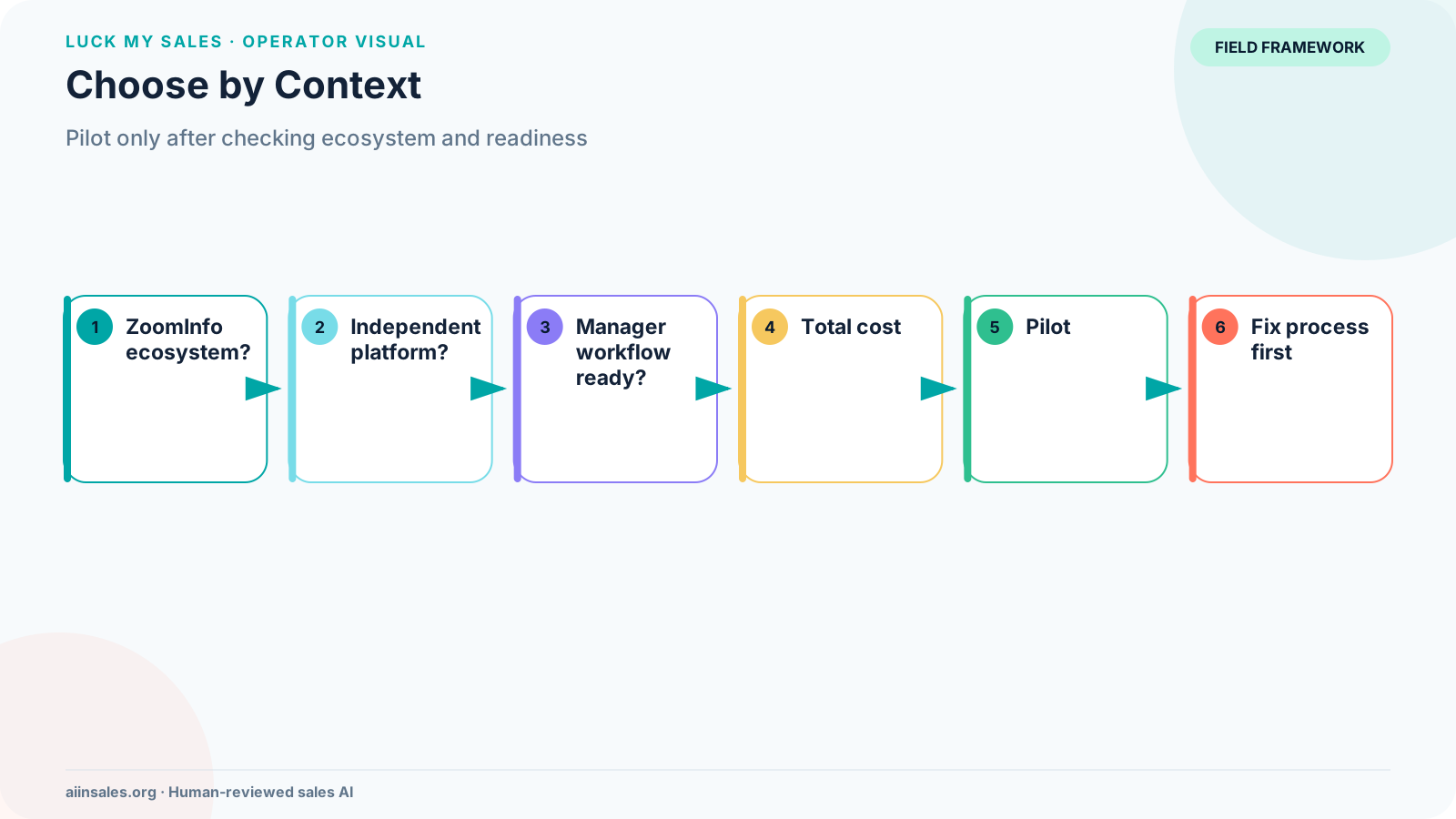
Decision tree for piloting Gong, Chorus.ai or fixing the coaching process before purchase.
The right shortlist depends on ecosystem, governance and operating readiness.
  • conversation evidence is becoming a central revenue workflow;
  • the team wants a platform independent of ZoomInfo ownership;
  • managers will actively use scorecards, libraries, and deal inspection;
  • CRM stages and ownership are already disciplined;
  • pipeline and call volume justify implementation and review;
  • the company can support governance and administration.

Consider a Chorus pilot when

  • ZoomInfo is already a strategic part of the go-to-market stack;
  • consolidation could remove real workflow or data friction;
  • the team can prove capture, coaching, and CRM fit with its own calls;
  • the buyer evaluates Chorus as an operating component, not a free add-on assumption.

Consider neither yet when

  • calls are not reliably recorded or connected to the CRM;
  • consent and retention rules are unclear;
  • stages, owners, and next steps are inconsistent;
  • managers do not have time or a rubric for coaching;
  • the team wants AI to repair a broken sales process;
  • the main need is only transcription and meeting notes.
The strongest answer can be “not yet.” A platform cannot create a closed revenue loop when the organization has not defined one.

11 / A practical workflow comparison for…

A practical workflow comparison for managers

The manager experience is where a platform either becomes useful or becomes shelfware. During a pilot, ask managers to complete the work they will repeat every week.
Start with a queue of calls selected by explicit rules: first discovery calls, pricing conversations, competitor mentions, stalled opportunities, or calls from new sellers. Let the platform surface moments, but do not let it decide that every long call is important.
For each selected call, the manager should be able to:
  1. see why the call entered the queue;
  2. inspect the source moment behind the flag;
  3. compare the call to a small approved rubric;
  4. correct an AI score or label;
  5. save one example for the team;
  6. assign one concrete coaching action;
  7. check later whether behavior and CRM outcomes changed.
Measure time from opening the queue to completing the review. A system that analyzes every call but requires the manager to reconstruct the commercial context manually is not saving the expensive part of the work.
Also test disagreement. Give two managers the same call and compare how they interpret the rubric before blaming the AI. If humans disagree because “good discovery” is undefined, neither Gong nor Chorus can create a stable score. Rewrite the criterion using observable evidence.
The manager should remain responsible for the feedback. AI may identify a missed question or unconfirmed next step. It cannot know every constraint surrounding the seller, buyer, market, or deal. Coaching should improve one behavior, not punish a person for a model output.

12 / What sellers need from the workflow

What sellers need from the workflow

Seller adoption is not a soft extra. It determines whether the record becomes more accurate.
The seller view should make five things easy:
  • verify the summary quickly;
  • find the exact moment behind an objection or recommendation;
  • correct a wrong speaker, name, or commercial fact;
  • accept or edit a proposed next step;
  • understand how the evidence will affect the CRM and manager review.
Do not require sellers to maintain a second version of the opportunity inside the conversation platform. Decide which system owns each field. If the seller corrects the next step in one interface and the CRM later overwrites it, trust falls quickly.
During the pilot, track which actions sellers perform voluntarily after the launch period. Login counts are weak evidence. More useful signs are corrections submitted, summaries reused after verification, follow-up time reduced, and missing CRM information resolved.
Ask sellers where the tool interrupts their work. A technically impressive prompt that appears during a live B2B call can make a seller stop listening. Post-call evidence and preparation are often safer starting points than real-time direction.

13 / Ecosystem consolidation versus inde…

Ecosystem consolidation versus independent evidence

The platform boundary affects long-term leverage.
With Chorus, a team already using ZoomInfo may value shared data, fewer vendors, or a more unified go-to-market workflow. Test whether that theoretical advantage removes actual steps. Does the correct account context appear automatically? Are contacts and conversations matched reliably? Does the team eliminate another tool, or does it simply add another module?
With Gong, the conversation layer can be assessed as a more independent revenue system. That may reduce dependence on one data provider and make conversation evidence usable across a broader stack. Test how much integration work is required and whether CRM remains the source of truth.
The risk on either side is architectural lock-in without operating value. Before signing, document:
  • what data enters the platform;
  • what derived data it creates;
  • what returns to the CRM;
  • what can be exported;
  • what happens when the contract ends;
  • which workflows depend on proprietary objects or scores;
  • how historical recordings, transcripts, and coaching records are retained or moved.
The decision is not only about today’s AI. It is about whether the company can keep its sales evidence usable as models, vendors, and processes change.

14 / Implementation plan after the pilot

Implementation plan after the pilot

A successful demo should not lead directly to an all-team rollout. Move in controlled stages.

1. Define the first decision job

Choose one job, such as discovery-call summaries with cited next steps, or manager review of pricing objections. Define success, failure, and human ownership.

2. Configure capture and policy

Connect only approved channels. Implement consent, access, retention, and deletion rules. Confirm that excluded calls remain excluded.

3. Connect a CRM sandbox

Map people, accounts, opportunities, activities, and only the fields required for the first job. Test duplicates, stale ownership, conflicting updates, and rollback.

4. Calibrate evidence and rubrics

Use representative calls. Correct names, speakers, summaries, trackers, and scorecards. Record why corrections occur. Do not hide errors in an average.

5. Train managers before sellers

Managers need to know how calls enter review, how to correct AI, how to give feedback, and which decisions remain human-only. If managers cannot explain the score, sellers should not be judged by it.

6. Release to a small team

Give sellers a correction path and explain what the system does with their calls. Measure review time and workflow completion, not only captured hours.

7. Expand only proven actions

Automate low-risk notes and tasks after stability. Keep material commercial fields gated. Re-test after model, telephony, CRM, or process changes.
This rollout is deliberately boring. That is a strength. Conversation intelligence affects customer data, performance management, pipeline reporting, and commercial action. Controlled adoption is faster than cleaning an opaque automation later.

15 / Procurement questions that expose r…

Procurement questions that expose real differences

Ask both vendors the same questions and require demonstrations with your scenario:
  • Which meeting and phone sources are supported in our configuration?
  • How is participant consent handled across our jurisdictions?
  • Which languages and regional variants are officially supported?
  • Can every summary claim link to the underlying moment?
  • How are custom names and terminology handled?
  • Can we define, version, and correct scorecards?
  • What can AI write to each CRM object and field?
  • What happens when CRM and conversation data conflict?
  • Can a seller dispute or correct a transcript and score?
  • Which roles can listen, export, share, or delete recordings?
  • What data is used for model improvement?
  • How do retention and deletion propagate?
  • Which APIs and exports are included in the proposed package?
  • What implementation, admin, and training work is expected from us?
  • What remains accessible if we leave?
The quality of these answers is itself evidence. A vendor that demonstrates the edge cases is more useful than one that repeats that its AI “understands every conversation.”

16 / Worked pilot scenario: a renewal ob…

Worked pilot scenario: a renewal objection

Use one real call for both pilots. The buyer says an incumbent provider remains under contract for six months. One workflow is still manual. The buyer is willing to review options later but does not want a replacement project now.
This scenario is useful because a shallow system may label the call as negative. A different shallow system may label it as a competitor mention and recommend an aggressive follow-up. Both answers lose the commercial nuance. The buyer has not rejected the problem. The buyer has set a timing and scope boundary.
Start by checking capture. Did each product record the full call? Did it identify the buyer and seller? Did it preserve the provider name, renewal period, manual workflow, and agreed timing? A correct summary without these facts is incomplete.
Then inspect evidence. Search for the incumbent, renewal, and manual process. Open each returned moment. The search result must lead to the correct recording section. A keyword hit without context is not enough. The reviewer needs to know whether the buyer, seller, or another participant used the term.
Next compare the summary. A strong summary says the buyer has a current provider, a six-month renewal horizon, and an unresolved manual process. It marks later review as the stated next step. It does not claim a confirmed project, budget, or replacement decision.
Now compare the scorecard. Use a small rule that both products can implement. For example, did the seller confirm the current process? Did the seller identify a gap? Did both sides agree on a next action? Managers should review the same timestamps and record why they accept or reject each score.
The next-step test is more revealing than a generic summary test. A reasonable recommendation may be to schedule a reminder before the renewal window and send a relevant workflow note. The system should not create a discount or commercial proposal. It should not set a close date. It should not change the forecast without a human decision.
Finally, test CRM behavior. Connect both products to a sandbox or controlled test record. Confirm contact and opportunity matching. Review every proposed field change. Test duplicate handling, an incorrect match, a missing opportunity, and a manual correction. Then reverse the changes.
Managers should record the time required for each review. Sellers should test whether the evidence is clear enough to trust. RevOps should inspect logs, permissions, and rollback. Security and legal should confirm recording, retention, and export controls.
The result is not a single beauty score. It is an operating comparison. One product may be faster for managers. Another may fit the existing data stack. A third outcome is also valid: neither product is ready because the company cannot connect calls to clean CRM records.
Run this same scenario in the languages, meeting systems, and regions that matter. A strong English demo does not validate a multilingual production workflow.

17 / A simple decision rule after the pilot

A simple decision rule after the pilot

Choose Gong when its independent workflow, manager experience, evidence access, and broader revenue use justify the full cost. Choose Chorus when the ZoomInfo ecosystem removes material integration work and the pilot proves the required evidence quality.
Choose neither when capture is incomplete, CRM identity is unreliable, managers will not review the queue, or the product cannot support the production languages. These are operating failures, not missing nice-to-have features.
Do not average every score into one number. A low-cost advantage cannot cancel a consent failure. A polished summary cannot cancel a wrong speaker. A suite discount cannot cancel missing export or rollback.
Write the decision in plain language. State the job, evidence, human owner, total cost, known weakness, and stop condition. This record will be more useful than the vendor comparison slide when the workflow changes.

18 / The Same-Call Pilot Card

The Same-Call Pilot Card
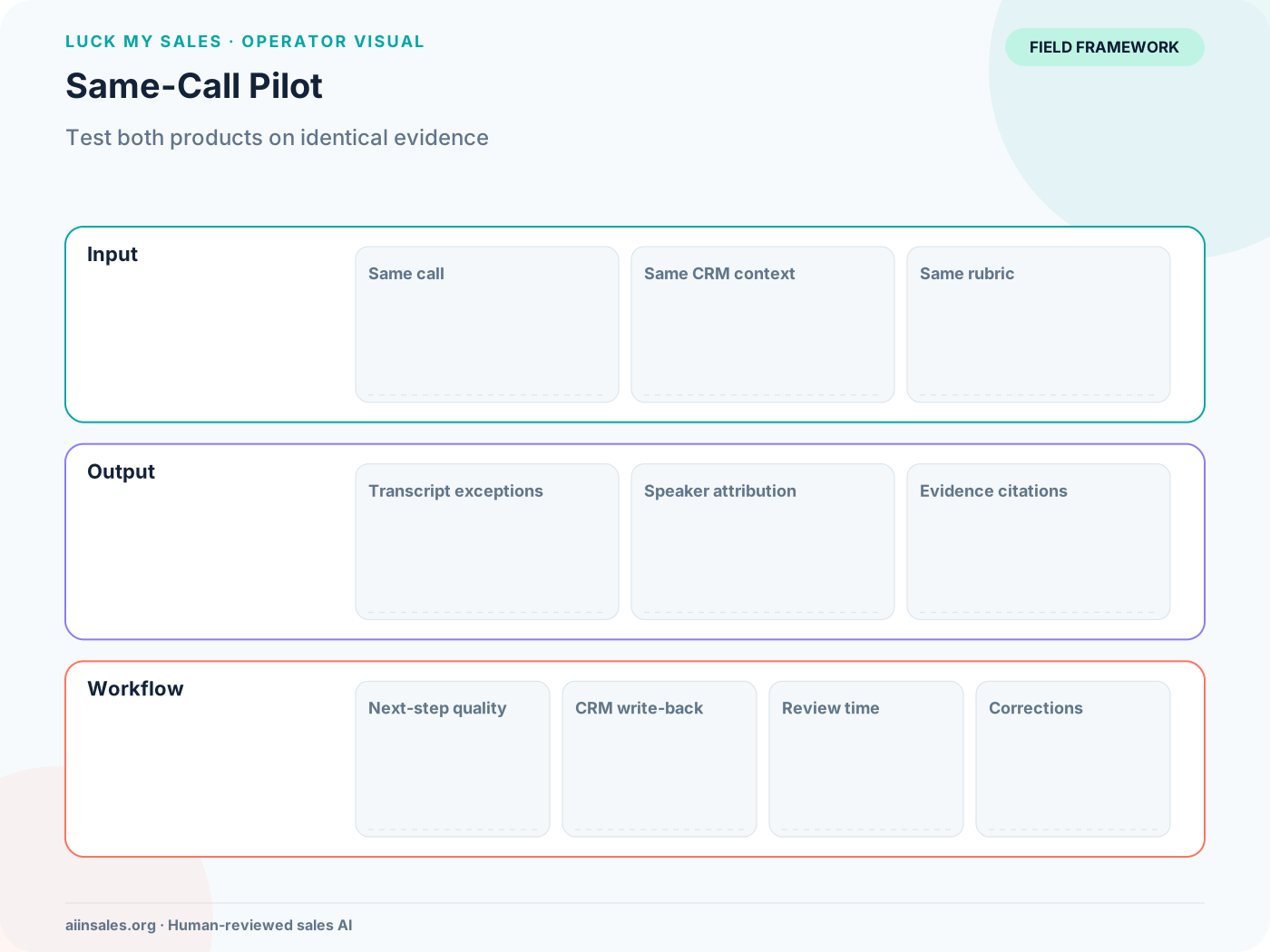
Same-Call Pilot scorecard comparing transcript, evidence, next steps, CRM write-back and review time.
Test both products on identical evidence before accepting a feature-led verdict.
Test areaRequired inputWhat to recordStop condition
Capturevideo meeting, phone call, multi-speaker callsuccessful capture, consent behavior, source metadatamaterial calls cannot be captured lawfully or reliably
Transcriptlanguages, accents, names, numbersmaterial corrections and speaker errorsrepeated commercial meaning errors
Summarysame call and CRM contextmissing facts, unsupported claims, review timerecommendations presented as agreements
Evidencepricing, objection, next step momentscitation accuracy and time to sourcematerial claims lack inspectable evidence
Coachingsame approved rubricscore differences, correction reasons, manager timerubric cannot be controlled or corrected
CRMsandbox objects and fieldsmapping, duplicates, reversibility, audit loguncontrolled commercial-field write-back
Searchknown topics and call momentsprecision of retrieved momentsmanagers cannot find or share the right evidence
Governancereal roles and retention policyaccess, deletion, export, audit behaviorpolicy cannot be implemented
Costequivalent scopequote plus implementation and operating timeeconomics rely on unused capabilities
Use at least several types of calls, not one perfect demo. Keep the scoring rubric identical. Freeze the CRM context. Record who reviewed each output and why it was corrected.
The pilot should answer “Which workflow can this team operate?” rather than “Which AI wrote the nicer paragraph?”

19 / Limits and commercial disclosure

Limits and commercial disclosure

This comparison does not claim equivalent hands-on testing. Gong is supported by first-hand operator experience and official sources. Chorus is covered through official product information and ecosystem research. No same-call benchmark or negotiated-price comparison was completed for this article.
There is no affiliate payment, sponsorship, free access, consulting relationship, or other commercial benefit from Gong, Chorus, or ZoomInfo.
Features, packaging, integrations, and policies can change. Verify them with current official documentation and a controlled pilot.

20 / Frequently asked questions

Frequently asked questions

Is Gong better than Chorus.ai?

There is no credible universal winner. Gong is a strong shortlist for an independent conversation-led revenue platform. Chorus may fit teams already committed to ZoomInfo. The decision should come from the same-call, same-rubric, same-CRM pilot.

Is Chorus.ai part of ZoomInfo?

Yes. Chorus is offered by ZoomInfo. That can matter if ZoomInfo already owns an important part of the team’s data and go-to-market workflow.

Is Gong suitable for a small sales team?

It can be, but the team should prove that pipeline, call volume, manager usage, and workflow value justify the total cost. A simpler stack may be more rational early on.

Can Gong or Chorus update CRM fields automatically?

Both operate in CRM-connected workflows, but buyers must verify current field-level behavior. Keep qualification, stage, forecast, pricing, promises, and account ownership under explicit human control.

Which product is better for coaching?

The better product is the one that supports your rubric, cites evidence, enables correction, fits manager review time, and earns seller adoption. A feature list cannot answer that.

How should transcript accuracy be compared?

Use the same real calls, including your languages, accents, names, numbers, and audio conditions. Count material corrections and downstream effects rather than relying only on a vendor-wide percentage.

What should a Gong vs Chorus pilot include?

Capture, consent, transcript, speaker attribution, summaries, evidence citations, scorecards, search, CRM mapping, governance, manager time, seller adoption, and total cost at equivalent scope.

Research note

Methodology

  1. 01Gong observations combine Anastasiia's hands-on use with current official documentation.
  2. 02Chorus observations are based on current official ZoomInfo sources and ecosystem research; no equivalent production use is claimed.
  3. 03No same-input benchmark, transcript-accuracy winner or negotiated-price comparison is claimed.
Read the full methodology

Source ledger

Sources & editorial notes

  1. 01
    Gong conversation intelligence

    Gong · Official product or documentation source used for bounded capability claims; current packaging and features may change.

  2. 02
    Gong recording consent guidance

    Gong Help · Official product or documentation source used for bounded capability claims; current packaging and features may change.

  3. 03
    ZoomInfo Chorus

    ZoomInfo · Official product or documentation source used for bounded capability claims; current packaging and features may change.

Corrections or primary material: contact the corrections desk.

About the author

Anastasiia Krynytska

Anastasiia Krynytska is a LeadGen Team Lead at Softermii and the lead editor of Luck My Sales. She covers AI-assisted outbound, account research, qualification, messaging, CRM handoffs and revenue workflows from a practitioner’s perspective.View author profile LinkedIn

Continue reading

01 · News analysis

AI sales is moving from assistant to operating layer

The category is expanding from drafting support into research, pipeline decisions, recommended actions and controlled execution.

Read news
02 · Field analysis

In AI sales, the handoff may be the product

Models are becoming accessible; durable value sits in the controlled transition from signal to seller action.

Read analysis
03 · Research framework

Sales AI Workflow Signals 2026

A launch framework for mapping the products, controls and buying questions shaping AI-enabled revenue work.

Read reports

Luck My Sales briefing

Useful context, once a week.

News, explanations and original research from this desk. No noise.
The newsletter is still being built. We will contact you when the first edition is ready.