Weekly industry intelligence · No noiseSubscribe to the Luck My Sales newsletterFree briefing

Independent operator-led media on AI in B2B sales

Menu

Software architecture comparison · Revenue intelligence

Revenue Intelligence Software: Compare Pipeline, Forecast and Conversation Evidence

Compare HubSpot, Salesforce, Gong, Clari, Salesloft, Revenue.io, Avoma and Revenue Grid by evidence, forecasting and seller workflow.
Editorial disclosure

AI may assist research organization and drafting. A human editor reviews every published page, checks material claims against the cited sources and owns the final decision. No company paid for placement in this article.

AI use policy

Agent-ready brief

AI takeaways

Keep the key points here, or take a source-aware text brief into Claude, ChatGPT or another AI workspace.
  1. 01Begin with the CRM-native baseline when the team is still establishing a closed revenue loop.
  2. 02Conversation-first and forecast-first platforms solve different evidence gaps.
  3. 03Run each candidate on the same opportunities, calls and decision questions.
  4. 04Score evidence coverage, correction effort and action quality before vendor feature breadth.
  5. 05Implementation and data readiness often cost more than the software license suggests.
Includes summary, takeaways, sources and a use note.
Revenue intelligence software is worth buying only after your revenue process produces evidence it can use. If leads do not resolve to CRM records, emails and calls are missing, stages have no common meaning and outcomes are not recorded, an intelligence platform will analyze an incomplete loop.
For a founder or small sales team, HubSpot is the practical baseline in this comparison because it can keep CRM, customer activity and forecasting relatively close together. Avoma deserves a pilot when meeting evidence and pipeline review are the gap. Gong and Clari become more relevant as conversation volume, forecast governance and management cadence grow. Salesforce Revenue Intelligence and Revenue.io fit Salesforce-centered organizations. Salesloft fits a team that wants engagement, conversation, deal and forecast work in one revenue workflow. Revenue Grid emphasizes Salesforce activity capture, guided signals and forecasting.
That is a job map, not an absolute ranking. I have direct operating experience with HubSpot. The remaining products are evaluated from current official product documentation. We did not run an identical controlled dataset through all eight products, so this article does not name one experiential winner.
Editorial disclosure note before publication: confirm no affiliate, sponsorship, partnership, client, free-access, demo or consulting relationship with Gong, Clari, Salesloft, Revenue.io, Avoma and Revenue Grid. No candidate receives placement based on an undisclosed commercial arrangement in this draft.

The right platform is the one that improves a defined revenue decision on a shared test set without creating another incomplete source of truth.

01 / Revenue intelligence software at a

Revenue intelligence software at a glance

PlatformArchitectureStrongest documented jobCRM hygiene approachBest-fit buyerEvidence here
HubSpotCRM-nativeConnected CRM context, pipeline and forecastingNative records, workflows and integrated customer activityFounder and SMBDirect use + official documentation
Salesforce Revenue IntelligenceCRM-native analyticsPipeline inspection, analytics and Einstein forecastingWorks inside Salesforce objects, permissions and activity captureSalesforce RevOpsOfficial documentation
GongConversation-first revenue platformConversation evidence, deal inspection and AI-guided forecastingSyncs conversation and deal evidence with CRMSales leadership with high call volumeOfficial documentation
ClariForecast-governance platformForecast roll-up, pipeline inspection and revenue cadenceUnifies revenue-critical data around forecast and inspectionMid-market and enterprise forecastingOfficial documentation
SalesloftCross-workflow executionEngagement, conversations, deals, Rhythm and forecastCRM sync plus activity and buyer-signal workflowStructured sales teamsOfficial documentation
Revenue.ioSalesforce-native executionDialing, engagement, real-time coaching, conversation and forecastNative Salesforce activity and record architectureSalesforce call-heavy teamsOfficial documentation
AvomaConversation-to-pipeline layerMeeting evidence, deal risk, pipeline review and forecastTwo-way CRM update around meetings and emailsSMB/mid-market managersOfficial documentation
Revenue GridSalesforce activity/intelligence layerActivity capture, signals, guided selling and forecastCaptures email/meeting activity into SalesforceSalesforce teams focused on data captureOfficial documentation
The comparison emphasizes three priorities from the author workflow: forecasting, CRM hygiene and seller productivity. Pipeline inspection, conversation coaching and next-step enforcement remain important, but they should serve those operating outcomes.

02 / What qualifies as revenue intelligence

What qualifies as revenue intelligence software

A product belongs in the category when it does more than report CRM fields. It should connect several evidence sources to a live revenue decision.
Minimum capabilities include:
  • capturing or synchronizing CRM, email, call, meeting or buyer-activity evidence;
  • resolving evidence to accounts and opportunities;
  • showing pipeline movement or deal health;
  • supporting forecast, qualification or next-step decisions;
  • putting the insight into a seller or manager workflow;
  • recording later action and outcome.
A call recorder with summaries is conversation intelligence. A contact database is sales intelligence. A dashboard of historical revenue is business intelligence. Each can feed the revenue intelligence loop, but the category requires a connection between evidence, live revenue state and action.
Our revenue intelligence guide defines that operating loop and the human decision contract. This comparison asks which software architecture best supports it.

03 / Five revenue intelligence architectures

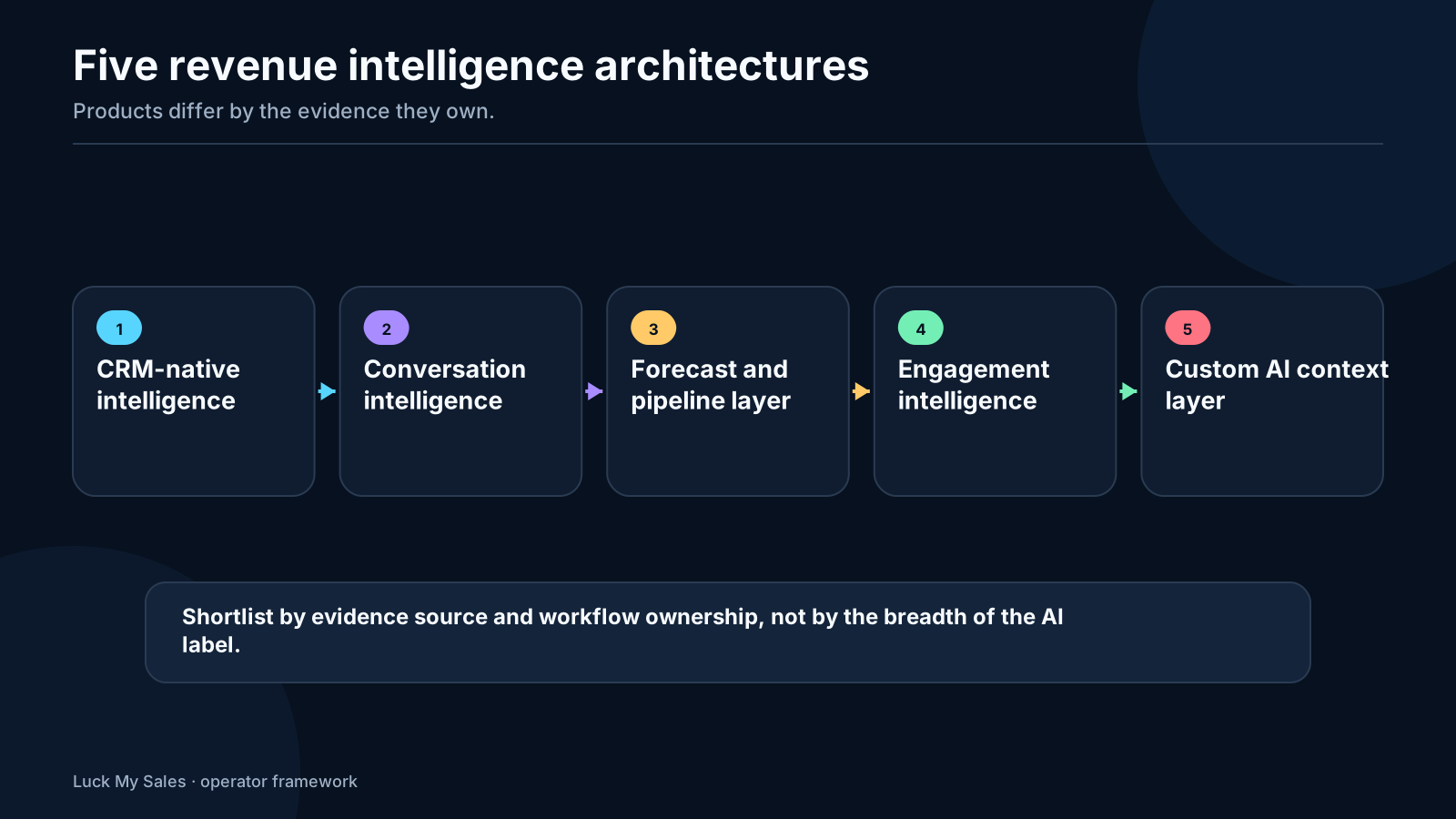
Five revenue intelligence architectures

1. CRM-native

HubSpot and Salesforce place intelligence close to canonical customer and opportunity records. The advantage is less sync distance and clearer use of existing permissions. The limitation is that the CRM may not capture enough conversation or external context without additional products.

2. Forecast governance

Clari begins with forecast, inspection and revenue cadence. It is useful when the main problem is inconsistent submissions, weak pipeline visibility and quarter management. It is excessive when a founder has ten open deals and no defined stages.

3. Conversation-first

Gong and Avoma derive much of their value from calls, meetings and buyer language. They help when important evidence is trapped in conversations. The limitation is coverage: unrecorded calls, external email or incomplete CRM linkage can still leave gaps.

4. Activity capture and Salesforce guidance

Revenue.io and Revenue Grid are built strongly around Salesforce activity, communication and seller guidance. They fit organizations that want Salesforce to remain the system of record and need better capture or execution around it.

5. Cross-system revenue execution

Salesloft connects engagement, buyer signals, conversations, deal workflow and forecasting. This can reduce context switching for structured sales teams. It also creates a parallel operating layer that needs clean CRM synchronization and ownership rules.
Many platforms now span several architectures. The map identifies the design center, not a permanent product boundary.
Five revenue intelligence architectures: CRM-native, conversation-first, forecast-first, engagement-led and activity-capture layers.
Architecture fit matters more than the number of features on a comparison page.

04 / Compare capabilities by the decision

Compare capabilities by the decision they support

A feature list is a poor way to compare revenue intelligence platforms. Almost every vendor can now mention summaries, alerts, scores, forecasts and generative AI. The useful question is whether a capability changes a specific revenue decision while preserving the evidence and owner behind it.
DecisionEvidence the system needsUseful outputHuman check before actionFailure to test
ForecastOpportunity history, buyer activity, stage movement, manager inputA forecast view with change and risk explanationManager commits the number and documents the assumptionA confident number built from incomplete activity
Pipeline inspectionCurrent stage, age, activity, stakeholders and next stepDeals that need review, with reasonsOwner confirms whether the risk is realGeneric risk flags that create alert fatigue
CRM hygieneEmail, meeting and call evidence linked to the correct recordMissing fields, stale records, duplicate or conflicting stateRevOps approves match, merge and protected-field rulesCorrect activity attached to the wrong account or opportunity
Seller productivityBuyer evidence, account context, open tasks and ownershipA prioritized next action with evidenceSeller decides what to send, promise or changeMore tasks without a clearer commercial priority
Conversation coachingTranscript, speaker attribution, topic and outcomeSpecific moment, behavior or objection to reviewManager checks context and decides coaching actionScoring a call from keyword counts without deal context
Next-step enforcementAgreed action, date, owner and later activityMissing or overdue next-step alertSeller confirms the commitment and updates the recordAI invents a next step that the buyer never accepted
This matrix also exposes category overlap. Gong and Avoma are naturally strong where conversation evidence is central. Clari is designed around forecast and inspection. Salesforce, Revenue.io and Revenue Grid benefit from close Salesforce context. HubSpot offers a practical CRM-native starting point. Salesloft connects engagement and action. None of those design choices removes the need to test evidence coverage, field authority and correction.

Forecasting is not one feature

Separate four jobs that vendors often group under forecasting:
  1. Submission: a seller or manager enters a call for an opportunity, team or period.
  2. Roll-up: the system aggregates calls through a forecast hierarchy.
  3. Inspection: managers see changes, gaps, risk and supporting evidence.
  4. Prediction: a model estimates an outcome from historical and current signals.
A team may need the first three without trusting an automated prediction. During a pilot, ask which number came from the human, which came from a configured rule and which came from a model. Then verify whether the model knows when evidence is missing.

CRM hygiene is an identity problem before it is an AI problem

Automatic activity capture sounds simple until one email involves several contacts, two related companies and more than one opportunity. The platform must decide where the event belongs. A correct summary attached to the wrong opportunity still corrupts pipeline truth.
Test parent and subsidiary accounts, consultants using client email threads, forwarded calendar invitations, multiple active deals and contacts who changed employers. Ask how a user corrects the match, whether the correction teaches only the current record or a reusable rule, and whether an administrator can audit the change.

Seller productivity must remove work, not move it

An AI-generated task is not saved time if the seller must reconstruct its evidence, dismiss duplicates and repair CRM state. Measure the complete path from signal to accepted action. Useful productivity outcomes include less preparation for a real review, faster access to a cited buyer commitment and fewer missing follow-ups. A larger task queue is not an outcome.

05 / How we evaluated the shortlist

How we evaluated the shortlist

We reviewed current official documentation available on 20 August 2026 and applied the same questions.
  1. Which evidence sources does the platform capture?
  2. How does it resolve evidence to the CRM and opportunity?
  3. Can a user inspect the evidence behind risk, forecast or next-step output?
  4. Which actions can be configured, approved, audited and reversed?
  5. Does the platform improve forecast governance, CRM hygiene or seller productivity?
  6. What minimum process and data maturity does it require?
  7. Where will a founder or RevOps team carry implementation cost?
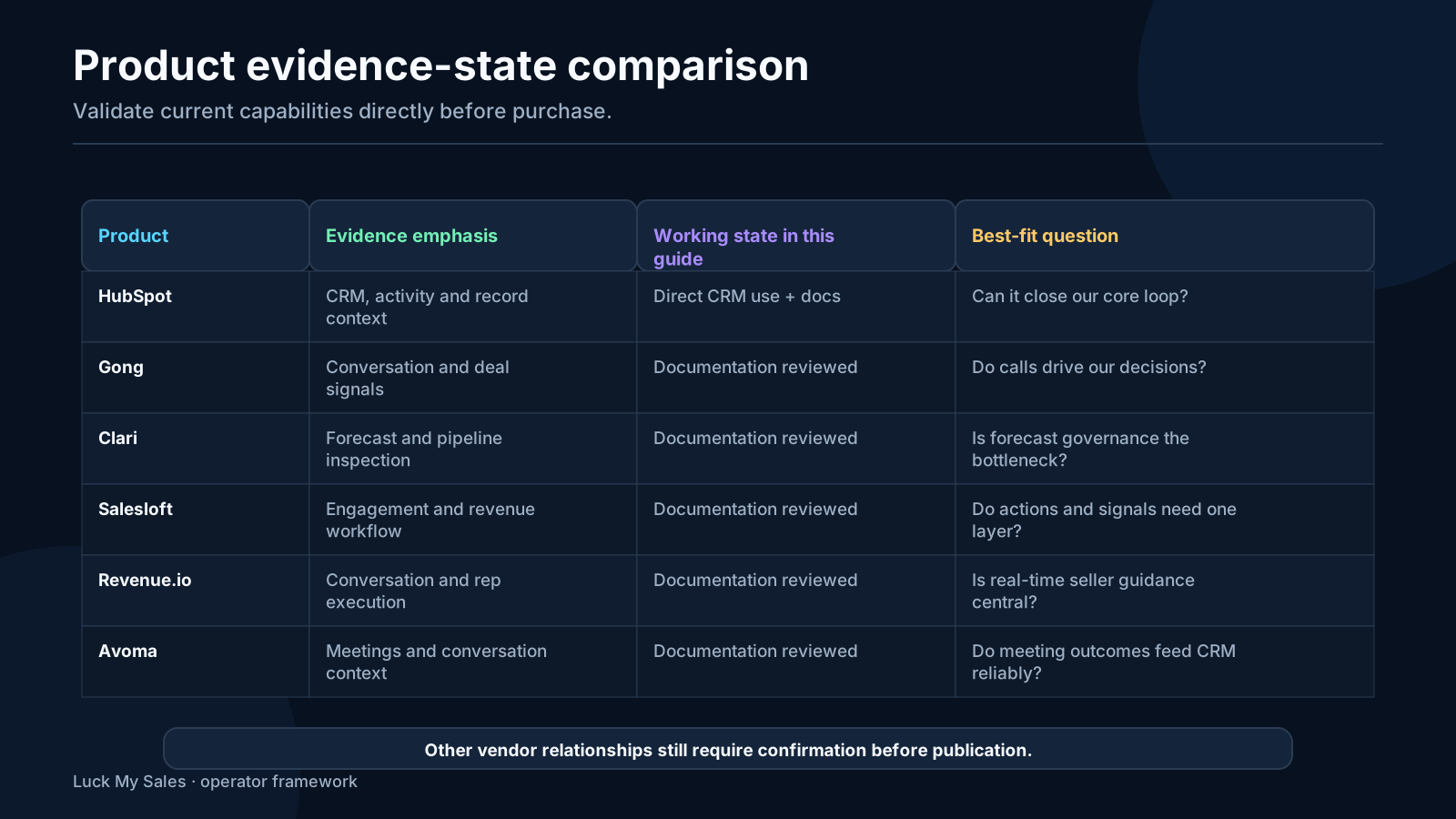
Vendor claims about win rates, forecast accuracy, hours saved or quota attainment were excluded from rankings. A vendor case can show that a workflow is possible. It cannot predict your result.
Evidence-state comparison matrix for direct use, official documentation and unverified commercial claims.
Placement is bounded by the evidence state available for each candidate.

06 / Total cost is larger than

Total cost is larger than the software license

The license is only the visible part of revenue intelligence cost. Compare candidates with the same cost model:
  • platform seats and required editions;
  • CRM, conversation or forecasting add-ons;
  • AI, transcription, storage or usage credits;
  • implementation and historical-data work;
  • CRM field mapping and identity resolution;
  • email, calendar, dialer and meeting integrations;
  • security, legal and regional-data review;
  • ongoing RevOps administration;
  • manager and seller training;
  • correction and exception handling;
  • migration or exit work if the platform becomes a parallel system of record.
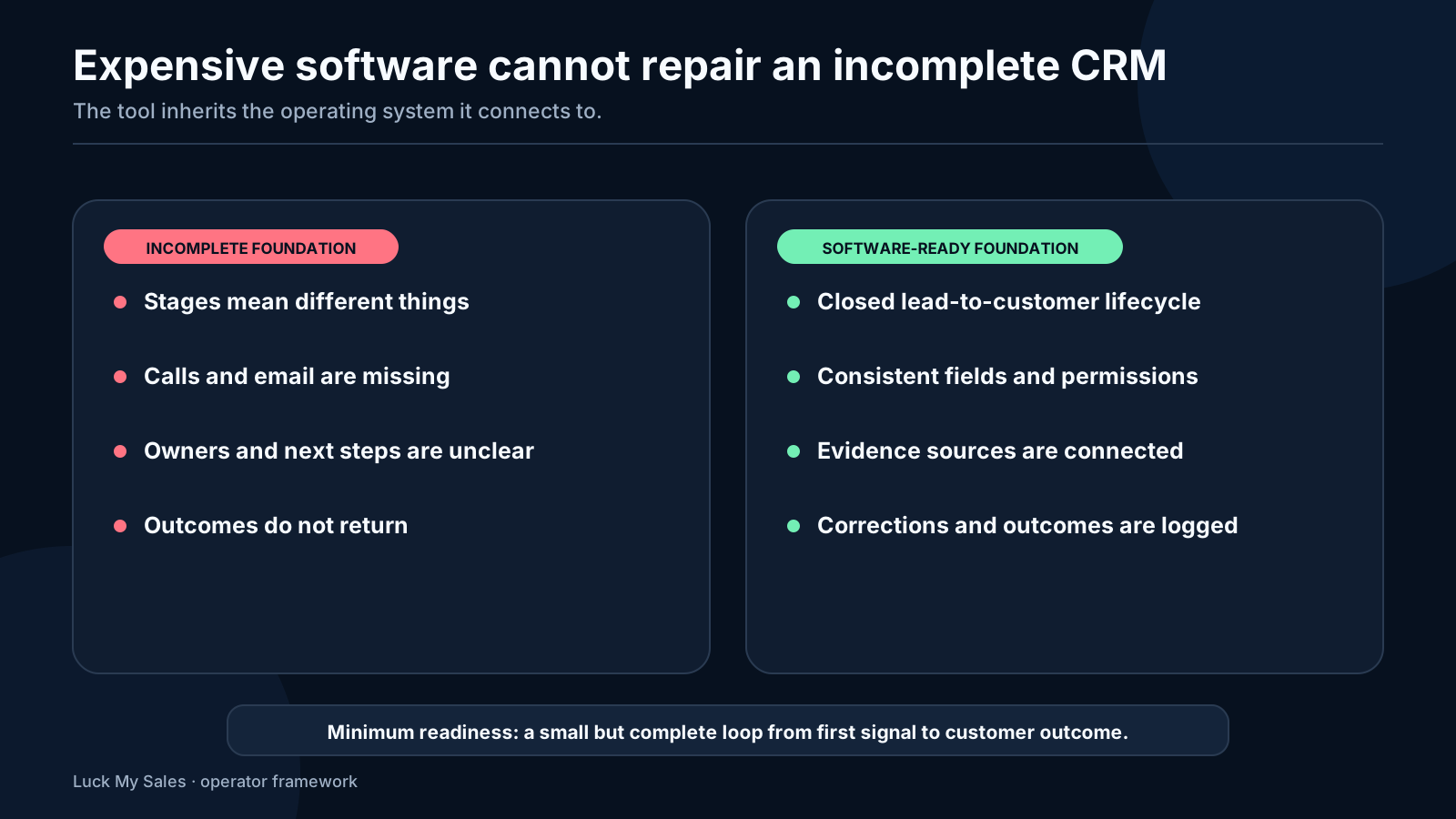
Integration and AI-credit costs deserve particular attention. A low seat price can become secondary if the team needs a higher CRM tier, a separate call recorder and paid usage for every processed conversation. Ask the vendor to price the actual pilot data and the expected production volume, not an idealized seat count.
Administration is also an operating cost. Someone must own field authority, source coverage, stage definitions, forecast rules, user access, incorrect matches and integration failures. If no one owns those controls, the product will quietly become another dashboard whose numbers are debated in every meeting.
For a founder, include opportunity cost. A sophisticated platform that needs weeks of configuration can be more expensive than fixing the existing CRM and running a disciplined weekly review. The correct purchase is the smallest architecture that removes the current evidence bottleneck.
Diagram comparing an intelligence platform over a closed CRM loop with a platform over incomplete CRM evidence.
New software does not create missing source, identity, stage or outcome history.

07 / HubSpot best CRMnative baseline for

HubSpot: best CRM-native baseline for founders and SMBs

HubSpot is the platform in this list I can discuss from direct operating experience. It is useful as a baseline because forms, contacts, lifecycle, owners, email, meetings, deals and reporting can live in one customer platform.
Its current forecasting product page documents customizable forecast categories, models and rep-level performance views. Sales Hub and Breeze add summaries, guided selling and agent capabilities around the CRM.
For a founder, the advantage is not a sophisticated forecast algorithm. It is a shorter path from inbound source to seller action and customer outcome. A small team can create the minimum closed loop before adding a specialized intelligence layer.
HubSpot is strongest when:
  • the company already uses HubSpot for forms, marketing or sales;
  • pipeline complexity is moderate;
  • managers need one understandable review surface;
  • the team wants AI close to the CRM rather than in a separate platform.
It becomes less attractive when the company needs highly specialized forecast hierarchies, deep custom objects or conversation analytics beyond the native and integrated feature set. Credits, tiers and multiple hubs also affect total cost.
Pilot question: Can HubSpot assemble the exact inbound, email, meeting and pipeline card your sellers need without creating custom-field sprawl?

08 / Salesforce Revenue Intelligence best for

Salesforce Revenue Intelligence: best for Salesforce-native analytics and governance

Salesforce's official Revenue Intelligence documentation describes a combination of CRM Analytics, Pipeline Inspection, Einstein Forecasting, Einstein Activity Capture and related sales capabilities.
The architectural advantage is clear for a Salesforce organization. Revenue evidence can operate within existing objects, roles, permissions, forecast structures and analytics. A complex team can inspect pipeline and forecast without exporting the core operating model to another system.
The same architecture has a high readiness requirement. Objects, stages, activities, permissions and forecast categories need disciplined configuration. Additional licensing and implementation can apply. If Salesforce hygiene is poor, Salesforce Revenue Intelligence will not create clean ground truth by itself.
Best fit: established Salesforce RevOps teams that need native pipeline and forecast visibility. Pilot question: Does the intelligence reflect actual customer activity, or mostly the fields sellers already enter?

09 / Gong best conversationfirst option for

Gong: best conversation-first option for evidence-rich deal review

Gong's design center is buyer and seller interaction. Its current Forecast page describes AI-guided forecasting built from revenue signals, with account and pipeline visibility. Gong also connects conversation intelligence to deal inspection, coaching and execution workflows.
This architecture is valuable when managers lack direct evidence from calls and meetings. A pipeline stage may say Evaluation; the conversation may reveal that no economic buyer has joined and the next step is vague. Gong can make that contradiction easier to review.
The buying risk is assuming conversation coverage equals full revenue coverage. Check:
  • which calls and meetings are recorded;
  • whether email and CRM state are connected;
  • how multiple opportunities or accounts are resolved;
  • whether the system cites the relevant moment;
  • how sellers correct a wrong interpretation;
  • which forecast or CRM fields it may change.
Best fit: sales organizations with enough recorded conversations and management cadence to use the evidence. Pilot question: Can managers trace each deal-risk or forecast challenge to current buyer evidence?

10 / Clari best for structured forecast

Clari: best for structured forecast governance

Clari's strongest documented jobs are forecasting and pipeline inspection. Clari Forecast supports roll-ups, revenue models, scenario work and forecast process. Clari Inspect focuses on deal health, gaps, risk and action.
Clari is relevant when a company needs a consistent revenue cadence across teams and managers. It can turn the forecast call from a spreadsheet assembly exercise into a review of changes, assumptions and risk.
That value depends on operating maturity. Forecast categories must mean the same thing across teams. Salesforce or other connected CRM data must be reliable. Managers must use the inspection workflow. A small team with an incomplete pipeline loop will carry more platform than process.
Best fit: mid-market and enterprise teams with formal forecast calls and RevOps ownership. Pilot question: Can the platform explain what changed since the last submission and connect the change to a decision owner?

11 / Salesloft best for one seller

Salesloft: best for one seller workflow across engagement and revenue action

Salesloft's revenue intelligence page brings together automation, deal work, conversation intelligence, forecasting and CRM integration. Rhythm prioritizes seller actions from buyer and seller signals, while Conversations and Forecast provide additional evidence and governance.
The potential advantage is workflow consolidation. A seller can move from signal to action, conversation and deal review without using separate engagement and intelligence tools.
The evaluation must test state synchronization:
  • Does a reply stop the correct outreach?
  • Does the conversation attach to the right opportunity?
  • Does the CRM receive a useful summary and next step?
  • Can a seller see why an action was prioritized?
  • Do forecast, deal and engagement views agree?
Best fit: structured SDR and AE teams that already need sales engagement and want intelligence in the same daily workflow. Pilot question: Does consolidation reduce seller work, or create another operating layer beside the CRM?

12 / Revenueio best for Salesforcenative call

Revenue.io: best for Salesforce-native call execution and coaching

Revenue.io describes itself as a Salesforce-native platform that combines dialing, sales engagement, conversation intelligence, real-time coaching, AI and forecasting. Its current product page emphasizes that calls, emails and meetings remain in Salesforce rather than synchronizing through a separate shadow CRM.
This can fit a call-heavy Salesforce team because activity capture, live coaching and pipeline evidence share the same underlying customer records. Revenue.io also documents conversation agents, summaries, next actions and deal-health workflows.
The dependency is equally clear: this is for Salesforce-centered organizations. Test record permissions, communication compliance, call coverage, AI citations and how recommendations interact with existing Salesforce flows.
Best fit: high-velocity or call-heavy sales teams committed to Salesforce. Pilot question: Does native activity capture materially improve CRM completeness and seller action without creating duplicate automation?

13 / Avoma best for meeting evidence

Avoma: best for meeting evidence, pipeline review and SMB accessibility

Avoma combines conversation intelligence with pipeline and forecast capabilities. Its Revenue Intelligence page documents pipeline review, deal risk, methodology tracking, win-loss analysis, CRM updates and forecasting. Its help documentation states that forecasting requires a connected CRM and the relevant add-on.
Avoma is attractive for founders and smaller revenue teams because it can begin with meeting notes and conversation evidence, then extend into pipeline and forecast work. This can be a more proportionate step than buying a forecast-governance platform first.
The pilot should test evidence coverage and write-back. Ask whether email and meetings are connected, whether the CRM field map is clear, whether risk explanations cite buyer language, and whether seller corrections are preserved.
Best fit: SMB and mid-market teams whose evidence is concentrated in calls and meetings. Pilot question: Can the platform improve the weekly deal review using your real meetings and CRM without forcing a second source of truth?

14 / Revenue Grid best for Salesforce

Revenue Grid: best for Salesforce activity capture and guided signals

Revenue Grid's architecture centers on Salesforce, email and calendar activity capture, pipeline visibility, signals and guided selling. Its current Sales Forecasting page describes forecast process, deal health, risk and natural-language questions based on Salesforce data.
The product is relevant when the primary problem is missing activity and weak seller guidance inside a Salesforce workflow. Automatically captured interactions can improve the evidence foundation for pipeline review.
Vendor pages contain strong accuracy and performance claims. We do not use those claims to place the product. The buying test is your own activity coverage, record matching, signal usefulness and correction rate.
Best fit: Salesforce teams that want stronger email/meeting capture, signals and forecast support. Pilot question: Are the signals specific enough to change seller action, and do they remain traceable to captured evidence?

15 / Best fit for founders and

Best fit for founders and small sales teams

A founder should usually begin with the CRM-native baseline already close to the operating process. HubSpot is the leading candidate here. If meetings are the main evidence gap, test Avoma as a layer. If calling and SMS are central and the company is choosing CRM at the same time, Close belongs in the adjacent CRM shortlist even though it is not one of the eight core revenue-intelligence profiles.
Do not buy a platform because the homepage promises forecast accuracy. At founder scale, the bigger problems are usually incomplete follow-up, unclear qualification, missing next steps and a pipeline that exists partly in the founder's head.
Minimum founder workflow:
lead source → one CRM record → owner → meaningful conversation → next step → opportunity outcome
Build that before adding specialized forecast intelligence.

16 / Best fit for midmarket RevOps

Best fit for mid-market RevOps

Mid-market teams should compare the operating layer already in use.
  • Salesforce organization: Salesforce Revenue Intelligence, Revenue.io or Revenue Grid.
  • Engagement-heavy SDR/AE team: Salesloft.
  • Conversation-rich management workflow: Gong or Avoma.
  • Formal cross-team forecast cadence: Clari.
  • HubSpot-centered organization: test native HubSpot first, then add a specialized layer only for the missing job.
RevOps should own identity, field authority, integration health, stage definitions and correction reporting. The platform should not be allowed to create a second definition of pipeline.

17 / Best fit for enterprise forecast

Best fit for enterprise forecast governance

Clari, Gong, Salesforce Revenue Intelligence and Salesloft are the main candidates in this shortlist. The deciding factor is architecture:
  • Clari for forecast and inspection cadence;
  • Gong when conversation evidence is central to deal truth;
  • Salesforce for native analytics and governance;
  • Salesloft when engagement and seller action should sit beside forecast and conversations.
Enterprise evaluation must include permissions, audit, regional data handling, retention, sandbox or test environments, model access, rollback and integration failure—not only feature demonstrations.

18 / A common pilot protocol

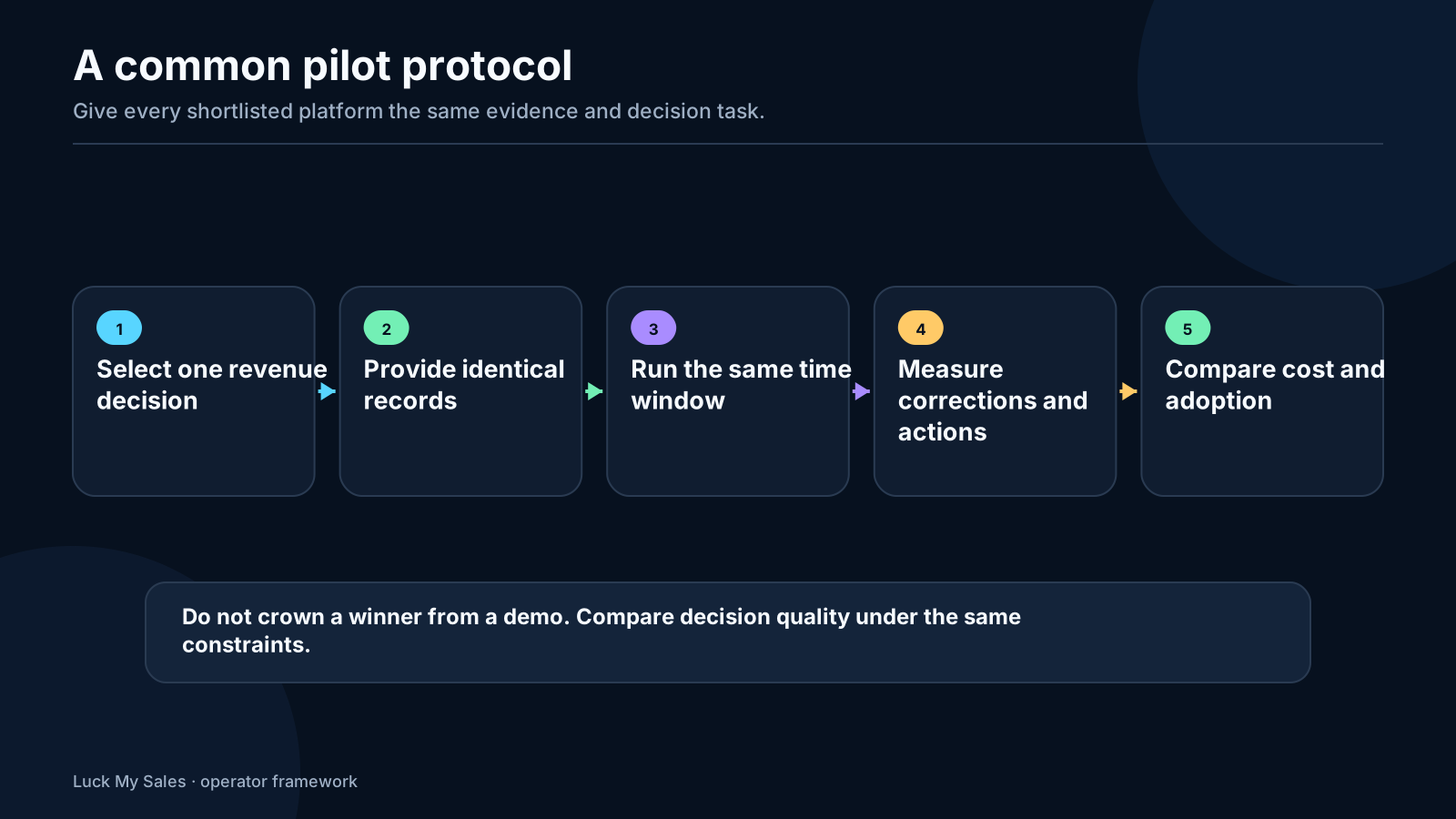
A common pilot protocol

Run the same evaluation sequence even if products do different jobs.

1. Prepare known evidence

Select 20–30 opportunities with known outcomes or current states. Include clean deals, stale deals, missing next steps, ambiguous stakeholders and incorrect CRM fields.

2. Connect the minimum sources

Use the real CRM, approved email and a representative set of calls or meetings. Record which historical periods each source covers.

3. Ask the same questions

  • What changed in this deal?
  • Which evidence supports the stage?
  • What is missing?
  • Which opportunity is at risk and why?
  • What next step was agreed?
  • Which forecast items contradict buyer evidence?
  • Which CRM fields need review?

4. Score the answers

Evaluate factual accuracy, citations, coverage awareness, usefulness, correction effort and permission safety. Do not score writing style as intelligence.

5. Test action

Create one approved task, summary or reversible update. Verify audit history, ownership and rollback.

6. Use it in a real cadence

Run one pipeline review or forecast call. Ask whether the software improved the decision, reduced preparation and helped the owner act.

7. Calculate total cost

Include licenses, required CRM tier, AI or usage credits, call recording, implementation, integrations, administration, training and seller time.
Common pilot protocol applying the same opportunities, conversations and decision questions to every revenue intelligence candidate.
A shared test set makes workflow differences visible.

19 / Score the pilot by evidence

Score the pilot by evidence and action

A pilot needs a written scorecard before the vendor configures the demo. Otherwise the team will reward the most polished interface or the most impressive generated summary.
Use six dimensions.

1. Evidence coverage

Measure how many required CRM records, emails, calls and meetings were available for the pilot. Record gaps by source and date. A correct answer on half the relevant evidence is not equivalent to a correct answer on complete evidence.

2. Identity and CRM resolution

Check whether activity attaches to the correct account, person and opportunity. Include contacts with multiple companies, several open deals and forwarded meetings. Count unresolved and incorrectly resolved events separately.

3. Factual accuracy and citation

For each answer, verify names, dates, commitments, objections, stage history and next steps. Require a link or timestamp to the source evidence. A fluent answer without a traceable source should not pass a consequential decision test.

4. Decision usefulness

Ask whether the output changed or accelerated a real pipeline, forecast, qualification or next-step decision. “Interesting” is not enough. Record the decision, owner and action.

5. Correction and control

Intentionally include wrong CRM values and ambiguous evidence. Test whether users can correct the result, preserve the correction, limit field writes, audit changes and reverse an action.

6. Operating cost

Measure preparation time, review time, exception handling and administration during the pilot. Add licenses, add-ons, AI usage and integration work. The cheapest demo may produce the most expensive production workflow.
Use a pass/fail threshold for safety items such as protected-field permissions, suppression, source citations and audit. Weight the remaining dimensions according to the job. A forecast-governance buyer should weight forecast change and manager review more heavily; a call-heavy team should weight conversation coverage and activity resolution.

20 / Buying red flags

Buying red flags

Pause the purchase if any of these remain unresolved:
  • the vendor cannot explain which sources produced a score or forecast;
  • missing evidence is hidden rather than labeled;
  • activity frequently attaches to the wrong opportunity;
  • sellers must copy the useful output manually into CRM;
  • the AI can overwrite owner, stage, close date or forecast without a clear authority rule;
  • corrections disappear after synchronization or enrichment;
  • pricing depends on undefined AI credits or processing units;
  • the pilot uses only vendor-provided sample data;
  • performance claims replace an own-data test;
  • the product creates another pipeline definition beside the CRM;
  • no one inside the company owns integration health and exceptions;
  • exit or export cannot preserve evidence and audit history.
One red flag does not automatically reject a platform. It tells you what must be proven before production. Several unresolved red flags usually mean the team is buying a presentation layer before fixing the operating loop.

21 / Write a decision memo before

Write a decision memo before buying

End the pilot with a short decision memo. Do not end with a vendor slide deck or a list of liked features.
The memo should name the decision bottleneck. It should state which evidence the platform can see. It should list important gaps. It should report the own-data test and the correction test. It should name every system that will remain after launch. It should also identify the internal owner.
Keep the recommendation direct. For example, “buy Avoma for meeting evidence and weekly pipeline review” is clearer than “buy an AI platform.” “Use native HubSpot forecasting and improve stage rules first” is also a valid result. A pilot can correctly end with no purchase.
Include the first production workflow. Choose one. It might prepare a weekly deal review. It might capture Salesforce activity. It might challenge forecast changes. Do not launch coaching, forecasting, automated CRM updates and seller prioritization at the same time.
Define the human boundary. State who commits a forecast. State who changes owner. State who approves a stage or close date. State which updates may run without review. The platform should enforce these rules.
Add a 30-day success test. Use observable measures. Track evidence coverage, correct CRM resolution, accepted recommendations, review time, corrections and completed actions. Avoid a vague target such as “better intelligence.”
Finally, record the stop condition. The team should pause if source coverage drops, identity errors rise, protected fields change without approval or sellers must repair more work than the system saves. This is a production control, not a sign that the pilot failed.
The memo forces the company to buy a workflow with an owner. It prevents the software category from becoming the strategy.

A founder can start with one review

A small team does not need a large rollout. Pick one weekly review. Use the CRM you already have. Connect one inbox and the calls that matter. Choose ten open deals. Ask the system to show what changed, what is missing and what the buyer agreed to.
Check every answer. Open the source. Fix wrong links. Mark unknown facts as unknown. Let the seller approve the next step. Then record what happened.
Repeat the review for four weeks. The pattern will become clear. You may find that native CRM tools are enough. You may find that calls hold the missing evidence. You may find that the real problem is stage design or poor follow-up. Each answer leads to a different product choice.
Do not expand because the demo worked once. Expand when the same review saves time and keeps the record correct. The first goal is trust in one loop. More seats and more AI can wait.

22 / Readiness checklist

Readiness checklist

  • Source and trigger are recorded.
  • Companies, people and opportunities resolve reliably.
  • Stages and forecast categories have written meaning.
  • Every opportunity has a named owner.
  • Email and relevant conversations are captured.
  • Next steps are specific, owned and dated.
  • Outcomes and loss reasons close the loop.
  • Protected fields and approval authorities are defined.
  • RevOps can monitor integration and data coverage.
  • The team has one decision and cadence for the pilot.
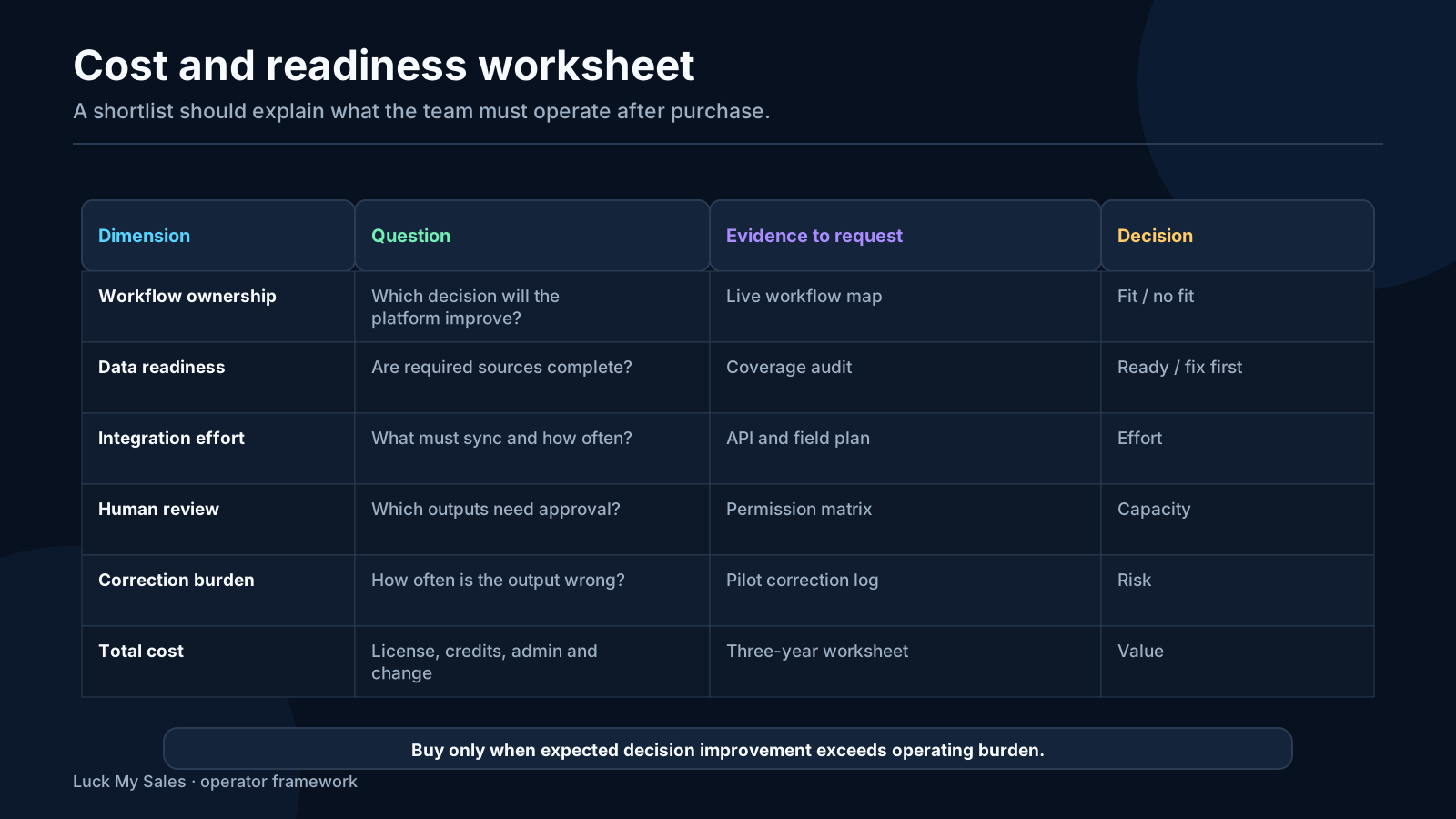
If several answers are no, use the implementation budget to fix the revenue loop first.
Revenue intelligence cost and readiness worksheet covering data, integration, workflow, ownership and adoption.
Price the implementation and evidence work alongside the license.

23 / Frequently asked questions

Frequently asked questions

What is the best revenue intelligence software?

It depends on the workflow. HubSpot is the practical CRM-native baseline for founders and SMBs. Gong is conversation-first, Clari forecast-governance-first, Salesforce native to its CRM, Salesloft execution-oriented, Revenue.io and Revenue Grid Salesforce-centered, and Avoma accessible for conversation-to-pipeline work.

Is revenue intelligence software the same as CRM?

No. CRM is usually the system of record. Revenue intelligence captures and interprets evidence to support pipeline, forecast and seller action. Some CRM platforms include revenue-intelligence capabilities.

Do small teams need revenue intelligence software?

Not always. A well-configured CRM, connected email and disciplined next-step process may be enough. Buy a specialized layer when a defined evidence or decision bottleneck justifies it.

How should I test a platform?

Use your CRM, conversations and known outcomes. Ask the same factual and action questions, check citations and corrections, test one workflow and use the output in a real review cadence.

Which features matter most?

For this comparison: forecast support, CRM hygiene and seller productivity. Evidence coverage, citations, permissions, audit and correction matter more than the number of AI features.

24 / The practical choice

The practical choice

Do not begin with a vendor shortlist. Begin with the decision the revenue team cannot make reliably today. Then identify which evidence is missing and which architecture can put that evidence into the workflow.
For a founder, the correct answer may be better HubSpot configuration. For an enterprise, it may be Clari forecast governance, Gong conversation evidence or a Salesforce-native layer. The best revenue intelligence software is the smallest system that closes the evidence-to-decision gap without creating another untrusted version of revenue.

Research note

Methodology

  1. 01HubSpot is the only candidate backed by Anastasiia's direct operating experience in this comparison.
  2. 02Salesforce Revenue Intelligence, Gong, Clari, Salesloft, Revenue.io, Avoma and Revenue Grid are evaluated from current official documentation, not a controlled common-input deployment.
  3. 03No candidate receives placement because of an undisclosed commercial arrangement; remaining vendor-relationship confirmation is retained as a visible pre-production gate.
Read the full methodology

Source ledger

Sources & editorial notes

  1. 01
    forecasting product page

    HubSpot · Official, primary or category source used for the bounded claim cited in this guide; current feature scope may change.

  2. 02
    official Revenue Intelligence documentation

    Salesforce Help · Official, primary or category source used for the bounded claim cited in this guide; current feature scope may change.

  3. 03
    Forecast page

    Gong · Official, primary or category source used for the bounded claim cited in this guide; current feature scope may change.

  4. 04
    Clari Forecast

    Clari · Official, primary or category source used for the bounded claim cited in this guide; current feature scope may change.

  5. 05
    Clari Inspect

    Clari · Official, primary or category source used for the bounded claim cited in this guide; current feature scope may change.

  6. 06
    revenue intelligence page

    Salesloft · Official, primary or category source used for the bounded claim cited in this guide; current feature scope may change.

  7. 07
    current product page

    Revenue.io · Official, primary or category source used for the bounded claim cited in this guide; current feature scope may change.

  8. 08
    Revenue Intelligence page

    Avoma · Official, primary or category source used for the bounded claim cited in this guide; current feature scope may change.

  9. 09
    Sales Forecasting page

    Revenue Grid · Official, primary or category source used for the bounded claim cited in this guide; current feature scope may change.

Corrections or primary material: contact the corrections desk.

About the author

Anastasiia Krynytska

Anastasiia Krynytska is a LeadGen Team Lead at Softermii and the lead editor of Luck My Sales. She covers AI-assisted outbound, account research, qualification, messaging, CRM handoffs and revenue workflows from a practitioner’s perspective.View author profile LinkedIn

Continue reading

01 · News analysis

AI sales is moving from assistant to operating layer

The category is expanding from drafting support into research, pipeline decisions, recommended actions and controlled execution.

Read news
02 · Field analysis

In AI sales, the handoff may be the product

Models are becoming accessible; durable value sits in the controlled transition from signal to seller action.

Read analysis
03 · Research framework

Sales AI Workflow Signals 2026

A launch framework for mapping the products, controls and buying questions shaping AI-enabled revenue work.

Read reports

Luck My Sales briefing

Useful context, once a week.

News, explanations and original research from this desk. No noise.
The newsletter is still being built. We will contact you when the first edition is ready.