
Diagnostic workflow · AI sales forecasting
How to Fix Inaccurate AI Sales Forecasts
A direct diagnostic order for separating dirty CRM data, broken stages, missing buyer evidence, bad rules and real model drift.
Editorial disclosure
AI may assist research organization and drafting. A human editor reviews every published page, checks material claims against the cited sources and owns the final decision. No company paid for placement in this article.
AI use policyAgent-ready brief
AI takeaways
Keep the key points here, or take a source-aware text brief into Claude, ChatGPT or another AI workspace.- 01Pause consequential write-back before diagnosing the cause.
- 02Audit CRM data and stage meaning before tuning the model.
- 03Missing evidence is not negative buyer behavior.
- 04A material correction rate above 15% is a practical stop gate, not an industry benchmark.
- 05Measure forecast error by horizon and segment against actual outcomes.
Includes summary, takeaways, sources and a use note.
When an AI forecast is wrong, teams often blame the model first. In practice, the more common causes are stale stages, fictional dates, missing buyer context and rules that were never defined clearly.
Tuning the model before fixing those inputs makes the system confidently repeat the same error.
Use the diagnostic order below, keep consequential write-back paused and restore automation only after the correction pattern is understood.
Most forecast errors should be debugged upstream of the model before the model itself is changed.
01 / Pause the write path
1. Pause consequential automation
Before debugging, stop AI from automatically changing opportunity stage, close date, probability, forecast category or account ownership. Preserve its recommendations, source evidence and logs, but route changes to a review queue.
Do not erase the current records. Snapshot the before state so you can reconstruct what the system saw and changed.
Build a small error table before changing anything. For every disputed opportunity, record the original recommendation, cited evidence, human decision, material correction and later outcome. Add the forecast horizon and segment. This prevents one memorable miss from becoming a universal diagnosis and shows whether the problem is concentrated in one motion, owner or evidence source.
02 / Audit CRM data
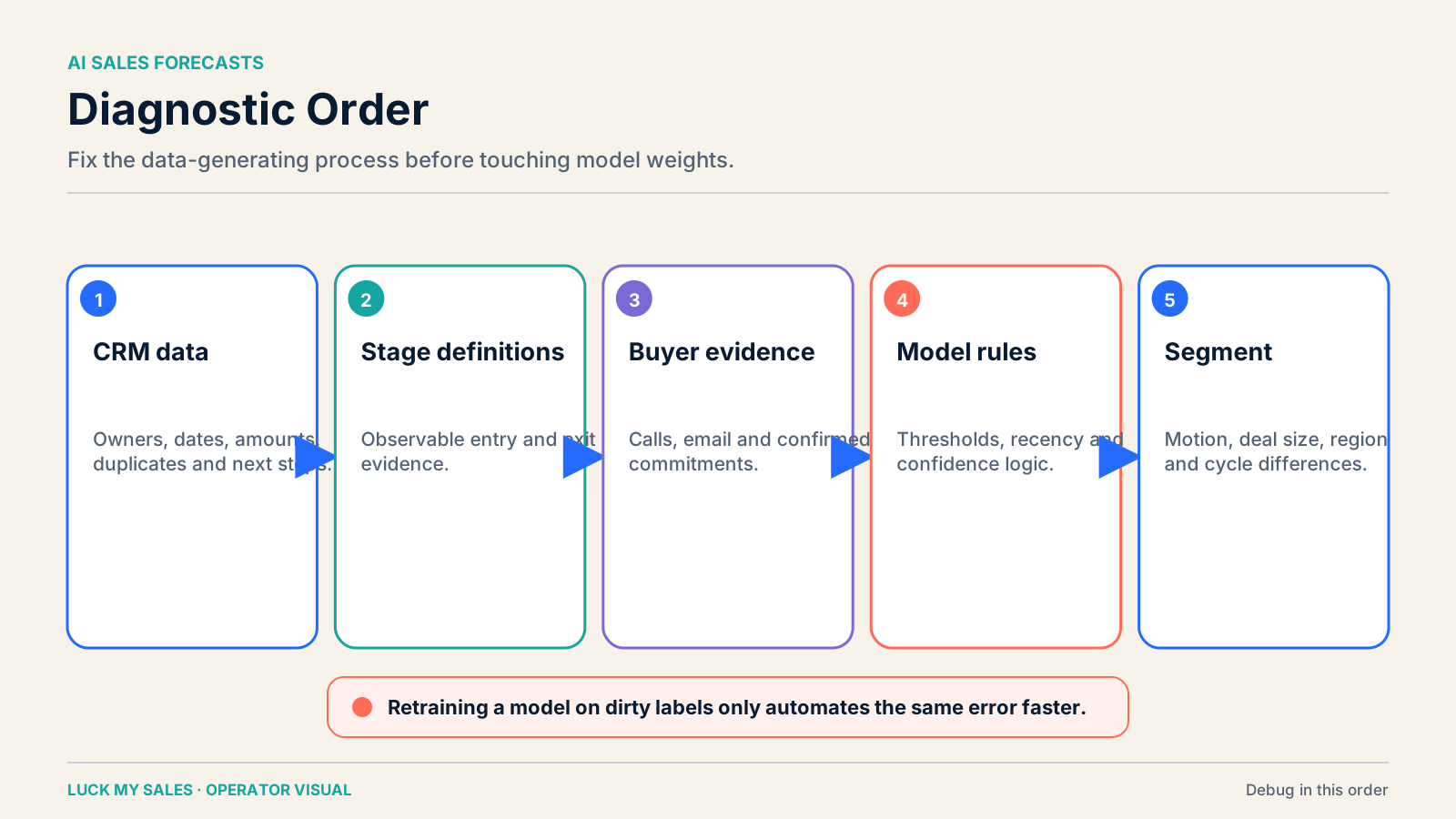
2. Audit CRM data first
Take a sample of wrong forecasts and compare the CRM record with the latest buyer communication. Look for:
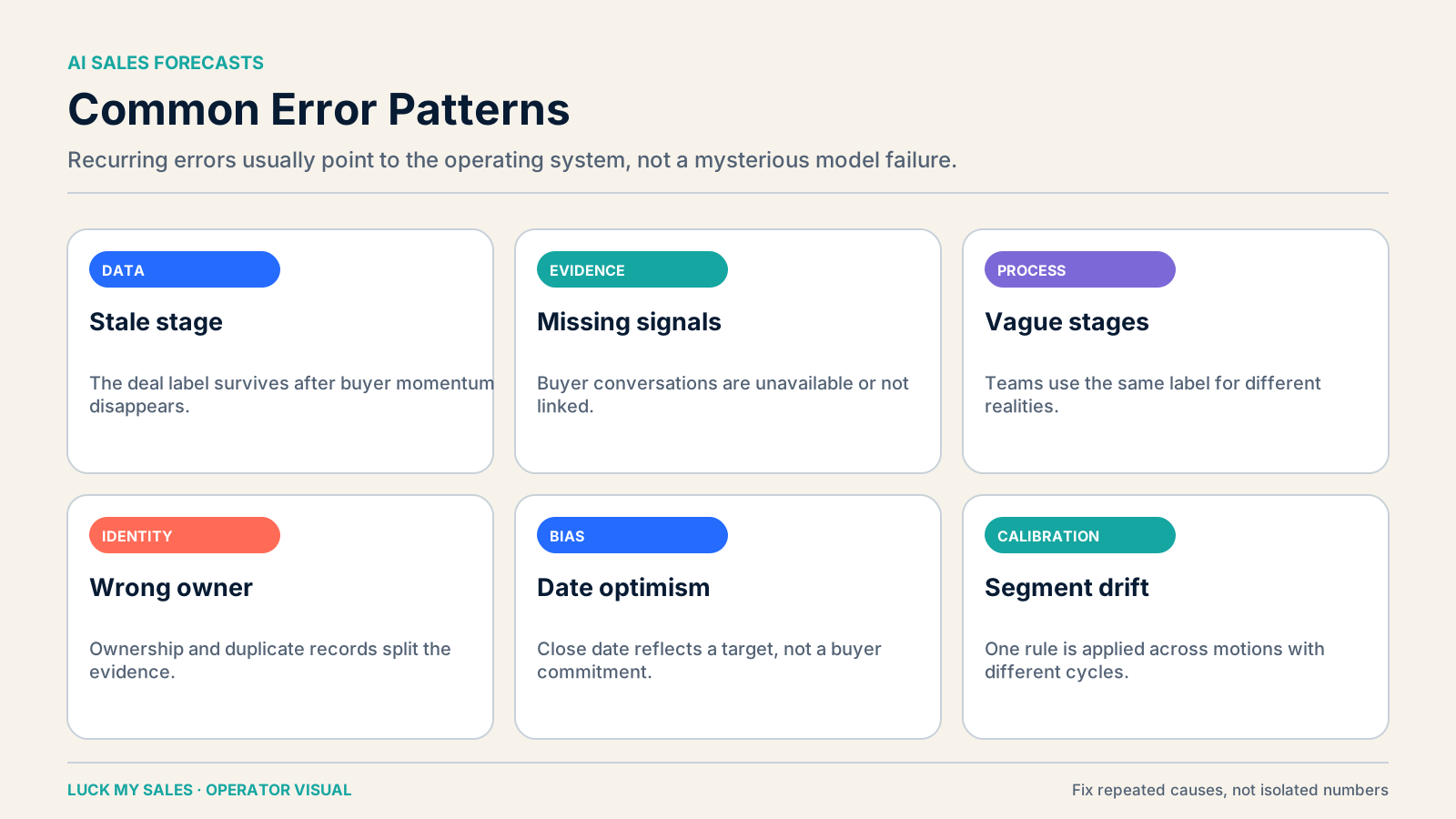
- stale stages or close dates;
- missing or vague next steps;
- wrong owner or duplicate opportunities;
- unmatched contacts and accounts;
- amounts or currencies recorded inconsistently;
- call, email or proposal evidence that never reached the record.
If the underlying fact is absent, AI did not necessarily misread it. The system may never have received it.
That was the failure in one workflow I reviewed: the AI did not collect enough context about a person because the CRM could not accept the necessary inputs. The fix was not a longer prompt. We used n8n to collect and normalize the available evidence, then sent the structured result into HubSpot with explicit field ownership.
03 / Audit stage definitions
3. Check whether stages mean anything
Ask sellers to explain what buyer action is required to enter and leave each stage. If the answers differ, the training history is inconsistent.
A useful stage contract names:
- entry evidence;
- exit evidence;
- maximum inactivity;
- required buying role;
- allowed exceptions;
- person who approves the exception.
Do not “fix” the AI until the same opportunity state has the same operational meaning.
04 / Audit buyer evidence
4. Separate buyer evidence from seller activity
Calls sent, emails sent and CRM edits prove seller activity. They do not prove buyer intent.
For each disputed forecast, identify the strongest buyer-controlled evidence: procurement action, proposal acceptance, redlines, budget or timing stated by the buyer, a confirmed decision meeting, or meaningful two-way communication.
Then check recency, speaker attribution and identity. Young companies, new brand names and people with several businesses frequently break simple entity matching. In those cases, add explicit knowledge-graph or matching rules and allow “uncertain identity” instead of forcing a confident classification.
Missing evidence should reduce confidence. It should not be converted into a negative signal unless the business rule explicitly supports that interpretation.
Separate coverage failure from reasoning failure
Coverage failure means the model did not receive a source that existed: an email thread was not synchronized, a transcript was attached to the wrong contact or a proposal event never reached the opportunity. Reasoning failure means the correct evidence was available but the recommendation did not follow the stated rule.
Fix coverage in the integration and data contract. Fix reasoning in the decision rule, examples or model configuration. Do not compensate for missing evidence with a more aggressive prompt. After the repair, replay both the failed records and a holdout set that was not used to design the change. Otherwise the workflow may learn the examples without becoming safer on the next batch.
05 / Measure corrections
5. Use correction rate as a gate
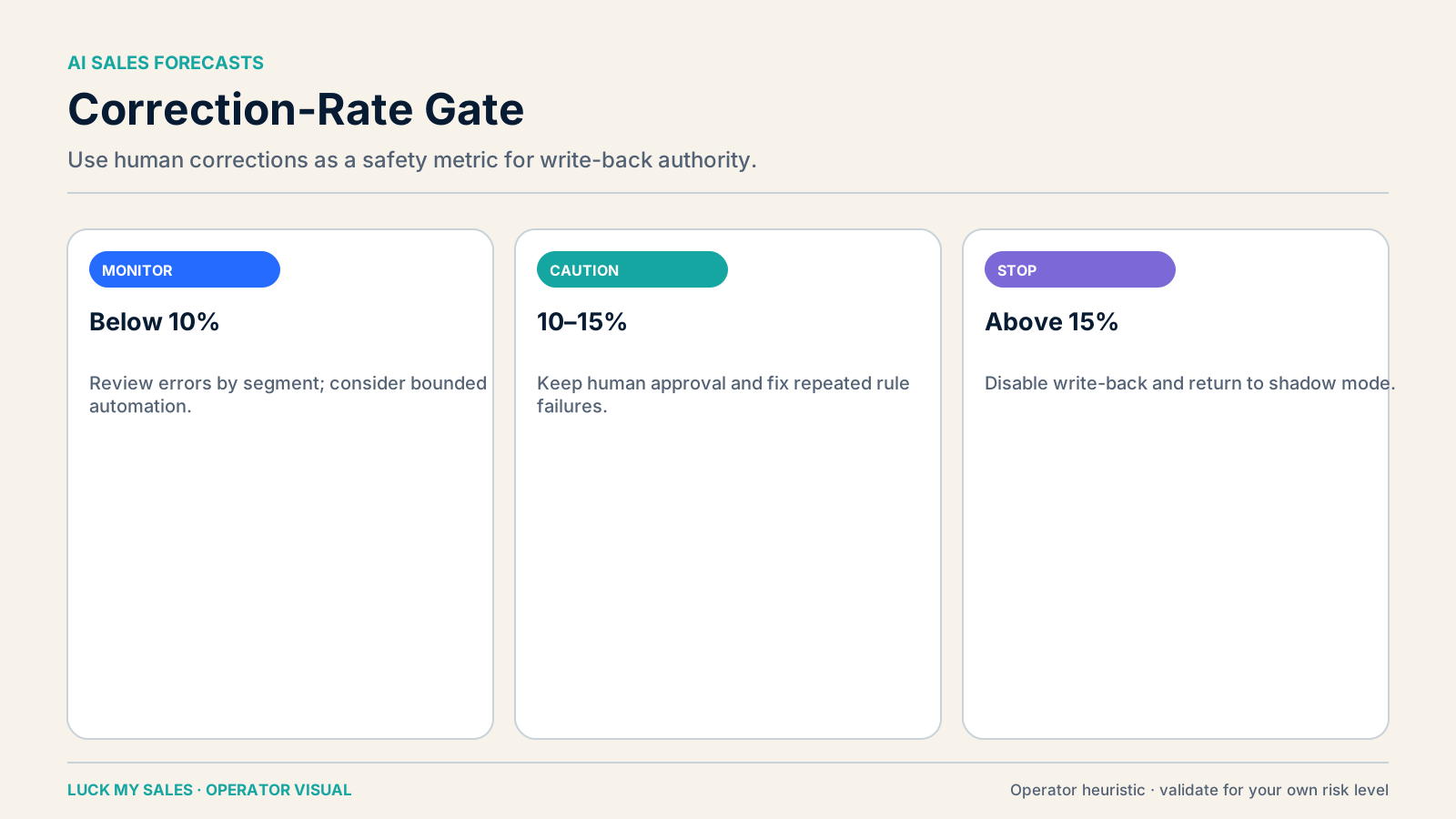
Review a meaningful sample and label every material human change. Split corrections into data, entity matching, transcript, stage rule, evidence recency, model interpretation and approved exception.
My practical rule is to keep consequential automatic write-back disabled while more than 15% of reviewed recommendations need a material correction. This is an operator stop gate, not an industry benchmark. A team may need a lower threshold for high-value enterprise opportunities.
Also inspect severity. A wrong punctuation mark in a summary and an unsupported Commit recommendation are not equivalent.
06 / Recalibrate and validate
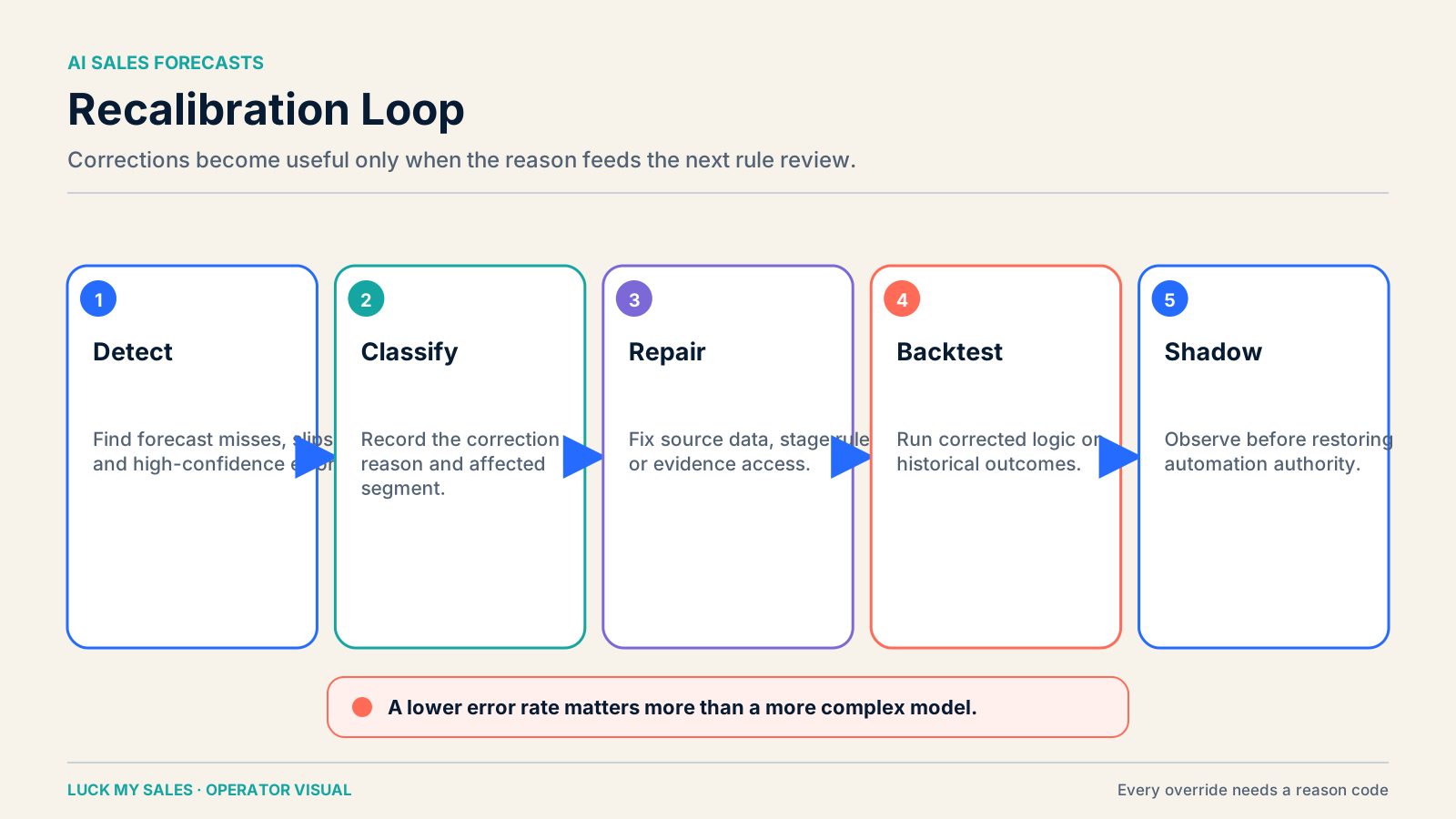
6. Recalibrate one layer at a time
Fix the earliest broken layer and replay the same historical sample. Do not change the data mapping, stage rules and model prompt simultaneously or you will not know what improved the result.
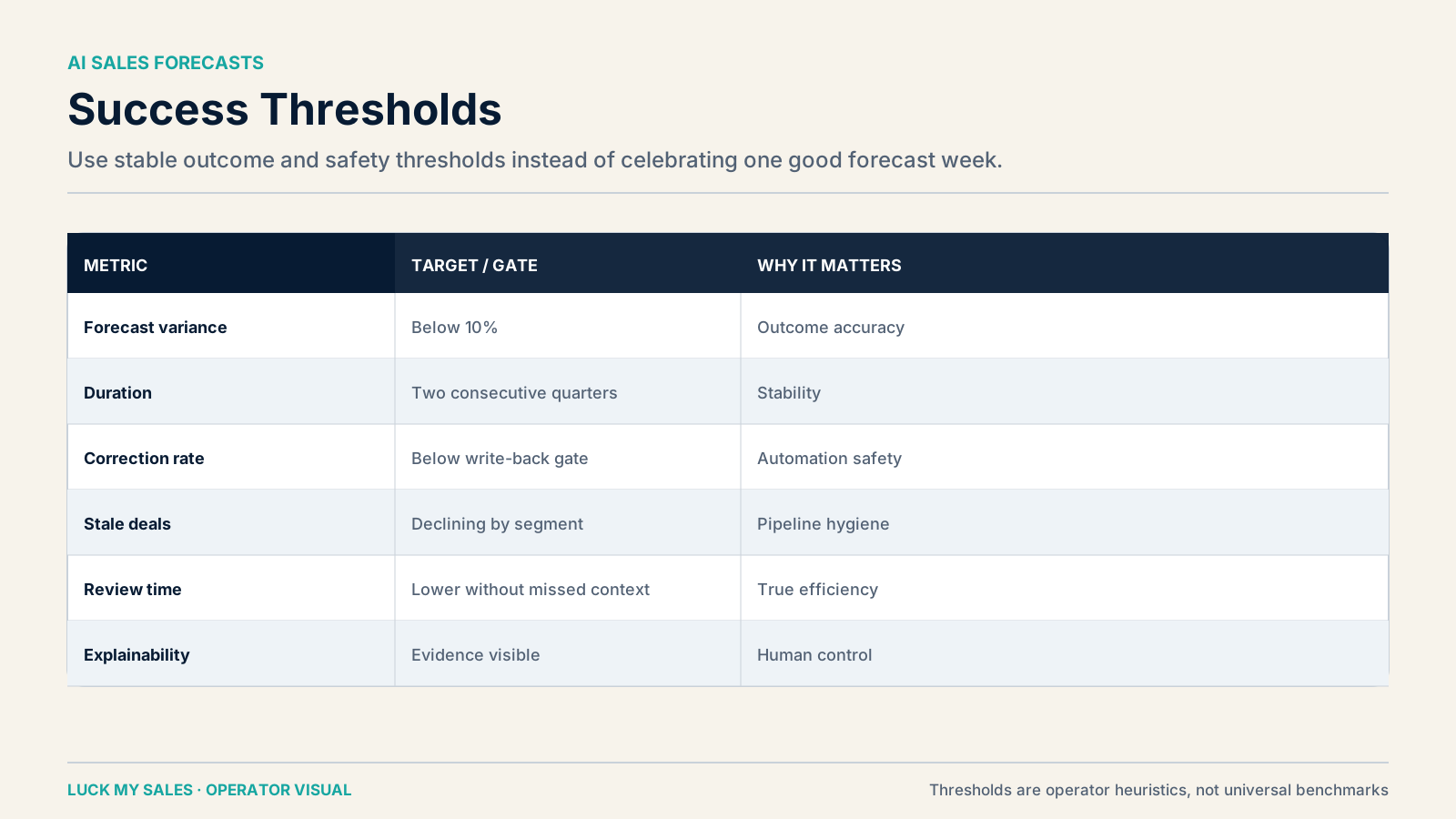
Run the workflow again in shadow mode. Compare forecasts with actual outcomes by horizon, deal size, segment and motion. A reasonable long-term operating target is forecast variance below 10% for two consecutive quarters, but the exact target must match the promise your business makes and the volatility of its pipeline.
Keep the evaluation window long enough to observe the outcome the forecast claims to predict. A 30-day review can validate data flow and correction patterns, but it cannot prove a 90-day revenue forecast after only a few weeks. Until outcomes mature, report recommendation agreement and evidence coverage separately from forecast accuracy.
07 / Restore narrowly
7. Restore narrow automation, not full autonomy
Start with low-risk actions: create a review task, flag a stale deal or draft a next-step recommendation. Keep pricing, commercial promises, stage, probability, close date, forecast category and account ownership behind a named human.
Continue monitoring:
- forecast variance against actual revenue;
- stale and slipped deals;
- material correction rate;
- evidence citation rate;
- review time;
- false upgrades and downgrades;
- error concentration by segment.
The objective is not to make the model look accurate. It is to make the forecast reviewable, correctable and commercially safer.
Research note
Methodology
- 01The diagnostic order and 15% correction stop gate are Anastasiia Krynytska's operator framework, not an audited industry benchmark.
- 02Examples are anonymized and deliberately separate known evidence from missing evidence.
- 03The recommended target of less than 10% variance across two consecutive quarters is a practical operating target that must be adapted to horizon and motion.
Source ledger
Sources & editorial notes
- 01Use the forecast tool
HubSpot · Official documentation used to bound forecast-category and submission context.
- 02Pipeline Inspection metrics and fields
Salesforce · Official documentation used for bounded pipeline field claims.