Conversation intelligence comparison · Sales AI comparisons
Gong vs Chorus.ai for Conversation Intelligence: Compare Evidence, Coaching and CRM Workflow
AI may assist research organization and drafting. A human editor reviews every published page, checks material claims against the cited sources and owns the final decision. No company paid for placement in this article.
AI use policyAgent-ready brief
AI takeaways
Keep the key points here, or take a source-aware text brief into Claude, ChatGPT or another AI workspace.- 01The evidence state is asymmetric: Gong is hands-on in this review, while Chorus is evaluated from official sources and ecosystem research.
- 02Gong fits teams seeking an independent conversation-led platform; Chorus may fit teams already committed to ZoomInfo.
- 03A same-call pilot should test real languages, CRM mappings, review time and manager correction—not just summaries.
- 04Small teams should prove that either platform solves a problem large enough to justify the operating overhead.
- 05Packaging, negotiated price and integration behavior must be verified in the buyer's environment.
The Gong-versus-Chorus decision depends on ecosystem, evidence quality, manager workflow and total operating cost—not a generic feature count.
01 / The comparison in one table
The comparison in one table
| Decision area | Gong | Chorus by ZoomInfo | What to verify in your pilot |
|---|---|---|---|
| Evidence state in this review | hands-on operator experience plus official documentation | official documentation and ecosystem research | do not treat the evidence depth as equal |
| Core category | conversation intelligence within a broader revenue-intelligence platform | conversation intelligence within the ZoomInfo platform | whether you need a standalone center of gravity or ecosystem component |
| Capture and analysis | records, transcribes, searches, analyzes, and surfaces call/deal signals | captures and analyzes customer interactions and connects them to revenue workflow | coverage of your actual meeting, phone, and CRM stack |
| Coaching | scorecards, call libraries, trackers, manager review workflows | coaching, call analysis, team performance workflows | manager time, seller adoption, rubric control |
| CRM workflow | activity and evidence connected to CRM/deal context | positioned around ZoomInfo and CRM-connected workflow | field mapping, duplicates, write-back, permissions, reversibility |
| Best initial buyer | established revenue team wanting independent conversation evidence and coaching | team already invested in ZoomInfo and seeking ecosystem consolidation | total stack fit, not a single demo feature |
| Main risk | buying too early and paying for a platform the team cannot operationalize | choosing for suite convenience without proving call-analysis quality and workflow fit | same-call pilot with real languages and CRM objects |
02 / How this comparison was built
How this comparison was built
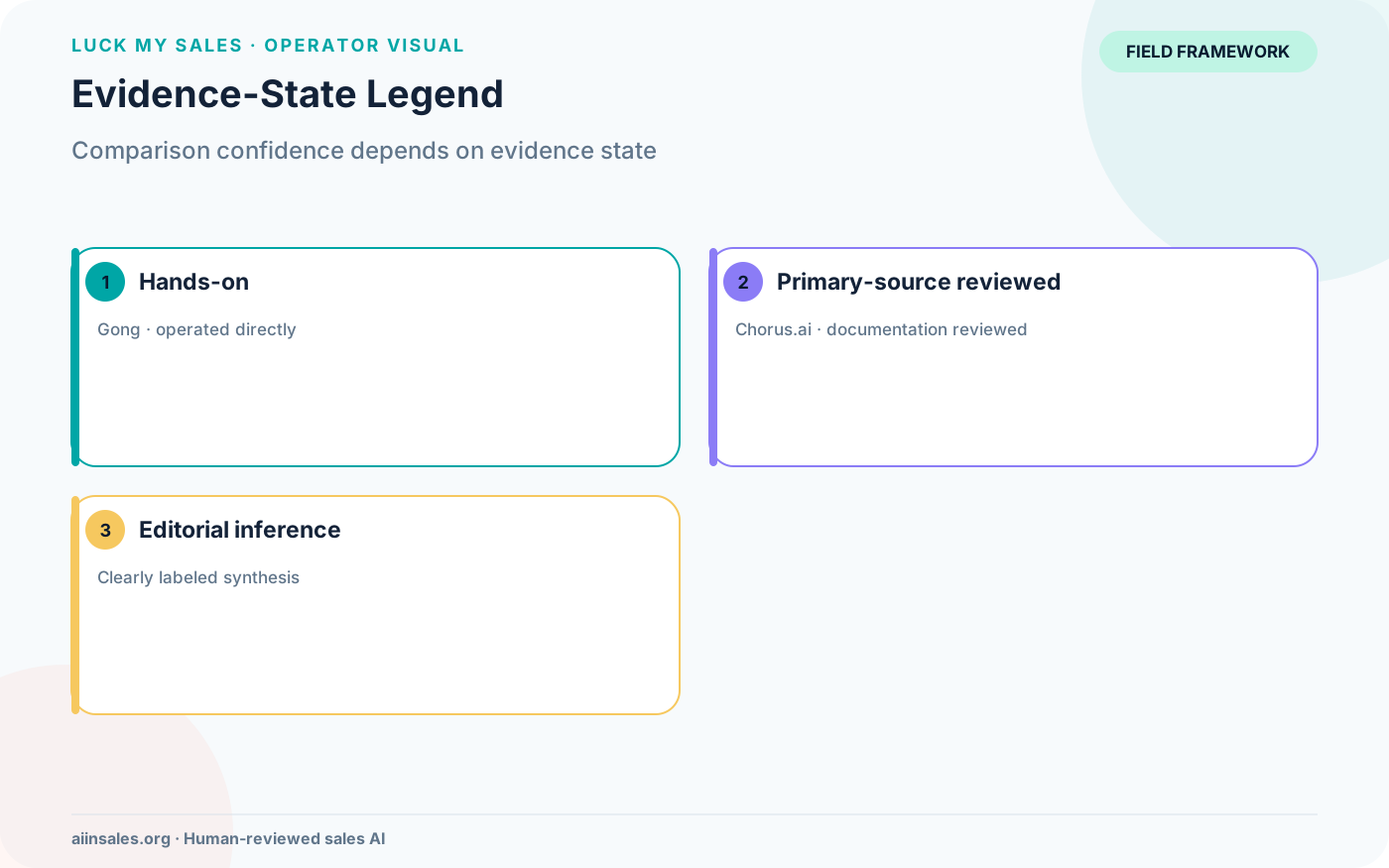
- Hands-on: used in live work, with first-hand observations about workflow and limitations.
- Officially verified: supported by current first-party documentation or product pages.
- Requires pilot: cannot be judged credibly without the buyer’s data, languages, integrations, and team behavior.
03 / Product boundary: independent platf…
Product boundary: independent platform or ZoomInfo ecosystem component
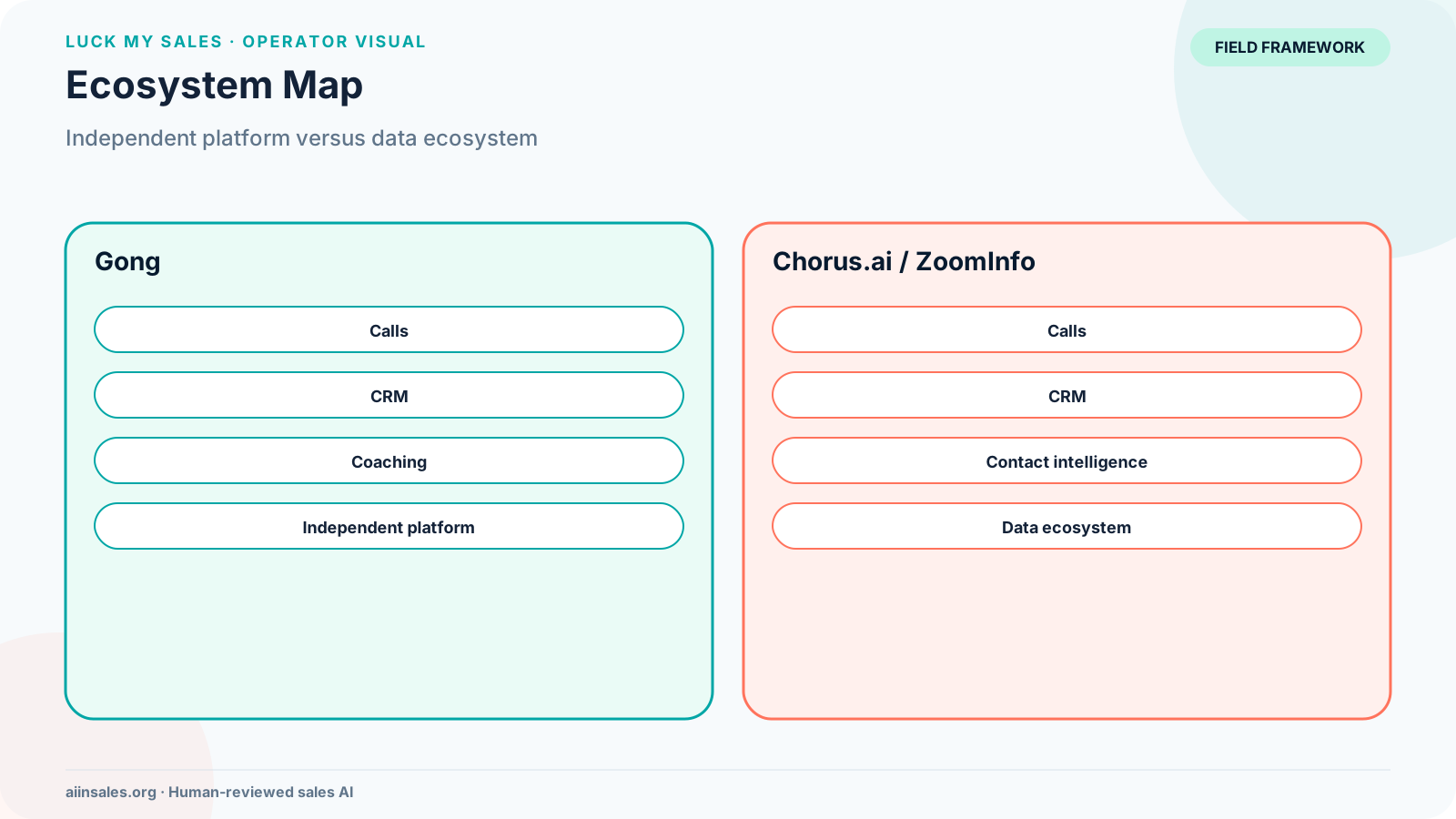
calendar or phone system → recording and consent → transcript → evidence → coaching/deal signal → CRM action → human review04 / Recording, transcript, language, an…
Recording, transcript, language, and search
- regional accents and the languages your team actually sells in;
- unfamiliar brand and product names;
- several speakers and interruptions;
- currencies, dates, quantities, and commercial terms;
- objections expressed indirectly;
- a transfer between an automated agent and a human;
- poor phone audio and a clean video meeting;
- a call that should not become an opportunity.
05 / Summaries are the beginning, not th…
Summaries are the beginning, not the decision
- buyer statements;
- seller statements;
- explicit agreements;
- unresolved questions;
- risks and objections;
- AI recommendations.
06 / Coaching: scorecards, examples, and…
Coaching: scorecards, examples, and manager behavior
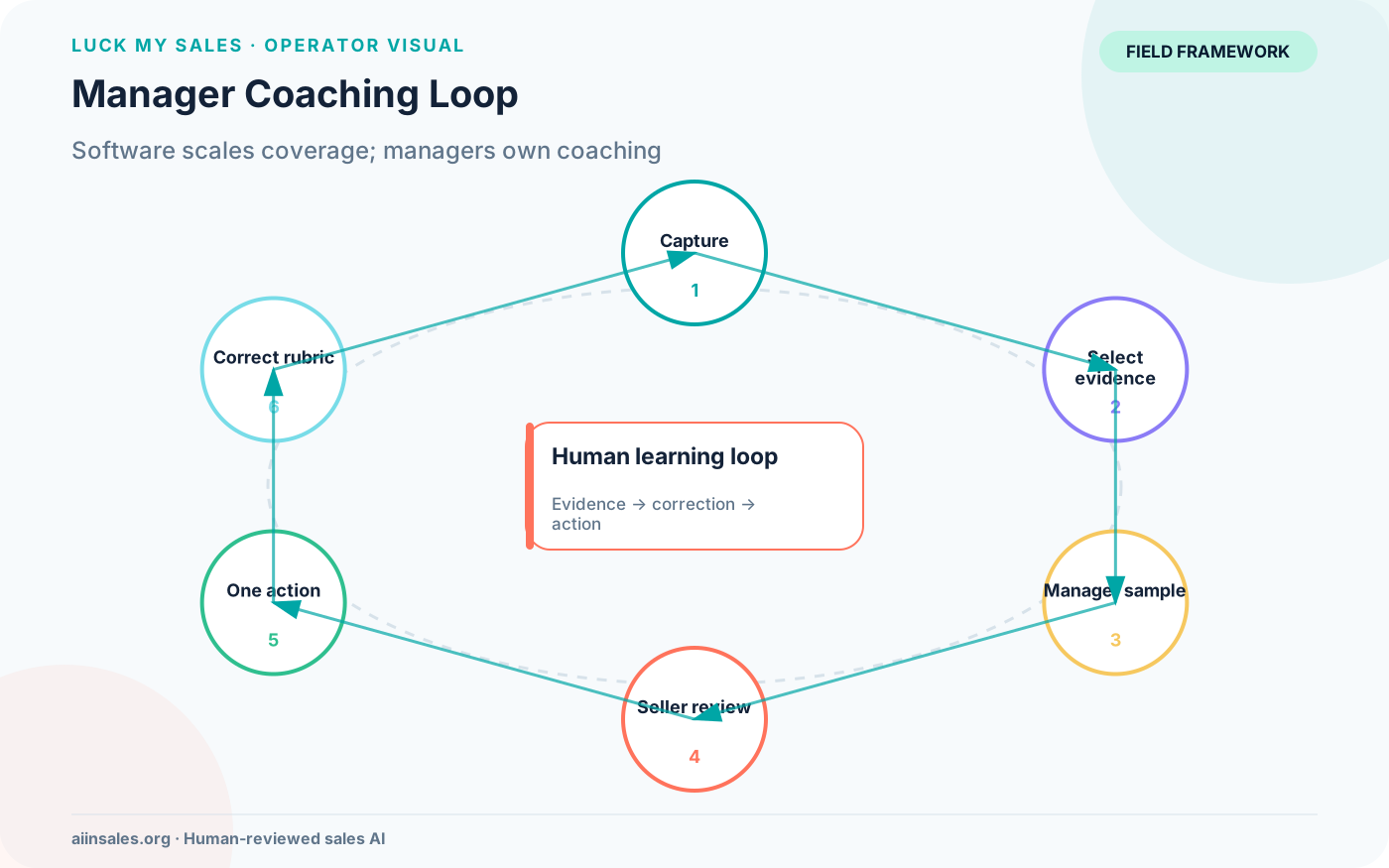
- Can enablement define or adapt the rubric?
- Does the system cite the call moment behind a score?
- Can a manager correct the score and explain why?
- Can sellers see their own evidence without feeling surveilled by an unexplained number?
- Can managers find examples worth sharing?
- Can the team connect a changed behavior to a downstream CRM outcome?
07 / Deal and CRM workflow
Deal and CRM workflow
- attach the correct conversation to the correct account and opportunity;
- identify agreed next steps and missing evidence;
- alert the owner to risk without changing the forecast silently;
- create a draft task or recap;
- preserve campaign, source, and owner context;
- prevent duplicate or conflicting write-backs;
- show who accepted or corrected the recommendation.
08 / Governance, consent, and reviewability
Governance, consent, and reviewability
- recording and consent configuration;
- role-based access to recordings and transcripts;
- data retention and deletion behavior;
- export controls;
- model-training and subprocessors policies;
- support for regional requirements;
- audit logs for AI and human changes;
- controls for sensitive calls and fields;
- whether the company can retrieve evidence after a summary is written to the CRM.
09 / Cost: quote, implementation, and op…
Cost: quote, implementation, and operating load
- platform licenses;
- recording or telephony dependencies;
- CRM and data integrations;
- security and legal review;
- implementation and migration;
- rubric and workflow design;
- manager review time;
- seller training and adoption;
- ongoing administration;
- correction and data-cleanup work;
- unused overlapping tools that remain in the stack.
10 / Best by operating context
Best by operating context
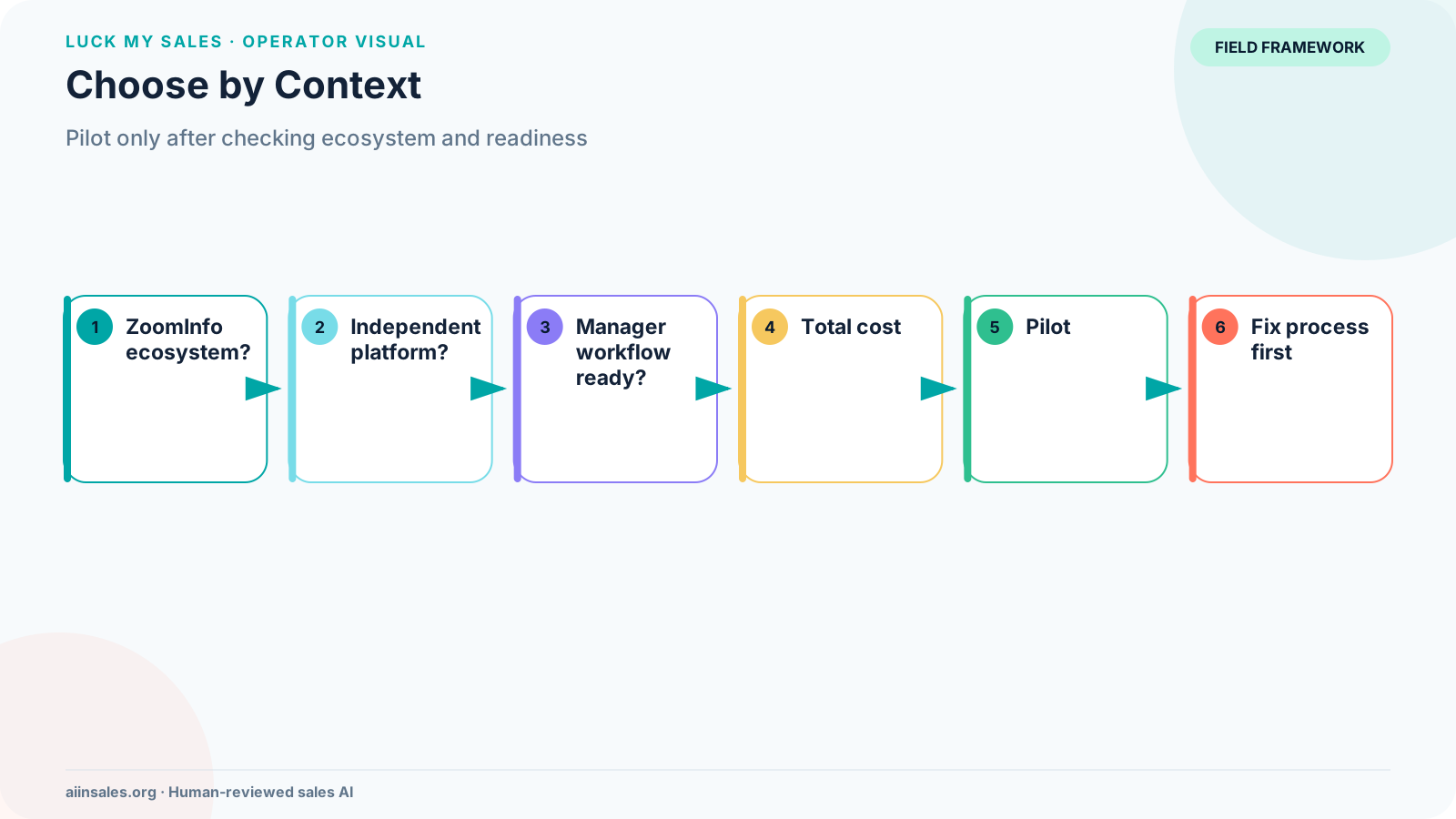
- conversation evidence is becoming a central revenue workflow;
- the team wants a platform independent of ZoomInfo ownership;
- managers will actively use scorecards, libraries, and deal inspection;
- CRM stages and ownership are already disciplined;
- pipeline and call volume justify implementation and review;
- the company can support governance and administration.
Consider a Chorus pilot when
- ZoomInfo is already a strategic part of the go-to-market stack;
- consolidation could remove real workflow or data friction;
- the team can prove capture, coaching, and CRM fit with its own calls;
- the buyer evaluates Chorus as an operating component, not a free add-on assumption.
Consider neither yet when
- calls are not reliably recorded or connected to the CRM;
- consent and retention rules are unclear;
- stages, owners, and next steps are inconsistent;
- managers do not have time or a rubric for coaching;
- the team wants AI to repair a broken sales process;
- the main need is only transcription and meeting notes.
11 / A practical workflow comparison for…
A practical workflow comparison for managers
- see why the call entered the queue;
- inspect the source moment behind the flag;
- compare the call to a small approved rubric;
- correct an AI score or label;
- save one example for the team;
- assign one concrete coaching action;
- check later whether behavior and CRM outcomes changed.
12 / What sellers need from the workflow
What sellers need from the workflow
- verify the summary quickly;
- find the exact moment behind an objection or recommendation;
- correct a wrong speaker, name, or commercial fact;
- accept or edit a proposed next step;
- understand how the evidence will affect the CRM and manager review.
13 / Ecosystem consolidation versus inde…
Ecosystem consolidation versus independent evidence
- what data enters the platform;
- what derived data it creates;
- what returns to the CRM;
- what can be exported;
- what happens when the contract ends;
- which workflows depend on proprietary objects or scores;
- how historical recordings, transcripts, and coaching records are retained or moved.
14 / Implementation plan after the pilot
Implementation plan after the pilot
1. Define the first decision job
2. Configure capture and policy
3. Connect a CRM sandbox
4. Calibrate evidence and rubrics
5. Train managers before sellers
6. Release to a small team
7. Expand only proven actions
15 / Procurement questions that expose r…
Procurement questions that expose real differences
- Which meeting and phone sources are supported in our configuration?
- How is participant consent handled across our jurisdictions?
- Which languages and regional variants are officially supported?
- Can every summary claim link to the underlying moment?
- How are custom names and terminology handled?
- Can we define, version, and correct scorecards?
- What can AI write to each CRM object and field?
- What happens when CRM and conversation data conflict?
- Can a seller dispute or correct a transcript and score?
- Which roles can listen, export, share, or delete recordings?
- What data is used for model improvement?
- How do retention and deletion propagate?
- Which APIs and exports are included in the proposed package?
- What implementation, admin, and training work is expected from us?
- What remains accessible if we leave?
16 / Worked pilot scenario: a renewal ob…
Worked pilot scenario: a renewal objection
17 / A simple decision rule after the pilot
A simple decision rule after the pilot
18 / The Same-Call Pilot Card
The Same-Call Pilot Card
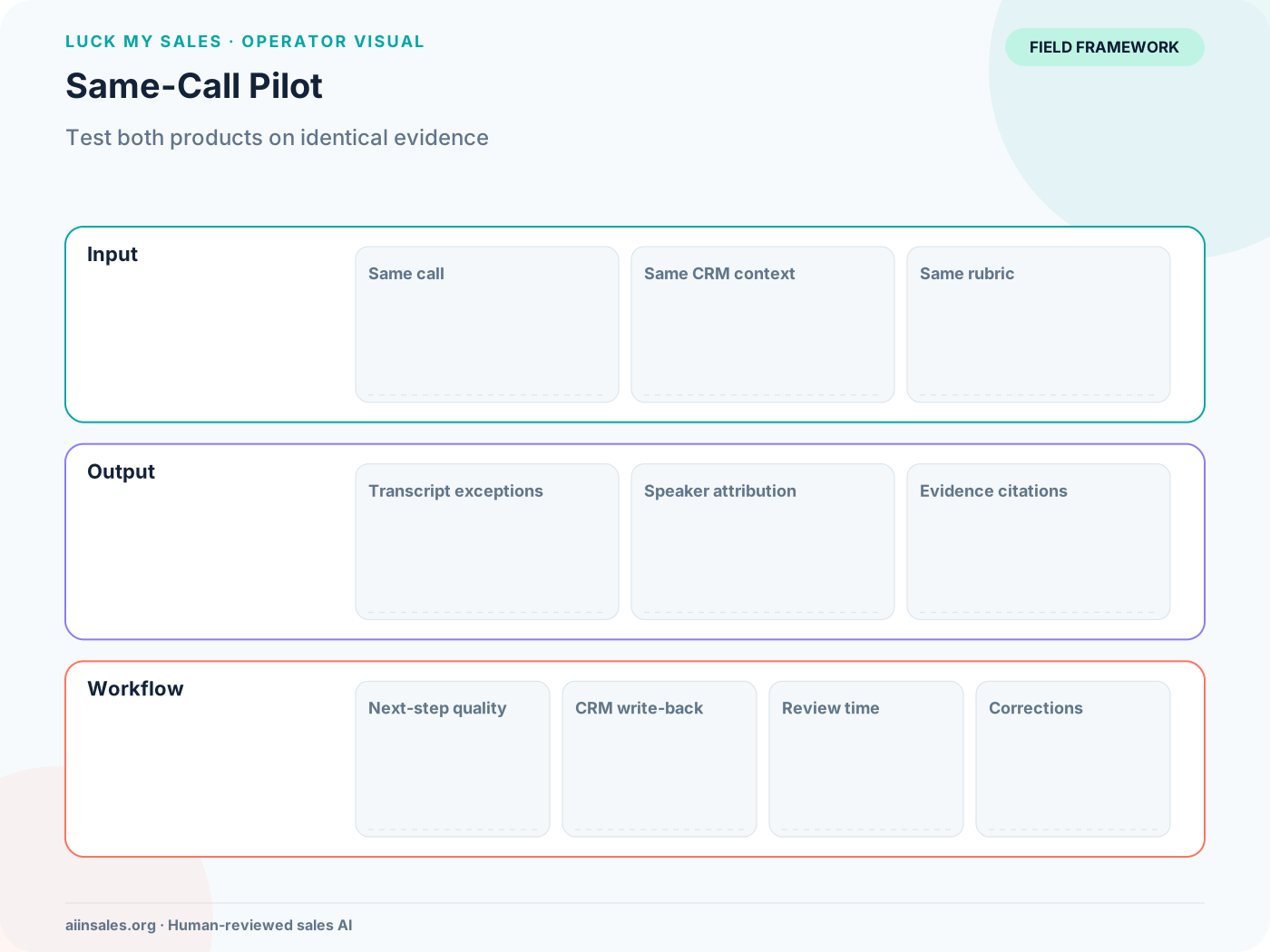
| Test area | Required input | What to record | Stop condition |
|---|---|---|---|
| Capture | video meeting, phone call, multi-speaker call | successful capture, consent behavior, source metadata | material calls cannot be captured lawfully or reliably |
| Transcript | languages, accents, names, numbers | material corrections and speaker errors | repeated commercial meaning errors |
| Summary | same call and CRM context | missing facts, unsupported claims, review time | recommendations presented as agreements |
| Evidence | pricing, objection, next step moments | citation accuracy and time to source | material claims lack inspectable evidence |
| Coaching | same approved rubric | score differences, correction reasons, manager time | rubric cannot be controlled or corrected |
| CRM | sandbox objects and fields | mapping, duplicates, reversibility, audit log | uncontrolled commercial-field write-back |
| Search | known topics and call moments | precision of retrieved moments | managers cannot find or share the right evidence |
| Governance | real roles and retention policy | access, deletion, export, audit behavior | policy cannot be implemented |
| Cost | equivalent scope | quote plus implementation and operating time | economics rely on unused capabilities |
19 / Limits and commercial disclosure
Limits and commercial disclosure
20 / Frequently asked questions
Frequently asked questions
Is Gong better than Chorus.ai?
Is Chorus.ai part of ZoomInfo?
Is Gong suitable for a small sales team?
Can Gong or Chorus update CRM fields automatically?
Which product is better for coaching?
How should transcript accuracy be compared?
What should a Gong vs Chorus pilot include?
Research note
Methodology
- 01Gong observations combine Anastasiia's hands-on use with current official documentation.
- 02Chorus observations are based on current official ZoomInfo sources and ecosystem research; no equivalent production use is claimed.
- 03No same-input benchmark, transcript-accuracy winner or negotiated-price comparison is claimed.
Source ledger
Sources & editorial notes
- 01Gong conversation intelligence
Gong · Official product or documentation source used for bounded capability claims; current packaging and features may change.
- 02Gong recording consent guidance
Gong Help · Official product or documentation source used for bounded capability claims; current packaging and features may change.
- 03ZoomInfo Chorus
ZoomInfo · Official product or documentation source used for bounded capability claims; current packaging and features may change.