Weekly industry intelligence · No noiseSubscribe to the Luck My Sales newsletterFree briefing

Independent operator-led media on AI in B2B sales

Menu

Evidence-led forecasting pillar · AI sales forecasting

AI Sales Forecasting: How to Build a Forecast From Evidence, Not CRM Optimism

A practical system for turning CRM activity, calls, email and buyer commitments into a reviewable sales forecast without handing the number to a model.
Editorial disclosure

AI may assist research organization and drafting. A human editor reviews every published page, checks material claims against the cited sources and owns the final decision. No company paid for placement in this article.

AI use policy

Agent-ready brief

AI takeaways

Keep the key points here, or take a source-aware text brief into Claude, ChatGPT or another AI workspace.
  1. 01Forecast confidence should rise when buyer evidence strengthens, not merely when a seller changes a CRM stage.
  2. 02Calls, email, proposal activity, legal work and procurement action need source, owner and timestamp metadata.
  3. 03AI may extract, compare, flag and recommend; people retain authority over commit, probability, close date and commercial promises.
  4. 04Shadow mode and a correction log are safer than immediate automatic write-back.
  5. 05Forecast accuracy must be measured against actual outcomes by horizon and segment, not by a vendor dashboard score.
Includes summary, takeaways, sources and a use note.
AI sales forecasting does not predict the future. It counts and interprets evidence about what buyers and sellers have already done, then helps a responsible person decide what that evidence means for the forecast.
That distinction matters. A model attached to a chaotic CRM becomes an expensive random-number generator. It can calculate a very precise probability from stale stages, fictional close dates and one-sided activity, but the precision does not make the forecast true.
The useful operating loop is simple: capture evidence, normalize it, expose contradictions, review the exceptions, record the human decision and compare the forecast with the eventual outcome.
This guide explains that loop, the evidence hierarchy behind it and the decision rights that keep automation from hiding the commercial judgment.

A credible AI forecast is a reviewable claim about buyer evidence, not an automatic percentage attached to a CRM stage.

01 / What AI sales forecasting actually does

What AI sales forecasting actually does

Traditional CRM forecasting often reduces a deal to three values: amount, stage and close date. A team may then multiply the amount by a stage probability and call the result a forecast. That is arithmetic. It is not intelligence.
AI sales forecasting can add value around the arithmetic by doing five jobs:
  • collecting evidence from CRM history, email, recorded calls, meeting activity and approved external signals;
  • normalizing inconsistent activity into an agreed evidence model;
  • identifying contradictions between a seller's forecast and observable buyer behavior;
  • recommending changes to stage, category, confidence or close date;
  • monitoring the eventual outcome so the team can correct its rules.
It still cannot know a buyer's future decision. It sees the evidence available to the system. If the real budget discussion happened in a private WhatsApp chat, if the seller never recorded the buying committee, or if the transcript assigned a statement to the wrong speaker, the model is missing part of the deal.
The responsible claim is therefore not “AI predicts revenue.” It is “AI helps the team inspect more forecast evidence consistently.”
That is less theatrical and more useful. A sales leader does not need another mysterious probability. The leader needs to know why the number changed, which source supports the change, when the evidence was captured and who can correct it.

02 / Build a buyer-evidence hierarchy

Build a buyer-evidence hierarchy
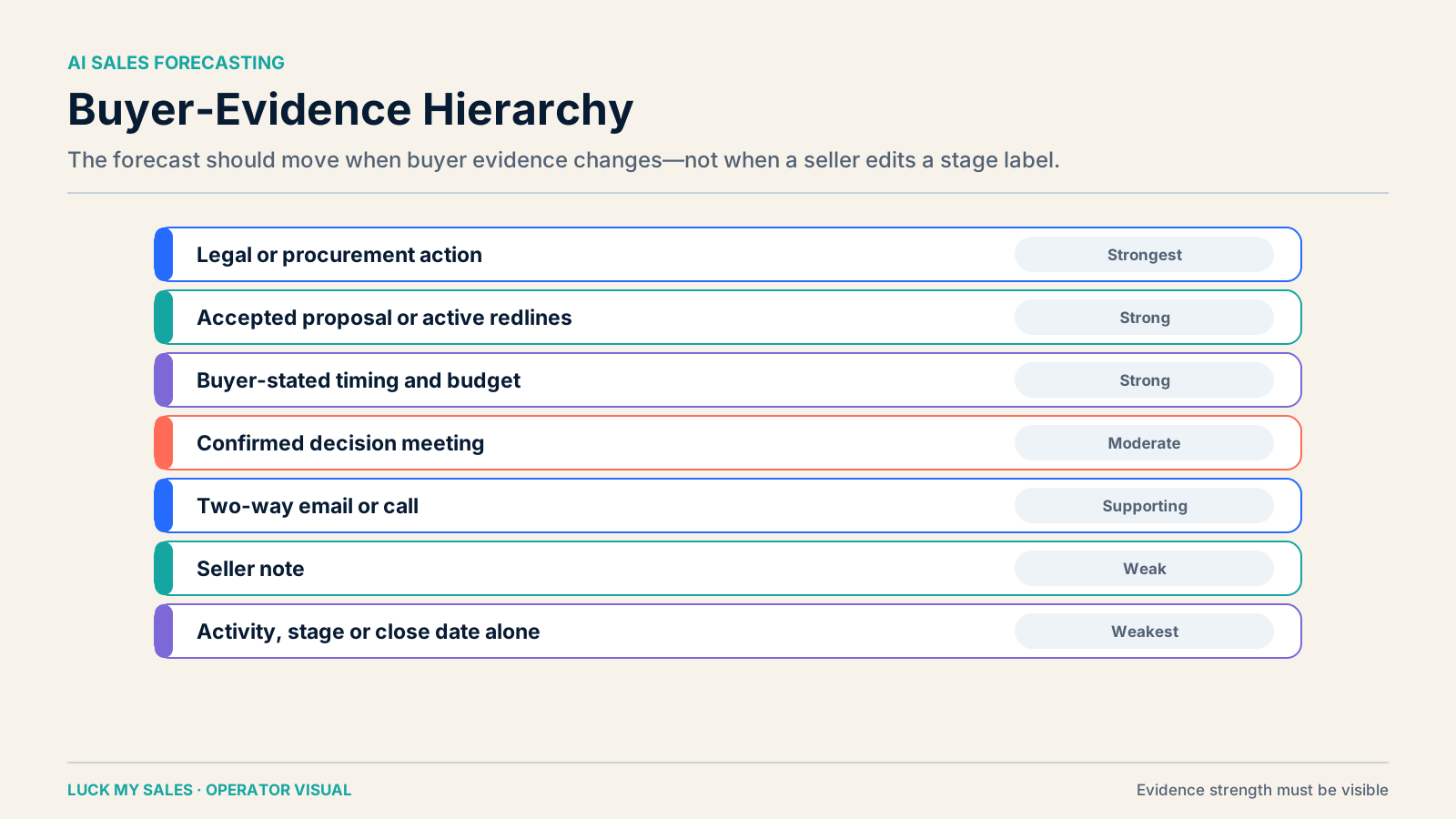
Hierarchy of buyer evidence for AI sales forecasting from legal and procurement activity to weak CRM activity fields.
Forecast confidence should follow the strength and recency of buyer evidence.
Not every signal deserves the same weight. A completed legal action is not equivalent to an email open. A buyer accepting redlines is not equivalent to a seller moving a deal to Negotiation.
In the workflow I operated, the practical hierarchy looked like this:
  1. legal or procurement action attributable to the buyer;
  2. an accepted proposal, active redlines or a documented commercial approval;
  3. buyer-stated timing and budget captured in a transcript or two-way exchange;
  4. a confirmed decision meeting with the right participants;
  5. meaningful two-way email or call evidence;
  6. a seller note with a named source;
  7. raw activity, stage or close-date changes without buyer confirmation.
The hierarchy is not universal. A self-serve SaaS team may care more about product usage. A channel business may need partner confirmation. A procurement-heavy enterprise motion may require an approved vendor process. The point is to make the hierarchy explicit before a model scores anything.
Each evidence object needs at least:
  • source: call, email, CRM field, proposal system, meeting or another approved system;
  • timestamp: when the buyer or seller action occurred;
  • subject: account, opportunity, contact or buying-group member;
  • actor: buyer, seller, legal, procurement, partner or automated system;
  • claim: the specific fact the evidence supports;
  • confidence: how reliably the system extracted or matched it;
  • owner: who can verify or correct the evidence;
  • expiry: when it becomes too old to support the same forecast claim.
An email from four weeks ago saying “we want to move this quarter” should not retain the same weight after procurement goes silent. Recency is part of evidence quality.
The system also needs a way to represent missingness. No recorded call is not evidence that no conversation occurred. It is evidence that the system cannot verify the conversation. That difference should lower confidence without pretending the seller is wrong.

Turn evidence into confidence without inventing a universal score

An evidence hierarchy does not need to become one opaque number. In fact, forcing every signal into a single score often removes the context the forecast meeting needs.
Use three separate views instead:
  • coverage: whether the record contains the evidence required for its current category;
  • strength: whether the evidence is buyer-controlled, current and attributable to the right person;
  • contradiction: whether another source challenges the claimed stage, date or probability.
A deal can have high coverage and still be weak. The CRM may contain every required field, but each field may repeat the seller's opinion. Another deal may have incomplete coverage but one strong event, such as procurement returning redlines. The reviewer should see both situations instead of receiving the same synthetic score.
This is why I prefer a short evidence card over a probability with no explanation. For each opportunity, show:
  1. the forecast claim being evaluated;
  2. the strongest evidence supporting it;
  3. the strongest contradictory evidence;
  4. missing evidence required by the category contract;
  5. the source and age of every cited item;
  6. the system's recommendation;
  7. the person who owns the final decision.
The card for a Commit opportunity might say that procurement opened a vendor record six days ago, the decision meeting is confirmed for Thursday, but the economic buyer has not approved the revised amount. That is commercially useful. “Commit confidence: 78%” is not useful unless the team can reconstruct those facts.
Do not let the same signal count repeatedly. A transcript, its AI summary and the CRM note created from that summary are one underlying event, not three independent confirmations. Preserve lineage so the system knows that all three objects came from the same call.
Also separate buyer evidence from seller compliance. A missing next step is a process failure. It may justify a review task, but it does not automatically mean the buyer has less intent. Conversely, a perfectly maintained next step does not prove that the buyer will act.
The practical rule is simple: confidence may increase only when the quality of buyer-controlled evidence improves or when an important contradiction is resolved. It should not increase merely because more internal activity was logged.

03 / Write the forecast evidence contract

Write the forecast evidence contract

Before choosing a forecasting tool, write the rules as a small contract between Sales, RevOps and the system.
For every forecast category, define:
  • which buyer actions qualify;
  • which seller actions are required;
  • how recent the evidence must be;
  • which contradictions cause a downgrade;
  • which missing fields create a review task;
  • who may approve an exception;
  • how the exception is recorded;
  • what the model is allowed to write back.
A simple contract might say:
CategoryMinimum evidenceAutomatic challengeFinal owner
Pipelinevalidated need, amount range and named next stepno next step or inactive contactseller
Best Casebuyer timing, commercial fit and active decision processmissing decision-maker or date moved twiceseller plus manager
Commitprocurement or legal action, agreed commercial path and dated buyer commitmentno buyer-side action inside the agreed windowforecast leader
In the four-month workflow behind this guide, Commit was intentionally strict. Procurement or legal had to be active, and the signature or decision date needed direct support. A seller's confidence was relevant context, but it was not enough to create the category.
This contract gives the AI a bounded job. It can test whether the evidence exists, whether it is current and whether another source contradicts it. It cannot quietly redefine Commit because a vendor model learned different stage patterns from other customers.
The contract also makes a dispute useful. When a seller rejects a recommendation, the team can record whether the problem was missing data, incorrect extraction, a bad rule, an approved exception or an actual model error. Without that reason code, the correction disappears and the same error returns.

04 / Run a weekly forecast operating loop

Run a weekly forecast operating loop
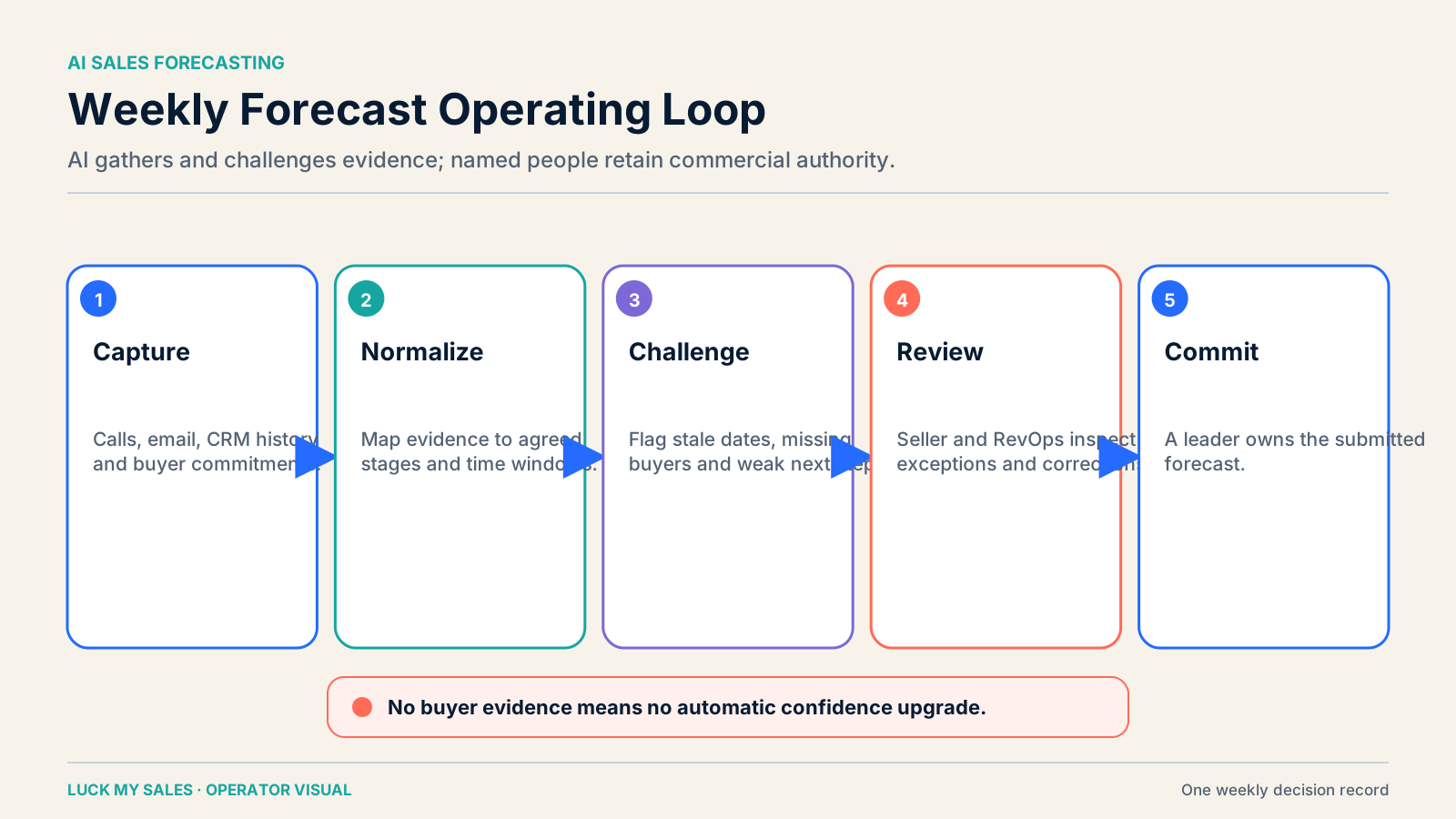
Weekly AI sales forecasting loop from evidence capture to human commit.
A forecast is an operating cadence, not a dashboard that updates itself.
A credible forecast is produced by a repeatable meeting and data loop. The dashboard is only one surface.
In the workflow behind this guide, the team used a weekly roll-up and a 90-day horizon. Tuesday was the control point. The purpose was not to make every record look complete before the meeting. It was to expose the few commercial assumptions capable of changing the number.

Capture

Ingest the approved evidence sources. At minimum, connect opportunity history, stage and amount changes, next steps, meetings and relevant email activity. Add call transcripts only after recording consent, speaker attribution and retention rules are clear.

Normalize

Map different seller language into the team's stage definitions. Normalize currencies, dates, account identifiers and buying roles. Do not infer a decision-maker from job title alone when the real buying role is unknown.

Challenge

Create an exception queue. Useful exceptions include:
  • a Commit opportunity without recent buyer action;
  • a close date that moved more than the allowed number of times;
  • a proposal-stage deal with no two-way activity;
  • a high amount with no economic-buyer evidence;
  • a transcript that contradicts the CRM next step;
  • an opportunity owner who is no longer responsible for the account;
  • a confidence increase based only on seller activity.

Review

The seller and manager review exceptions, not every field in every deal. The seller supplies missing context or accepts the correction. RevOps inspects repeated data and rule problems. High-value or named accounts may receive a deeper manual review.

Commit

A named leader submits the forecast. The submission records the value, horizon, included categories, exceptions and evidence snapshot. If the number changes later, the team can see what changed rather than rewriting history.

Learn

After the period closes, compare the forecast with actual outcomes. Group misses by cause: missing buyer evidence, stale CRM, extraction error, rule error, unexpected buyer event, seller judgment or model calibration. Change one rule at a time where possible.
This loop is what makes forecasting operational. A real-time number without a review and correction cadence is merely a fast-moving opinion.

What a useful Tuesday review looks like

Start with the movement since the previous snapshot, not with a tour of every open opportunity. The system should answer four questions before anyone joins the call:
  • Which deals entered or left Pipeline, Best Case or Commit?
  • Which changes came from new buyer evidence, and which came only from seller edits?
  • Which opportunities have evidence that contradicts their current category or date?
  • Which changes would materially alter the 90-day number?
The manager then reviews the exceptions with the seller. If a seller says procurement is active, the record should point to the procurement action. If a decision moved, the record should show who communicated the delay and what happens next. If the evidence occurred outside connected systems, the seller can add it with a source and date rather than asking the team to accept an undocumented feeling.
The meeting should end with explicit outcomes: accept the category, downgrade it, change the date, request missing evidence or approve a documented exception. “Keep an eye on it” is not an outcome because it gives neither the seller nor the system a testable next action.
After the review, keep the original recommendation, the human decision and the reason side by side. Do not overwrite the disagreement. Those disagreements are the calibration data. They reveal whether the source was missing, the extraction was wrong, the rule was too broad or the seller had valid context the system could not access.
This operating pattern also limits review cost. A six-person sales team does not need an enterprise command center. It needs a reliable exception list, a consistent evidence contract and a leader willing to own the submitted number.

05 / Keep commercial decision rights visible
Keep commercial decision rights visible

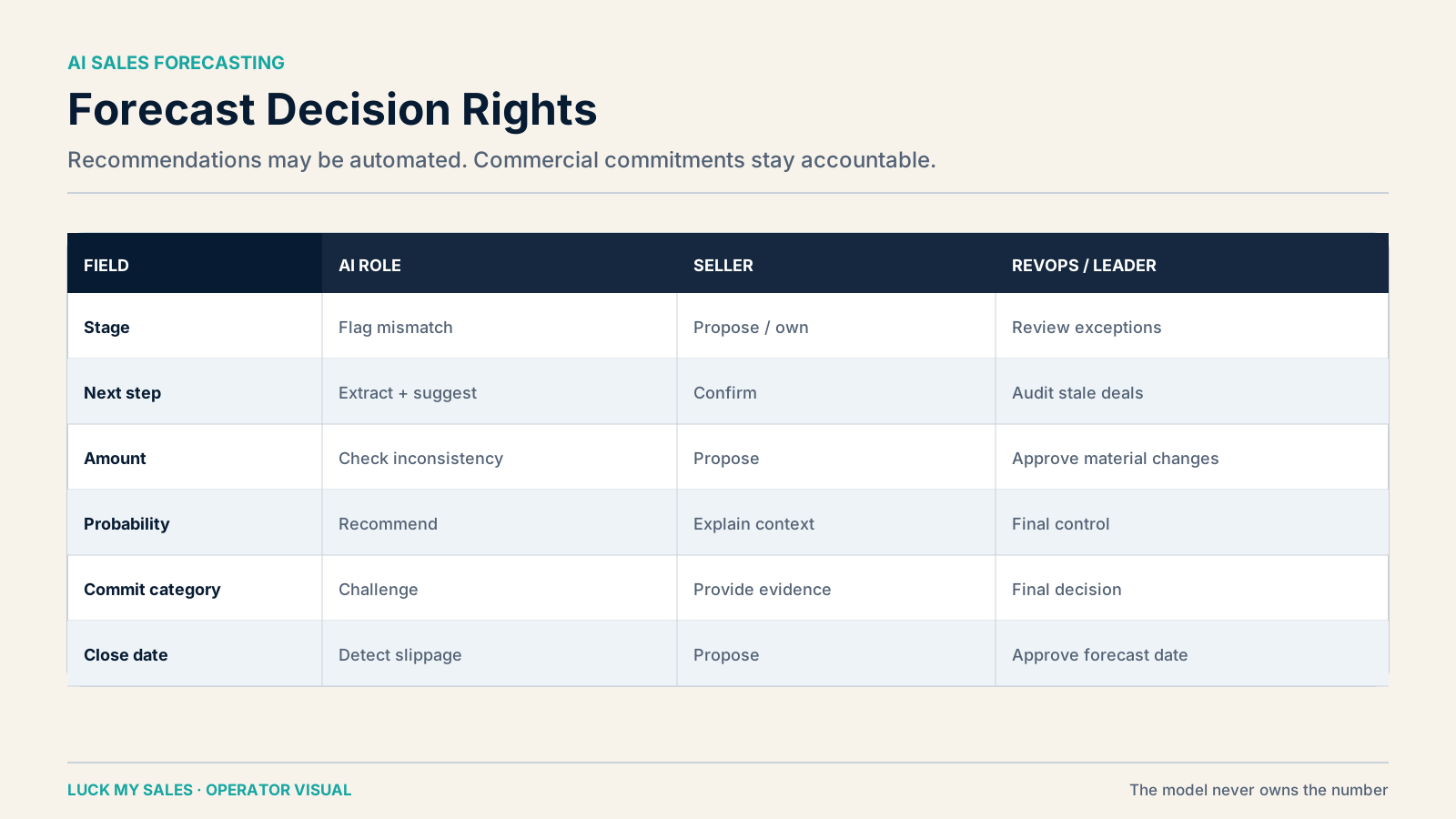
Table of AI, seller and RevOps decision rights for stage, next step, amount, probability, commit category and close date.
The model may challenge the number. It should not own the number.
Automation becomes dangerous when responsibility is ambiguous. A field changed, but nobody knows whether the seller, a workflow or the model changed it. A probability appears, but nobody knows which evidence produced it.
Use an explicit authority matrix.
AI may:
  • extract buyer statements;
  • summarize calls and email threads;
  • detect missing or stale evidence;
  • recommend a stage, probability, category or date;
  • create a review task;
  • prepare a proposed next step;
  • identify forecast changes and their likely source.
The seller may own the opportunity stage and next step, provided those fields meet the evidence contract. The seller and Sales Director may jointly own material amount changes. RevOps or the forecast leader should retain final authority over submitted probability, Commit status and the forecast close date.
Pricing and commercial promises remain human decisions. AI can format an approved price or proposal that a person has already defined. It should not invent a discount, guarantee, implementation date or contractual promise.
Account ownership also remains a sales decision. A model may detect a duplicate or a territory conflict, but a sales manager resolves the commercial relationship.
Every automatic write-back should include:
  • old value;
  • proposed or new value;
  • source evidence;
  • rule or model version;
  • timestamp;
  • actor;
  • correction path.
If the CRM cannot show that audit trail, start with recommendations and tasks instead of silent field changes.

06 / An $80K deal where evidence beat optimism

An anonymized $80K deal where evidence beat optimism
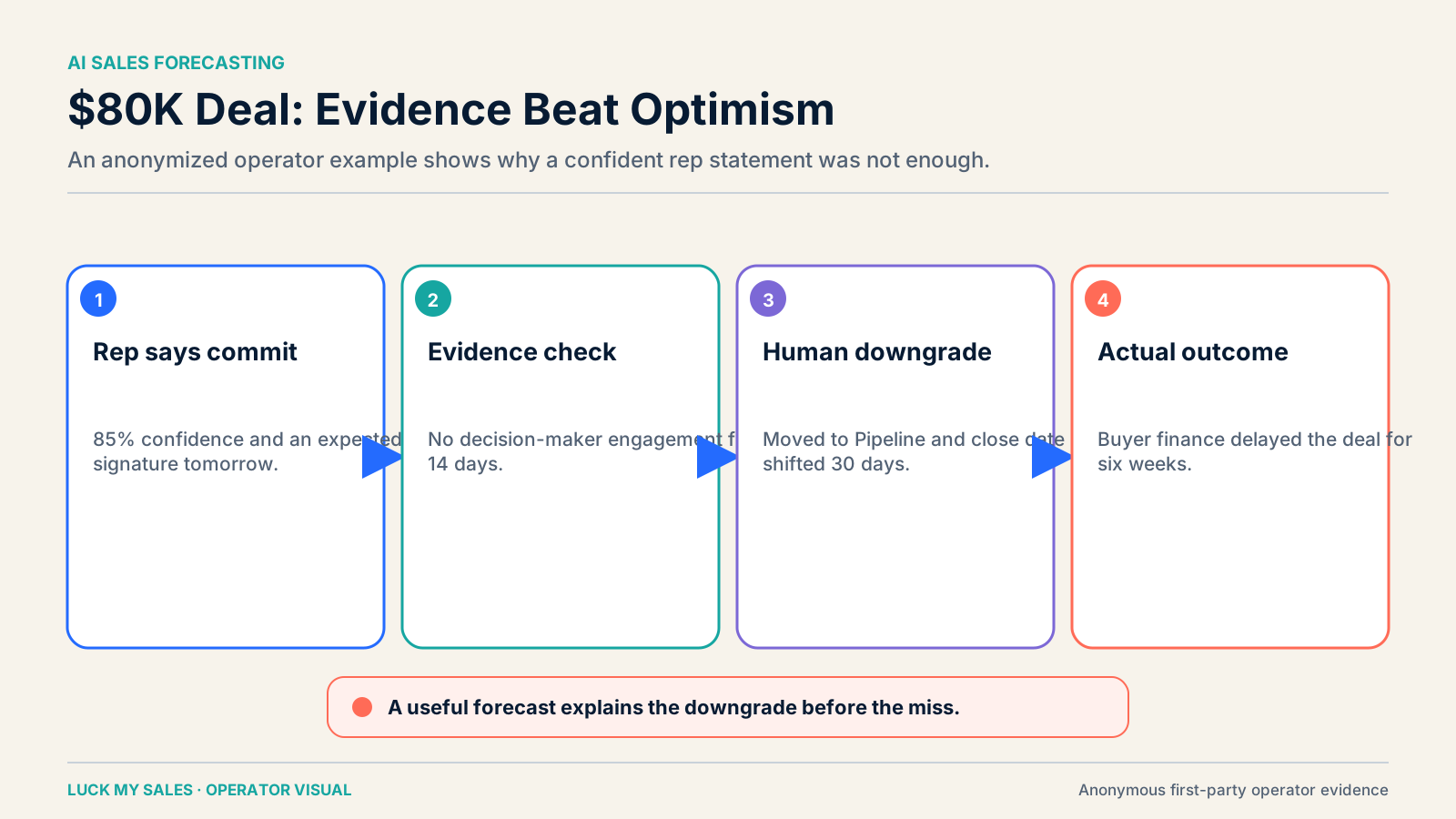
Timeline of an anonymized $80,000 deal downgraded from Commit after evidence review.
The value came from exposing a contradiction before the period closed.
One opportunity in the workflow was worth $80,000. The account executive put it in Commit with 85% confidence and expected a signature the next day.
The seller's explanation sounded plausible. The opportunity was late-stage, commercial terms had been discussed, and the seller believed the buyer was ready.
The evidence check told a different story. Gong and email activity showed no observable engagement from the decision-maker for 14 days. The active contact was a middle manager. There was no current buyer-side legal, procurement or executive action that supported the expected signature date.
The system did not close or disqualify the deal. It surfaced the contradiction. A human review downgraded the opportunity to Pipeline and moved the close date by 30 days.
The actual buyer delay was six weeks because finance had not completed its process.
This is not proof that an AI model predicted the delay. It is a first-party operator example of a narrower benefit: connecting evidence sources made it harder for optimism to pass as Commit.
The important questions were reviewable:
  • Was the right buyer active?
  • Was the activity recent?
  • Did any buyer-controlled process support the date?
  • Which evidence justified 85%?
  • Who approved the downgrade?
The example also shows why activity volume is a weak proxy. The account may have many emails and meetings. The missing fact was decision authority, not seller effort.

07 / Fix data readiness before model selection

Fix data readiness before model selection

AI forecasting cannot repair a pipeline that has no stable meaning. Before a pilot, check whether the team has a minimally closed evidence loop from lead source to won, lost or another observed outcome.
The minimum data set usually includes:
  • stable account and opportunity identifiers;
  • one accountable owner;
  • stage definitions with entry and exit evidence;
  • amount and currency rules;
  • a next step with owner and due date;
  • close-date change history;
  • reason codes for loss, delay and disqualification;
  • links to relevant calls, meetings and email evidence;
  • an observed final outcome.
Do not confuse field completion with data quality. A required next-step field can contain “follow up” and still be useless. A close date can be present and still be fictional.
Run a sample audit before connecting AI:
  1. Select deals across stages, values and sellers.
  2. Compare the CRM record with the latest buyer communication.
  3. Count missing, stale and contradictory fields.
  4. Identify which sources are absent from the CRM.
  5. Define which gaps can be automated and which need seller behavior.
If the audit finds that sellers use stages differently, fix the stage contract first. If recordings are absent or consent is unclear, do not make transcript evidence mandatory. If the opportunity hierarchy is inconsistent, fix account matching before asking AI to inspect buying committees.
The goal is not perfect data. The goal is a known data boundary. A forecast can say, “Confidence is low because decision-maker evidence is unavailable.” It cannot responsibly manufacture certainty.

08 / Start in shadow mode and measure corrections

Start in shadow mode and measure corrections

Do not let a new model write stages, dates or forecast categories on day one. Run it in shadow mode for at least one complete forecast cycle; 30 days is a practical starting point for many teams, but the period should cover the team's normal deal motion.
During shadow mode, AI produces recommendations beside the existing human forecast. It does not change the record. Reviewers accept, reject or edit each recommendation with a reason.
Track at least:
  • recommendation coverage: how many eligible deals received a usable recommendation;
  • correction rate: how often a human materially changed the output;
  • evidence citation rate: how often the recommendation linked to reviewable evidence;
  • missing-data rate: how often no responsible recommendation was possible;
  • false downgrade and false upgrade patterns;
  • review time per deal;
  • forecast variance by horizon and segment;
  • close-date movement and stale-deal volume.
A single correction rate is not enough. Split corrections by transcript, entity matching, stage rule, evidence recency, owner data and model interpretation. A 12% rate caused by harmless speaker labels is different from a 12% rate on Commit classification.
Only enable write-back for a narrow field after the team understands its failure modes. Tasks for overdue next steps are lower risk than automatic stage changes. A recommended date is lower risk than an unreviewed date overwrite.
Keep rollback simple. If the model or integration degrades, the team should be able to pause the workflow without losing the original CRM values.

09 / Measure the forecast, not the dashboard

Measure the forecast, not the dashboard

The core outcome is forecast error against actual revenue for a defined horizon. Report the horizon, category and segment. A quarterly Commit forecast and a 90-day Pipeline forecast are different promises.
Useful metrics include:
  • absolute forecast variance;
  • weighted and unweighted error;
  • Commit conversion and slippage;
  • close-date movement;
  • stale opportunities by stage;
  • false upgrades and false downgrades;
  • percentage of recommendations with evidence;
  • human correction rate;
  • review time;
  • missing-data rate.
Do not optimize only for average accuracy. A model can look accurate overall while failing on enterprise deals or a new region. Slice results by deal size, motion, segment, age, owner and forecast horizon.
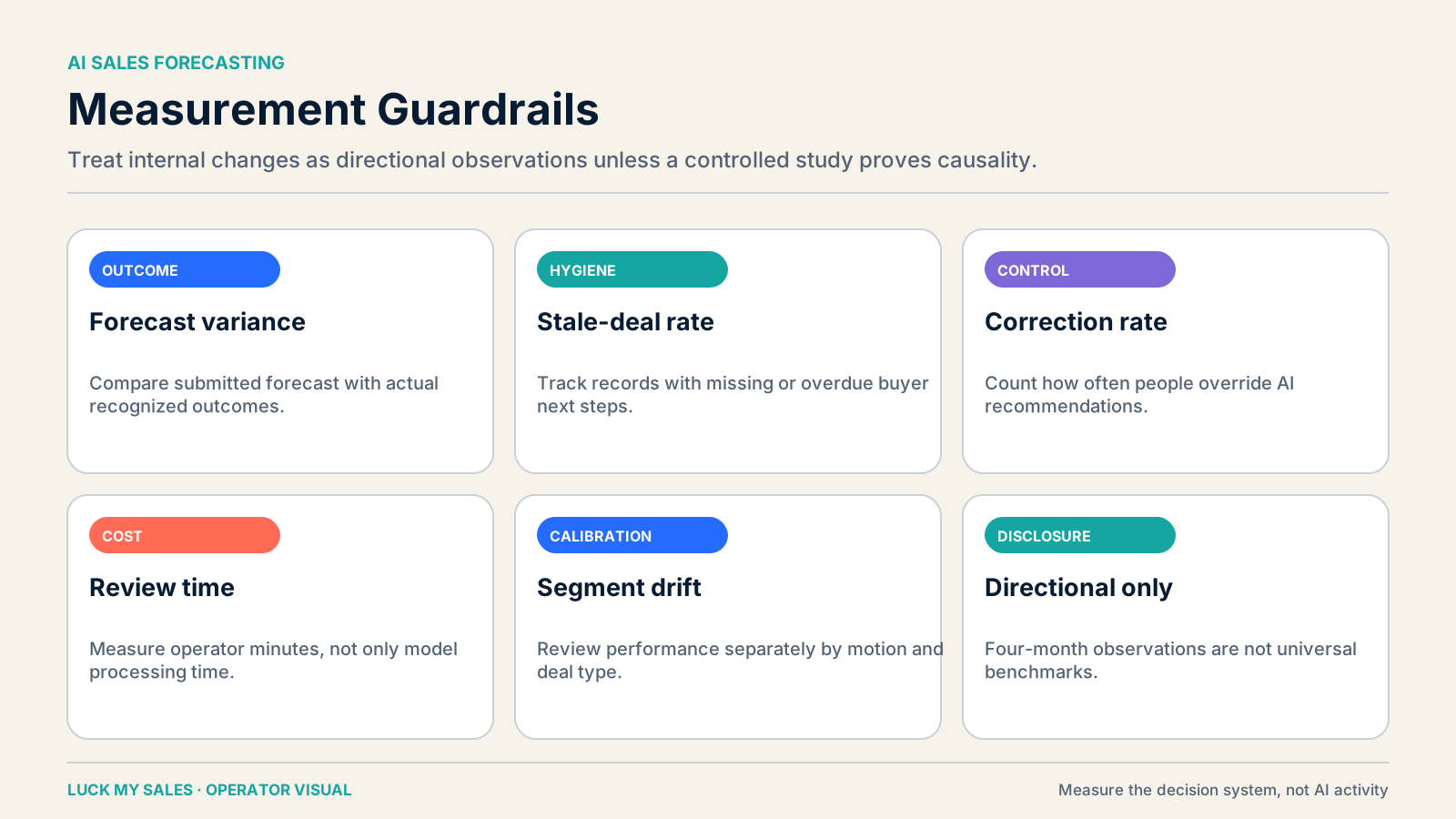
In the four-month operator workflow, forecast variance moved directionally by about 22% and stale deals fell by about 35%. Those figures are internal observations from six account executives plus RevOps. They were not produced by a randomized or audited study and should not be treated as a vendor benchmark or a universal expected result.
The more important durable change was operational: weak evidence became visible before the forecast meeting, and corrections had a reason. That made the meeting about exceptions and commercial judgment rather than manually reconstructing deal history.
Measurement guardrails separating internal observations, controlled evidence and unsupported universal claims.
Directional internal improvement is useful evidence, but it is not a universal benchmark.

10 / What current tools can contribute

What current tools can contribute

Different products own different layers of the workflow.
HubSpot's forecast tool supports forecast categories and team submissions inside its CRM. That can be sufficient when the team already maintains reliable opportunity data and needs a governed roll-up more than a separate forecasting platform.
Salesforce Pipeline Inspection brings opportunity changes, activity and pipeline inspection into the Salesforce workflow. Its value still depends on the fields, stage rules and evidence available in the implementation.
Gong Forecast connects forecasting with conversation and engagement evidence. In my experience, conversation context is useful when the commercial process actually happens in recorded calls. It is less useful when the team has a small pipeline, poor recording coverage or cannot justify the cost.
Clari Forecast emphasizes roll-ups, inspection and forecasting workflows across revenue teams. It should be evaluated against the team's hierarchy, CRM complexity and review cadence rather than by the number of dashboards.
Outreach forecast rollups can matter for teams already operating their revenue workflow in Outreach. The integration advantage is real only if the evidence and decisions remain auditable.
No product removes the need to define Commit, stale evidence, field authority, exceptions and correction. A sophisticated model over inconsistent stages is still an inconsistent forecast.

11 / The practical implementation order

The practical implementation order

Use this order to avoid automating chaos.

Week 1: define the decision

Choose one forecast horizon and one team. Write category definitions, evidence hierarchy, final owners and prohibited automatic actions.

Week 2: audit the records

Sample opportunities. Compare CRM fields with calls and email. Quantify stale dates, weak next steps, missing buyers and stage contradictions.

Week 3: connect evidence read-only

Ingest approved sources without write-back. Verify identity matching, consent, timestamps, permissions and retention.

Week 4: run shadow recommendations

Let the system recommend a category, date or exception. Require evidence links. Record human decisions and correction reasons.

Following cycles: calibrate narrowly

Compare the forecast with actual outcomes. Fix data and rule problems before changing the model. Automate only low-risk actions that have a stable correction profile.
The first production automation might be a stale-deal task, not an automatic forecast category. That is fine. Useful AI is not measured by autonomy. It is measured by better decisions at acceptable review cost.

12 / Common failure modes

Common failure modes

Treating stage probability as AI

Stage weight multiplied by amount ignores buyer evidence and uncertainty. It is a baseline calculation, not a complete forecasting system.

Training on inconsistent history

If past winners and losers were recorded differently by seller or region, the model learns the inconsistency. Historical volume does not guarantee useful training data.

Confusing activity with intent

More calls and emails may indicate seller effort, buyer confusion or a difficult deal. Activity is context, not proof of purchase intent.

Silent CRM write-back

An unlogged field change destroys accountability and makes evaluation harder. Every consequential change needs source and actor metadata.

Ignoring missing channels

If important evidence sits outside connected systems, lower confidence. Do not interpret missing data as negative buyer behavior.

Using one model across unlike motions

Enterprise procurement, SMB transactional sales and channel deals have different evidence. Calibrate by motion and segment.

Optimizing for an impressive dashboard

A dashboard can show an accuracy score without revealing horizon, denominator, exclusions or changes over time. Demand the underlying calculation.

13 / Human review checklist

Human review checklist

Before a forecast is submitted, the responsible reviewer should be able to answer:
  • What buyer-controlled evidence supports the category?
  • How recent is that evidence?
  • Is the economic or final decision-maker represented?
  • What contradicts the seller's view?
  • Did the close date move, and why?
  • Is the next step specific, owned and dated?
  • Which evidence is missing from connected systems?
  • Did AI change or merely recommend a CRM value?
  • Who accepted the recommendation?
  • What would cause the deal to be downgraded next week?
For a strategic account, add a deeper review of buying committee, procurement, legal, security, implementation and commercial dependencies.
The checklist is intentionally human. Forecasting is a commercial commitment, not a classification exercise. AI makes the evidence easier to inspect. A leader decides what the business will commit to.

14 / Final word

Final word

AI sales forecasting works best as an evidence and exception system.
It gathers signals that a manager cannot manually inspect at scale. It can find stale dates, missing decision-makers, unsupported confidence and contradictions between calls and CRM fields. It can recommend a change and explain the recommendation.
It should not turn incomplete inputs into hidden certainty. It should not invent commercial promises, silently rewrite the pipeline or own the forecast submission.
Start with the evidence contract. Run shadow mode. Measure correction patterns and forecast error against outcomes. Automate the low-risk parts only after the human process is stable.
The result will look less like a magical prediction engine and more like a disciplined weekly operating system. That is exactly why it can be useful.

Research note

Methodology

  1. 01The operating model and anonymized $80,000 deal example come from a four-month workflow Anastasiia Krynytska personally operated with six account executives and RevOps using HubSpot plus custom Python and n8n automation.
  2. 02The internal changes in forecast variance and stale deals are directional observations from that workflow, not a controlled study, audited benchmark or universal product result.
  3. 03Product capability statements are limited to current official vendor sources. No product is ranked as an absolute winner.
Read the full methodology

Source ledger

Sources & editorial notes

  1. 01
    Use the forecast tool

    HubSpot · Official documentation used to bound HubSpot forecast-category and submission claims.

  2. 02
    Revenue forecasting software

    Gong · Official product source used for current capability claims; packaging may change.

  3. 03
    Forecast product

    Clari · Official product source used for current workflow claims; packaging may change.

  4. 04
    Pipeline Inspection

    Salesforce · Official documentation used for bounded pipeline-inspection claims.

  5. 05
    How to use the forecast rollup

    Outreach · Official documentation used for bounded rollup claims.

Corrections or primary material: contact the corrections desk.

About the author

Anastasiia Krynytska

Anastasiia Krynytska is a LeadGen Team Lead at Softermii and the lead editor of Luck My Sales. She covers AI-assisted outbound, account research, qualification, messaging, CRM handoffs and revenue workflows from a practitioner’s perspective.View author profile LinkedIn

Continue reading

01 · News analysis

AI sales is moving from assistant to operating layer

The category is expanding from drafting support into research, pipeline decisions, recommended actions and controlled execution.

Read news
02 · Field analysis

In AI sales, the handoff may be the product

Models are becoming accessible; durable value sits in the controlled transition from signal to seller action.

Read analysis
03 · Research framework

Sales AI Workflow Signals 2026

A launch framework for mapping the products, controls and buying questions shaping AI-enabled revenue work.

Read reports

Luck My Sales briefing

Useful context, once a week.

News, explanations and original research from this desk. No noise.
The newsletter is still being built. We will contact you when the first edition is ready.