Weekly industry intelligence · No noiseSubscribe to the Luck My Sales newsletterFree briefing

Independent operator-led media on AI in B2B sales

Menu

AI coaching software comparison · Sales AI comparisons

AI Sales Coaching Software for B2B Teams: Compare Call Analysis, Role-Play and Manager Control

Compare AI sales coaching software for post-call analysis, role-play, enablement and live guidance using manager control and a common pilot.
Editorial disclosure

AI may assist research organization and drafting. A human editor reviews every published page, checks material claims against the cited sources and owns the final decision. No company paid for placement in this article.

AI use policy

Agent-ready brief

AI takeaways

Keep the key points here, or take a source-aware text brief into Claude, ChatGPT or another AI workspace.
  1. 01Post-call analysis, role-play, enablement and real-time guidance are separate buying categories.
  2. 02Manager correction, sampling and evidence access are product requirements, not optional administration.
  3. 03A common-scenario pilot should expose transcript quality, rubric control, review time and CRM integration.
  4. 04Regional language performance and workflow integration often matter more than summary quality.
  5. 05A small team may be better served by a lightweight recording, transcript and approved-rubric workflow than a full platform.
Includes summary, takeaways, sources and a use note.
The best AI sales coaching software depends on the coaching mode your team can actually operate. Gong, Chorus, ExecVision, and Avoma belong in a post-call analysis shortlist. Second Nature, Quantified, and Mindtickle are stronger candidates for AI role-play and simulations. Highspot and Seismic Learning fit broader enablement programs. Real-time guidance products such as Balto solve a narrower live-call job and should not be compared as if they were the same category.
There is no credible universal winner here. We did not run every candidate through an identical production test. This comparison uses first-hand experience where explicitly stated and current official product information elsewhere.
Start with the decision: Do you need to inspect real calls, let sellers practice, operate a training program, or guide a tightly scripted conversation? Then evaluate evidence quality, manager control, languages, CRM integration, governance, adoption, and total cost.

AI coaching software should be shortlisted by coaching mode, manager control, language fit, integration and adoption rather than by the longest feature list.

01 / Best AI sales coaching software by…

Best AI sales coaching software by mode
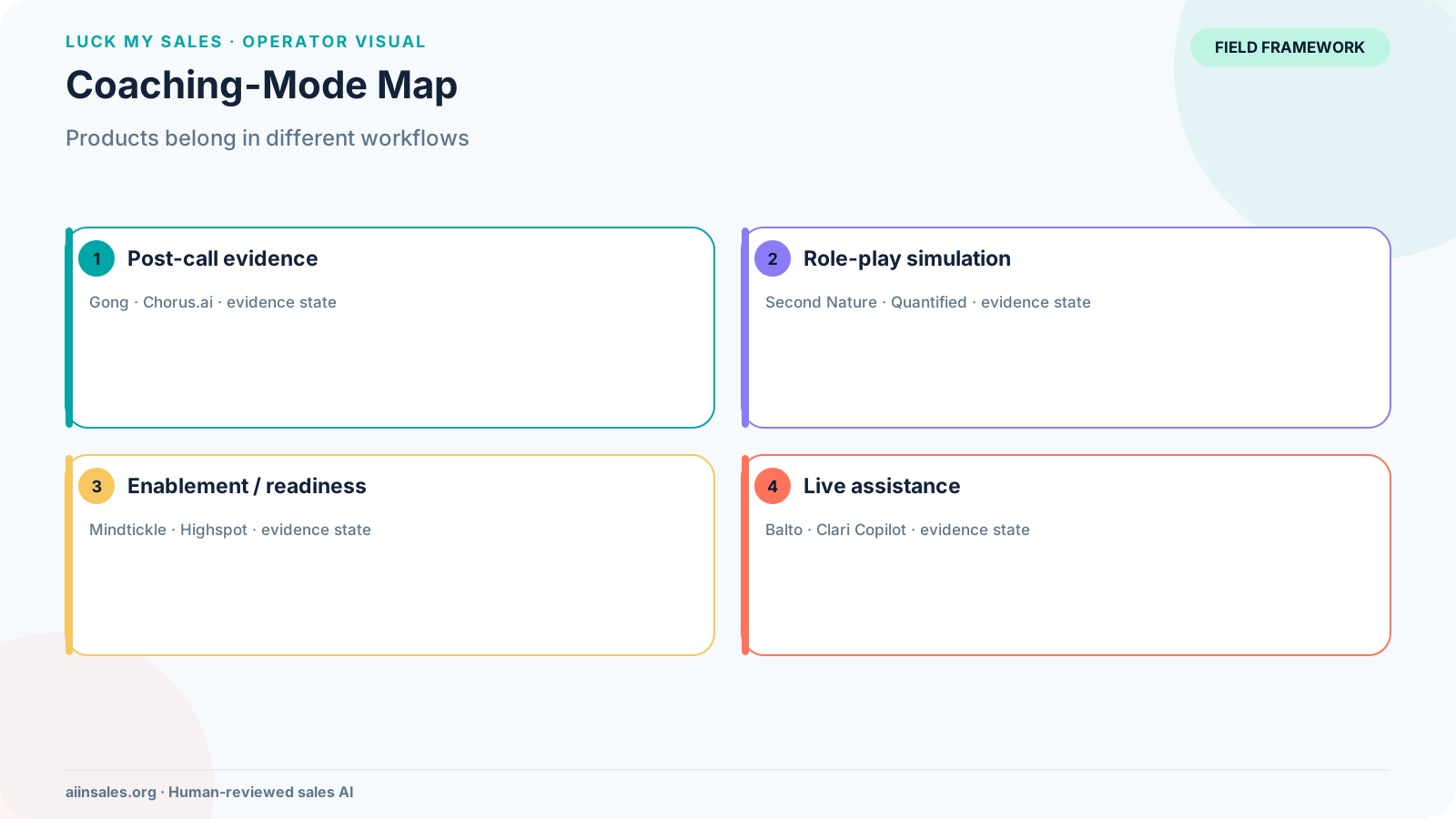
Four-quadrant map of AI sales coaching software by coaching mode.
Products belong in different workflows even when they all use the words AI coaching.
The first question is not “Which tool has the most features?” It is “Which coaching loop do we have the people and evidence to run?”

02 / Evaluation method and evidence state

Evaluation method and evidence state

We evaluate coaching software through the workflow:
call or scenario → transcript/evidence → rubric → AI score or recommendation → manager verification → seller action → CRM outcome
Each candidate is assessed on:
  • source evidence and citations;
  • transcript, speaker, and language quality;
  • rubric control and correction;
  • manager sampling and calibration;
  • seller self-review and practice;
  • CRM and enablement integrations;
  • governance and access;
  • operating time and total cost;
  • human control over people and commercial decisions.
Evidence labels matter:
  • hands-on means we used the product in real work;
  • officially verified means the capability appears in current first-party materials;
  • pilot required means the team must test it using its own calls, scenarios, languages, and systems.
Gong has hands-on evidence in this review. Other third-party product descriptions are based on official sources and should not be mistaken for equal production testing.

03 / Product comparison matrix

Product comparison matrix

ProductMain modeEvidence or practice objectManager controls to verifyStrongest buying context
Gongpost-call and revenue intelligencerecorded conversations, trackers, scorecards, deal contextrubric, sampling, libraries, CRM workflowmature sales team with meaningful call and pipeline volume
Chorus by ZoomInfopost-call conversation intelligencecaptured interactions and team performance signalscoaching workflow, ZoomInfo/CRM integration, permissionsteam already invested in ZoomInfo
ExecVisioncoaching intelligenceanalyzed conversations and targeted coachingmethodology alignment, feedback, coaching plansorganization prioritizing manager-led call coaching
Avomameeting intelligence and coachingtranscripts, summaries, trackers, custom scorecardsAI scoring, coaching recommendations, packagingmeeting-led team wanting structured review
Second NatureAI role-playsimulated buyer conversationsscenario authoring, scoring, feedback, integrationonboarding and repeatable practice
QuantifiedAI role-play and readinesssimulated conversations, readiness and coaching datascenario governance, reporting, regulated-use fitlarger or regulated teams needing controlled practice
Mindticklereadiness, role-play, and call analysisskills, simulations, calls, learning activityprogram design, scoring, manager visibilitymature enablement organization
Highspotenablement and coachingtraining, practice, content, meeting/deal signalsassessments, role play, scorecards, analyticsteams already building an enablement system
Seismic Learninglearning and practicelessons, training, practice, enablement workflowprogram authoring, assignments, reportingorganizations using Seismic for enablement
Balto-style toolslive guidancereal-time call momentsprompt rules, latency, compliance, seller controlhigh-volume, structured contact-center work
This matrix is not a ranking. Product packaging and capabilities change. Verify the exact commercial tier and integration before selection.

04 / Post-call analysis products

Post-call analysis products

Gong

Gong is the product here with direct hands-on operator evidence. It records, transcribes, and analyzes customer interactions and connects conversation evidence to scorecards, coaching, deals, and pipeline work.
It is most credible when a team has enough calls, pipeline, managers, and CRM discipline to use the wider platform. My practical heuristic is to begin a serious Gong evaluation around USD 20,000 in monthly active pipeline. This is not a formal ROI test, vendor rule, or guarantee.
For a founder or very small team, the platform can be more than the process needs. Reliable recordings, structured notes, and direct manager review may be sufficient.

Chorus by ZoomInfo

Chorus belongs in the shortlist when ZoomInfo is already central to the company’s go-to-market stack. ZoomInfo positions Chorus around captured customer interactions, conversation insights, coaching, and team performance.
We did not operate Chorus under the same conditions as Gong. Its position in this article is researched, not a same-input endorsement.
Test whether ecosystem integration removes real work. Also test call quality, CRM behavior, data ownership, manager review, and total suite cost. Suite membership should not replace product evaluation.

ExecVision

ExecVision positions its coaching intelligence around conversation analysis, targeted feedback, coaching plans, and alignment to a team’s methodology.
That makes it relevant when the central job is manager-led coaching rather than broad revenue forecasting. Verify current capture sources, integrations, permissions, reporting, and product packaging in a live evaluation.
The team still needs a stable rubric. Methodology alignment is useful only if the methodology is observable in real calls.

Avoma

Avoma’s official materials include transcription, summaries, trackers, talk-pattern analysis, custom scorecards, AI scoring, and coaching recommendations.
It can fit a meeting-led team that wants a combination of notes, conversation intelligence, and structured coaching. Verify current add-ons and license requirements because coaching capabilities may depend on packaging.
The pilot should test material transcript details, evidence behind scores, manager correction, seller self-review, CRM write-back, and the languages used in production.

05 / AI role-play and simulation products

AI role-play and simulation products

Second Nature

Second Nature offers AI sales role-play for jobs such as discovery, cold calls, and objection handling, with customizable training and integrations.
Its value depends on scenario realism. Feed it actual buyer language, product boundaries, common objections, approved claims, and success conditions. A polished simulated buyer that does not resemble the market teaches the wrong reflexes.

Quantified

Quantified positions its platform around AI role-play, readiness, coaching, governance, and reporting, including use cases in regulated industries.
It deserves evaluation when the organization needs controlled practice and evidence of readiness across a larger team. Do not repeat vendor outcome statistics as independent facts. Test the same scenario used for other role-play candidates.

Mindtickle

Mindtickle combines readiness, AI role-play, skill data, call analysis, and coaching capabilities within a broader sales-readiness platform.
It may suit an enablement organization that wants training and practice connected to skill measurement. The risk is implementing a broad platform before the team defines what readiness means and who maintains the program.

06 / Enablement and learning platforms

Enablement and learning platforms

Highspot

Highspot’s sales-coaching materials cover assessments, role play, meeting and deal signals, scorecards, coaching analytics, and integrations within its enablement platform.
Consider it when coaching is part of a larger system that includes content, training, plays, and manager execution. If the only requirement is call transcription and a small scorecard, a broader enablement platform may be excessive.

Seismic Learning and Lessonly

Lessonly is now part of Seismic Learning. Seismic positions the product around learning, practice, and coaching inside its enablement platform.
It belongs in the shortlist when Seismic already owns enablement content and the team needs structured learning and practice. Verify how conversation evidence enters the workflow and whether managers can connect a lesson to live-call behavior.

07 / Real-time guidance is a separate ca…

Real-time guidance is a separate category

Balto-style real-time guidance listens during a call and surfaces prompts or required language. This is not simply faster post-call coaching.
Real-time tools may help when:
  • calls follow a repeatable script;
  • agents handle high volume;
  • compliance wording must be exact;
  • a narrow decision tree is known;
  • prompt latency and distraction can be measured.
For complex B2B discovery, live prompts can make sellers stop listening and sound robotic. A seller may read an objection response while the buyer is still explaining the problem.
Evaluate live guidance separately. Test interruptions, latency, incorrect prompts, compliance behavior, and whether sellers become dependent. Never let the system invent pricing or a commercial promise.

08 / Build the rubric before choosing so…

Build the rubric before choosing software

Software cannot define good selling for the team.
Build a small rubric from real calls. Compare strong calls, stalled deals, lost opportunities, and different seller styles. Use observable criteria.
Good starting criteria include:
  • confirmed the buyer’s current process;
  • captured a consequence in the buyer’s words;
  • clarified who participates in the decision;
  • handled a named objection without making an unsupported promise;
  • agreed a concrete next action.
For each criterion, define positive evidence, insufficient evidence, exceptions, and the corrective coaching action.
Then test whether each platform can:
  • implement the criterion accurately;
  • cite the source moment;
  • let a manager correct the score;
  • version the rule;
  • show the seller why the score changed;
  • connect the coaching action to later evidence.
If managers disagree on the definition, calibrate them before comparing AI scores.

09 / Transcript, language, and regional fit

Transcript, language, and regional fit

Language support is mandatory, not a secondary checkbox.
Use calls with your actual accents, code switching, names, terminology, poor audio, several speakers, and phone conditions. English is usually easier across established tools, but regional performance must still be tested.
Count material corrections:
  • buyer and seller swapped;
  • price or quantity changed;
  • company or product misunderstood;
  • objection meaning reversed;
  • next step attributed to the wrong person;
  • compliance phrase missing.
A tool can produce an excellent summary from an incorrect transcript. Keep the recording and timestamp connected to the score.
For MENA or other multilingual workflows, choose based on representative evidence and regional references rather than a long published language list. The author’s team has relevant first-party NextLevel experience, but that experience is not an independent ranking claim.

10 / CRM, integrations, and the closed loop
CRM, integrations, and the closed loop

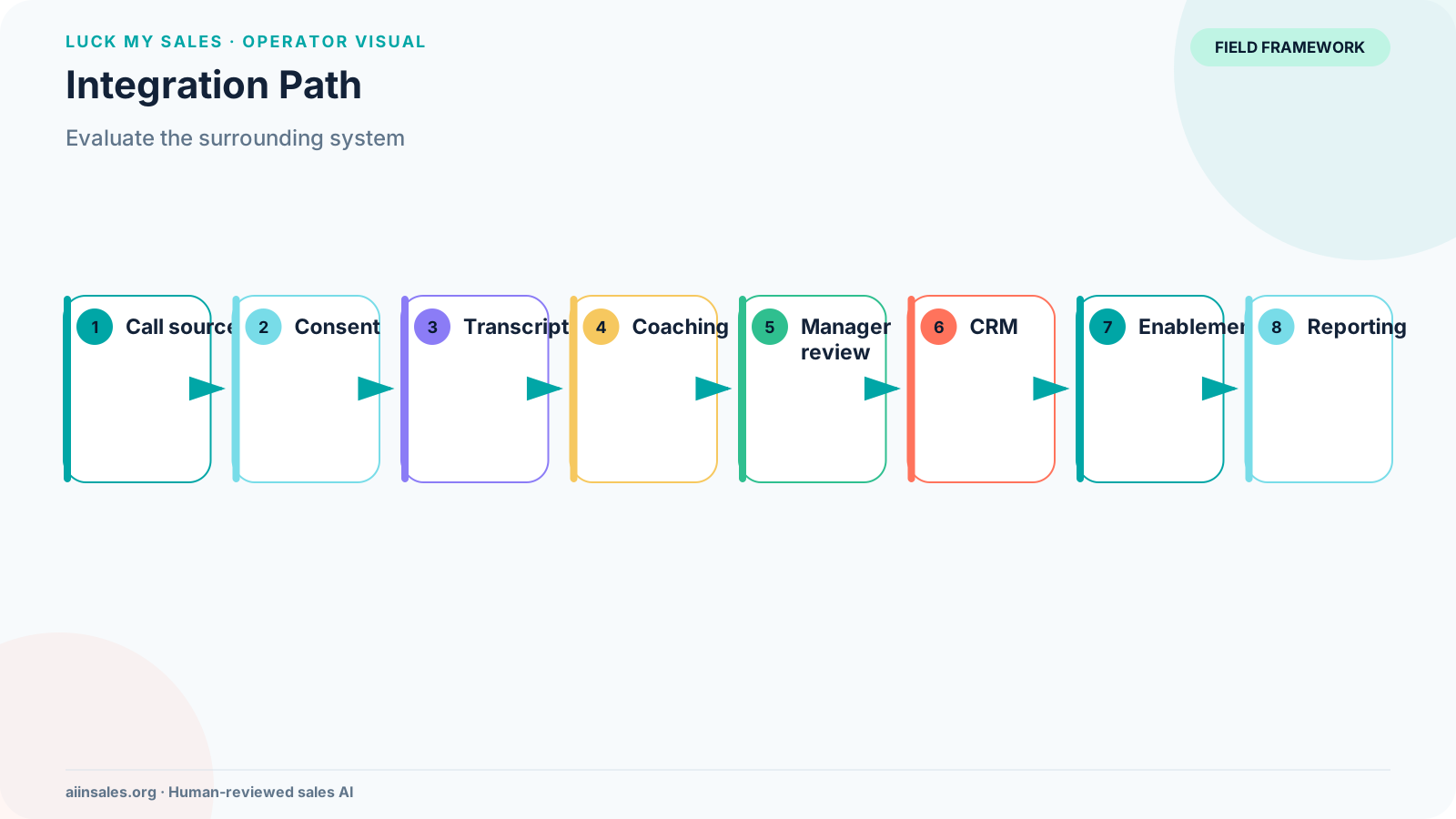
AI coaching software integration path from call recording to manager review, CRM and enablement.
The surrounding workflow often matters more than the AI model itself.
The minimum loop is:
call → evidence → coaching action → next calls → CRM stage or outcome → manager review
Verify:
  • identity matching between call, seller, contact, account, and opportunity;
  • activity and evidence written to the correct record;
  • field-level write-back controls;
  • duplicate and conflict handling;
  • seller corrections;
  • owner notifications;
  • audit logs and rollback;
  • access to evidence after a CRM update.
AI may recommend a next step, forecast review, follow-up, or coaching action. It must not independently create pricing or a commercial proposal. Qualification, opportunity stage, forecast commitment, commercial promises, and account ownership remain human-owned. Sales makes the final owner change.

11 / Governance and employment boundaries

Governance and employment boundaries

The platform processes buyer conversations and employee performance signals. Define:
  • recording notice and consent;
  • access to recordings, transcripts, scores, and exports;
  • retention and deletion;
  • seller correction and dispute;
  • use of data for model training;
  • sensitive-call exclusions;
  • rubric versioning;
  • manager accountability;
  • prohibited automated decisions.
AI must not decide termination, discipline, compensation, quotas, promotion, or career development. A score may be one reviewed input, never the accountable decision-maker.
Managers need training too. Searching for mistakes across every call can become surveillance rather than coaching. The program should focus on agreed skills and give sellers a fair, visible process.

12 / Adoption and total cost

Adoption and total cost
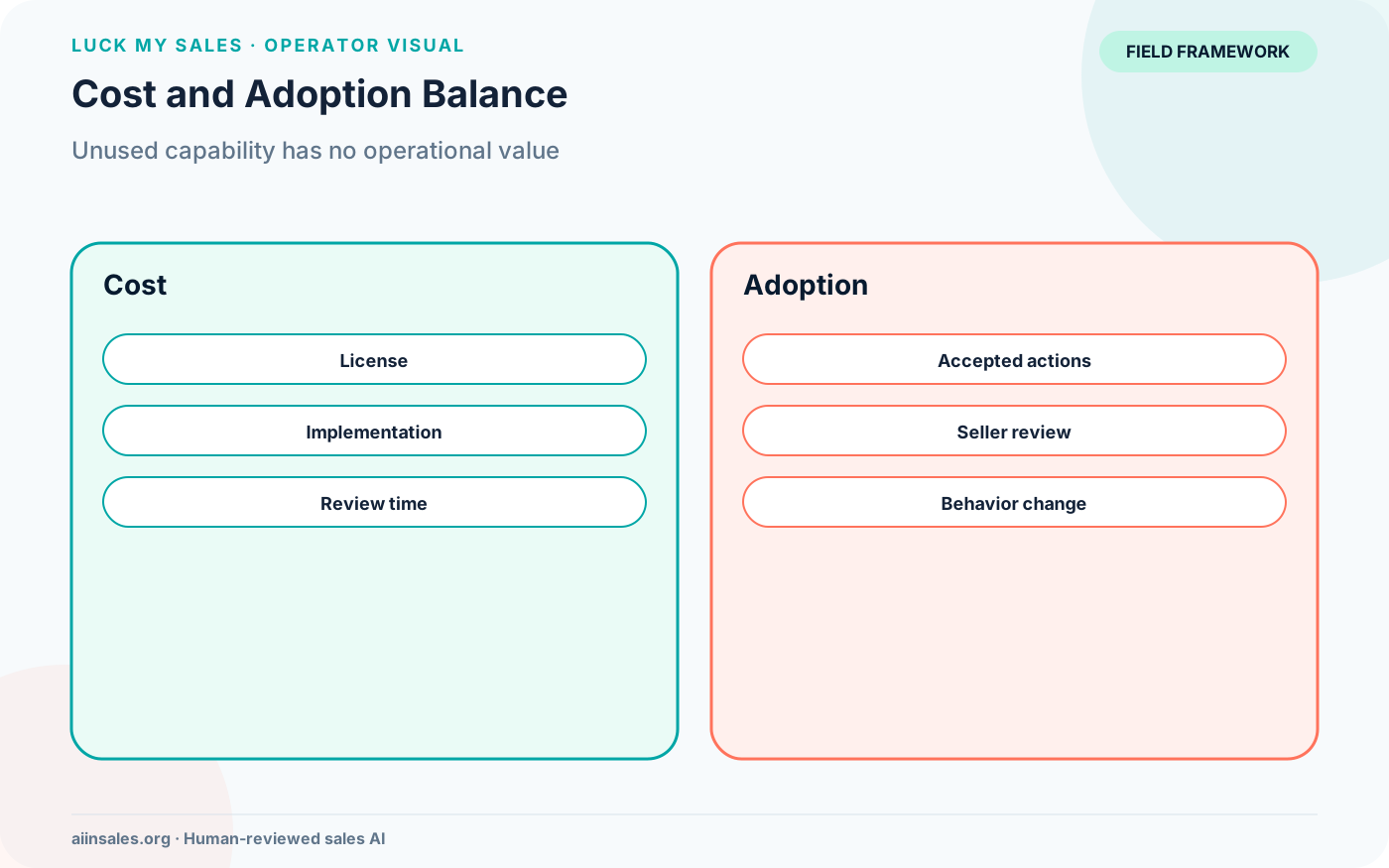
Balance between AI coaching software cost and adoption-driven value.
Calls processed are not value if managers and sellers do not use the output.
  • required modules and user types;
  • recording, telephony, and storage;
  • AI or usage credits;
  • CRM, LMS, and data integrations;
  • implementation and security review;
  • scenario and rubric design;
  • manager sampling and calibration;
  • seller training;
  • administration and correction;
  • overlapping tools that remain;
  • migration and exit costs.
Adoption is not the number of accounts created. Track managers completing reviews, sellers inspecting evidence, corrections submitted, coaching actions completed, and repeated role-play practice.
If managers ignore the queue after launch, a cheaper product they will operate is better than a sophisticated platform they will not.

13 / Match the software to team maturity

Match the software to team maturity

The same product can be sensible for one sales organization and wasteful for another. Team size alone is not enough. The useful dividing line is whether the organization has a repeatable evidence and coaching loop.

Founder-led and very small teams

A founder who still joins the important calls rarely needs a large coaching platform. The immediate requirement is usually simpler:
  • record eligible calls with proper notice;
  • produce a searchable transcript and evidence-linked summary;
  • keep the agreed next step visible;
  • review the few calls that materially affect pipeline;
  • store only the CRM fields the team can maintain.
The founder should not buy a complex scorecard program to compensate for an unclear sales motion. A low-cost recording and transcript workflow, plus a small human-owned review checklist, is often more useful. Move to a dedicated platform when call volume prevents the founder or manager from seeing the important patterns.

Growing SMB sales teams

An SMB with several sellers needs consistency but still has limited enablement and RevOps capacity. Here the product must reduce review work without creating a new administration job.
Prioritize:
  • reliable meeting capture across the actual calendar and telephony stack;
  • evidence-linked summaries and next-step suggestions;
  • a small configurable scorecard;
  • manager correction and seller visibility;
  • clean CRM association;
  • pricing that includes realistic recording and AI usage.
Avoid buying separate products for recording, scoring, simulation, content, and live prompts unless each layer owns a proven bottleneck. Integration work can exceed the value of the additional feature.

Mid-market and enterprise teams

Larger organizations have more calls, managers, regions, methodologies, and governance requirements. They may justify a broader platform, but scale increases the cost of a bad rule.
Evaluate:
  • role-based access and regional retention;
  • rubric versioning across teams;
  • language performance by region;
  • manager calibration and quality assurance;
  • data export and warehouse access;
  • CRM conflict handling;
  • enablement content and practice assignment;
  • audit history for changed scores and actions;
  • administrative effort across business units.
The product should let central enablement govern standards while local managers preserve legitimate market context. A global average can hide a broken regional workflow.

14 / Manager control is a product requir…

Manager control is a product requirement
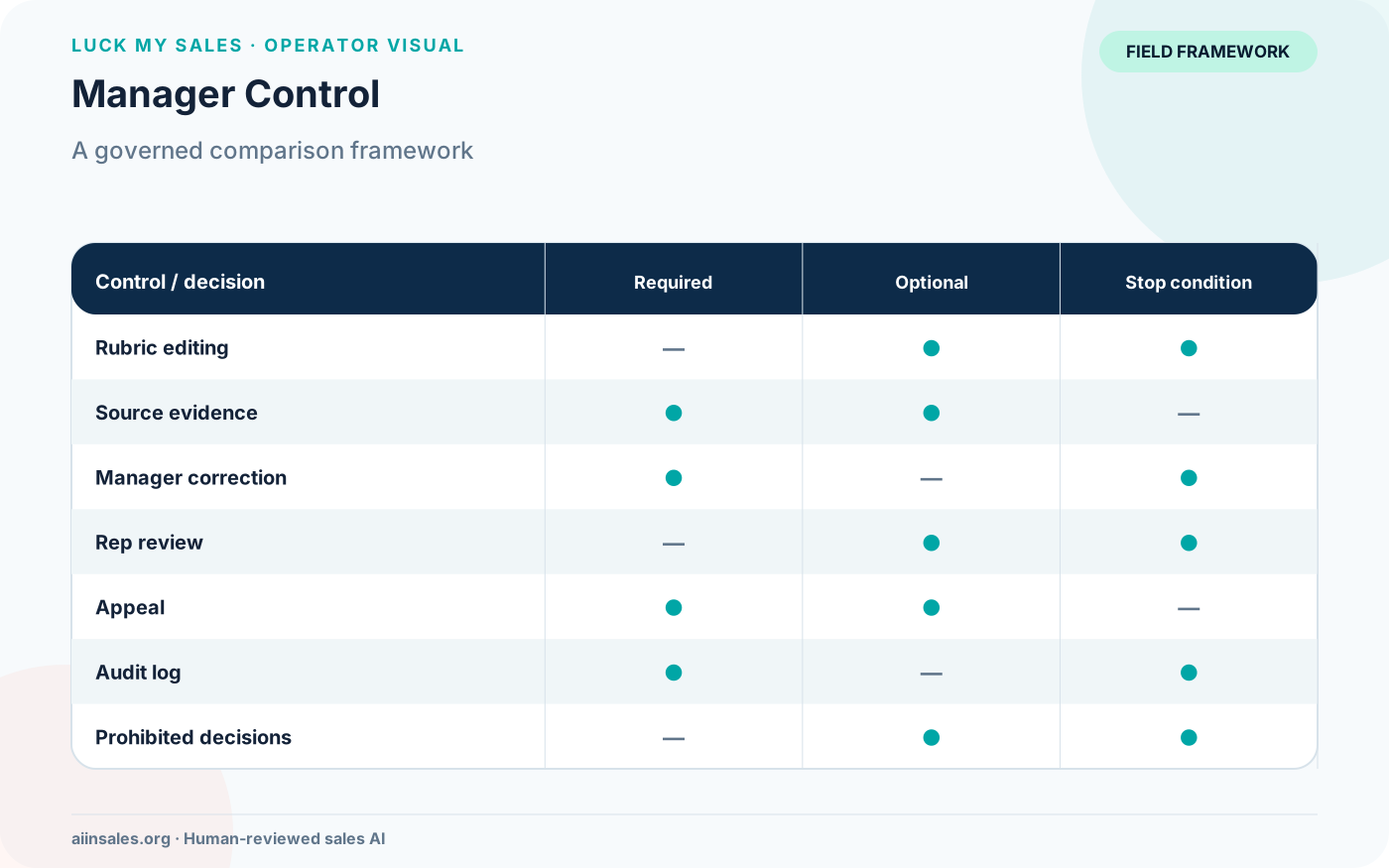
Manager-control matrix for AI sales coaching software.
A coaching tool should make corrections and ownership easier, not hide them.
Ask the vendor to show:
  1. how a manager opens the exact recording segment behind a score;
  2. how the manager corrects a transcript, speaker, criterion, or recommendation;
  3. whether the correction changes only one record or the underlying rule;
  4. how sellers see and dispute evidence;
  5. how the team samples low-confidence and high-impact calls;
  6. who can publish a new rubric version;
  7. what happens to historical scores after the rubric changes;
  8. whether CRM writes can require approval;
  9. how an incorrect action is reversed;
  10. how access, retention, and deletion are audited.
If a score cannot be traced and corrected, it is not a trustworthy coaching artifact. It is a label.
The manager also needs control over coaching focus. A system that produces ten recommendations after every call can create more noise than insight. The useful unit is usually one behavior a seller can practice and a later call can confirm.

15 / A 30-day pilot that exposes operati…

A 30-day pilot that exposes operating cost

A product tour will not reveal transcript failures, weak regional language support, CRM mismatches, or manager fatigue. Run a short production-shaped pilot before committing to a broad deployment.

Week 1: establish the baseline

Choose a representative set of eligible calls and one or two sales behaviors. Document the current manager review time, correction process, CRM completion, and seller access to feedback. Confirm consent, retention, and permissions before recording more calls.
Use real conditions: normal microphones, accents, products, meeting types, interruptions, and CRM records. A curated perfect call proves very little.

Week 2: calibrate the evidence

Have managers review transcripts, speaker attribution, summaries, objection labels, next steps, and scorecard results. Record material correction reasons rather than counting every punctuation error.
Separate three failure types:
  • the source evidence is wrong;
  • the rubric is unclear;
  • the recommendation does not follow from otherwise correct evidence.
This distinction tells the buyer whether the problem is transcription, program design, or reasoning.

Week 3: run the coaching loop

Managers assign one specific action. Sellers inspect the evidence, practice if appropriate, and apply the behavior on later calls. Test notifications, task ownership, CRM write-back, and seller corrections.
The purpose is not to maximize platform activity. It is to determine whether the product helps a manager deliver useful feedback with less search and administration.

Week 4: decide with a complete cost picture

Review:
  • percentage of calls captured and correctly matched;
  • material transcript and speaker corrections;
  • unsupported score or recommendation rate;
  • manager review and calibration time;
  • seller self-review and practice completion;
  • CRM write-back errors and reversals;
  • governance exceptions;
  • license, integration, storage, AI usage, and administration cost.
Do not claim revenue impact from a four-week pilot. Use it to verify evidence quality, workflow fit, adoption conditions, and operating cost. Revenue and stage-conversion effects require a longer, controlled observation period.

16 / Procurement red flags

Procurement red flags

Pause the purchase when:
  • the vendor demonstrates only preselected English calls;
  • a score has no timestamped evidence;
  • product categories are bundled so the required workflow cost is unclear;
  • the team cannot export recordings, transcripts, scores, and corrections;
  • CRM write-back is presented without conflict or rollback controls;
  • employment decisions are marketed as automatic outcomes;
  • language support is a list rather than tested performance;
  • the pilot excludes the real telephony, CRM, or calendar stack;
  • the promised ROI assumes managers will change behavior without allocated time;
  • a real-time prompt can publish pricing or a commercial promise.
Another warning is a platform that requires the buyer to replace every adjacent system before any value appears. Integration matters, but the first pilot should expose one working coaching loop. Expansion comes after the loop is reliable.

17 / Migration, integration, and exit ar…

Migration, integration, and exit are part of the buying decision

AI sales coaching software sits between sensitive recordings, seller performance data, CRM records, and enablement content. The implementation plan matters as much as the demo.
Begin with data ownership. Identify who controls recordings, transcripts, summaries, scorecards, corrections, role-play sessions, and coaching notes. Confirm where each object is stored. Confirm who can export it. A buyer should understand what remains available if the contract ends.
Map identity before workflow automation. The platform needs a reliable link between the call, seller, buyer, account, opportunity, manager, and region. Test shared calendars, reassigned accounts, duplicate contacts, multiple opportunities, and calls hosted by another employee. A wrong identity match can create a privacy problem and a false coaching record.
Next, define the CRM boundary. Decide which fields the product can read. Decide which fields it can propose. Decide which fields require human approval. Summary notes and draft tasks may be low risk. Stage, forecast, pricing, commercial promises, and account ownership are not. Sales keeps the final owner decision.
Test conflicts on purpose. Change a CRM value after the call but before the platform writes its result. Confirm which value wins. Test an unavailable field, a deleted opportunity, and a duplicate record. The system should log the conflict and stop. It should not silently create a second version of the truth.
The integration must also support correction. A manager may change a score after reviewing evidence. A seller may correct a speaker or next step. The downstream coaching action and CRM note should show the change. Historical records should preserve who changed what and why.
Security review should cover more than sign-in. Review role-based access, regional storage, retention, deletion, subprocessors, training-data use, exports, audit logs, incident response, and access by vendor support. Sensitive calls may need exclusion before capture.
Plan the exit before full deployment. Export a small test set during the pilot. Confirm that the files include stable identifiers, timestamps, speakers, evidence links or usable references, scores, rubric versions, and corrections. A PDF summary is not a complete data export.
If the platform is replaced, decide how managers and sellers keep access to prior coaching evidence. Decide how active assignments move. Decide how CRM links survive. The team should not lose its coaching history because the vendor relationship changed.
Migration effort belongs in total cost. A lower license can become expensive when data mapping, permission work, and historical imports require custom services. A higher license can still be poor value if the team cannot leave without losing usable evidence.

18 / How to compare AI role-play without…

How to compare AI role-play without rewarding theater

Role-play demos can look impressive because the simulated buyer responds smoothly. That is not the buying standard. The system must help a seller practice the commercial behavior that matters.
Build the scenario from real call evidence. Include the buyer’s role, current process, known problem, constraints, approved product claims, common objections, and prohibited promises. Define what a strong conversation should discover. Do not script one perfect response.
Then let different sellers run the same scenario. Check whether the simulated buyer reacts to what the seller says or merely follows a fixed path. Test interruptions, incomplete answers, a wrong assumption, a competitor mention, a request for pricing, and an attempt to skip discovery.
The score should cite moments from the simulation. It should separate factual completion from style. “Asked about the current process” can be a factual criterion. “Sounded confident” needs a clearer rule and careful human review.
Feedback should lead to another attempt. A long report after one simulation is less useful than one clear action and a second run. The platform should show whether the seller changed that behavior.
Test scenario maintenance as well. Products, positioning, markets, and objections change. An enablement owner must be able to update facts and rules without rebuilding the whole program. Old versions should remain visible for audit and comparison.
Do not compare role-play completion with revenue. Completion shows activity. The useful near-term measures are evidence quality, manager correction, seller repetition, and transfer of the practiced behavior to later real calls. Commercial outcomes need a longer observation window.

19 / How to compare post-call coaching w…

How to compare post-call coaching without rewarding volume

A platform may advertise that it analyzes every call. Coverage is useful, but coverage alone is not coaching. The system must help a manager find the few moments worth reviewing.
Test the selection logic. Give the product calls from different stages, sellers, outcomes, and regions. Ask it to find first meetings, pricing discussions, competitor mentions, objections, missing next steps, and unusual changes. Review false positives and missed high-impact calls.
Then test the manager queue. The manager should know why a call was selected, which evidence matters, and what action is proposed. The queue needs priority, ownership, due date, and a way to dismiss noise with a reason.
The platform should not turn every observation into coaching. Some problems are data errors. Some are product gaps. Some are pricing or delivery constraints. Some need leadership action. A seller should not receive coaching for a problem outside the seller’s control.
Finally, inspect whether the coaching action appears in later evidence. The manager may ask the seller to confirm the buying process on the next discovery call. The system can help find that behavior later. The manager still decides whether the improvement is real and useful.

20 / A final shortlist decision in six s…

A final shortlist decision in six sentences

Write the final decision without vendor language. Name the coaching mode. Name the evidence the platform uses. Name the human who verifies the output. Name the CRM or enablement action it supports. Name the total operating cost. Name the event that will pause the workflow.
This short record exposes weak purchases. If the team cannot name the mode, it is probably buying a broad promise. If it cannot name the evidence, it is trusting a label. If no person owns review, adoption will fail.
The pause event matters. It may be a consent error, wrong speaker, bad CRM match, high correction rate, regional language failure, or seller dispute. The platform must make that event visible.
Run the decision past a manager and a seller. Managers see queue and calibration work. Sellers see whether feedback will be fair. RevOps sees integration risk. Security and legal see data obligations.
Do not expand the license because the demo showed another feature. Expand only when the first loop works. The team should be able to show one reviewed call, one useful action, one later outcome, and one correction path.

21 / The Coaching-Mode Map

The Coaching-Mode Map

BottleneckStart withRequired human gateDo not buy yet if
managers hear too few real callspost-call analysismanager verifies evidence and feedbackcalls and CRM records cannot be matched
new sellers need safe repetitionrole-playenablement defines scenario and rubricbuyer language and objections are undocumented
training is fragmentedenablement platformenablement owns program and measurementthere is no curriculum or manager routine
agents miss fixed language in high-volume callsreal-time guidancemanager/compliance owns prompt rulescalls are complex and unscripted
regional AI-agent flow is uniquecustom workflowoperator verifies evidence and actionsno team owns monitoring and governance
The map should eliminate products before the demo stage. A role-play vendor is not the answer to a CRM evidence problem.

22 / Common-Scenario Pilot Sheet

Common-Scenario Pilot Sheet
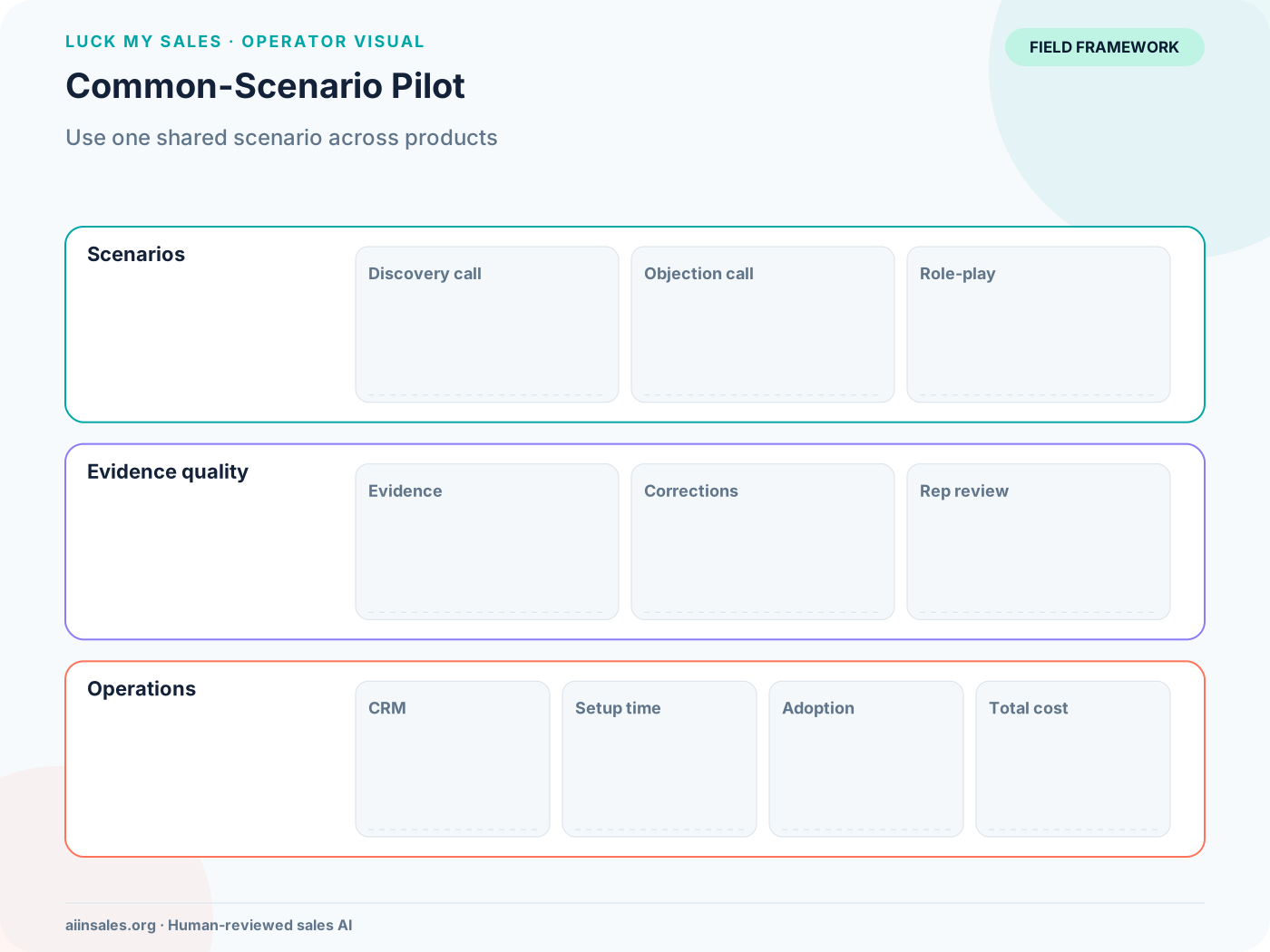
Common-scenario pilot sheet for testing AI coaching software on real calls and role-play.
One shared scenario makes product differences easier to inspect.
Scenario: a buyer says the company already uses a provider, the current contract renews later, and one process remains manual. The seller must explore the gap without attacking the vendor or inventing a discount.
Pilot stepPost-call candidateRole-play candidateEnablement candidateLive-guidance candidate
Inputrecorded real callsame buyer facts and objectionsame call, lesson, and practicescripted test call
Evidencetranscript and cited objectionsimulation transcript and scorelearning completion plus live evidenceprompt event and call outcome
Human reviewmanager verifies contextenablement reviews realismmanager checks transfer to fieldmanager checks distraction and compliance
Successone useful coaching actionseller explores gap without false claimbehavior appears on later callcorrect prompt helps without harming listening
Stop conditionunsupported score or wrong speakerbot rewards memorized pitchactivity does not change behaviorprompt creates error or distraction
Run the pilot in the languages and channels that matter. Keep the rubric stable. Record correction reasons and manager time. Request equivalent commercial scope before comparing cost.

23 / When to choose no platform

When to choose no platform

Do not buy AI sales coaching software yet when:
  • the founder can still review every important call;
  • recording and consent are not settled;
  • CRM stages and outcomes are unreliable;
  • the team has no agreed coaching behavior;
  • managers do not have time for feedback;
  • software is being used to avoid a difficult management conversation;
  • the expected value depends on automatic people decisions;
  • the team cannot run a pilot with representative calls.
A simple workflow can be enough: record approved calls, summarize with evidence, let the manager review a small sample, and track one action. Buy more when the bottleneck is proven.

24 / Make the final shortlist decision i…

Make the final shortlist decision in one meeting

Bring the pilot evidence into one short review. Include the sales leader, the manager who will coach, one seller, enablement or RevOps, and security when needed. Do not replay every vendor demo. Compare the same scenario.
Ask five plain questions. Did the tool capture the call correctly? Could a manager trace each score to evidence? Did the workflow save review time? Could the seller understand and use the feedback? Did the total cost fit the problem?
Reject any option with a critical failure. A polished dashboard does not offset a wrong speaker, a missing objection, or a bad CRM update. Choose the smallest product that solves the proven bottleneck. Name an owner for the rubric, corrections, integrations, and renewal review. If nobody owns those tasks, choose the simpler workflow or buy nothing.

25 / Limits and commercial disclosure

Limits and commercial disclosure

This article does not claim an identical production test or an absolute winner. Gong is informed by hands-on experience; other product descriptions are based on official sources and require buyer validation.
There are no affiliate payments, sponsorships, free-access arrangements, consulting relationships, or other commercial benefits from Gong, Chorus/ZoomInfo, ExecVision, Avoma, Second Nature, Quantified, Mindtickle, Highspot, Seismic/Lessonly, or Balto.
The author/team is affiliated with NextLevel.AI. Its workflow is included as first-party operator evidence, not as an independently ranked recommendation.
Features, pricing, integrations, and packaging change. Verify current details and run a controlled pilot.

26 / Frequently asked questions

Frequently asked questions

What is AI sales coaching software?

It is software that uses call evidence or simulations to score behavior, recommend feedback, support practice, and help managers review more seller interactions.

What is the best AI sales coaching software for B2B teams?

There is no universal winner. Gong, Chorus, ExecVision, and Avoma fit post-call analysis; Second Nature, Quantified, and Mindtickle fit role-play; Highspot and Seismic fit broader enablement. Choose by workflow.

Is AI role-play better than call analysis?

No. Role-play supports practice before a real call. Call analysis supports feedback after real buyer interactions. Many teams need one before the other.

Should sales teams use real-time AI coaching?

Only for a measured use case. It may help high-volume scripted calls but can distract sellers in complex B2B conversations.

Can AI coaching software score every call?

It can apply a rubric to eligible calls, but managers must sample and correct scores. More coverage does not make an ambiguous rubric valid.

Can AI coaching scores determine pay or termination?

No. Employment, compensation, discipline, promotion, and career decisions must remain accountable human decisions supported by broader evidence.

How should a team compare platforms?

Use the same call or scenario, rubric, languages, CRM context, and reviewers. Measure material corrections, review time, adoption, integration behavior, governance, and total cost.

Research note

Methodology

  1. 01Candidates are grouped by coaching mode and evaluated by evidence, manager control, integration, governance, adoption and total cost.
  2. 02No identical production test across every candidate or universal winner is claimed.
  3. 03Hands-on observations and first-party workflow evidence are identified separately from official product-source research.
Read the full methodology

Source ledger

Sources & editorial notes

  1. 01
    Gong conversation intelligence

    Gong · Official product or documentation source used for bounded capability claims; current packaging and features may change.

  2. 02
    ZoomInfo Chorus

    ZoomInfo · Official product or documentation source used for bounded capability claims; current packaging and features may change.

  3. 03
    ExecVision sales coaching

    ExecVision · Official product or documentation source used for bounded capability claims; current packaging and features may change.

  4. 04
    Avoma conversation intelligence

    Avoma · Official product or documentation source used for bounded capability claims; current packaging and features may change.

  5. 05
    Second Nature

    Second Nature · Official product or documentation source used for bounded capability claims; current packaging and features may change.

  6. 06
    Quantified

    Quantified · Official product or documentation source used for bounded capability claims; current packaging and features may change.

  7. 07
    Mindtickle AI sales coaching

    Mindtickle · Official product or documentation source used for bounded capability claims; current packaging and features may change.

  8. 08
    Highspot sales coaching

    Highspot · Official product or documentation source used for bounded capability claims; current packaging and features may change.

  9. 09
    Seismic Learning and Lessonly

    Seismic · Official product or documentation source used for bounded capability claims; current packaging and features may change.

Corrections or primary material: contact the corrections desk.

About the author

Anastasiia Krynytska

Anastasiia Krynytska is a LeadGen Team Lead at Softermii and the lead editor of Luck My Sales. She covers AI-assisted outbound, account research, qualification, messaging, CRM handoffs and revenue workflows from a practitioner’s perspective.View author profile LinkedIn

Continue reading

01 · News analysis

AI sales is moving from assistant to operating layer

The category is expanding from drafting support into research, pipeline decisions, recommended actions and controlled execution.

Read news
02 · Field analysis

In AI sales, the handoff may be the product

Models are becoming accessible; durable value sits in the controlled transition from signal to seller action.

Read analysis
03 · Research framework

Sales AI Workflow Signals 2026

A launch framework for mapping the products, controls and buying questions shaping AI-enabled revenue work.

Read reports

Luck My Sales briefing

Useful context, once a week.

News, explanations and original research from this desk. No noise.
The newsletter is still being built. We will contact you when the first edition is ready.