
Weekly industry intelligence · No noiseSubscribe to the Luck My Sales newsletterFree briefing

Independent operator-led media on AI in B2B sales

Menu

AI sales coaching pillar · AI sales coaching

AI Sales Coaching: How to Turn Call Evidence Into Reviewable Feedback

Build an AI sales coaching workflow that converts call evidence into manager-reviewed feedback, focused seller practice and measurable CRM outcomes.
Editorial disclosure

AI may assist research organization and drafting. A human editor reviews every published page, checks material claims against the cited sources and owns the final decision. No company paid for placement in this article.

AI use policy

Agent-ready brief

AI takeaways

Keep the key points here, or take a source-aware text brief into Claude, ChatGPT or another AI workspace.
  1. 01Post-call analysis, role-play, enablement and live prompts are different coaching modes with different success criteria.
  2. 02The rubric should come from real calls and top-performer evidence, not generic management intuition.
  3. 03Managers should sample and correct AI output, then coach one observable behavior at a time.
  4. 04Live prompts often distract sellers in complex B2B conversations; post-call review is the safer starting point.
  5. 05AI must never own discipline, compensation, quota, career or sensitive employment decisions.
Includes summary, takeaways, sources and a use note.
AI sales coaching works when it helps a manager inspect more calls, find specific evidence, and coach one behavior that can be measured in the CRM. It fails when a company buys software, turns on automatic scores, and expects sellers to trust an unexplained machine judgment.
AI does not replace the manager. It changes the manager’s coverage. Instead of manually hearing a tiny fraction of calls, the team can use AI to review every eligible conversation, identify calls worth attention, and prepare evidence for a human coaching decision.
The operating loop is:
approved calls → transcript and evidence → team rubric → AI selection and proposed score → manager sample and correction → one coaching action → CRM outcome review
The human still defines good selling, handles context, gives feedback, and decides what the result means for the person. AI should never decide termination, discipline, compensation, promotion, or career development.

AI sales coaching works when it increases manager evidence coverage without turning automatic scores into unreviewed judgments about sellers.

01 / What AI sales coaching can and cann…

What AI sales coaching can and cannot do

AI sales coaching software may:
  • record or import calls;
  • transcribe and separate speakers;
  • detect topics, questions, objections, competitors, and next steps;
  • apply a scorecard;
  • find examples of a behavior across many calls;
  • recommend a coaching focus;
  • create a role-play simulation;
  • draft a manager note or seller self-review;
  • connect evidence to CRM activity and outcomes.
Those capabilities are useful because manager attention is scarce. A system can scan far more conversations than a manager can hear end to end.
It cannot independently determine the correct behavior for every market, account, role, or deal. It does not know why a buyer’s budget froze, why a seller changed the planned agenda, or why a strategic account requires a different approach unless that context is available and represented correctly.
AI can say, “The seller did not ask about budget.” A manager decides whether budget was relevant at that stage, whether it had been confirmed elsewhere, and what the seller should practice next.
The goal is not a perfect automatic score. The goal is faster access to reviewable evidence.

02 / Four modes of AI sales coaching

Four modes of AI sales coaching
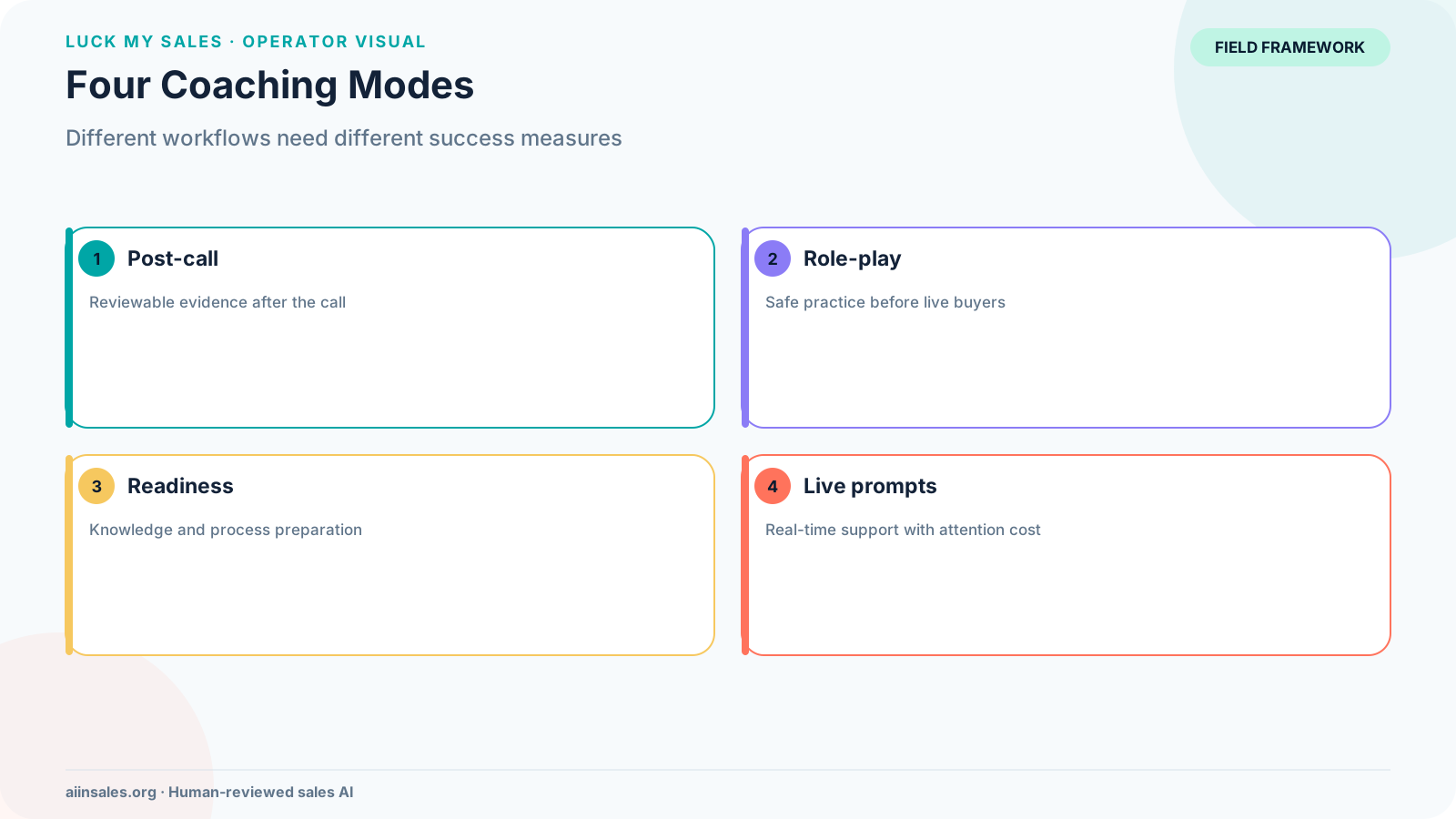
Four AI sales coaching modes: post-call analysis, role-play, readiness and live prompts.
Different coaching modes solve different problems and should not share one success metric.

1. Post-call analysis

AI reviews completed calls, creates transcripts and summaries, finds commercial moments, and applies a scorecard. This is the most useful starting point for many B2B teams because it does not interrupt the seller–buyer conversation.

2. Role-play and simulation

The seller practices discovery, objection handling, or a pitch with an AI buyer before speaking to a real customer. This is valuable for onboarding and repeatable scenarios, provided the simulation reflects real buyer language and the team’s actual offer.

3. Manager and enablement workflow

AI prioritizes calls, organizes examples, tracks rubric performance, and prepares coaching discussions. The value depends on whether managers use the queue and whether enablement maintains the rules.

4. Live prompts

AI displays suggestions while the seller is on the call. This can help in highly scripted, high-volume environments. In complex B2B sales, it often distracts the seller, weakens listening, and makes the conversation sound automated.
These modes should not be ranked as more or less “AI.” They solve different problems. Start with the bottleneck, not the most futuristic demo.

03 / Build the rubric from real calls

Build the rubric from real calls

The team owns the coaching definition. The model does not.
Enablement and sales leadership should study calls from strong performers, average performers, lost opportunities, and deals that progressed. Look for observable behaviors associated with the team’s actual motion.
A weak rule is “showed empathy.” A more reviewable rule is “the seller restated the buyer’s problem and asked the buyer to confirm or correct it.”
A weak rule is “ran good discovery.” Better criteria might be:
  • confirmed the current process;
  • identified one consequence of the problem in the buyer’s words;
  • clarified who is involved in the decision;
  • separated timing from urgency;
  • agreed a specific next action.
Keep the first rubric small. Three to five observable facts are more useful than 25 subjective qualities. For each criterion, define:
  • required evidence;
  • positive example;
  • negative or insufficient example;
  • legitimate exceptions;
  • who can correct the score;
  • what coaching action follows.
If rules come from a generic template, AI may train sellers to optimize for a score rather than win the team’s deals.

04 / The AI Coaching Contract

The AI Coaching Contract
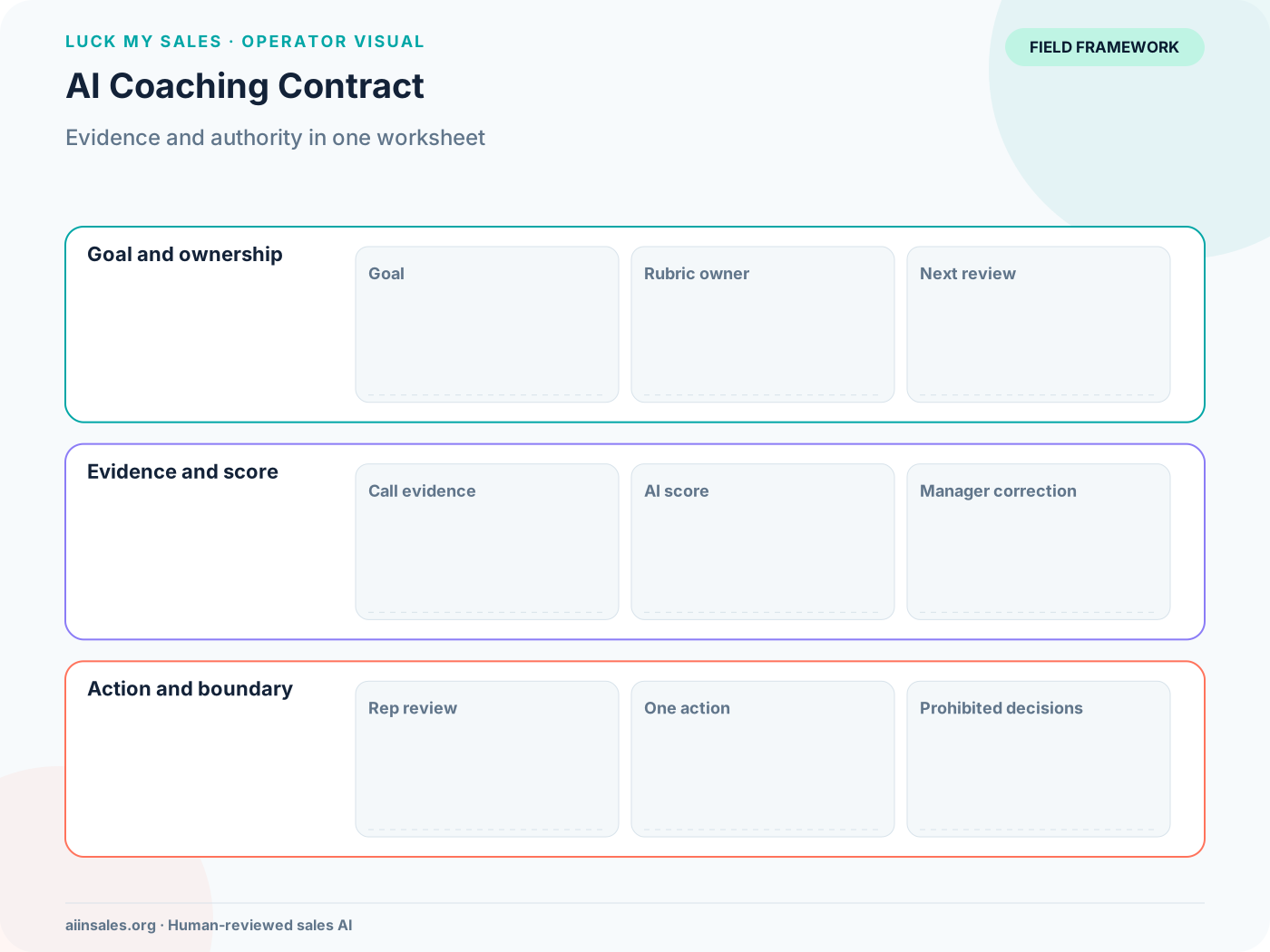
AI Coaching Contract with rubric, evidence, corrections, rep review and prohibited decisions.
A coaching contract makes evidence, corrections and decision rights explicit.
The contract prevents the score from becoming an invisible manager. It also prevents managers from blaming AI for rules they designed poorly.

05 / The weekly evidence-to-feedback loop

The weekly evidence-to-feedback loop
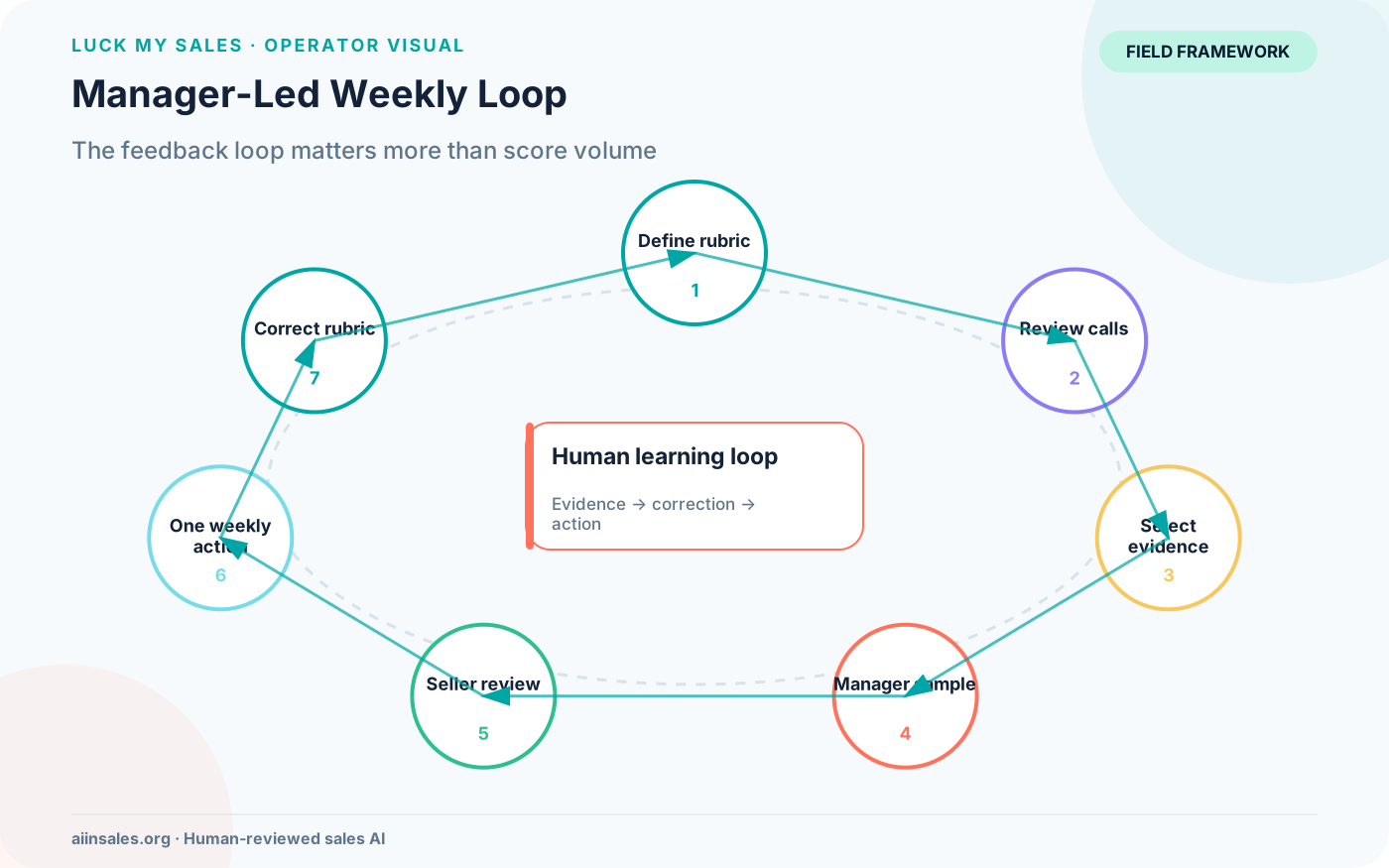
Weekly AI sales coaching loop with manager sampling and rubric correction.
The feedback loop matters more than the volume of automatic scores.

Enablement defines and maintains the rule

Enablement reviews calls from strong sellers and updates the small rubric. Changes are versioned. A score from last month should remain interpretable after a rule changes.

AI reviews eligible conversations

The system processes approved calls and selects moments based on stage, topic, objection, competitor, pricing, or another trigger. It does not need to send every call to a manager.

The manager samples and corrects

The manager reviews a sample of selected calls and corrects wrong transcripts, missing context, or rubric interpretations. Corrections are categorized so the team can improve inputs and rules.

The seller self-reviews first

Where appropriate, the seller sees the call moment and proposed feedback before the one-to-one. Self-review makes the meeting less defensive and gives the seller a chance to add context.

The one-to-one focuses on one action

The manager discusses one behavior, not the entire scorecard. The action is specific enough to practice and observe on the next calls.

The team checks an outcome

If the action is “confirm a concrete next step,” check whether follow-up tasks and second meetings improve. If it is “ask about the current process,” check whether opportunities contain better discovery evidence. Do not claim causality from one week of movement.
This loop turns AI output into management work. Without the loop, the product is a dashboard of judgments.

06 / Post-call analysis is the strongest…

Post-call analysis is the strongest starting point

Post-call analysis usually offers the best balance of coverage and control.
The call is complete, so the system cannot distract the live conversation. Managers can inspect the source. Sellers can correct the record. The team can compare evidence across many calls without asking every manager to listen from the beginning.
Useful post-call outputs include:
  • talk and listen patterns;
  • buyer questions;
  • objections and competitor mentions;
  • evidence of qualification criteria;
  • explicit and missing next steps;
  • unapproved pricing or commercial promises;
  • moments that match the coaching rubric;
  • examples suitable for a learning library.
Talk ratio alone is not coaching. A seller may speak more during a technical explanation and less during discovery. Treat the metric as a prompt to inspect the call, not a universal target.
The same applies to sentiment and engagement scores. Use them to find evidence, not to label people.

07 / Role-play is useful when the scenar…

Role-play is useful when the scenario is real

AI role-play lets a new seller fail safely before speaking to customers. A person can repeat the same discovery or objection scenario many times without using a manager for every attempt.
The simulation needs business-specific inputs:
  • buyer role and company context;
  • current process and problem;
  • realistic objections in the buyer’s language;
  • product boundary and approved claims;
  • pricing rules the AI must not invent;
  • success and failure conditions;
  • what evidence the evaluator should capture.
Use role-play for onboarding, a new product, a new market, or a recurring objection. Do not use it to create a theatrical score that has no relationship to real calls.
The manager should compare simulation behavior with live-call evidence. A seller may perform perfectly with a predictable bot and struggle when a buyer changes direction. The simulation is practice, not proof of field performance.
Products such as Second Nature, Quantified, and Mindtickle offer AI role-play or coaching capabilities. Evaluate them using the same scenario, rubric, languages, and review process rather than vendor demo scripts.

08 / Why live prompts often fail in comp…

Why live prompts often fail in complex B2B sales
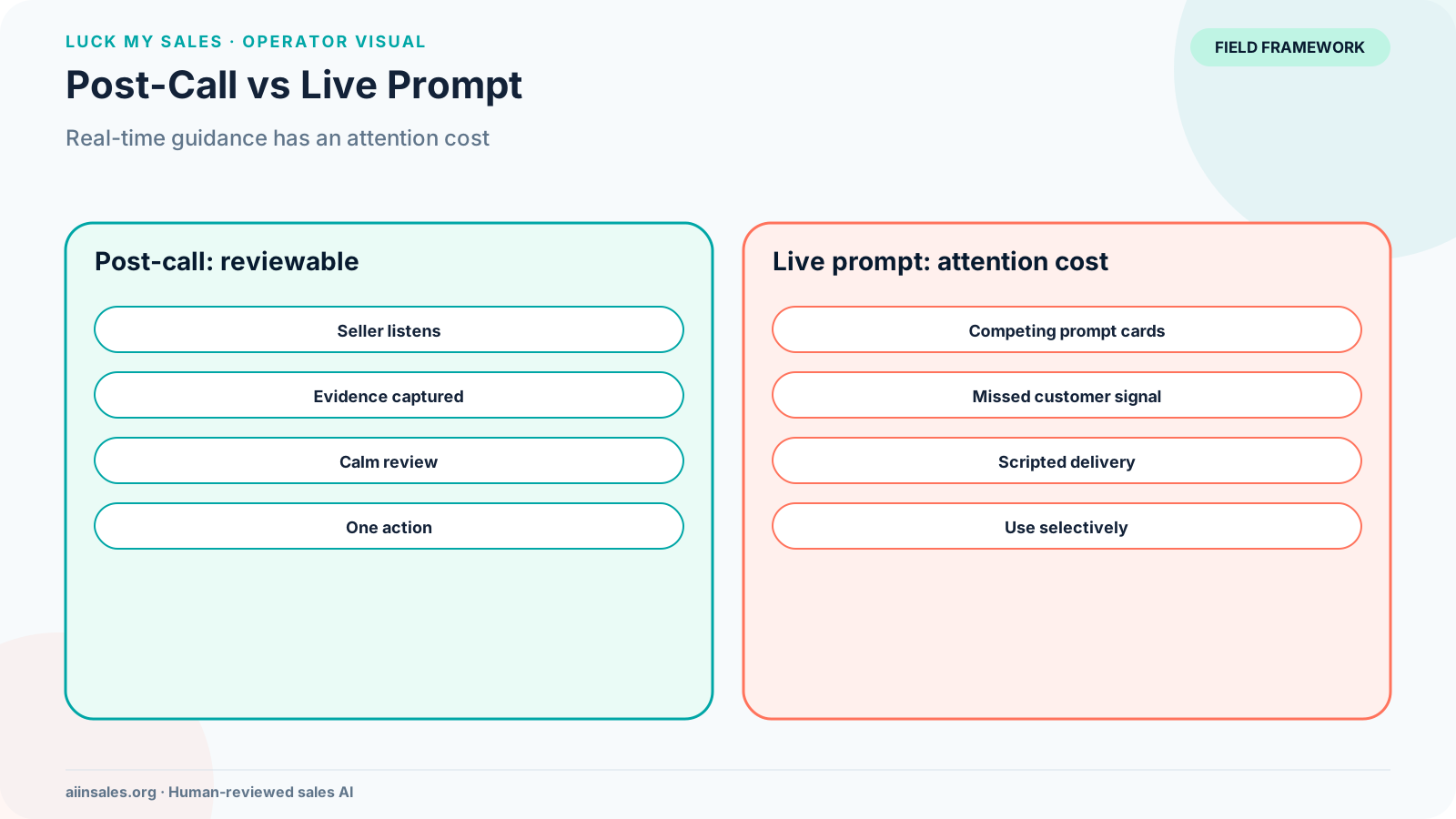
Comparison of focused post-call review with distracting live prompts during a complex B2B call.
Real-time guidance has an attention cost that post-call analysis avoids.
In complex B2B conversations, that can be counterproductive. The seller reads the screen, stops listening, and delivers a generic response after the buyer has already added context. The interaction starts to sound like a script.
Live prompts are more plausible when:
  • calls are high volume and tightly structured;
  • compliance wording is fixed;
  • the decision tree is narrow;
  • the seller must retrieve a precise approved fact;
  • the organization has measured that prompts improve, rather than distract from, outcomes.
Use them cautiously for strategic or discovery calls. A better workflow may prepare the seller before the call and analyze evidence after it.
If live guidance is tested, measure missed buyer cues, seller interruptions, prompt latency, incorrect suggestions, and seller reliance. A prompt should never create pricing or a commercial promise outside human-approved inputs.

09 / Scorecards, sampling, and correction

Scorecards, sampling, and correction

AI makes it possible to score every eligible call. That does not remove sampling.
Managers should inspect a representative sample of AI-scored calls, including:
  • high and low scores;
  • different sellers and stages;
  • multiple languages and channels;
  • calls with unusual objections;
  • calls where CRM outcome conflicts with the score;
  • calls after a rubric or model change.
Track the correction rate and reason. If more than a tolerable share of scores require material correction, investigate the rule, transcript, context, or model. Do not set a universal threshold without a baseline; different criteria have different risk.
Calibration also matters between managers. If two managers disagree on the same evidence, the rubric may be ambiguous. Resolve human disagreement before treating AI consistency as truth.
Make corrections visible to sellers. A score that changes without explanation creates distrust.

10 / Coach one action per week

Coach one action per week

A 20-item scorecard encourages shallow feedback. Sellers cannot change every behavior at once.
Choose one action that is:
  • visible in call evidence;
  • relevant to the seller’s current opportunities;
  • within the seller’s control;
  • small enough to practice;
  • connected to an observable CRM or call outcome.
Examples:
  • restate the buyer’s problem before presenting a solution;
  • ask who else will evaluate the decision;
  • confirm the next meeting before ending the call;
  • separate a “not now” objection from a permanent disqualification;
  • stop introducing features before the buyer describes the current process.
At the next one-to-one, review a new call and the downstream record. The manager is coaching a behavior, not chasing a higher AI score.

11 / Anonymous operator case: what impro…

Anonymous operator case: what improved and what remains unverified

In an anonymous team case, AI reviewed a much larger share of calls than managers could inspect manually. Managers sampled the system’s scores, corrected a minority of them, and used selected evidence in one-to-one coaching. Sellers also reviewed their own call feedback.
The team observed less manager time spent finding and replaying calls, stronger seller use of the review system, faster onboarding, and improved meeting-to-deal movement during the measured program.
We are deliberately not publishing the exact numbers in this version because the measurement period has not yet been supplied for the editorial record. The direction is real operator input; it should not be presented as a causal benchmark for other teams.
Even with a complete period, several factors would need disclosure: team composition, call mix, lead quality, rubric changes, sales process, seasonality, and whether opportunities were measured consistently. The case is evidence that the workflow can be useful, not proof that software alone creates the outcome.

12 / Metrics that matter

Metrics that matter

Track three layers.

System quality

  • material transcript corrections;
  • speaker-attribution errors;
  • evidence coverage for scores;
  • AI score correction rate;
  • missing-context rate;
  • review and correction time.

Workflow adoption

  • managers completing the weekly sample;
  • sellers inspecting and correcting feedback;
  • coaching actions assigned and completed;
  • role-play repetitions for the defined scenario;
  • time saved finding relevant call moments.

Commercial outcomes

  • stage conversion after the coached behavior;
  • next-step completion;
  • opportunity quality;
  • ramp time using a stable definition;
  • held meetings and accepted opportunities;
  • win rate, while controlling for mix and timing.
Do not use hours analyzed as the headline outcome. It measures machine activity.

13 / Decisions AI must never own

Decisions AI must never own
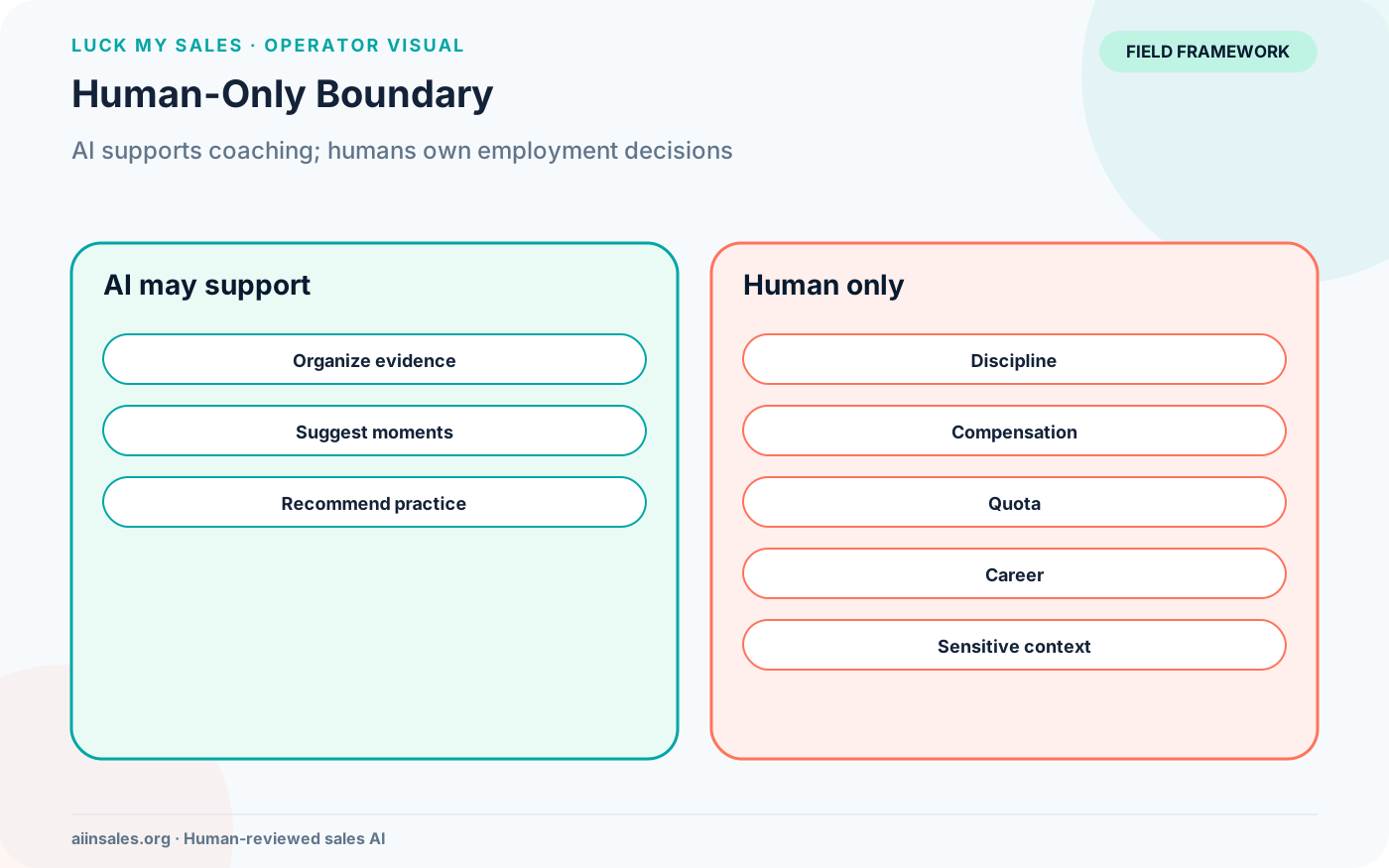
Human-only decision boundary for discipline, compensation, quota, career and sensitive context.
Coaching software may support a manager; it should not become an employment decision-maker.
  • termination, discipline, and performance sanctions;
  • salary, commission, bonuses, and quota allocation;
  • promotion and career decisions;
  • interpretation of personal or exceptional circumstances;
  • final qualification and disqualification where material;
  • pricing and commercial promises;
  • forecast commitments;
  • account ownership;
  • the feedback delivered to the seller.
A manager can use AI evidence as one input. The manager cannot outsource accountability for a people decision to a score.
Sellers need a clear correction and appeal path. They should know which calls are recorded, how scores are used, who can access them, and how long the data is retained.

14 / A staged implementation

A staged implementation

Phase 1: define policy and baseline

Set recording, consent, access, retention, and deletion rules. Measure current manager review time, coaching frequency, and a few stable CRM outcomes.

Phase 2: build a small rubric

Study real calls and define three to five observable criteria. Create examples and exceptions. Calibrate managers.

Phase 3: analyze without consequences

Run AI scores, but use them only for evaluation. Review a diverse sample. Categorize corrections. Fix transcripts, inputs, and rules.

Phase 4: start weekly coaching

Let AI prioritize evidence. Managers verify it and coach one action. Sellers self-review and can dispute errors.

Phase 5: add role-play

Turn recurring problems into realistic practice scenarios. Compare simulation behavior with real calls.

Phase 6: connect outcomes

Link coaching actions to accurate CRM stages, next steps, and conversion measures. Treat improvement as directional until the team has enough stable data.

Phase 7: expand carefully

Add teams, languages, scorecards, or live assistance only after the previous layer is trusted. Recalibrate after process, model, or market changes.

15 / Readiness: what must exist before s…

Readiness: what must exist before software

A team is not ready for AI coaching merely because calls are available.
The minimum foundation is:
  • approved recording and consent practices;
  • calls connected to the correct seller, account, and opportunity;
  • a stable definition of stages and outcomes;
  • manager ownership of coaching;
  • a small set of observable behaviors;
  • enough calls to see patterns rather than isolated anecdotes;
  • a correction process for transcripts and scores;
  • psychological safety around learning and mistakes;
  • time in the manager calendar for a weekly loop.
CRM hygiene matters because coaching outcomes need somewhere to appear. If every seller uses a different definition of “qualified,” the team cannot know whether better discovery is followed by better opportunities. If next steps live only in personal notes, AI can identify a missing commitment but the company cannot measure whether the behavior changed.
Recording volume is not readiness. A company may have thousands of calls and no coherent rubric. Another may have a smaller set of well-labeled conversations, clear stages, and managers who coach consistently. The second team is more ready.
For founder-led sales, the readiness question is different. The founder often remains close enough to every meaningful call to coach directly. Software becomes relevant when onboarding, call volume, multiple managers, regional teams, or consistency creates a real bottleneck.

16 / Seller trust is part of system accu…

Seller trust is part of system accuracy

Sellers are not passive data sources. They often know when the transcript, opportunity context, or AI score is wrong.
Before rollout, explain:
  • which calls are recorded and why;
  • who can access recordings and scores;
  • which criteria AI evaluates;
  • how feedback is used;
  • which decisions AI is prohibited from making;
  • how a seller corrects or disputes an output;
  • how long the data is retained;
  • how examples enter a shared library.
Do not promise that the system is only for development and then quietly use the score as a compensation shortcut. That destroys the correction loop. Sellers who fear the score will optimize calls for visible criteria, avoid useful risk, or stop reporting errors.
Trust does not mean hiding poor performance. It means using evidence consistently and giving the person a fair way to add context. A transcript error corrected by a seller improves the system. Treating the correction as resistance wastes that signal.
Managers also need discipline. They should not search calls for embarrassing moments or overwhelm a one-to-one with ten machine-generated criticisms. The product should reduce noise, and the manager should protect focus.

17 / The calibration meeting managers sh…

The calibration meeting managers should run

A weekly coaching workflow needs a separate calibration routine. Without it, managers can apply the same rubric in different ways. The AI then appears inconsistent even when the real disagreement is human.
Take three recent calls: one strong, one mixed, and one weak. Ask each manager to score the same three to five criteria. Require a timestamp and a short reason for every score. Compare the results before showing the AI output.
When managers disagree, define the missing rule. “Good discovery” is too broad. “The seller confirmed the buyer’s current process and one operational consequence” is observable. Add examples and exceptions. Then rescore the calls.
Only after managers align should the team compare AI scores. Corrections must record the cause. The transcript may be wrong. The rule may be ambiguous. The evidence may be missing. The recommendation may be too broad. These are different problems and need different fixes.
Calibration is not a one-time launch task. Repeat it when the offer, market, team, or sales stage changes. Keep old rubric versions so historical scores are not silently reinterpreted.

18 / A fair seller correction process

A fair seller correction process

Sellers need a simple way to challenge evidence. The correction screen should show the recording moment, transcript, criterion, AI explanation, manager decision, and final coaching action. The seller should be able to add context without editing the source recording.
The manager must review high-impact disputes. An AI score cannot decide pay, discipline, promotion, or termination. A coaching platform also should not punish a seller for following an approved exception that the rubric does not understand.
Track recurring corrections. If several sellers challenge the same criterion, the team should inspect the rule. If errors cluster in one language or channel, inspect capture and transcription. If recommendations ignore CRM context, repair the integration.
This process protects trust and improves the system. It also prevents managers from treating model output as neutral truth.

19 / The minimum coaching record

The minimum coaching record

Each coaching action needs a small record. Include the call, evidence moment, rubric version, manager correction, agreed behavior, owner, and review date. Keep the later outcome beside it.
This record prevents vague feedback. “Improve discovery” is not an action. “Confirm the current process and one consequence on the next first meeting” is clear. The seller knows what to practice. The manager knows what to inspect.
The record also prevents the system from rewriting history. A later rubric change should not make an old score look final. Keep the original result and the corrected result.
If the outcome is poor, inspect the whole chain. The evidence may be wrong. The action may be weak. The buyer context may have changed. Do not assume the seller ignored coaching.

20 / Common implementation mistakes

Common implementation mistakes

Buying software before defining coaching

The vendor’s default scorecard becomes the company’s accidental methodology. Sellers receive generic advice, and managers cannot explain why the score matters.
Fix: define three to five behaviors from real calls before enabling automated scoring.

Scoring everything immediately

The team launches a long rubric across all calls, languages, stages, and sellers. Corrections become unmanageable, so managers stop reviewing them.
Fix: start with one call type, one team, and a small rubric. Expand by proven criterion.

Treating the transcript as evidence without verification

A wrong speaker or product name creates wrong scores and coaching recommendations.
Fix: sample material transcript details and keep the recording linked to every disputed claim.

Coaching the score instead of the behavior

The manager tells the seller to move from 72 to 80. The seller has no concrete action.
Fix: translate one cited moment into one behavior the seller can use on the next call.

Ignoring context outside the call

The AI says the seller failed to ask about budget, but budget was documented in an earlier email or a separate buying-committee call.
Fix: connect relevant CRM and conversation context, and let managers mark legitimate exceptions.

Using real-time prompts because they look advanced

Sellers divide attention between the buyer and the screen. The conversation becomes less human.
Fix: prove post-call analysis and preparation first. Pilot live prompts only for a narrow, measured use case.

Using AI scores for people decisions

An approximate coaching signal becomes an employment judgment it was never designed to support.
Fix: prohibit automatic discipline, compensation, promotion, or termination decisions. Use accountable human review and broader evidence.

21 / A manager’s 30-minute weekly routine

A manager’s 30-minute weekly routine

The workflow must fit the real calendar.

Five minutes: inspect the queue

Review why calls were selected. Remove irrelevant calls and note repeated selection errors. The queue should prioritize learning, not merely unusual keywords.

Ten minutes: verify evidence

Open a few cited moments. Check transcript, speaker, commercial context, and rubric application. Correct errors with a reason code.

Five minutes: choose one action

Select the behavior most likely to help the seller’s current work. Avoid the temptation to coach every visible weakness.

Five minutes: prepare the conversation

Write a short observation, a question for the seller, and one practice request. Use the call moment as evidence, not as a verdict.

Five minutes: record follow-through

After the one-to-one, capture the agreed action and when it will be reviewed. Link the next relevant call or CRM outcome.
The exact timing will vary. The point is to design a repeatable manager habit. If the software requires an hour of dashboard work before feedback begins, managers will eventually bypass it.

22 / An example of a reviewable coaching…

An example of a reviewable coaching moment

Imagine a discovery call where the buyer says, “We are comparing a few tools, but I am not sure this project will be funded this quarter.” The seller immediately demonstrates features and ends by offering to send pricing.
A weak AI output says:

Objection handling: 4/10. Seller should improve discovery.

A reviewable output says:
  • Buyer evidence: uncertainty about project funding this quarter, linked to the call moment.
  • Seller behavior: moved to product demonstration without asking what would determine funding.
  • Rubric criterion: clarify decision condition before presenting the solution.
  • Missing context: previous budget discussion is not available in the connected record.
  • Recommended coaching action: on the next three discovery calls, ask what event or decision would release budget before discussing features.
  • Human review: manager verifies earlier account history and chooses whether the action fits.
  • Outcome to observe: clearer decision-process notes and agreed next steps, not merely a higher score.
The second output is longer, but it reduces ambiguity. The seller knows what happened, why it matters, what to practice, and how improvement will be observed.

23 / Role-play design example

Role-play design example

Suppose an SMB sales team repeatedly hears, “We already use another provider.” Do not ask an AI role-play tool to generate a random difficult buyer.
Build the scenario from real calls:
  • the buyer is satisfied with part of the current solution;
  • the contract renews in six months;
  • one workflow remains manual;
  • the buyer will not accept a replacement pitch;
  • the seller should discover whether a supplemental use case exists;
  • the seller must not invent a discount or integration;
  • success is a clear problem statement or a respectful disqualification, not forcing a meeting.
Let the seller practice several times. AI can vary the buyer’s tone and resistance while keeping the commercial facts stable. The scorecard checks whether the seller acknowledged the current vendor, explored the gap, and avoided an unsupported promise.
Then compare the practice with real calls. If sellers pass the simulation but fail in the field, the scenario may be too predictable or the score may reward memorized phrases. Update it with new buyer language.

24 / Selecting software without confusin…

Selecting software without confusing categories

Products in this market emphasize different jobs.
  • Gong, Chorus, ExecVision, Avoma, and similar tools center post-call analysis, conversation evidence, and coaching workflows to different degrees.
  • Second Nature, Quantified, and Mindtickle emphasize role-play, simulation, readiness, or coaching practice.
  • Highspot and Seismic Learning connect training, content, practice, and enablement programs.
  • Balto represents the real-time guidance category, which should be evaluated separately from post-call coaching.
A company may need one mode, not four products. If the bottleneck is onboarding, a role-play system may matter more than a revenue-intelligence platform. If managers cannot find useful call moments, post-call analysis comes first. If the team lacks a training program, buying an enablement platform will not create one automatically.
Build the shortlist around the workflow:
evidence source → coaching mode → manager action → seller practice → outcome
Then compare language coverage, integrations, governance, total cost, and time to operate. A vendor should not win because it uses “AI coach” in the product name.

25 / What good looks like after 90 days

What good looks like after 90 days

A healthy program does not need spectacular claims. Look for operational signs:
  • managers complete the sample without a separate project manager chasing them;
  • sellers understand the rubric and correct errors;
  • the correction log produces better rules;
  • one-to-ones refer to specific evidence and one action;
  • role-play scenarios use real buyer language;
  • CRM records contain clearer next steps and discovery evidence;
  • the team can name which behavior it is improving and why;
  • no employment or commercial decision is hidden behind an AI score.
If the program produces more dashboards, more scores, and more anxiety without changing manager behavior, pause it. The problem may be the rubric, workflow, or leadership habit rather than the model.

26 / A simple weekly operating rhythm

A simple weekly operating rhythm

Keep the routine small. On Monday, AI selects the calls that match the approved rules. The manager checks a sample and corrects weak evidence. Before the one-to-one, the seller reviews the same moment and writes one self-assessment. During the meeting, both people agree on one behavior to practise. The next week, they look for that behavior in a new call. This loop is easier to sustain than a large quarterly scorecard review.

27 / Limits, evidence, and disclosure

Limits, evidence, and disclosure

This guide reflects first-hand operator experience and an anonymous coaching case. Exact case metrics are withheld until the measurement period is documented. Product capabilities referenced in examples should be verified through official documentation and a same-scenario pilot.
There are no affiliate payments, sponsorships, free-access arrangements, consulting relationships, or other commercial benefits from Gong, Chorus/ZoomInfo, ExecVision, Second Nature, Quantified, Mindtickle, Highspot, Seismic/Lessonly, or Balto.
The author/team is affiliated with NextLevel.AI. Its workflow is included as first-party operator evidence, not as an independently ranked recommendation.

28 / Frequently asked questions

Frequently asked questions

What is AI sales coaching?

It is the use of AI to analyze sales conversations, apply an approved rubric, identify examples, support practice, and prepare feedback. A human manager remains responsible for interpretation and coaching.

Can AI replace a sales manager?

No. It can expand review coverage and reduce time spent finding evidence. It cannot own context, trust, motivation, commercial judgment, or people decisions.

What is the best use of AI in sales coaching?

Post-call analysis is a strong starting point. AI can review eligible calls, surface evidence for a small rubric, and help managers focus their limited time.

Are live AI prompts useful during sales calls?

They may help tightly scripted, high-volume calls. In complex B2B conversations they can distract sellers and weaken listening. Test them separately rather than assuming real-time is better.

How many scorecard criteria should a team start with?

Start with three to five observable criteria based on real calls. Add more only when managers and sellers understand the evidence and correction process.

Can AI scores be used for compensation or termination?

They should not make those decisions. AI evidence may inform a human review, but employment, compensation, discipline, promotion, and career decisions require accountable human judgment and broader evidence.

How do you measure AI sales coaching?

Measure system corrections, manager review time, seller adoption, completed coaching actions, and downstream CRM outcomes. Do not rely on calls or hours analyzed.

Does a founder-led team need AI coaching software?

Usually not at the beginning. Founders can often review important calls directly. Add software when call volume, onboarding, manager coverage, or consistency becomes a real bottleneck.

Research note

Methodology

  1. 01The operating model reflects Anastasiia's first-hand sales and coaching experience, with anonymized examples.
  2. 02Exact anonymous performance figures remain excluded because their measurement period has not been supplied.
  3. 03Product-category claims are bounded to current official sources and separated from operator judgment.
Read the full methodology

Source ledger

Sources & editorial notes

  1. 01
    Gong conversation intelligence

    Gong · Official product or documentation source used for bounded capability claims; current packaging and features may change.

  2. 02
    Second Nature AI sales role-play

    Second Nature · Official product or documentation source used for bounded capability claims; current packaging and features may change.

  3. 03
    Quantified AI sales role-play

    Quantified · Official product or documentation source used for bounded capability claims; current packaging and features may change.

  4. 04
    Mindtickle AI sales coaching

    Mindtickle · Official product or documentation source used for bounded capability claims; current packaging and features may change.

  5. 05
    Highspot sales coaching software

    Highspot · Official product or documentation source used for bounded capability claims; current packaging and features may change.

  6. 06
    Seismic Learning and Lessonly

    Seismic · Official product or documentation source used for bounded capability claims; current packaging and features may change.

Corrections or primary material: contact the corrections desk.

About the author

Anastasiia Krynytska

Anastasiia Krynytska is a LeadGen Team Lead at Softermii and the lead editor of Luck My Sales. She covers AI-assisted outbound, account research, qualification, messaging, CRM handoffs and revenue workflows from a practitioner’s perspective.View author profile LinkedIn

Continue reading

01 · News analysis

AI sales is moving from assistant to operating layer

The category is expanding from drafting support into research, pipeline decisions, recommended actions and controlled execution.

Read news
02 · Field analysis

In AI sales, the handoff may be the product

Models are becoming accessible; durable value sits in the controlled transition from signal to seller action.

Read analysis
03 · Research framework

Sales AI Workflow Signals 2026

A launch framework for mapping the products, controls and buying questions shaping AI-enabled revenue work.

Read reports

Luck My Sales briefing

Useful context, once a week.

News, explanations and original research from this desk. No noise.
The newsletter is still being built. We will contact you when the first edition is ready.