
Post-sale expansion workflow guide · RevOps automation
How AI Sales Agents Contribute to Upselling and Cross-Selling
AI may assist research organization and drafting. A human editor reviews every published page, checks material claims against the cited sources and owns the final decision. No company paid for placement in this article.
AI use policyAgent-ready brief
AI takeaways
Keep the key points here, or take a source-aware text brief into Claude, ChatGPT or another AI workspace.- 01Keep upsell, cross-sell, renewal and retention as separate commercial decisions.
- 02Combine usage, goals, health, support and contract evidence rather than trusting one signal.
- 03Suppress recommendations during incidents, disputes, churn motion, owner ambiguity and weak evidence.
- 04Keep offer, price, timing and customer conversation under human authority.
- 05Measure recommendation precision, review burden, downstream outcomes and customer-harm guardrails.
An expansion agent should surface sourced account evidence, expose contrary signals and route a recommendation to the human owner—not turn product activity into an automatic pitch.
01 / Separate upsell, cross-sell, renewal and retention
Separate upsell, cross-sell, renewal and retention
| Motion | Commercial question | Example | Primary owner |
|---|---|---|---|
| Upsell | Does the customer need more of the current capability or a higher tier? | More seats, usage or advanced capacity | Account Manager or CSM with commercial authority |
| Cross-sell | Does another product solve a separate, evidenced need? | Add an adjacent workflow or product | Account owner plus relevant specialist |
| Renewal | Should the existing contract continue under agreed terms? | Renew current scope | Account owner, CS and commercial operations |
| Retention intervention | Is customer value or relationship health at risk? | Resolve adoption, support or outcome gap | CSM, support and account leadership |
02 / How AI sales agents contribute to upselling
How AI sales agents contribute to upselling and cross-selling safely
For active accounts with an assigned owner, the agent may evaluate approved usage, customer-goal, support, health and contract data. It may create an internal expansion recommendation with sources, contrary evidence and missing information. It may not contact the customer, select a price, change a contract or create an opportunity without human review.
- recommendation ready for owner review;
- more evidence required;
- suppress because of health, timing or policy;
- no relevant offer;
- route to retention or support instead;
- close as false positive.
No offer is an important output. Without it, every signal becomes a sales task.03 / Build an evidence contract for account expansion
Build an evidence contract for account expansion
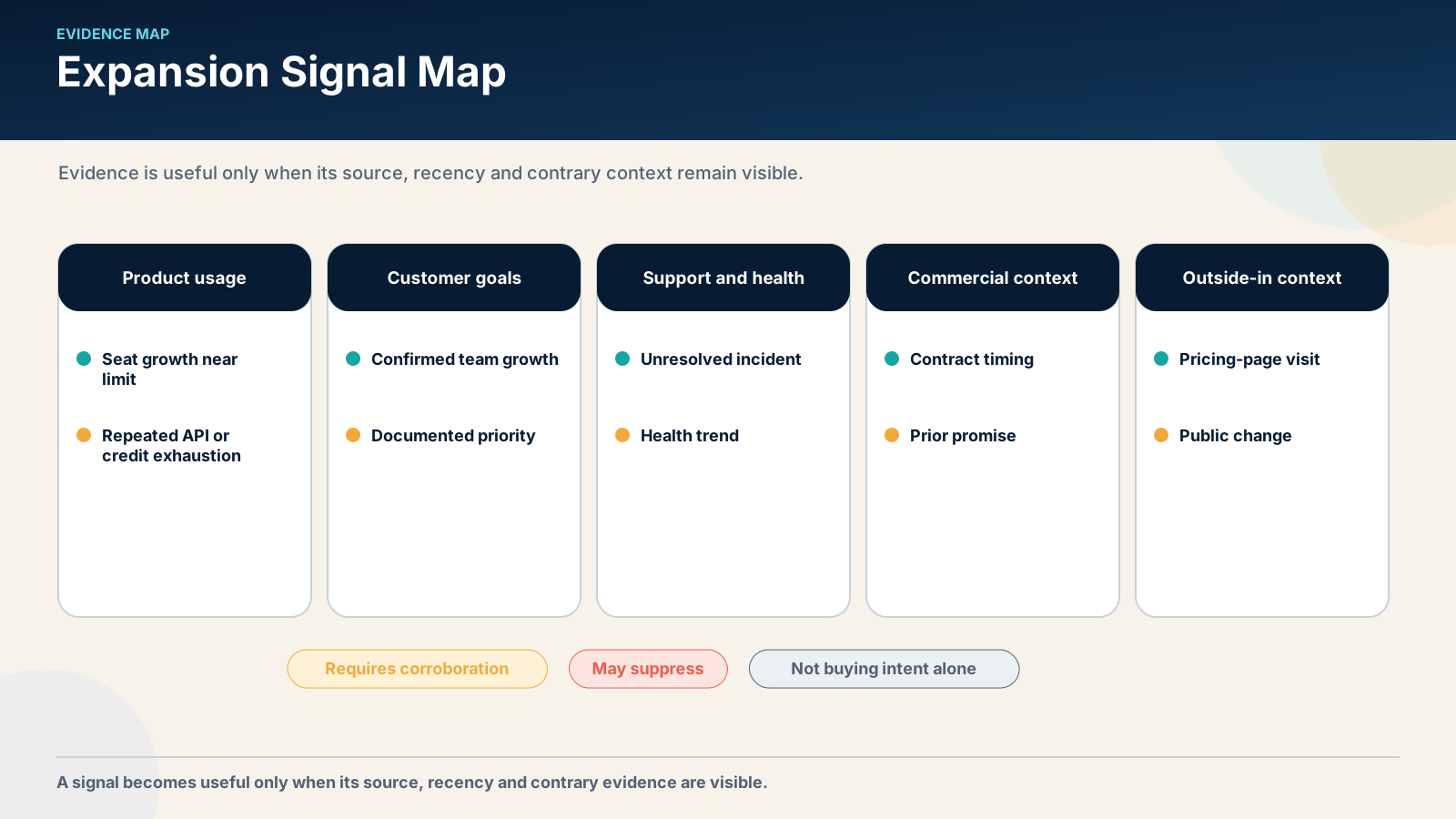
why this offer, why this account and why now.Product-usage evidence
- licensed versus active seats;
- sustained seat growth;
- feature adoption and depth;
- usage near a documented limit;
- repeated API, credit or storage exhaustion;
- workflows blocked by current capacity;
- unused features and adoption risk;
- timestamp and observation window.
- rapid seat growth approaching a contractual limit;
- API or credit limits exhausted in two consecutive weeks.
Customer-goal and conversation evidence
- success plans and agreed outcomes;
- QBR or review notes;
- support conversations;
- sales and renewal calls;
- product requests;
- confirmed growth plans;
- prior objections and promises.
Health and support evidence
- unresolved incidents;
- complaint or escalation;
- adoption trend;
- time-to-value gaps;
- disputed invoice;
- poor outcome or unmet promise;
- churn or downgrade risk;
- executive sentiment;
- last human contact.
Contract and commercial evidence
- current product and tier;
- quantities and limits;
- renewal date;
- pricing and discount authority;
- expansion clauses;
- territory and account owner;
- open opportunity or negotiation;
- recent offer and cooldown period.
Outside-in evidence
04 / Create a governed offer map
Create a governed offer map
| Offer-map field | Required question |
|---|---|
| Eligible customer state | Which current product, tier, region and contract can use it? |
| Customer problem | Which confirmed goal or constraint does the offer address? |
| Supporting signals | Which usage, conversation or contract evidence is relevant? |
| Required evidence | What must be present before the offer can be recommended? |
| Contrary evidence | What makes the apparent fit weaker? |
| Suppression | Which support, health, timing or contact states block the play? |
| Proof boundary | Which value statements are approved, and which need specialist review? |
| Commercial owner | Who selects scope, price and discount? |
| Next question | What should the account owner verify with the customer? |
| Expiry | When must the map be reviewed after a product or policy change? |
no match and insufficient evidence outcomes. If several offers appear possible, route the alternatives and reasons to the human owner instead of choosing the highest-value item. If the map is outdated or the account sits outside its scope, stop the recommendation.05 / Recognize false positives
Recognize false positives
One pricing-page visit
High CSAT or NPS from a non-buyer
- one short usage spike;
- automated traffic;
- repeated limit errors caused by a bug;
- a feature request from an unsupported persona;
- generic positive sentiment;
- old funding news;
- a job post unrelated to the product;
- renewal timing with unresolved value concerns.
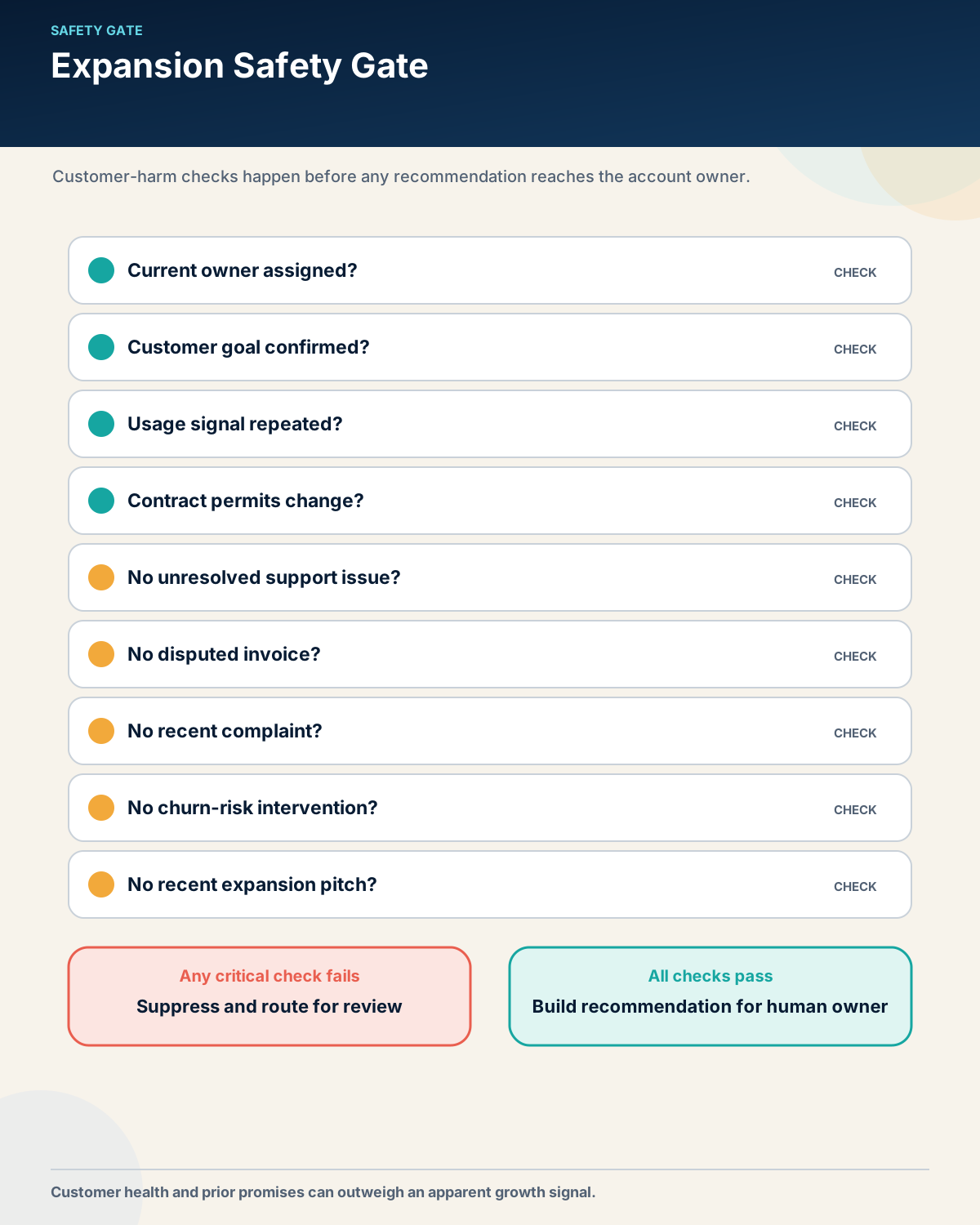
06 / Use an expansion safety gate
Use an expansion safety gate
- Is a current human owner assigned?
- Is the account eligible for expansion review?
- Is the signal current and repeated where required?
- Does it connect to a confirmed customer goal or problem?
- Is the candidate offer within the contract and product scope?
- Is there unresolved support, health or billing risk?
- Has the customer complained or asked not to receive the contact?
- Is a renewal, downgrade or retention intervention already active?
- Was another expansion offer made recently?
- Is commercial authority known?
- Is there contrary evidence or missing data?
07 / Run the observe-to-route workflow
Run the observe-to-route workflow
1. Observe approved events
2. Validate identity and freshness
3. Match a candidate offer
4. Explain fit
- observed customer need;
- candidate offer;
- expected customer value;
- source and date;
- uncertainty.
5. Surface contrary evidence
6. Apply suppression
7. Route to the human owner
8. Record the review and outcome
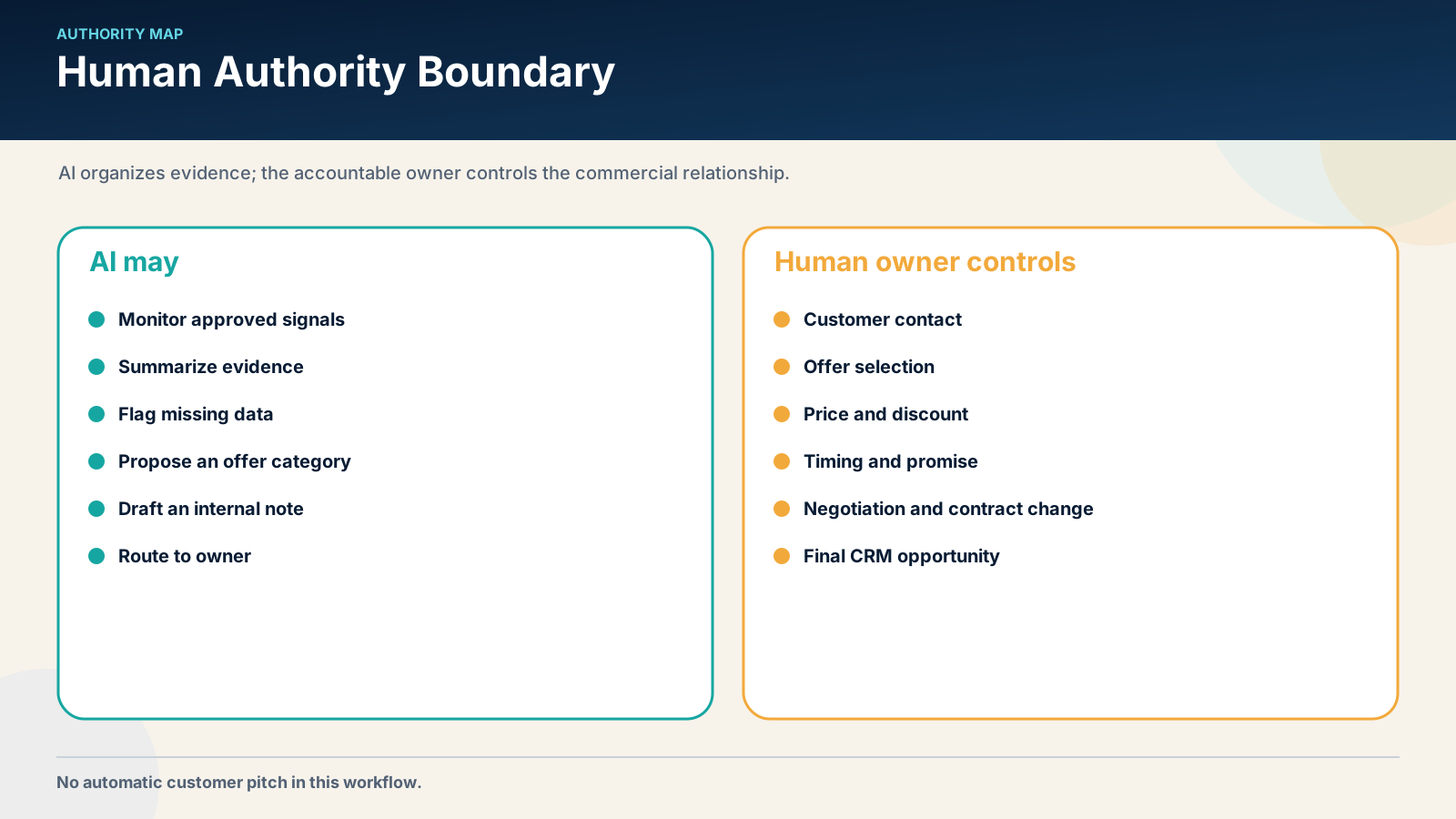
08 / Keep commercial authority human
Keep commercial authority human
| AI may | Human owner controls |
|---|---|
| Monitor approved signals | Whether to contact the customer |
| Summarize evidence | Which offer is appropriate |
| Flag missing or conflicting data | Price and discount |
| Suggest an offer category | Timing and channel |
| Draft an internal account note | Promise and value claim |
| Route to an assigned owner | Negotiation and contract change |
09 / Resolve owner, timing and channel before contact
Resolve owner, timing and channel before contact
- who owns the account and commercial relationship now;
- whether Customer Success, Account Management, support or a specialist should lead;
- whether an open renewal, opportunity or escalation already covers the issue;
- which customer stakeholders use, approve and buy the relevant capability;
- when the account was last contacted about expansion;
- which channel and cadence the relationship permits;
- which promise or unresolved issue changes the sequence.
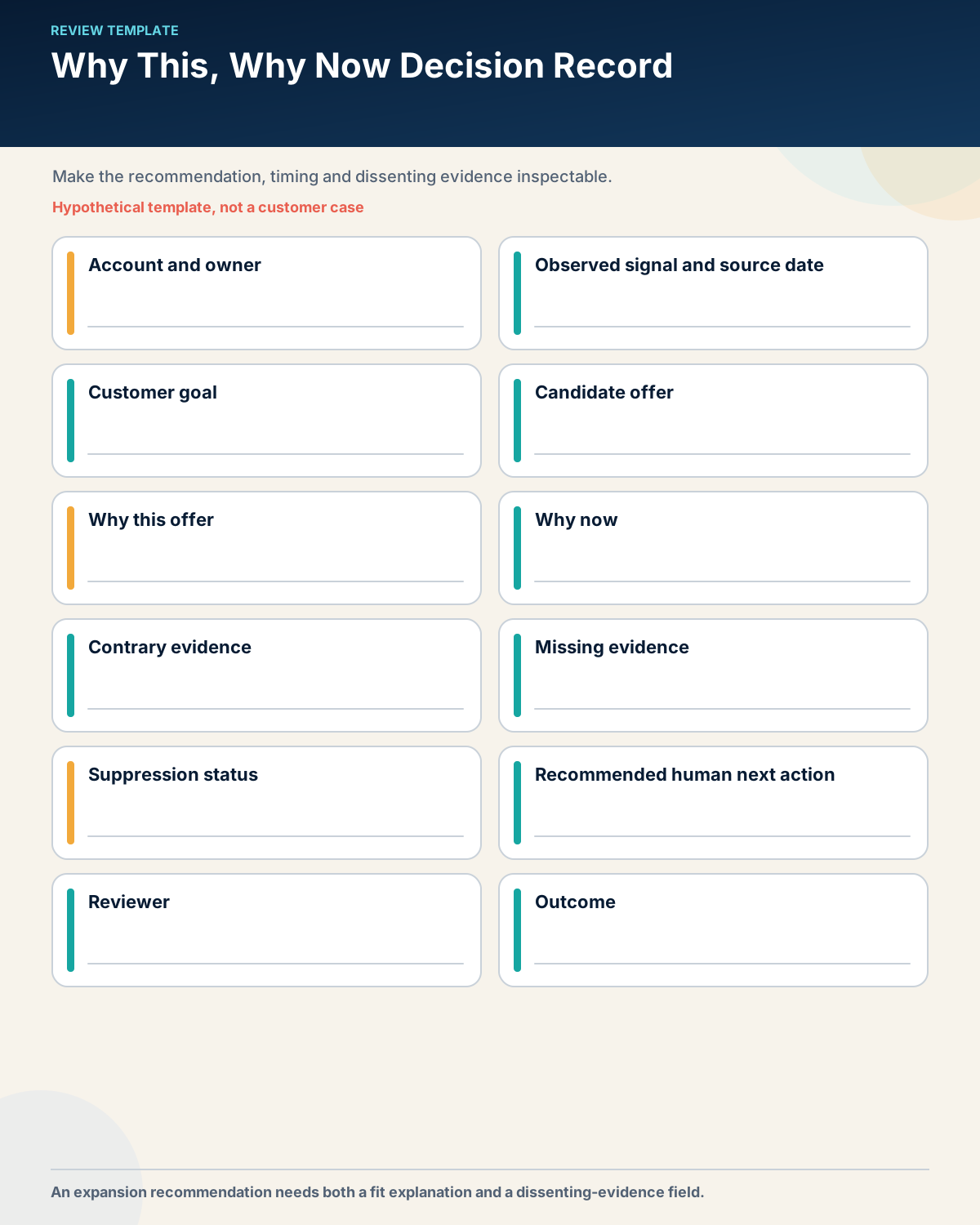
10 / A hypothetical expansion decision record
A hypothetical expansion decision record
| Field | Hypothetical entry |
|---|---|
| Account and owner | ExampleCo; assigned Account Manager |
| Observed signal | Active seats rose toward the contracted limit for three weekly snapshots |
| Source and date | Product telemetry; current review date |
| Customer goal | Confirmed plan to add a second operations team |
| Candidate offer | Higher seat tier |
| Why this offer | Removes the documented seat constraint tied to the confirmed growth plan |
| Why now | Capacity may constrain the planned team rollout |
| Contrary evidence | Open medium-severity support issue |
| Missing evidence | Final headcount and rollout date |
| Suppression | Do not pitch until support owner confirms resolution plan |
| Recommended action | Account Manager reviews support status, then asks about rollout timing |
| AI authority | Internal recommendation only |
| Human outcome | Accept, revise, reject or route to support |
11 / Measure recommendation quality and customer harm
Measure recommendation quality and customer harm
Flag precision
Owner-accepted expansion signals ÷ reviewed expansion signalsRecommendation completeness
Records containing all required evidence and contrary-evidence fields ÷ reviewed recordsOwner review burden
Human review minutes ÷ owner-accepted recommendationsOpportunity creation
Expansion opportunities meeting the CRM rule ÷ owner-accepted recommendationsExpansion value
assisted when the human owner conducted the work.Guardrails
- opt-outs and complaints;
- support escalations after the pitch;
- churn or downgrade signals;
- duplicate offers;
- outreach during active incidents;
- promises or prices outside authority;
- owner overrides and CRM reversals.
12 / Run a weekly expansion decision review
Run a weekly expansion decision review
- accepted, revised and rejected recommendations;
- rejection reasons and recurring missing evidence;
- support, health or contact suppressions;
- duplicated records and owner conflicts;
- offer-map gaps or stale product rules;
- opportunities admitted under the CRM rule;
- complaints, overrides and retention warnings;
- changes to signals, models or source systems.
no offer records as well as accepted ones. This detects a safety gate that is too strict or a source that silently stopped updating. An expansion workflow can fail by creating too much pressure, but it can also fail by hiding legitimate customer needs.13 / Pilot the workflow without automated customer contact
Pilot the workflow without automated customer contact
- Choose one offer and account segment.
- Freeze the signal and suppression definitions.
- Create a human answer key from historical or current accounts.
- Run the agent in shadow mode.
- Review every recommendation and rejection reason.
- Measure completeness, precision and owner time.
- Route accepted records as internal tasks only.
- Track opportunity and harm outcomes.
- Change one signal or rule at a time.
14 / Failure modes
Failure modes
High usage becomes automatic intent
The happiest user becomes the buyer
The agent pitches during a support problem
The model selects the price
The recommendation hides uncertainty
The queue optimizes for volume
15 / Frequently asked questions
Frequently asked questions
How do AI sales agents contribute to upselling and cross-selling?
Can an AI agent contact customers automatically about an upgrade?
What are the best upsell signals?
How is cross-sell different from upsell?
What should suppress an expansion recommendation?
16 / Readiness checklist
Readiness checklist
- account and owner IDs are reliable;
- usage events have timestamps and definitions;
- customer goals are distinguishable from inferred intent;
- support, health and contract data are available;
- suppression states are deterministic;
- every offer has an approved value-fit map;
- the decision record shows contrary and missing evidence;
- price, timing and contact remain human-owned;
- CRM admission and attribution are defined;
- harm and retention guardrails are monitored.
Research note
Methodology
- 01The workflow is informed by owner-supplied RevOps experience and is presented without an identifiable customer case or quantitative outcome claim.
- 02McKinsey and explainable-prioritization research support evidence combination and reviewability, not a universal conversion or revenue lift.
- 03The example decision record is explicitly hypothetical and preserves missing and contrary evidence.
Source ledger
Sources & editorial notes
- 01McKinsey's discussion of outside-in intelligence, internal opportunity analysis and human judgment in B2B sales
McKinsey & Company · Primary, official or disclosed research source used for the bounded claim cited in this guide; scope and current status require rechecking.
- 02Explainable account-prioritization research
arXiv · Primary, official or disclosed research source used for the bounded claim cited in this guide; scope and current status require rechecking.